
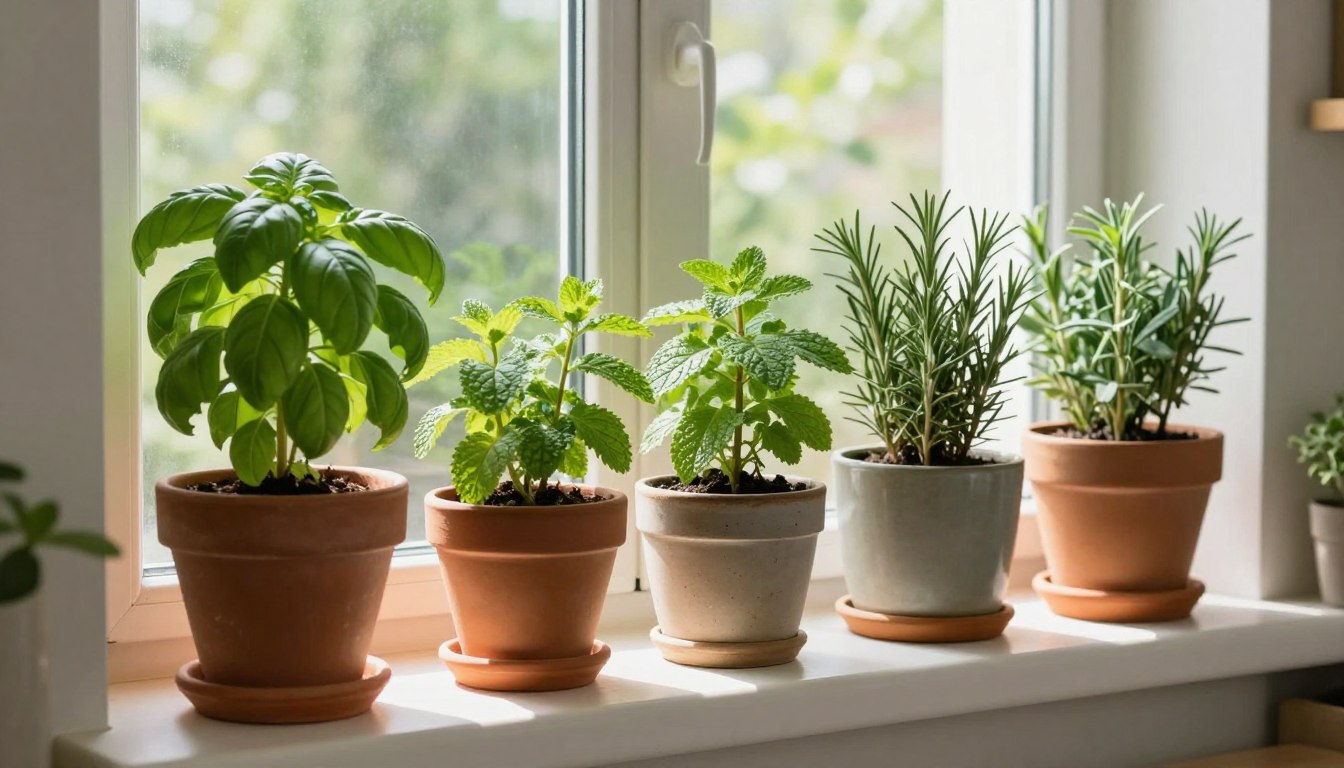
Growing herbs indoors transforms your kitchen into a year-round garden. Fresh basil for pasta, mint for tea, and rosemary for roasted dishes become available with a simple reach. Indoor herb gardening offers convenience and flavor that dried herbs cannot match.
Many people believe herbs need outdoor space to thrive. This assumption keeps home cooks from enjoying fresh herbs during winter months. The truth is that numerous herbs adapt beautifully to indoor conditions when given proper care.
This guide explores ten exceptional herbs that flourish indoors throughout all seasons. Each entry provides specific growing requirements, care instructions, and practical harvesting tips. Whether you live in a small apartment or a spacious home, these herbs will thrive on your windowsill.
1. Basil (Ocimum basilicum)
Growing Requirements
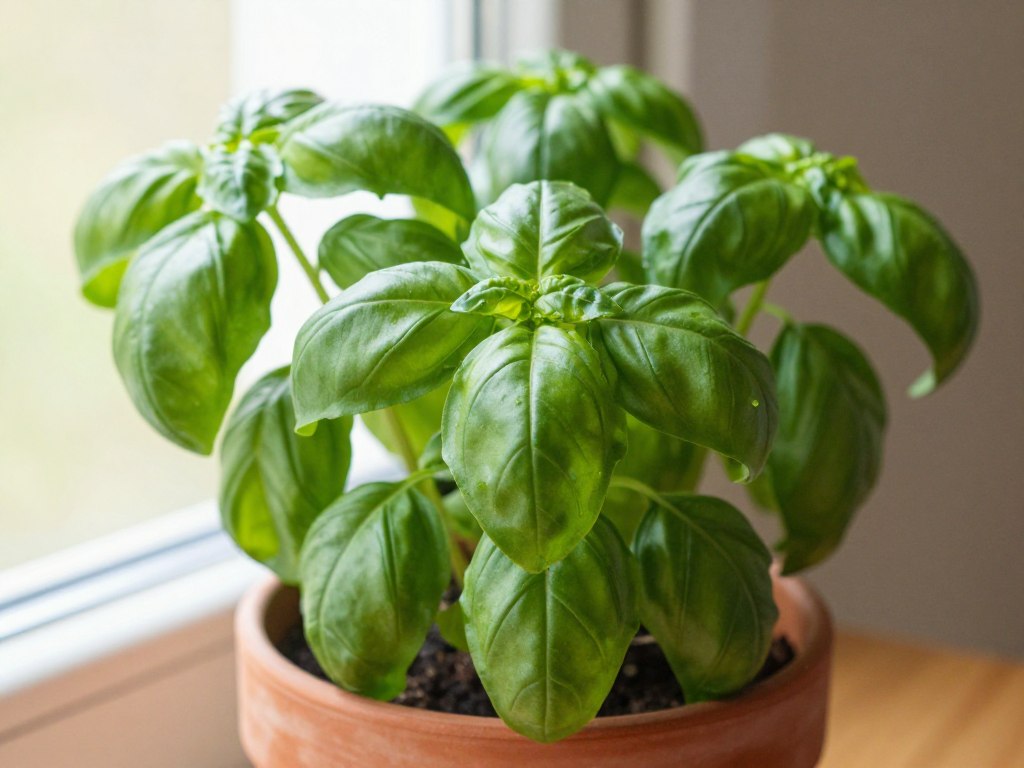
Basil stands as the crown jewel of indoor herb gardens. This aromatic annual brings the essence of Italian cooking into your kitchen. The plant demands attention but rewards growers with abundant, flavorful leaves perfect for pesto, caprese salads, and tomato-based sauces.
Place your basil near a south-facing window where it receives at least six hours of direct sunlight daily. Without adequate light, basil becomes leggy and produces fewer leaves. The plant thrives in temperatures between 65 and 75 degrees Fahrenheit.
Water and Soil Needs
Basil requires consistently moist soil but abhors waterlogged conditions. Water when the top inch of soil feels dry to the touch. Use high-quality potting soil with excellent drainage properties. A pot at least 6 inches deep allows roots to spread properly.
Feed your basil plant every two weeks with an all-purpose liquid fertilizer. This regular feeding maintains the vigorous growth necessary for continuous harvesting. Choose a large container if growing multiple plants together, spacing them 12 inches apart to prevent fungal diseases.
Harvesting Tips
Begin harvesting when your basil reaches 6 inches tall. Pinch stems just above a leaf node to encourage bushier growth. Remove flower buds immediately, as flowering causes leaves to become bitter and signals the plant to stop producing foliage.
Regular harvesting keeps basil productive. Take no more than one-third of the plant at any time. Morning harvesting captures the strongest flavor when essential oils concentrate in the leaves.
2. Mint (Mentha species)
Growing Requirements
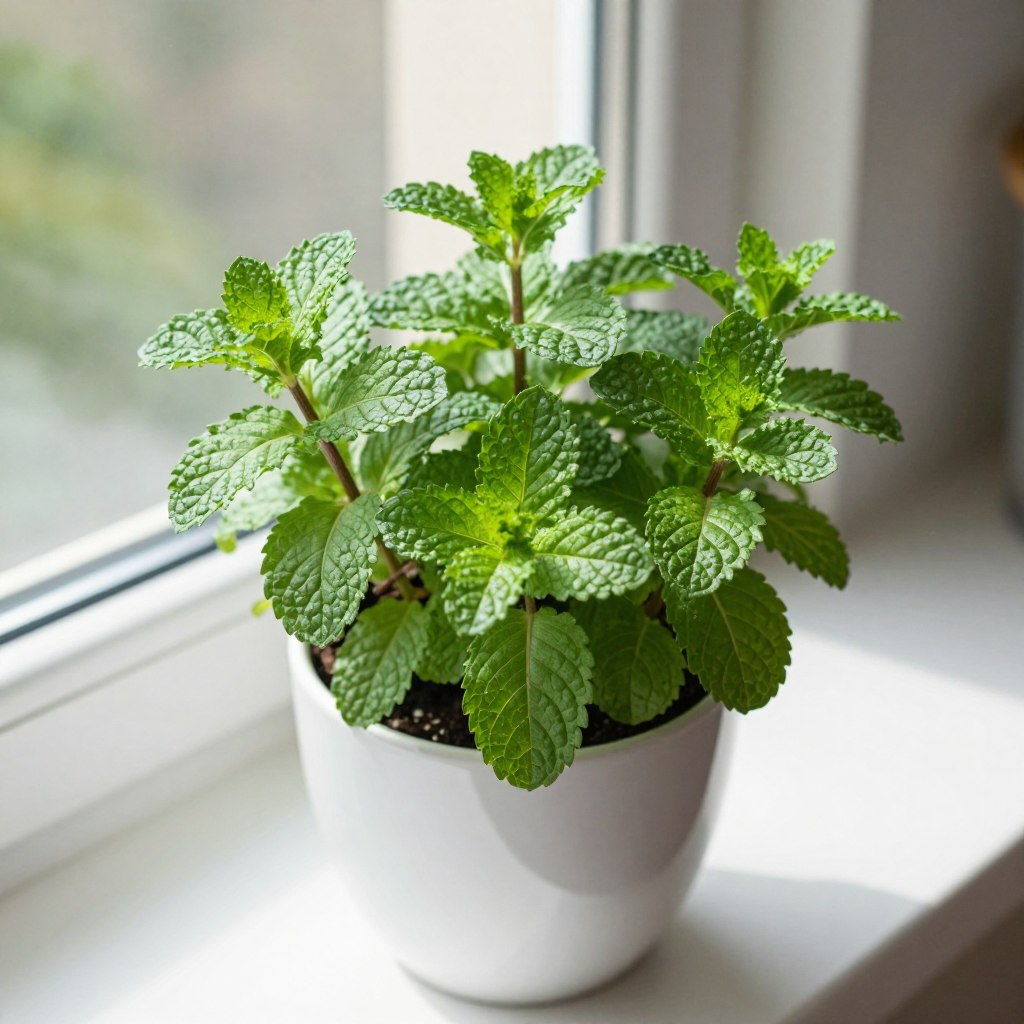
Mint earns its reputation as one of the easiest herbs to grow indoors. This perennial herb family includes spearmint, peppermint, and chocolate mint varieties. Each type offers unique flavors for teas, desserts, and savory dishes.
Mint tolerates lower light conditions than most herbs. A west-facing window provides sufficient light for healthy growth. The plant adapts to various indoor temperatures but prefers cooler conditions around 65 to 70 degrees Fahrenheit.
Water and Soil Needs
Keep mint soil consistently moist but not soggy. This herb appreciates more water than drought-tolerant varieties like thyme or rosemary. Standard potting compost with good drainage works well for mint cultivation.
Container growing actually benefits mint growers. Outdoors, mint spreads aggressively and can overtake garden beds. Pots contain this vigorous growth while still producing abundant leaves for harvest.
Harvesting Tips
Harvest mint leaves regularly to promote bushy growth and prevent flowering. Cut stems just above a leaf pair. Mint recovers quickly from harvesting and produces new growth within days.
The plant can grow from cuttings placed in water. Simply place a 4-inch stem cutting in a jar of water until roots develop, then transplant to soil. This method provides an endless supply of mint plants.
3. Parsley (Petroselinum crispum)
Growing Requirements
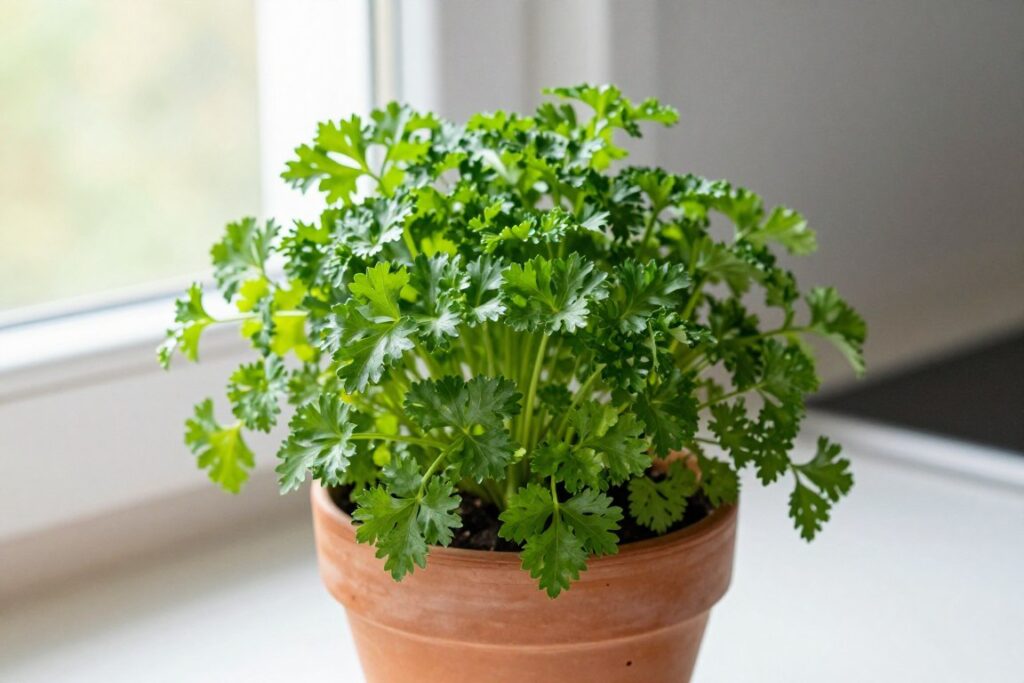
Parsley comes in two main varieties: curly and flat-leaf Italian. Flat-leaf parsley delivers stronger flavor and works better in cooking. Curly parsley adds ornamental value with its ruffled leaves and makes an attractive garnish.
This biennial herb grows best near a west-facing window with moderate light. Parsley tolerates less intense sunlight than basil. The plant prefers temperatures between 60 and 70 degrees Fahrenheit.
Water and Soil Needs
Parsley needs evenly moist soil similar to basil. Water when the top half-inch of soil dries out. Use high-quality potting soil that retains moisture without becoming waterlogged.
A container 8 to 10 inches deep accommodates parsley’s taproot system. The plant requires minimal fertilization but benefits from a light feeding once monthly. Good drainage prevents root rot, a common problem with overwatered parsley.
Harvesting Tips
Begin harvesting parsley when plants reach 6 inches tall. Cut outer stems first, leaving the center to continue producing new growth. Take stems from the base rather than trimming tips.
Parsley leaves maintain their flavor better when harvested before the plant flowers. Regular cutting delays flowering and extends the productive harvest period. Fresh parsley adds brightness to soups, salads, and grain dishes.
4. Chives (Allium schoenoprasum)
Growing Requirements
Chives belong to the onion family and provide mild onion flavor without the tears. This perennial herb produces grass-like leaves and pretty purple flowers. Both leaves and flowers are edible, making chives a dual-purpose addition to indoor herb gardens.
Place chives near a west or south-facing window. The plant tolerates moderate light conditions better than sun-demanding herbs like rosemary. Chives grow well in typical household temperatures.
Water and Soil Needs
Water chives regularly to keep soil evenly moist. This herb tolerates occasional drying better than basil or parsley. Use standard potting mix with good drainage and feed monthly with all-purpose fertilizer.
Chives multiply through bulb division over time. When your pot becomes crowded, dig up the clump and separate it into smaller sections. Replant divisions in fresh soil to create new plants.
Harvesting Tips
Cut chive leaves 2 inches above the soil line using sharp scissors. The plant quickly produces new growth from the base. Harvest regularly to encourage tender new shoots rather than tough older leaves.
Chive flowers appear in spring and early summer. Allow some flowers to develop for their mild onion flavor and attractive purple color. Deadhead spent blooms to redirect energy into leaf production.
5. Oregano (Origanum vulgare)
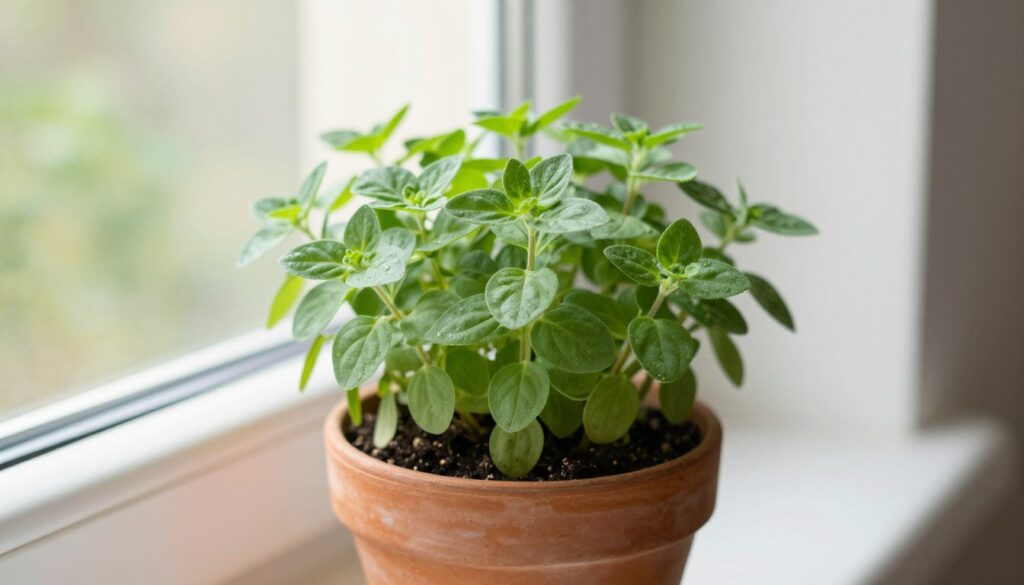
Growing Requirements
Oregano brings Mediterranean flavor to indoor herb gardens year-round. This drought-tolerant perennial handles indoor conditions better than more finicky herbs. Greek oregano offers the strongest flavor for pizza, pasta, and grilled meats.
Provide oregano with maximum sunlight from a south-facing window. This herb craves bright light and suffers in dim conditions. Oregano tolerates dry indoor air better than humidity-loving basil.
Water and Soil Needs
Allow oregano soil to dry between waterings. Overwatering causes more problems than underwatering with this Mediterranean native. Use well-draining potting mix and ensure pots have adequate drainage holes.
Place the pot on a tray filled with pebbles and water to increase humidity slightly without overwatering the plant. This technique benefits oregano during dry winter months when indoor heating reduces moisture levels.
Harvesting Tips
Harvest oregano by cutting stems rather than individual leaves. Take up to one-third of the plant at once. Oregano flavor intensifies when dried, making it excellent for preserving excess harvest.
Pinch growing tips regularly to encourage bushy growth and prevent the plant from becoming leggy. Oregano tends to sprawl if left unpruned. Regular harvesting maintains compact, productive plants.
6. Thyme (Thymus vulgaris)
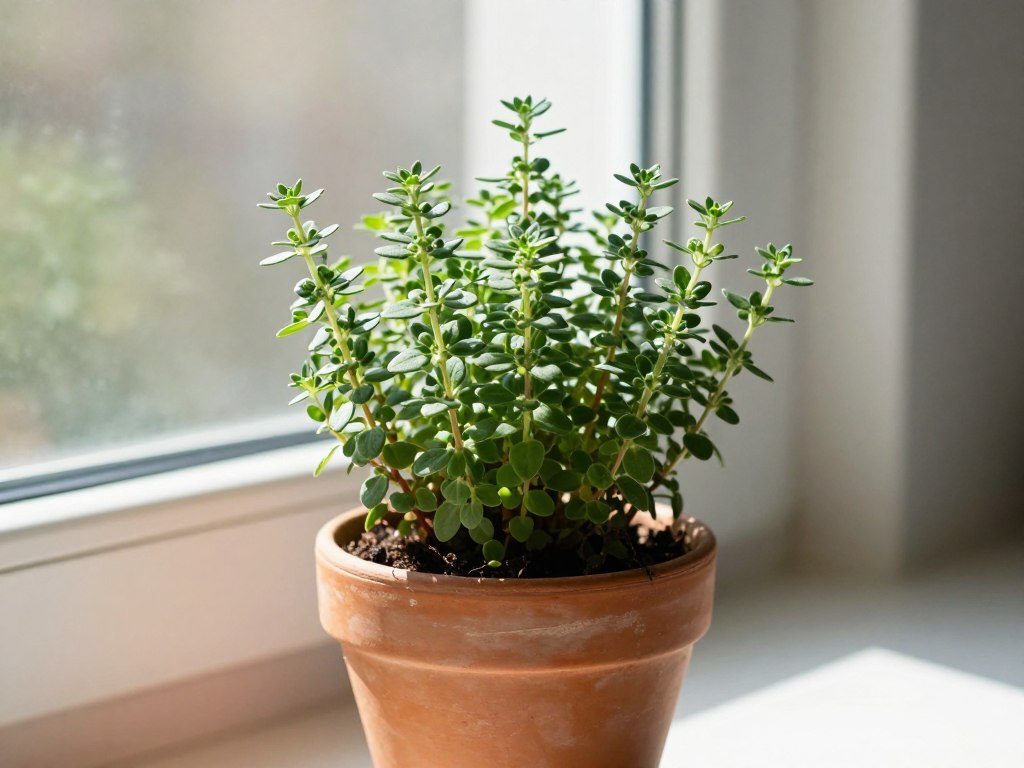
Growing Requirements
Thyme ranks among the most adaptable herbs for indoor cultivation. This low-growing perennial offers intense flavor from tiny leaves. Common thyme, lemon thyme, and creeping varieties all grow successfully indoors.
Maximize sunlight exposure by placing thyme near a south-facing window. This herb needs at least six hours of direct sun daily. Thyme prefers warm temperatures and low humidity, making it ideal for typical home conditions.
Water and Soil Needs
Thyme thrives on neglect compared to moisture-loving herbs. Allow soil to dry completely between waterings. Overwatering kills thyme faster than underwatering. Use fast-draining cactus or succulent potting mix for best results.
Avoid humid locations like bathrooms for thyme. This Mediterranean herb prefers dry air and suffers from fungal problems in damp conditions. A sunny bedroom or living room window works better than a kitchen windowsill.
Harvesting Tips
Harvest thyme sprigs by cutting stems rather than picking individual leaves. The tiny leaves make individual leaf harvest impractical. Cut up to one-third of the plant at once, allowing time for regrowth.
Thyme dries exceptionally well. Hang harvested stems in bundles or dry them on screens. Dried thyme maintains potent flavor for months when stored properly in airtight containers away from light.
7. Rosemary (Salvia rosmarinus)
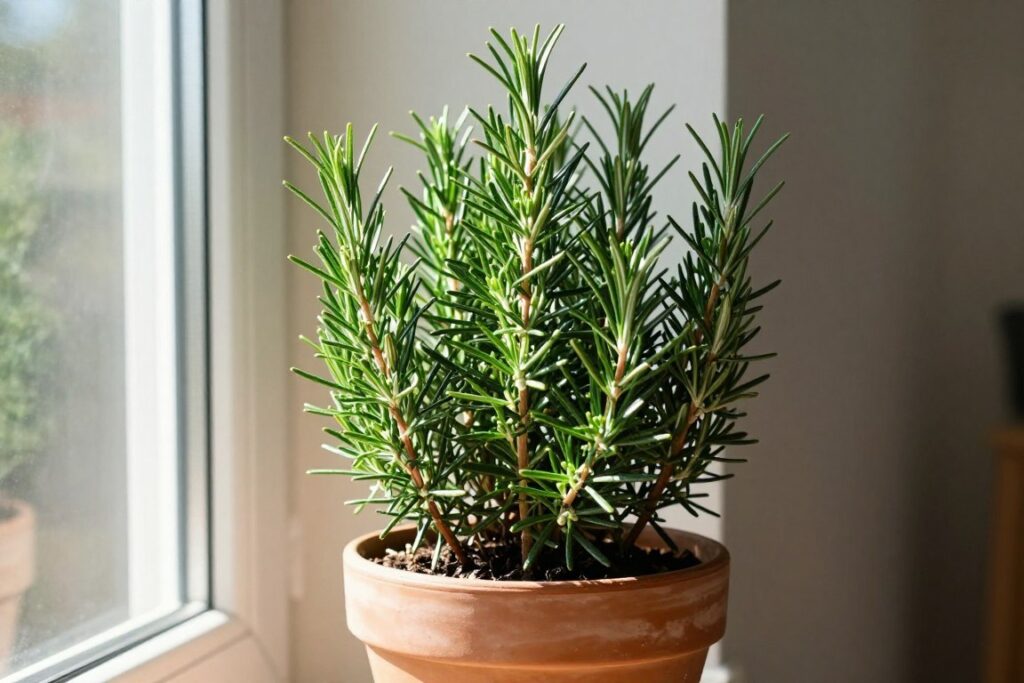
Growing Requirements
Rosemary presents the biggest challenge for indoor herb growers but rewards persistence with aromatic, pine-scented leaves. This woody perennial becomes quite large over time. Choose a dwarf variety for container growing to manage size better.
Place rosemary in the sunniest spot available, preferably a south-facing window. Insufficient light causes leaf drop and poor growth. Rosemary tolerates temperatures between 60 and 70 degrees Fahrenheit.
Water and Soil Needs
Rosemary needs more humidity than typical indoor air provides. Create a humidity tent by placing stakes in the pot and draping clear plastic over them. Remove the plastic for watering and harvesting, then replace it.
Use extremely well-draining potting soil for rosemary. Mix standard potting soil with perlite or sand in a 2:1 ratio. Water when the top inch of soil dries out. Rosemary tolerates dry soil better than soggy conditions.
Harvesting Tips
Cut rosemary sprigs as needed for cooking. This herb handles frequent harvesting well once established. Take no more than one-third of new growth at any time to avoid stressing the plant.
Rosemary branches become woody with age. Harvest from tender new growth rather than old wood. Regular pruning maintains a bushier shape and encourages fresh, flavorful shoots.
8. Cilantro (Coriandrum sativum)
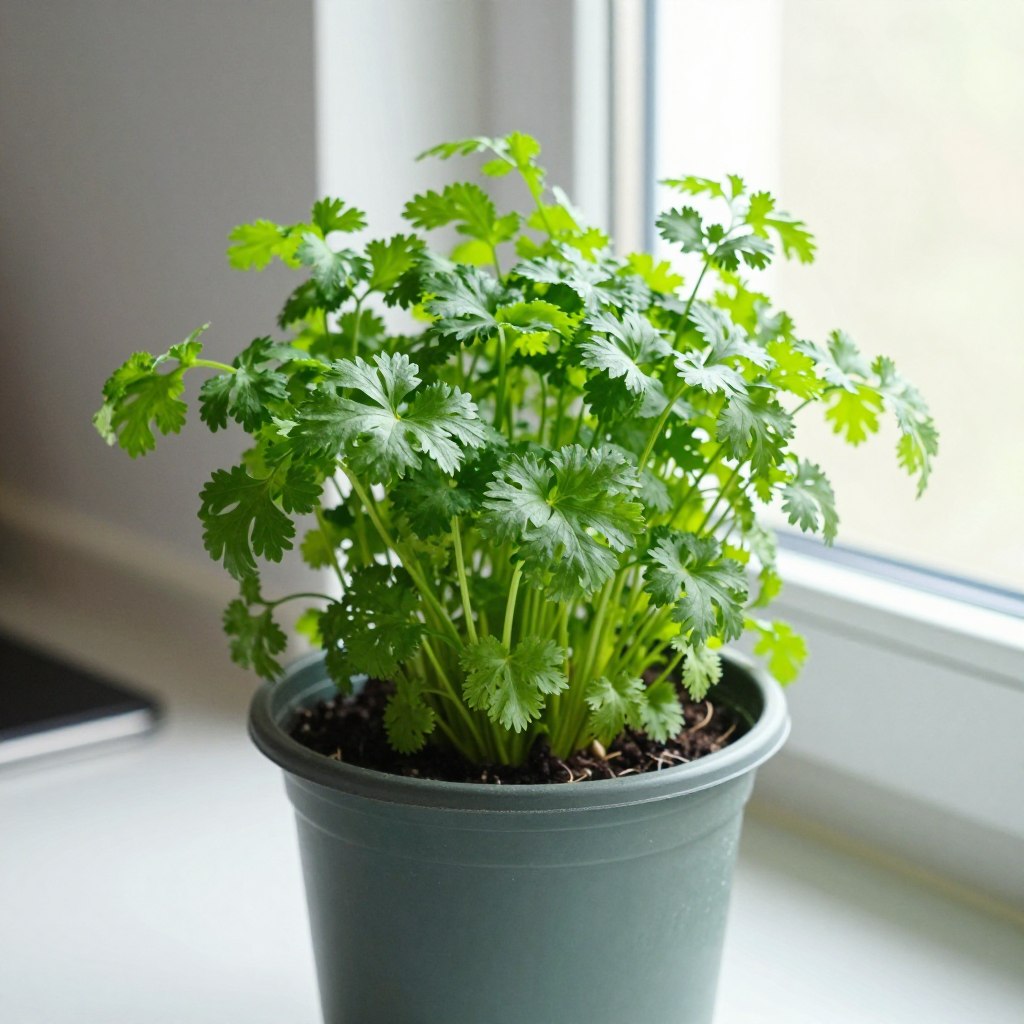
Growing Requirements
Cilantro divides opinion among herb lovers, but fans appreciate its bright, citrusy flavor in salsas, curries, and Asian cuisine. This fast-growing annual tends to bolt (flower) quickly, especially in warm conditions.
Provide cilantro with bright light from an east-facing window or very bright indirect light. Too much heat causes premature flowering. Cilantro prefers cooler temperatures between 60 and 68 degrees Fahrenheit.
Water and Soil Needs
Keep cilantro soil consistently moist but not waterlogged. This herb needs more water than drought-tolerant varieties. Use a wide, shallow plastic container rather than a deep terracotta pot to maintain moisture levels.
Choose a pot at least 18 inches wide and 12 inches deep for best results. Plastic containers retain moisture better than terracotta, benefiting cilantro’s water needs. Use acidic potting soil with good drainage.
Harvesting Tips
Begin harvesting cilantro when plants reach 6 inches tall. Cut outer leaves first, leaving the center to continue growing. Pinch back regularly to delay flowering and extend the harvest period.
Once cilantro flowers, leaves become bitter. Plan to start new plants from seed every few weeks for continuous supply. Cilantro germinates quickly and provides harvests within 3 to 4 weeks.
9. Sage (Salvia officinalis)
Growing Requirements
Sage brings robust, earthy flavor to poultry stuffing, pasta dishes, and butter sauces. This perennial herb features soft, gray-green leaves with a velvety texture. Several ornamental varieties offer purple, variegated, or tricolor foliage.
Maximize sunlight for sage by choosing a south-facing window. This Mediterranean herb craves bright light and warmth. Sage tolerates typical household temperatures but prefers conditions on the warmer side.
Water and Soil Needs
Allow sage soil to dry between waterings. This drought-tolerant herb suffers from overwatering more than underwatering. Use well-draining potting mix with added perlite or sand for sharp drainage.
Sage requires minimal fertilization compared to heavy feeders like basil. Feed lightly once monthly during the growing season. Too much fertilizer reduces the intensity of sage’s aromatic oils and flavor.
Harvesting Tips
Harvest sage leaves individually or cut entire stems. Take no more than one-third of the plant at once. Sage leaves maintain the best flavor when harvested before flowers appear.
Dry excess sage for long-term storage. The herb dries well and maintains potency for months. Fresh sage offers a brighter flavor, while dried sage provides concentrated, earthy notes for winter cooking.
10. Lemon Balm (Melissa officinalis)
Growing Requirements
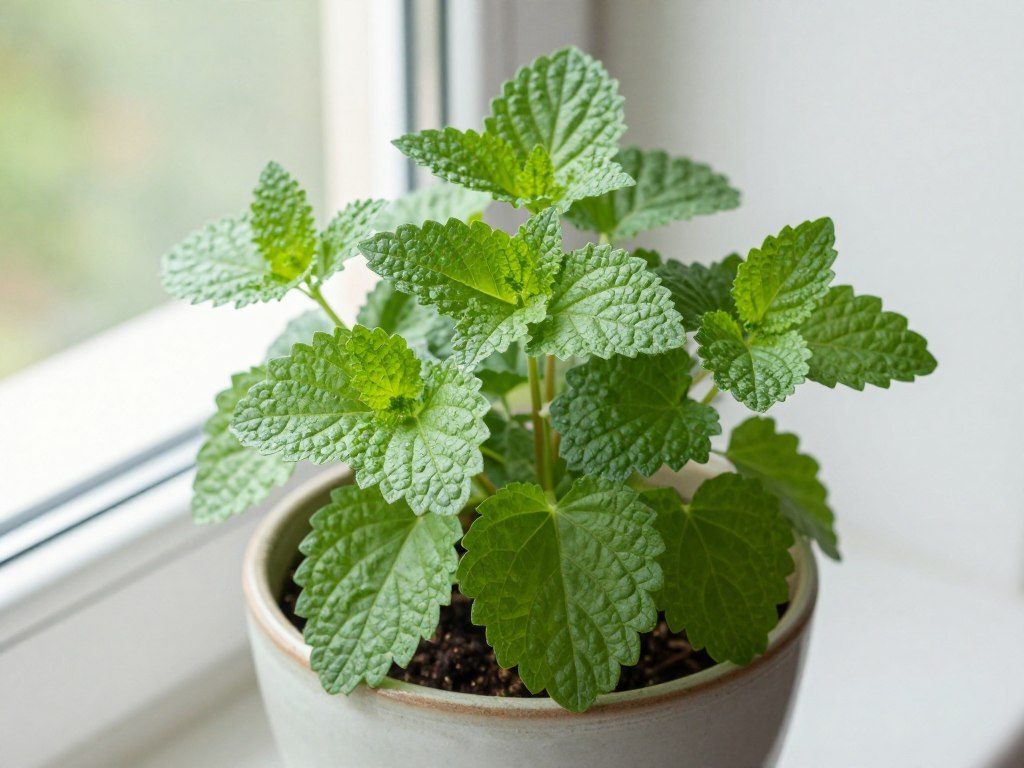
Lemon balm completes our list with refreshing citrus flavor and remarkable ease of cultivation. This perennial herb belongs to the mint family and shares its relative’s vigorous growth habit. Use lemon balm in teas, desserts, and salads.
Place lemon balm near a south-facing window for optimal growth. The plant tolerates partial shade better than sun-demanding herbs but produces more flavorful leaves with bright light. Lemon balm adapts to typical household temperatures.
Water and Soil Needs
Keep lemon balm soil moderately moist but not soggy. This herb needs regular watering but tolerates brief dry periods better than basil. Use standard potting compost with good drainage properties.
Lemon balm requires minimal fertilization. Feed monthly during active growth with diluted liquid fertilizer. Like other mint family members, lemon balm can become invasive outdoors but stays contained in pots.
Harvesting Tips
Harvest lemon balm leaves regularly to encourage bushy growth and prevent flowering. Cut stems above leaf nodes to promote branching. The plant recovers quickly from harvesting and produces abundant new growth.
Lemon balm leaves make excellent herbal tea. Steep fresh or dried leaves in hot water for a calming beverage with digestive benefits. The herb also adds bright citrus notes to fruit salads and summer drinks.
Essential Care Tips for Indoor Herb Gardens
Light Requirements
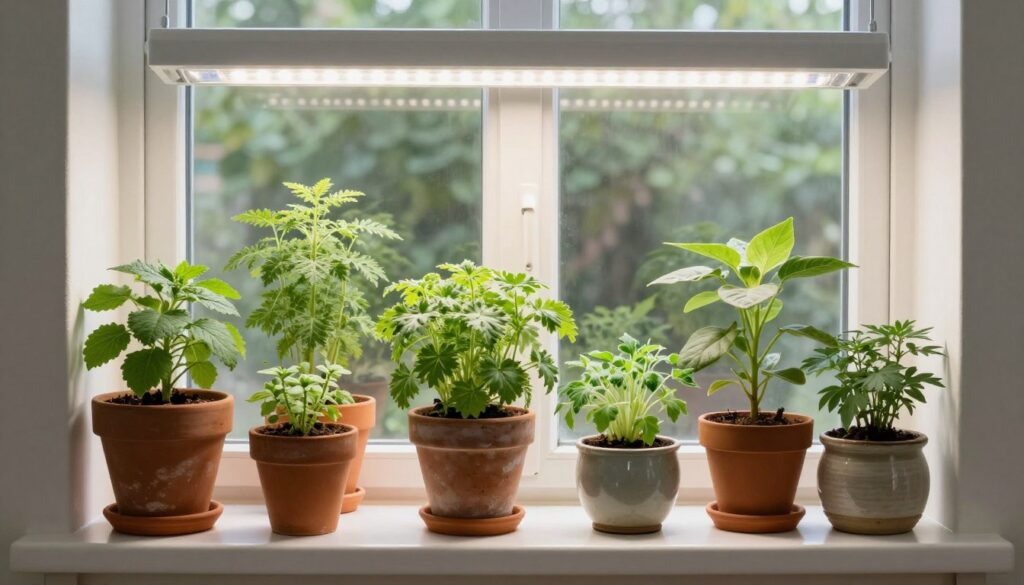
Light determines success or failure with indoor herbs. Most culinary herbs need at least six hours of direct sunlight daily. South-facing windows provide the strongest light in the Northern Hemisphere.
Supplement natural light with grow lights during winter months when daylight hours decrease. LED grow lights offer energy-efficient options that don’t generate excessive heat. Position lights 6 to 12 inches above plants for best results.
Watering Strategies
More indoor herbs die from overwatering than underwatering. Check soil moisture by inserting your finger one inch deep. Water only when the soil feels dry at this depth, unless growing moisture-loving herbs like basil or mint.
Water thoroughly until liquid drains from pot holes. Empty saucers after 30 minutes to prevent roots from sitting in standing water. Morning watering allows leaves to dry before evening, reducing disease risk.
Container Selection
Choose pots with drainage holes to prevent waterlogged soil. Terracotta pots allow air and water movement through their porous walls, benefiting most herbs. Plastic containers retain moisture longer, suiting herbs with higher water needs.
Size containers appropriately for each herb’s mature size. Small pots restrict root growth and require more frequent watering. Start with 6-inch pots for most herbs, upgrading to larger containers as plants grow.
Temperature and Humidity
Most herbs thrive in temperatures between 60 and 75 degrees Fahrenheit. Avoid placing plants near heating vents, air conditioners, or drafty windows. Sudden temperature changes stress plants and reduce productivity.
Indoor heating dries air during winter months. Increase humidity for moisture-loving herbs by grouping plants together, using pebble trays filled with water, or running a humidifier nearby. Mediterranean herbs prefer lower humidity and need less intervention.
Troubleshooting Common Indoor Herb Problems
Leggy Growth
Stems stretch toward light sources when herbs don’t receive adequate sunlight. Plants develop long stems with sparse leaves and weak structure.
Solution: Move plants closer to windows or add supplemental grow lights. Rotate pots weekly to ensure even light exposure on all sides. Pinch back leggy growth to encourage bushier development.
Yellow Leaves
Yellowing foliage indicates several potential problems including overwatering, nutrient deficiency, or insufficient light. The specific pattern of yellowing helps diagnose the cause.
Solution: Check soil moisture and adjust watering frequency. Feed plants with diluted liquid fertilizer if nutrients are depleted. Improve light conditions if plants sit in dim locations.
Pest Infestations
Spider mites, aphids, and fungus gnats occasionally attack indoor herbs. These pests weaken plants and reduce harvest quality.
Solution: Inspect plants regularly for early pest detection. Spray affected plants with insecticidal soap or neem oil. Improve air circulation to discourage pest establishment.
Wilting Plants
Wilting occurs from both overwatering and underwatering. Check soil moisture to determine the cause before taking corrective action.
Solution: For dry soil, water thoroughly and adjust watering schedule. For wet soil, allow complete drying before watering again. Ensure adequate drainage to prevent root rot.
Maximizing Your Herb Garden Harvest
Proper Harvesting Techniques
Harvest herbs in the morning after dew dries but before the day’s heat intensifies. Essential oils concentrate in leaves during this window, providing maximum flavor. Use clean, sharp scissors or pruning shears to make clean cuts.
Never harvest more than one-third of a plant at any time. Removing too much foliage stresses plants and slows recovery. Regular light harvesting maintains plant health better than infrequent heavy cutting.
Preserving Fresh Herbs
Store fresh-cut herbs in glasses of water like flower bouquets. Cover loosely with plastic bags and refrigerate. This method keeps herbs fresh for up to two weeks, much longer than storing them in produce bags.
Freeze excess harvest in ice cube trays with water or olive oil. These herb cubes drop directly into soups, stews, and sauces during cooking. Dried herbs work well for varieties like oregano, thyme, and rosemary.
Encouraging Continuous Production
Pinch growing tips regularly to promote branching and bushier growth. This technique increases the number of harvest points on each plant. Remove flower buds promptly on herbs like basil and cilantro to extend leaf production.
Feed herbs monthly during active growth periods with balanced liquid fertilizer diluted to half strength. Container plants deplete soil nutrients faster than garden-grown herbs. Regular feeding maintains vigorous growth and flavor production.
Seasonal Indoor Herb Care
Winter Growing Challenges
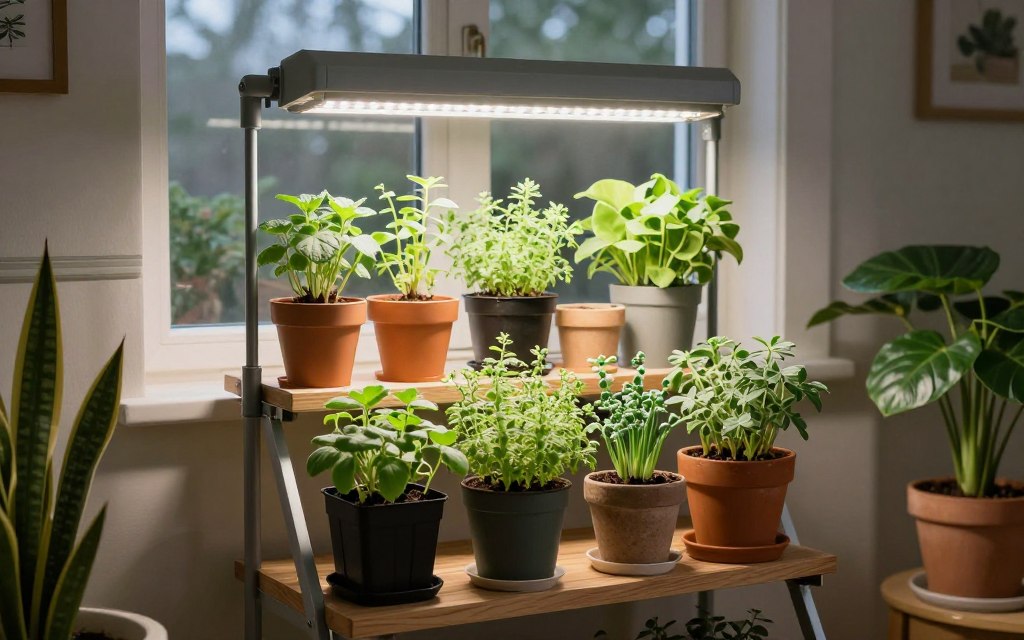
Winter presents the greatest challenge for indoor herb gardens. Reduced daylight hours and dry heating air stress plants. Shorter days decrease the amount of light available even near windows.
Add supplemental grow lights to maintain adequate light levels during winter months. Run lights for 12 to 14 hours daily to compensate for reduced natural sunlight. Monitor humidity levels and use humidifiers or pebble trays as needed.
Growth slows during winter even with proper care. Reduce fertilizer applications to match decreased growth rates. Water less frequently as plants use less moisture in cooler conditions with slower growth.
Spring and Summer Abundance
Herbs grow vigorously during spring and summer with longer days and stronger sunlight. Increase watering frequency as plants grow faster and temperatures rise. Resume regular fertilization to support active growth.
Monitor plants closely for signs of too much sun during peak summer months. Leaves may scorch if afternoon sun proves too intense. Move plants slightly back from windows or add sheer curtains to filter harsh rays.
Harvest increases dramatically during these seasons. Use fresh herbs generously in cooking and preserve excess through drying or freezing. Regular harvesting prevents plants from flowering and maintains tender leaf production.
Transitioning Outdoor Herbs Inside
Bring outdoor herb plants inside before first frost if you want to continue growing them. Inspect plants carefully for pests before bringing them indoors. Treat any infestations outdoors to avoid introducing problems to your home.
Acclimate outdoor herbs gradually to indoor conditions. Place them in shade for a few days before moving inside. This transition reduces shock from sudden changes in light and temperature. Trim plants back by one-third to reduce stress.
Common Beginner Mistakes to Avoid
Key Mistakes That Kill Indoor Herbs
- Overwatering causes more herb deaths than any other factor
- Insufficient light leads to weak, unproductive plants
- Over-harvesting young plants before they establish
- Using garden soil instead of potting mix in containers
- Placing pots without drainage holes
- Forgetting to rotate plants for even light exposure
- Ignoring early signs of pest problems
- Mixing herbs with different water needs in the same pot
New herb gardeners often water on a schedule rather than checking soil moisture. Each plant and pot combination has unique water needs based on size, material, temperature, and humidity. Learn to assess soil dryness by touch rather than following rigid schedules.
Growing multiple herb varieties in a single container creates problems. Rosemary needs dry soil while basil prefers moisture. Combining herbs with different requirements in one pot makes proper care impossible. Plant each herb type in separate containers.
Starting with seeds indoors requires patience and proper conditions. Many beginners give up when seeds fail to germinate or seedlings die. Purchase established starter plants for your first indoor herb garden. Gain experience with plant care before attempting seed starting.
Start Your Indoor Herb Garden Today
Growing herbs indoors year-round brings fresh flavors and natural fragrance into your home. These ten reliable herbs adapt beautifully to indoor conditions when provided with adequate light, proper watering, and suitable containers. Start with easier varieties like mint, chives, and oregano before attempting finicky herbs like rosemary.
Success with indoor herbs depends on matching each plant’s needs to your available conditions. South-facing windows provide ideal light for sun-loving herbs. Cooler rooms suit herbs preferring moderate temperatures. Observe your plants and adjust care based on their responses.
Fresh herbs from your windowsill elevate everyday meals into memorable dining experiences. The convenience of snipping herbs while cooking encourages their use in recipes. Indoor herb gardening rewards growers with continuous harvests, cost savings, and the satisfaction of growing your own food year-round.
Begin your indoor herb garden with just two or three varieties. Master their care requirements before expanding your collection. Each successful harvest builds confidence and skills for growing more challenging herbs. Your kitchen window can become a productive herb garden regardless of the season outside.
Never Miss a Growing Season
Get expert indoor gardening advice, seasonal planting schedules, and exclusive troubleshooting guides delivered weekly. Join our community of successful herb gardeners.