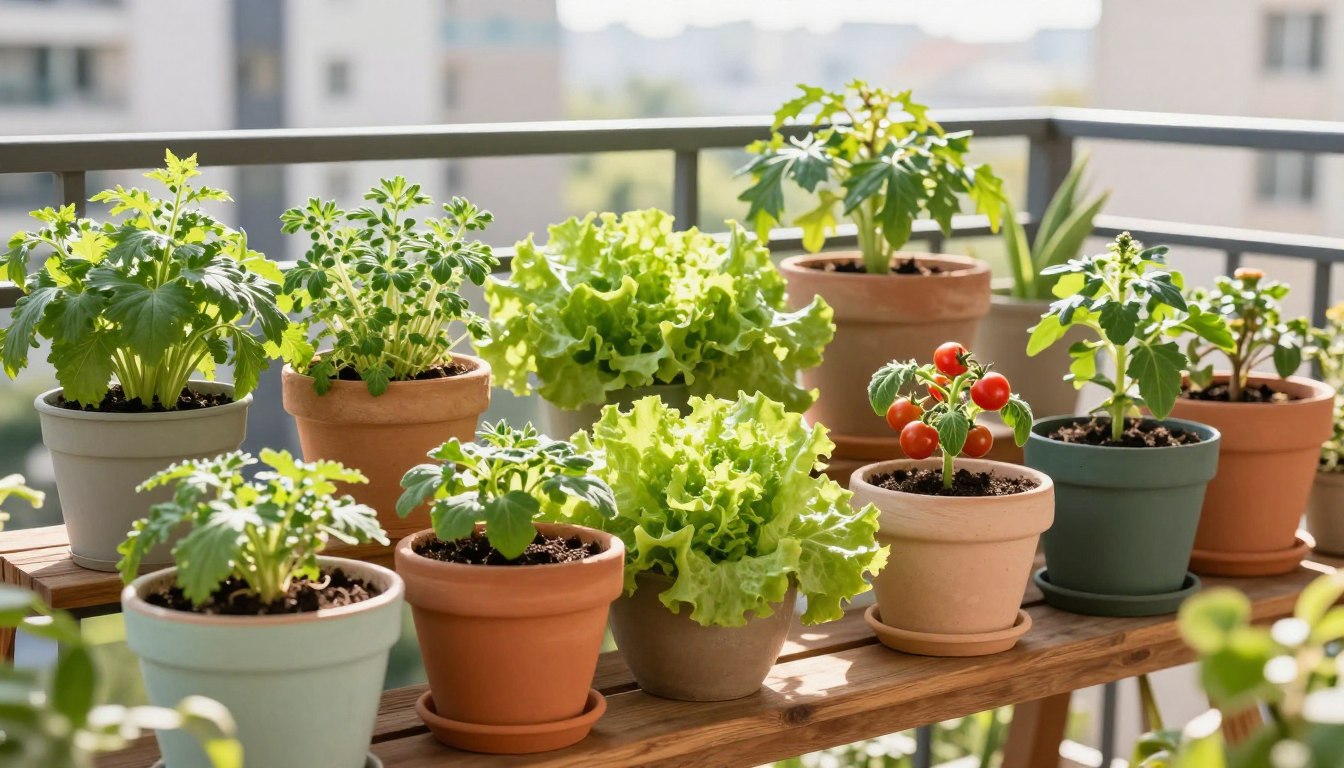
This complete guide walks you through every step of creating your first balcony garden. You’ll learn how to assess your space, choose the right supplies, select beginner-friendly plants, and establish simple care routines that fit your lifestyle. No green thumb required.
Whether you dream of growing aromatic herbs for cooking, fresh vegetables for salads, or colorful flowers for beauty, your balcony garden journey starts here. Let’s transform that empty outdoor space into your personal growing oasis.
Start Growing with Confidence
Join 50,000+ beginner gardeners receiving weekly tips, seasonal guides, and troubleshooting advice delivered straight to your inbox. Get started today.
The First Steps: Planning Your Balcony Garden
Before you buy a single pot or packet of seeds, take time to understand your unique balcony conditions. This planning phase sets you up for success and saves money by helping you choose plants that will actually thrive in your space.

Assess Your Space and Conditions
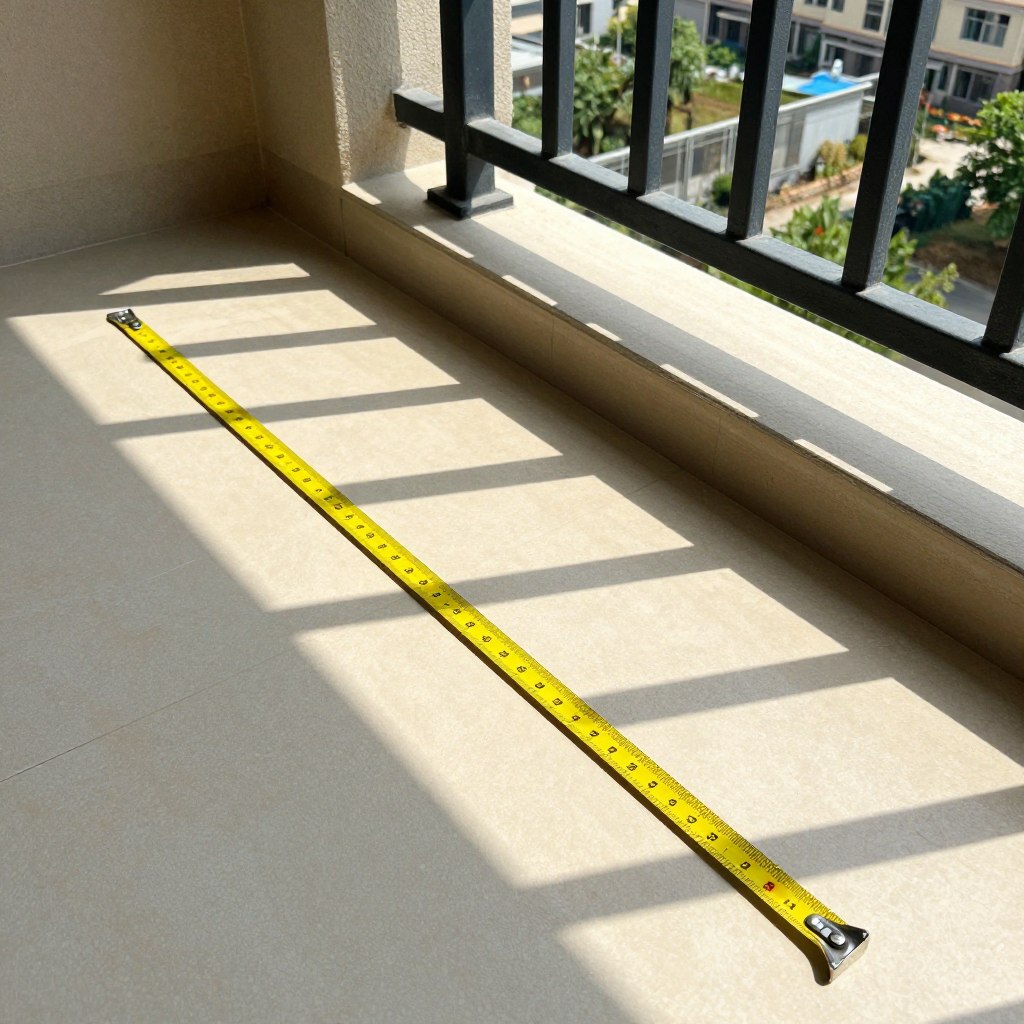
Your balcony has its own microclimate. Understanding these conditions determines which plants will flourish and which will struggle. Start by observing your space throughout the day.
Sunlight is the most critical factor for plant growth. Spend a full day tracking how many hours of direct sunlight different areas of your balcony receive. Full sun means six or more hours of direct sunlight. Partial shade indicates three to six hours. Full shade receives less than three hours of direct sun daily.
Use your smartphone’s compass app to determine which direction your balcony faces. South-facing balconies receive the most intense sunlight throughout the day. These spaces are perfect for sun-loving vegetables like tomatoes and peppers. East-facing balconies get gentle morning sun, ideal for herbs and leafy greens. West-facing spaces experience hot afternoon sun. North-facing balconies receive the least direct sunlight and work best for shade-tolerant plants.
Understanding Wind and Weather
Wind exposure affects water needs and plant selection. Higher floors typically experience stronger winds that can dry out soil quickly and damage delicate foliage. Notice whether your balcony is sheltered or exposed.
Temperature fluctuations matter too. Balconies can become much hotter than ground level during summer days. Dark surfaces like concrete absorb and radiate heat, creating warmer conditions for your plants. In winter, exposed balconies may experience colder temperatures and frost earlier than protected areas.
Consider these weather conditions when planning your garden layout. Place delicate plants near walls for wind protection. Position heat-sensitive varieties in shadier spots during peak summer months.
Check Weight Limits and Building Rules
Safety comes first when gardening above ground level. Before filling containers with heavy soil and water, understand your balcony’s weight capacity. Most modern balconies support at least 50 pounds per square foot, but older structures may have lower limits.
Contact your building management or landlord to ask about weight restrictions. Some buildings have specific rules about where you can place containers. They may prohibit hanging items from railings or attaching structures to walls.
Review your lease agreement or homeowner association rules. Some buildings restrict certain types of plants or require approval before making changes to balcony appearance. Getting this information early prevents problems later.
Define Your Garden Goals
What do you want from your balcony garden? Your answer shapes every decision that follows. Take a moment to consider your priorities before moving forward.
- Do you want to grow fresh herbs for cooking? A small herb garden requires minimal space and provides maximum flavor impact for your meals.
- Are you interested in growing vegetables? Determinate tomato plants, lettuce, and snap peas thrive in containers and deliver rewarding harvests.
- Would you prefer a beautiful flower display? Colorful annuals and perennials create a relaxing outdoor retreat for morning coffee or evening unwinding.
- Do you want a mix of everything? Many gardeners successfully combine edible plants with ornamental flowers for both beauty and productivity.
Starting small is perfectly acceptable. In fact, beginning with just three or four containers helps you learn without feeling overwhelmed. You can always expand your garden as you gain confidence and experience.
Essential Supplies for Beginners
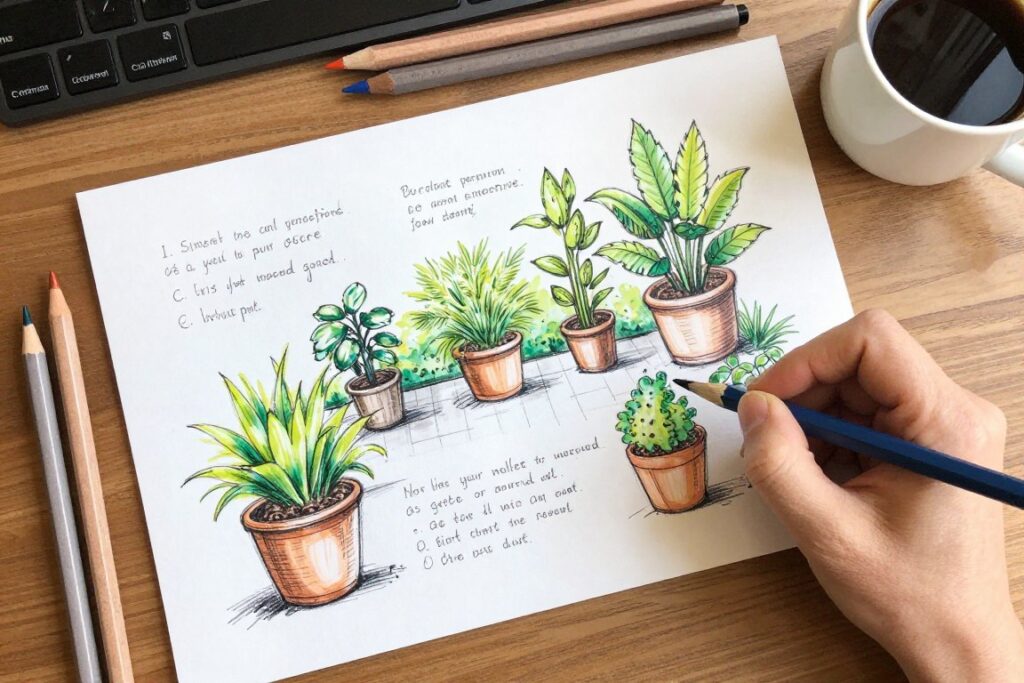
Setting up your first balcony garden requires only a handful of basic supplies. Quality matters more than quantity when you’re starting out. These fundamental items form the foundation of your growing success.
Choosing the Right Containers
Your container choice significantly impacts plant health and maintenance requirements. The good news is that plants thrive in many different container types as long as certain requirements are met.
Drainage holes are absolutely essential. Without proper drainage, excess water accumulates in the soil and leads to root rot. This is the number one killer of container plants. Every pot must have at least one drainage hole in the bottom. If you fall in love with a container that lacks holes, use it as a decorative outer pot and place your plant in a smaller pot with drainage inside it.
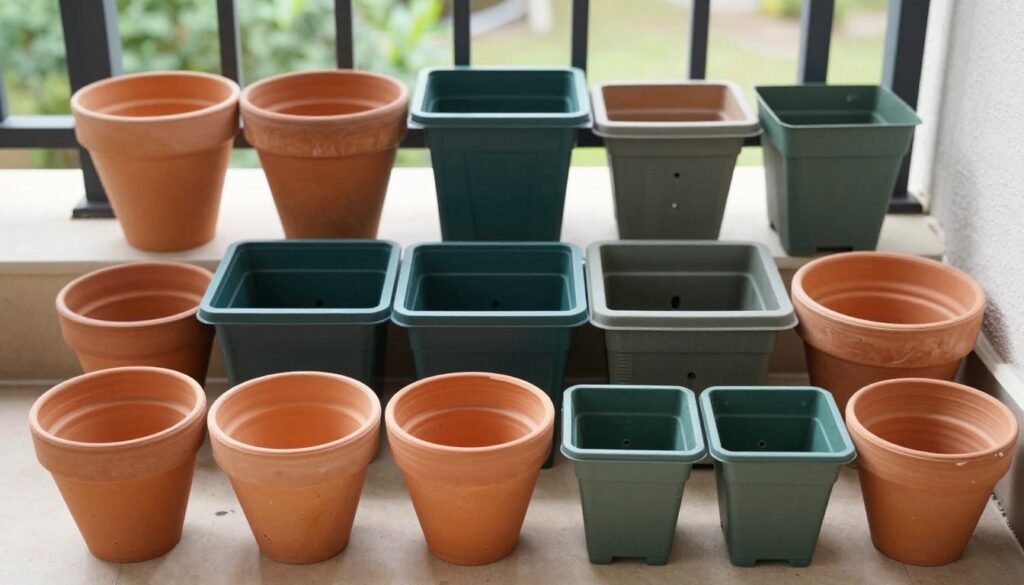
Container size matters for plant health. Small pots dry out quickly and restrict root growth. As a general rule, herbs need containers at least 6 inches deep. Leafy greens like lettuce prefer 8-inch depth. Tomato plants and larger vegetables require containers 12 inches deep or more. Wider containers allow you to group multiple plants together.
Plastic and Resin Containers
These lightweight options work perfectly for balcony gardens. They retain moisture better than terracotta and won’t break if dropped. Modern plastic planters come in attractive designs that mimic natural materials. They’re affordable and available in every size imaginable.
The main advantage is weight. When filled with wet soil, plastic containers weigh significantly less than ceramic alternatives. This matters when you’re working with weight limits on elevated balconies.
Self-Watering Planters
These containers feature a water reservoir in the bottom that feeds moisture to plant roots through capillary action. They’re excellent for beginners who travel frequently or forget to water regularly.
Self-watering planters maintain more consistent soil moisture levels. This prevents both overwatering and underwatering, two common beginner mistakes. The initial investment costs more, but the convenience and improved plant health make them worthwhile.
Fabric grow bags offer another beginner-friendly option. These breathable containers prevent overwatering through superior drainage and air circulation. They fold flat for easy storage during winter months. Many gardeners find them perfect for growing vegetables in small spaces.
Window boxes and railing planters maximize limited balcony space by utilizing vertical surfaces. Make sure any railing-mounted containers are securely attached according to your building’s rules. These shallow containers work well for herbs, flowers, and shallow-rooted greens.
Selecting Quality Potting Soil
Never use garden soil in containers. This bears repeating because it’s such a common mistake. Garden soil becomes compacted in pots, blocking air from reaching roots and preventing proper drainage. It also may contain weed seeds, diseases, and pests that harm your plants.
Potting mix is specially formulated for container growing. It’s lighter and fluffier than garden soil, providing the drainage and aeration that container plants need. Quality potting mix contains ingredients like peat moss or coconut coir for moisture retention, perlite or vermiculite for drainage, and sometimes compost for nutrients.
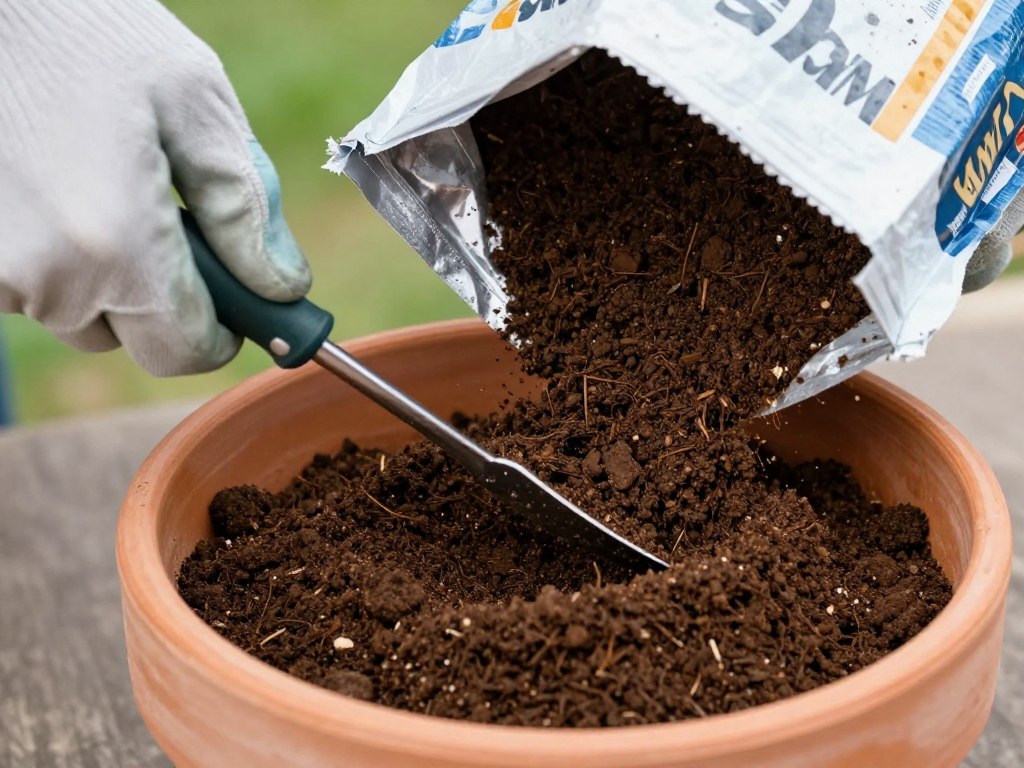
Look for potting mix labeled for containers or vegetables. Avoid products that feel heavy or contain mostly wood chips. The soil should feel light and springy when squeezed. Some potting mixes include slow-release fertilizer, which feeds your plants for several months. This convenience helps beginners who might forget regular feeding schedules.
Plan to purchase enough potting mix to fill all your containers. Soil settles after the first few waterings, so you’ll need extra to top off containers later. As a rough guide, a large bag of potting mix (about 2 cubic feet) fills approximately four 12-inch containers.
Beginner-Friendly Plant Recommendations
Choosing the right plants makes all the difference for first-time gardeners. These selections tolerate beginner mistakes, grow reliably in containers, and provide rewarding results quickly.
Herbs for Sunny Balconies
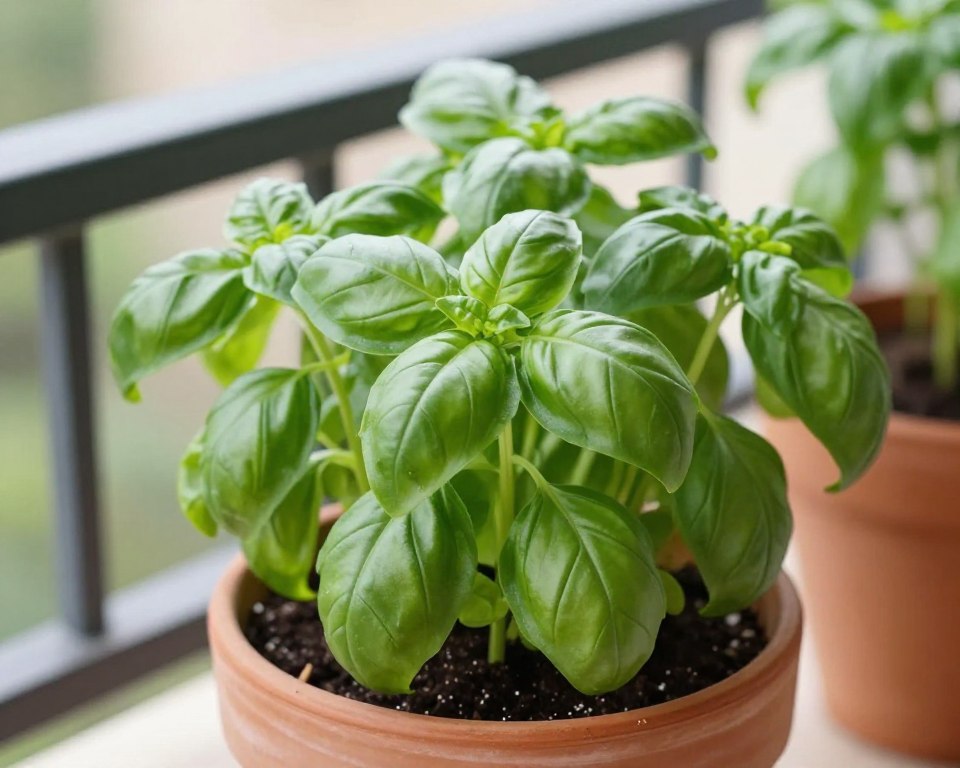
Basil grows quickly and produces abundant aromatic leaves for cooking. It thrives in warm weather and full sun. Harvest leaves regularly to encourage bushier growth.
Mint spreads aggressively, making it perfect for container growing where it can’t take over your garden. It tolerates partial shade and needs consistent moisture. Use fresh mint in tea, cocktails, or desserts.
Chives are nearly indestructible. They return year after year, tolerate various conditions, and produce both edible leaves and pretty purple flowers. Snip the hollow leaves whenever you need a mild onion flavor.
Easy Vegetables for Small Spaces
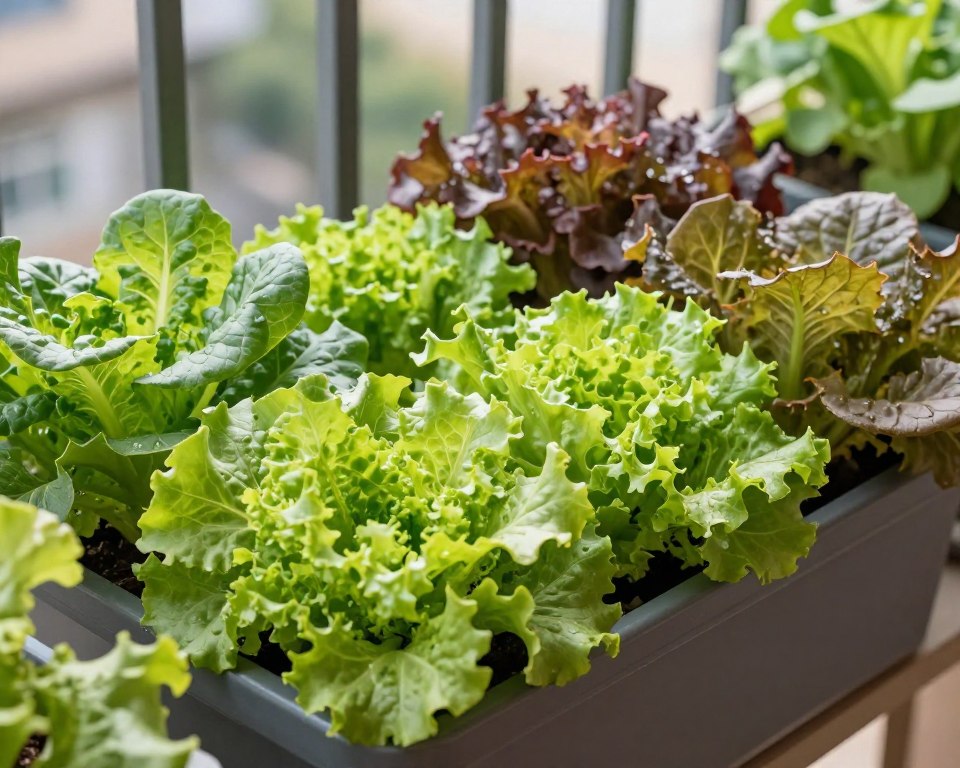
Lettuce grows fast and tolerates cooler weather. Plant it in spring or fall for best results. You can harvest outer leaves continuously while the plant keeps producing new growth from the center.
Cherry tomatoes provide the most satisfying harvest for container gardeners. Choose compact or determinate varieties bred specifically for pots. Expect to wait about 60 to 80 days from planting to first harvest, but the wait is worth it.
Radishes mature in just 25 to 30 days, giving beginners a quick confidence boost. They grow well in cool weather and take up minimal space. Plant new seeds every two weeks for continuous harvests throughout the season.
Colorful Flowers for Beauty
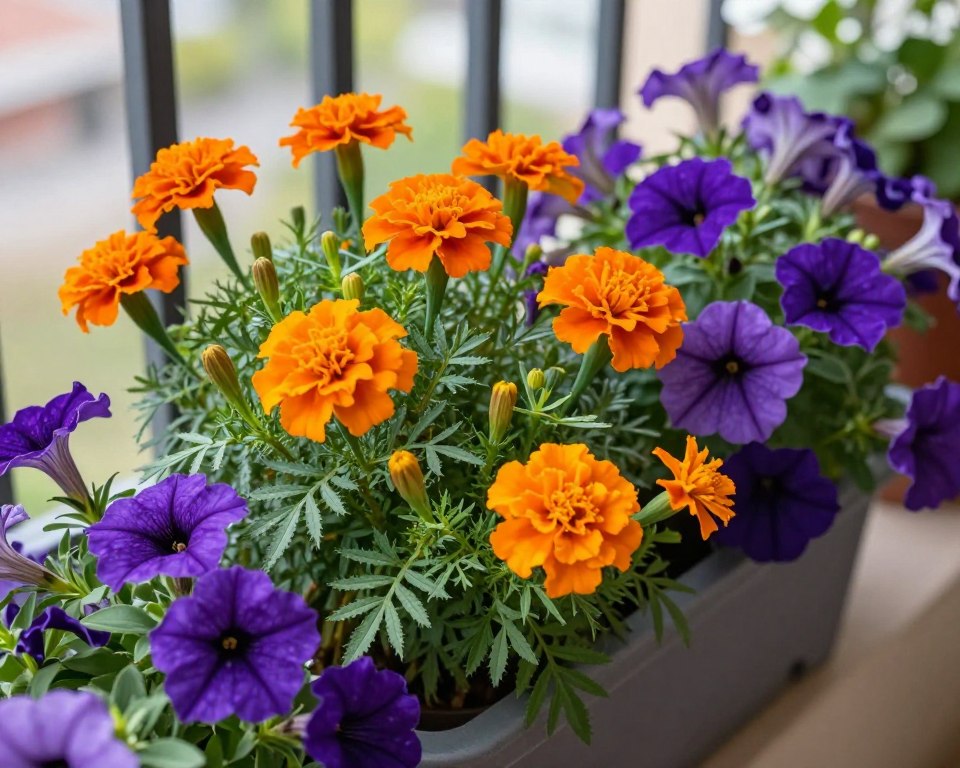
Marigolds are tough, drought-tolerant flowers that bloom all summer long. Their bright orange and yellow flowers add cheerful color to any balcony. They also help repel certain garden pests naturally.
Petunias deliver non-stop blooms from spring through fall with minimal care. They come in every color imaginable and tolerate both full sun and partial shade. Deadhead spent flowers to encourage more blooms.
Nasturtiums produce edible flowers and leaves with a peppery flavor. Both leaves and flowers make attractive additions to salads. These hardy annuals thrive in poor soil and actually produce more flowers when not over-fertilized.
For shady balconies, consider these reliable performers. Parsley grows well in partial shade and produces flavorful leaves for months. Swiss chard tolerates less sun than many vegetables and offers colorful stems in addition to nutritious leaves. Impatiens and begonias bloom beautifully in shade where other flowers struggle.
Basic Tools You Actually Need
Don’t overcomplicate your tool collection. A few quality basics handle most balcony garden tasks. You can always add specialized tools later as your garden expands.
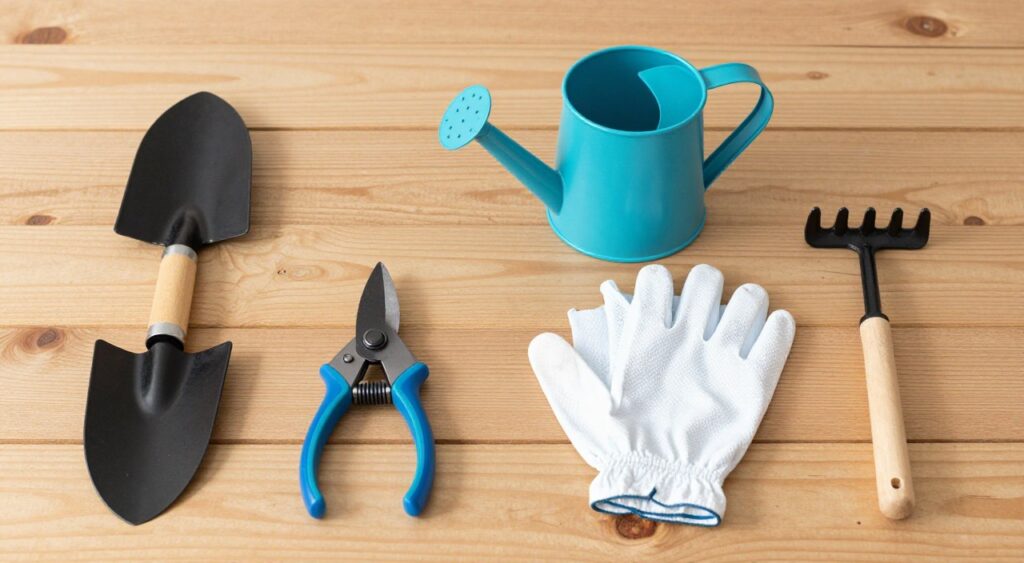
- Hand trowel: This small shovel helps you fill containers, transplant seedlings, and mix soil amendments. Choose one with a comfortable grip and sturdy construction.
- Watering can: Select a can that holds at least one gallon to minimize trips back and forth to your water source. A long spout helps reach plants at the back of your balcony without spilling.
- Pruning shears: Sharp, clean cuts promote plant health and prevent disease. Use pruning shears to harvest herbs, deadhead flowers, and remove damaged leaves.
- Gardening gloves: Protect your hands from dirt, thorns, and rough container edges. Washable gloves last longer and stay cleaner than disposable options.
- Small rake or cultivator: This tool loosens compacted soil surface and mixes in fertilizer. The small size suits container gardening perfectly.
Store your tools in a small bucket or caddy that fits in a closet or corner of your balcony. Keeping everything together makes gardening more convenient and protects your investment from weather damage.
Download Your Free Starter Checklist
Get our complete supply list, planting calendar, and care schedule in one convenient PDF. Perfect for printing and referencing as you build your balcony garden.
The Step-by-Step Planting Process
Now comes the fun part: actually putting plants in containers. This straightforward process takes just minutes per pot once you understand the basic steps. Follow this method for consistent success with every plant you add to your balcony garden.
Preparing Your Containers
Start with clean containers. If you’re reusing pots from previous seasons, wash them with soap and water to remove any soil or residue. This simple step prevents disease transmission to your new plants.
Check that drainage holes are clear and unobstructed. Place a small piece of mesh screen, coffee filter, or broken pottery shard over large drainage holes. This prevents soil from washing out while still allowing water to drain freely.
Fill the container about one-third full with potting mix. Don’t pack it down. Loose, fluffy soil allows roots to spread easily and water to drain properly. Add more soil until the container is filled to within two inches of the rim.
Planting Your Seedlings
Water your plants thoroughly while they’re still in their nursery pots. This makes them easier to remove and reduces transplant shock. Moist soil holds together better than dry soil during transplanting.
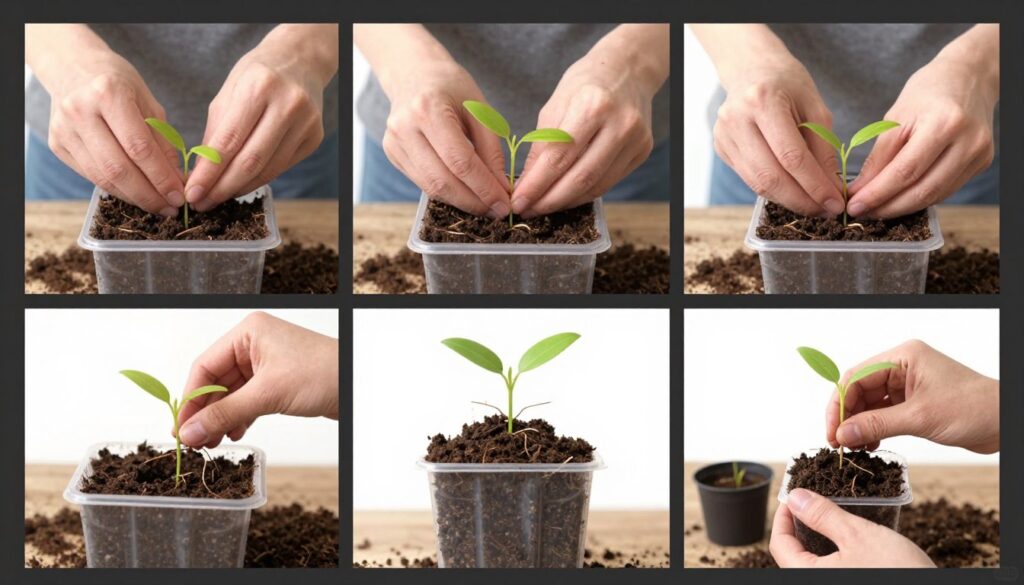
Turn the nursery pot upside down while supporting the plant stem between your fingers. Gently squeeze the sides of the pot to release the root ball. The plant should slide out easily. If roots are circling the bottom, gently tease them apart with your fingers. This encourages them to grow outward into the new soil.
Dig a hole in your prepared container that’s slightly larger than the root ball. Place the plant so the top of the root ball sits level with the surrounding soil surface. Planting too deep can cause stem rot. Planting too shallow exposes roots and causes drying.
Pro Tip: Tomato plants are the exception to the planting depth rule. You can bury them deeper than they grew in the nursery pot. They’ll develop additional roots along the buried stem, creating a stronger plant.
Fill in around the root ball with additional potting mix. Firm the soil gently with your hands to eliminate air pockets, but don’t compact it. Leave about an inch of space between the soil surface and container rim. This prevents water from running off before it can soak in.
Initial Watering and Placement
Water your newly planted containers thoroughly until water drains from the bottom holes. This settles the soil around roots and eliminates any remaining air pockets. The soil should feel evenly moist throughout the container.
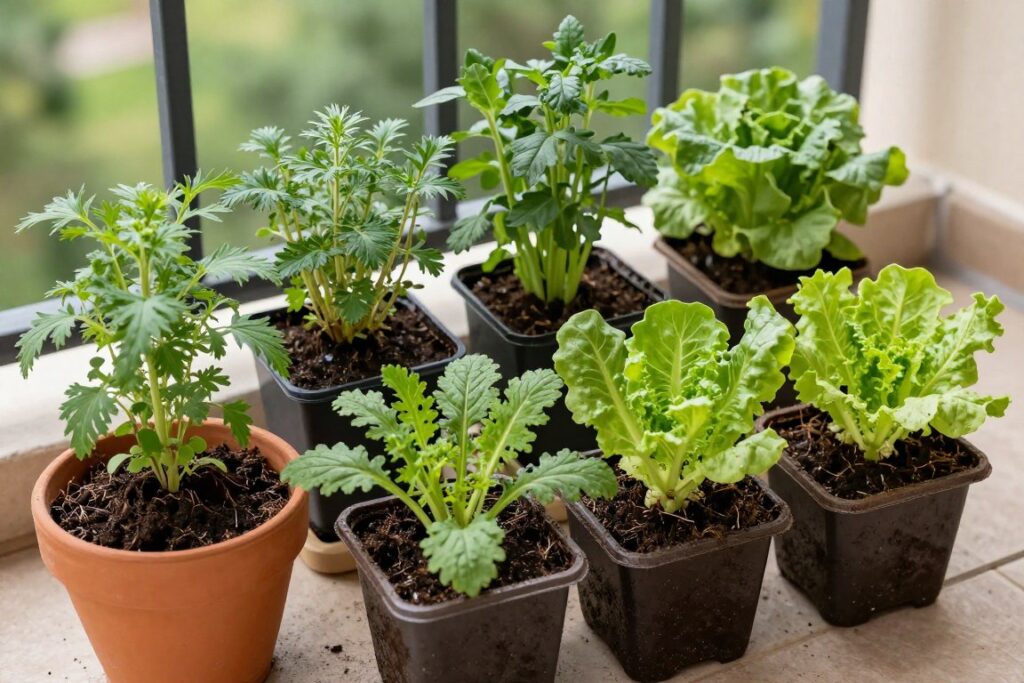
Place containers in their permanent locations based on plant light requirements. Group plants with similar needs together. This makes watering and care more efficient. Put sun-loving vegetables and herbs where they’ll receive the most light. Position shade-tolerant plants in protected areas.
Allow plants a few days to adjust to their new environment before expecting vigorous growth. Some temporary wilting is normal as roots adapt. Keep soil consistently moist but not waterlogged during this establishment period.
Balcony Garden Care 101
Consistent care keeps your balcony garden healthy and productive. These fundamental practices take just minutes each day but make the difference between thriving plants and struggling ones. Establish simple routines that fit your schedule.
Mastering the Art of Watering
Watering represents the most important skill for container gardeners to develop. Container plants dry out faster than ground-planted gardens because soil volume is limited. Wind and sun exposure accelerate moisture loss from balcony gardens even more.
The finger test provides the most reliable way to check if plants need water. Stick your finger into the soil up to your second knuckle. If the soil feels dry at that depth, it’s time to water. If it still feels moist, wait another day and check again.
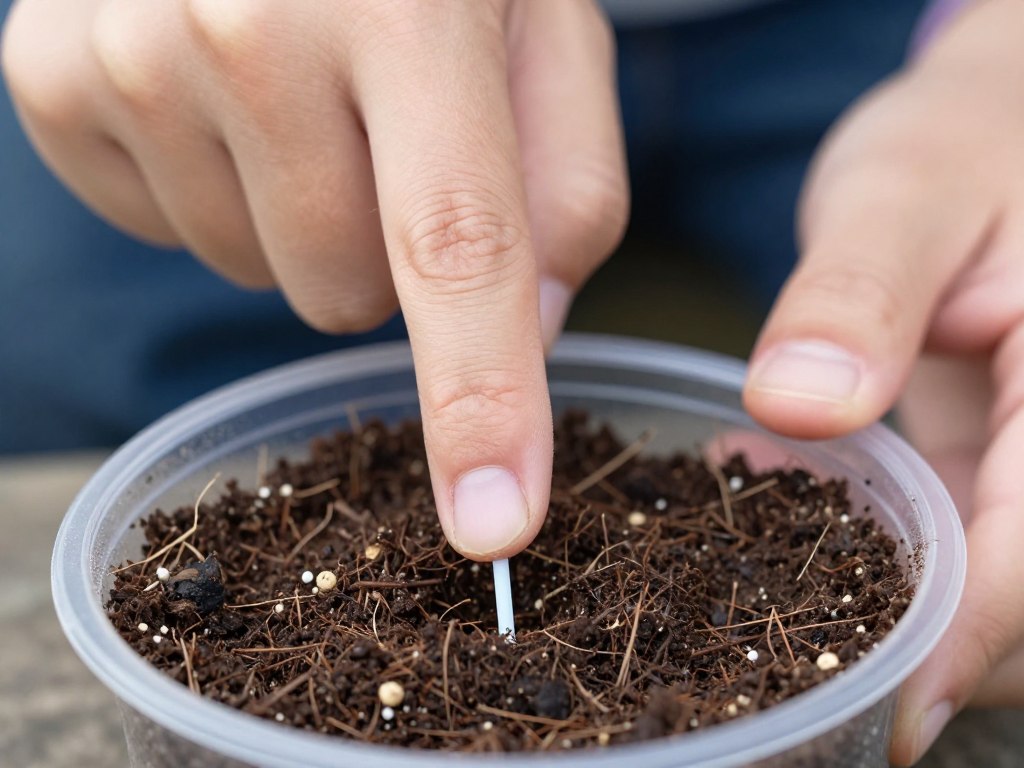
Different plants have different water needs. Herbs like rosemary and thyme prefer soil that dries out between waterings. Leafy greens like lettuce need consistently moist soil. Tomato plants want regular, even moisture to prevent problems like blossom end rot. Pay attention to how quickly each container dries out and adjust your watering schedule accordingly.
Morning watering works best for most plants. This gives foliage time to dry before nightfall, reducing disease risk. It also ensures plants have adequate moisture to withstand hot afternoon sun. If you can only water in the evening, avoid getting water on leaves and flowers. Direct water at the soil surface instead.
Signs of Overwatering
- Yellow leaves that feel soft and mushy
- Moldy smell from soil surface
- Fungus gnats hovering around containers
- Stunted growth despite adequate fertilizer
- Roots that appear dark brown or black
Solution: Allow soil to dry out more between waterings. Check that drainage holes aren’t blocked. Consider moving plants to a location with better air circulation.
Signs of Underwatering
- Wilting leaves that perk up after watering
- Dry, crispy leaf edges or tips
- Soil pulling away from container edges
- Slower growth than expected
- Flower buds dropping before opening
Solution: Water more frequently and ensure you’re applying enough water to moisten soil throughout the container. Add mulch to help retain moisture.
Water thoroughly each time you water. Apply water until it drains from the bottom holes. This ensures moisture reaches the entire root zone. Light, frequent watering encourages shallow roots that make plants more vulnerable to stress. Deep, less frequent watering builds stronger, deeper root systems.
Hot, windy conditions require more frequent watering. You might need to water twice daily during heat waves. Check soil moisture more often during extreme weather. Self-watering planters help maintain consistent moisture during periods when you can’t water as frequently.
Feeding Your Container Plants
Container plants deplete nutrients faster than garden beds because frequent watering washes nutrients out through drainage holes. Regular feeding keeps plants healthy, productive, and vibrant.
Most potting mixes contain enough nutrients to last about six to eight weeks. After that initial period, you’ll need to supplement with fertilizer. The exact timing depends on whether your potting mix included fertilizer to begin with.
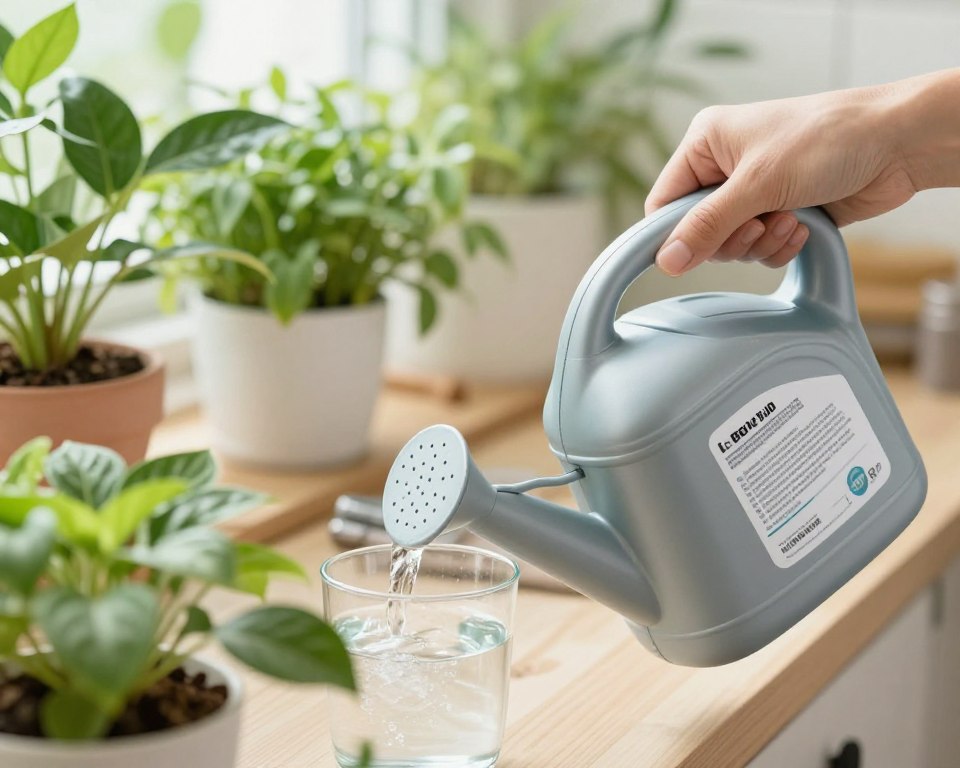
Liquid fertilizers offer the easiest feeding method for beginners. Dilute the concentrate according to package directions and apply during regular watering. Most container plants benefit from feeding every two to four weeks during the growing season. Reduce feeding frequency in fall and winter when growth naturally slows.
Balanced fertilizers work well for most plants. Look for numbers like 10-10-10 or 20-20-20 on the label. These indicate equal amounts of nitrogen (for leafy growth), phosphorus (for roots and flowers), and potassium (for overall health). Tomatoes and flowering plants benefit from fertilizer slightly higher in phosphorus.
Organic options include fish emulsion, seaweed extract, and compost tea. These provide nutrients gradually and improve soil health. They typically have lower nutrient concentrations than synthetic fertilizers, so you may need to apply them more frequently.
Warning: More fertilizer is not better. Over-fertilizing burns roots, causes excessive leafy growth at the expense of flowers or fruit, and can kill plants. Always follow package directions and err on the side of using less rather than more.
Pruning and Maintenance Tasks
Regular pruning keeps plants compact, encourages bushier growth, and improves air circulation. These simple maintenance tasks take just minutes but significantly improve plant health and appearance.
Pinch off the growing tips of herbs like basil and mint when plants reach six inches tall. This causes them to branch out sideways instead of growing tall and leggy. You can use these pinched portions in cooking. Continue pinching throughout the season to maintain bushy, productive plants.
Deadheading removes spent flowers before they set seed. This tricks plants into producing more flowers to achieve their reproductive goal. Simply pinch or cut off faded blooms just above the next set of leaves. Petunias, marigolds, and most other flowering annuals benefit from regular deadheading.
Remove yellowing or damaged leaves promptly. These serve no purpose for the plant and may harbor diseases or pests. Cut them off at the base where they attach to the stem. This improves appearance and directs the plant’s energy toward healthy growth.
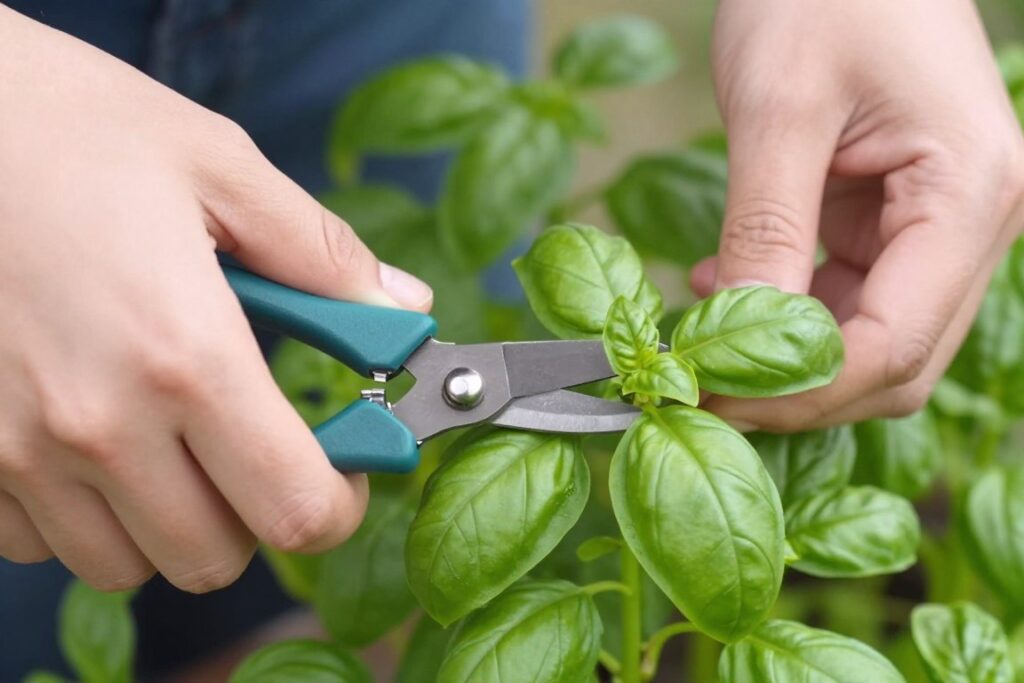
Harvest vegetables and herbs regularly to encourage continued production. The more you harvest, the more most plants produce. Pick lettuce leaves from the outside while letting the center continue growing. Harvest herbs before they flower for best flavor. Cut tomatoes when fully colored but still firm.
Managing Common Pests
Balcony gardens typically experience fewer pest problems than ground-level gardens, but issues can still occur. Early detection and prompt action prevent small problems from becoming major infestations.
Check plants regularly for signs of pests. Look under leaves where many insects hide. Common balcony garden pests include aphids (tiny soft-bodied insects that cluster on new growth), spider mites (cause stippled, yellowing leaves), and whiteflies (small white flying insects).
Aphid Control
These soft-bodied pests suck plant juices and multiply rapidly. A strong spray of water from a hose often dislodges them effectively. For persistent infestations, insecticidal soap provides safe, effective control.
Mix one tablespoon of liquid dish soap (not detergent) in one quart of water. Spray directly on aphids, coating them thoroughly. Repeat every few days until the infestation clears.
Natural Prevention Methods
Plant diversity helps prevent pest outbreaks. Include flowers like marigolds and nasturtiums that naturally repel certain insects. These companion plants add beauty while protecting vegetables.
Maintain plant health through proper watering and feeding. Stressed plants attract more pests than healthy, vigorous ones. Good air circulation between containers also reduces pest and disease problems.
When to Use Organic Sprays
Neem oil provides broad-spectrum pest control for serious infestations. This organic option affects many common garden pests while remaining safe for beneficial insects when used properly.
Apply neem oil in early morning or evening to avoid leaf burn. Follow package directions carefully. Most problems resolve with two or three applications spaced one week apart.
Troubleshooting: Common Beginner Mistakes and How to Avoid Them
Every gardener makes mistakes. Learning from these common pitfalls helps you avoid frustration and keeps your plants thriving. Most problems have simple solutions once you identify the cause.
| Common Problem | What’s Happening | Simple Solution |
| Overwatering | Yellow leaves, soggy soil, slow growth. Most common cause of plant death in containers. Roots rot without oxygen. | Let soil dry more between waterings. Check that drainage holes aren’t blocked. Water only when top inch of soil feels dry. |
| Insufficient Sunlight | Leggy, stretched growth. Pale leaves. Few flowers or fruit. Plants lean toward light source. | Move plants to brighter location. Choose shade-tolerant varieties for low-light areas. Consider supplemental grow lights for very dark balconies. |
| Overcrowding Plants | Plants compete for nutrients, water, and light. Increased disease risk from poor air circulation. Stunted growth despite good care. | Follow spacing recommendations on plant tags. Use larger containers or fewer plants per pot. Thin seedlings to proper spacing early. |
| Using Poor Quality Soil | Compacted soil that doesn’t drain. Plants struggle despite adequate water and fertilizer. Soil becomes hard and crusty. | Always use quality potting mix designed for containers. Replace old soil annually. Never use garden soil in pots. |
| Forgetting to Fertilize | Slow growth after initial weeks. Pale or yellowing leaves. Few flowers or small vegetables. Plants look generally unhealthy. | Set reminders to fertilize every 2-4 weeks during growing season. Use slow-release fertilizer at planting for automatic feeding. Keep fertilizer with watering can as reminder. |
| Ignoring Plant Requirements | Choosing plants unsuited to your conditions. Sun lovers in shade or shade plants in bright sun. Wrong hardiness zone for perennials. | Read plant tags carefully before purchasing. Match plants to your specific light, temperature, and space conditions. Start with proven beginner varieties. |
Seasonal Considerations
Your balcony garden needs change with the seasons. Understanding these shifts helps you adapt your care routine and make smart planting decisions throughout the year.
Spring offers the most exciting planting opportunities. Start cool-season vegetables like lettuce, peas, and radishes as soon as danger of frost passes. Wait until temperatures consistently stay above 50 degrees Fahrenheit at night before planting warm-season crops like tomatoes, peppers, and basil.
Summer demands increased vigilance with watering. Hot weather and strong sun dry out containers quickly. Check soil moisture daily during heat waves. Provide afternoon shade for heat-sensitive plants. Apply mulch to container surfaces to retain moisture and keep roots cooler.
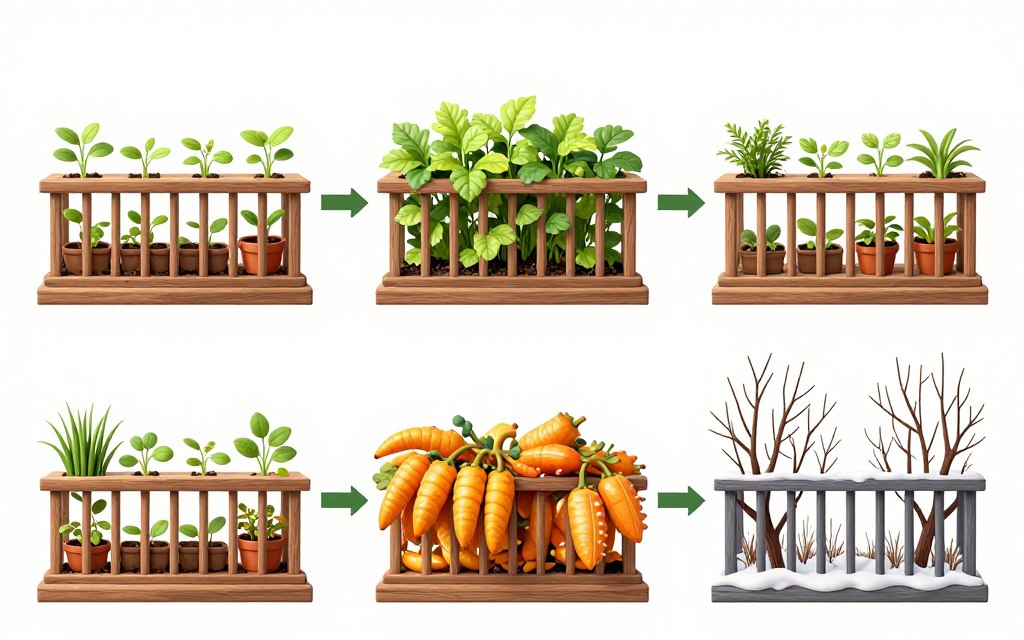
Fall extends your growing season with a second chance for cool-season crops. Plant lettuce, spinach, and greens in late summer for fall harvests. Many herbs continue producing until hard frost. Flowers like pansies thrive in cool fall weather.
Winter requires special consideration for perennial plants and containers. Bring tender plants indoors before freezing temperatures arrive. Empty and store containers that might crack in freezing weather. Ceramic and terracotta pots are especially vulnerable to freeze damage. Consider growing cold-hardy herbs like parsley and chives that withstand light frost.
Climate Matters: Your specific location and USDA hardiness zone affect timing for all these seasonal activities. Northern gardeners have shorter growing seasons than southern regions. Coastal areas often experience milder winters than inland locations. Adjust recommendations based on your local conditions.
Your Balcony Garden Journey Begins Now
You now have everything you need to start your first balcony garden successfully. From assessing your space and gathering supplies to planting, watering, and maintaining your containers, each step builds your confidence and skills.
Remember that gardening is a learning process. Your first season will teach you more than any guide can explain. You’ll discover which plants thrive in your specific conditions. You’ll develop a watering rhythm that works for your schedule. You’ll learn to read your plants’ signals and respond to their needs.
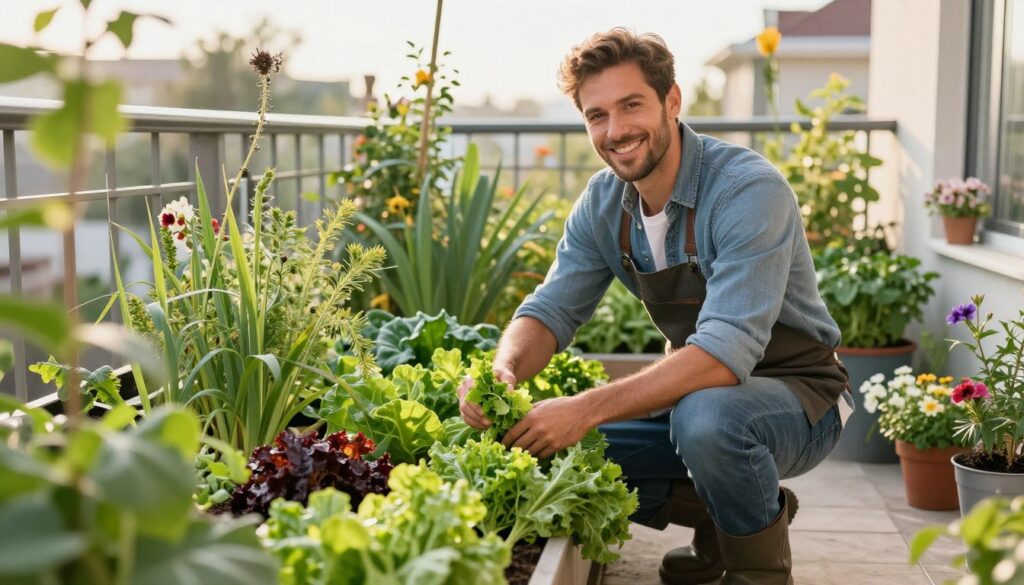
Start small and expand gradually. Three or four containers give you plenty of gardening experience without overwhelming you. Success with these first plants builds the confidence to try new varieties and expand your garden space next season.
Don’t fear mistakes. Every gardener kills plants occasionally. Treat failures as learning opportunities. Did the plant need more sun? Less water? Different soil? Each unsuccessful attempt teaches you something valuable for next time.
The rewards of balcony gardening extend beyond fresh food and beautiful flowers. You’ll notice stress melting away as you tend your plants. You’ll sleep better knowing you’ve spent time outdoors. You’ll eat healthier with fresh herbs and vegetables steps from your kitchen. You’ll connect with nature even in the heart of the city.
Your balcony garden creates a small sanctuary where you can escape the demands of daily life. Morning coffee tastes better surrounded by growing things. Evening relaxation feels more complete with the scent of fresh herbs nearby. This tiny green space becomes your personal retreat.
Gardening also connects you with larger rhythms. You’ll notice seasonal changes more acutely. You’ll understand how weather affects plant growth. You’ll develop patience waiting for tomatoes to ripen. These lessons extend beyond the balcony into other areas of life.
Join the community of balcony gardeners proving that space limitations need not limit growing dreams. Share your successes with friends and neighbors. Inspire others to start their own container gardens. Give away excess herbs and vegetables to spread the joy.
Continue Your Garden Education
Get weekly tips, seasonal planting guides, troubleshooting advice, and exclusive beginner-friendly content delivered to your inbox. Join 50,000+ new gardeners growing with confidence.
Plus, get instant access to our library of downloadable guides, planting calendars, and troubleshooting checklists designed specifically for balcony gardens.
Your balcony garden journey begins with a single seed planted in a single pot. Take that first step today. Choose one plant that excites you. Fill a container with quality potting mix. Place it where morning sun will warm it. Water it gently and watch the magic begin.
Welcome to the wonderful world of balcony gardening. Your outdoor space will never look the same again.