
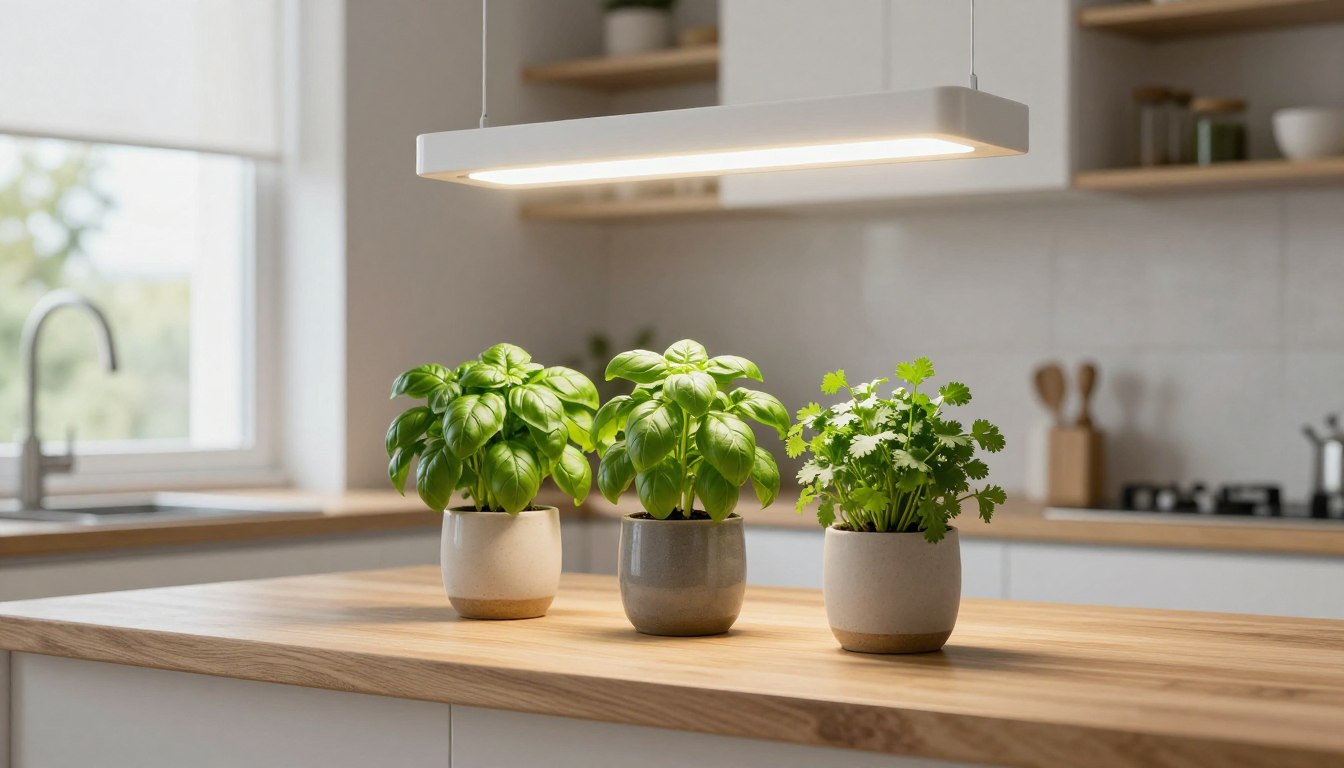
Our #1 Pick for Kitchen Counters
The AeroGarden Trio Grow Light combines elegant design with powerful full-spectrum LEDs, perfect for herb gardens and small plants on your kitchen counter. Adjustable arms, app controls, and a compact footprint make it our top recommendation.
Why Kitchen Counters Need Grow Lights
Most kitchens don’t provide ideal lighting conditions for plant growth. Even those with windows rarely offer the 12-16 hours of consistent, direct light that herbs and vegetables require. Kitchen counters typically sit several feet from windows, receiving only indirect sunlight that weakens throughout the day. During winter months in particular, natural light becomes severely limited, causing plants to become leggy, pale, and unproductive.
Grow lights solve these challenges by delivering consistent, full spectrum illumination regardless of weather, season, or window placement. Modern LED grow lights emit wavelengths specifically optimized for photosynthesis, promoting robust plant growth and healthy foliage. For kitchen gardening, this means you can grow herbs, microgreens, lettuce, and even small vegetables year-round, ensuring fresh ingredients are always available when cooking.
The benefits extend beyond simple plant survival. With proper lighting, kitchen herbs develop stronger flavors and more aromatic oils compared to grocery store equivalents. You’ll notice the difference immediately—home-grown basil has incomparably more fragrance, and fresh cilantro maintains its vibrant taste. Additionally, having an indoor garden reduces food waste, as you harvest only what you need for each recipe rather than watching store-bought herbs wilt in the refrigerator.
Challenges of Kitchen Counter Growing
- Insufficient natural light from windows
- Inconsistent daylight duration across seasons
- Counter space limitations requiring compact fixtures
- Need for aesthetically pleasing equipment
- Heat concerns near food preparation areas
- Potential water damage from plant care
Benefits of Using Grow Lights
- Year-round fresh herb and vegetable production
- Consistent light intensity for optimal growth
- Control over photoperiod timing
- Space-efficient vertical growing
- Energy-efficient LED technology
- Faster germination and stronger seedlings
Key Factors to Consider When Choosing Grow Lights for Kitchen Counters
Selecting the best grow light for your kitchen counter requires balancing horticultural effectiveness with practical considerations unique to kitchen environments. Unlike basement growing operations or dedicated plant rooms, kitchen counters demand fixtures that function well in living spaces where aesthetics, size, and heat output matter significantly.
Size and Form Factor
Kitchen counter real estate is precious. The ideal grow light maximizes plant coverage while minimizing its footprint. Compact designs work best—look for fixtures that can illuminate multiple small pots without dominating your workspace. Under-cabinet strip lights provide illumination without consuming any counter space, mounting beneath overhead cabinets to shower light downward. Alternatively, small panel lights or adjustable desk-style lamps offer flexibility for countertop placement.
Consider your typical counter usage patterns. If you need the space for food prep, removable or easily adjusted fixtures provide the best solution. Some gardeners prefer dedicated corner areas for plants, which allows for slightly larger fixtures that remain permanently positioned. Measure your available space carefully, accounting not just for the light fixture itself but also for the plants it will accommodate and any clearance needed above for growth.
Light Spectrum
Plants require different wavelengths for various growth stages. Blue light promotes compact, leafy growth—ideal for herbs and vegetables. Red light encourages flowering and fruiting, though most kitchen herbs don’t require heavy red spectrum. The best grow lights for kitchen counters typically offer full spectrum output, providing balanced wavelengths from 400-700 nanometers that support all growth phases.
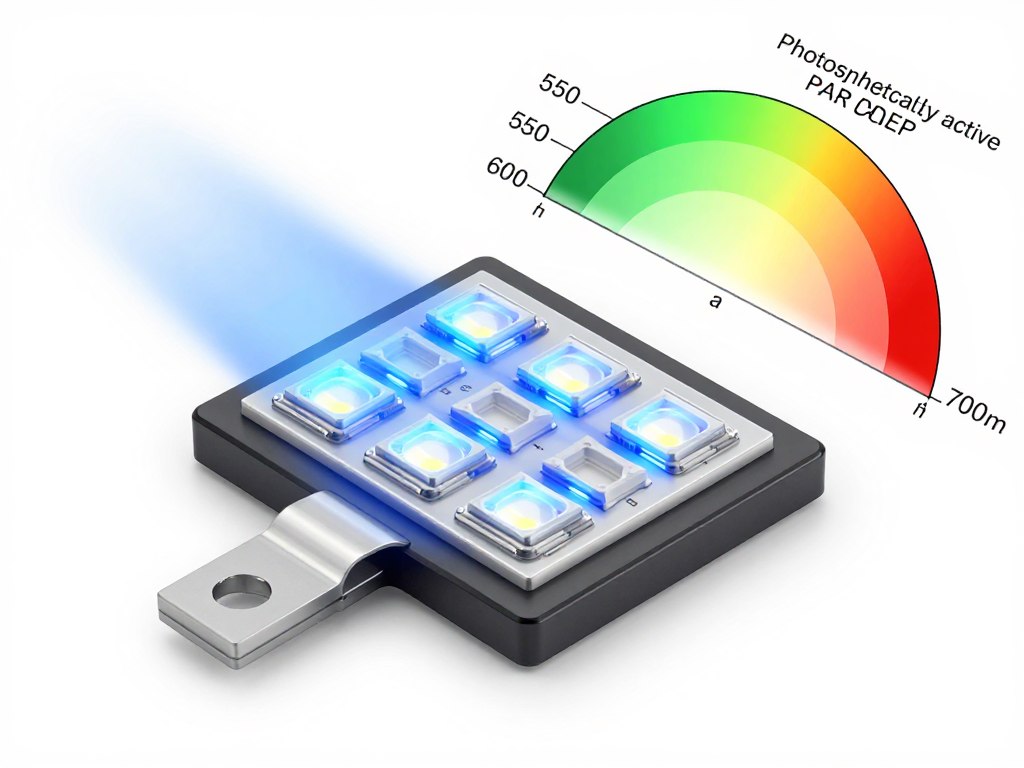
Some advanced fixtures allow spectrum adjustment, letting you emphasize blue wavelengths for vegetative growth or increase red during flowering. However, for kitchen herb gardens and leafy greens, fixed full-spectrum LEDs work perfectly well and cost significantly less. The key measurement is PPFD (photosynthetic photon flux density), which quantifies the amount of light reaching your plants. For herbs and leafy greens, aim for 200-400 μmol/m²/s at plant height.
Intensity and Coverage
Light intensity diminishes rapidly with distance following the inverse square law. A light that seems bright may provide inadequate intensity if positioned too far from plants. Most compact grow lights effectively illuminate an area of 1-2 square feet when positioned 6-12 inches above plants. Herbs and leafy vegetables typically need moderate light levels, while fruiting plants like tomatoes or peppers require higher intensity.
Adjustable fixtures excel here, allowing you to raise the light as plants grow, maintaining optimal intensity throughout the growth cycle. Fixed-position lights work well for plants that maintain consistent height, such as mature herbs. When evaluating coverage, consider both the horizontal area illuminated and the vertical distance from light to plant—both affect intensity at the leaf surface.
Energy Efficiency
Since grow lights operate 12-18 hours daily, energy consumption matters. LED lights dramatically outperform older fluorescent or incandescent options, consuming 50-80% less energy while generating superior light output. A typical 20-watt LED grow light costs approximately $2-4 per month to operate, compared to $8-12 for equivalent fluorescent fixtures.
Modern LED grow lights also generate minimal heat, an important consideration for kitchen environments. Unlike older grow light technology that could raise ambient temperatures uncomfortably, quality LED fixtures remain cool enough to position close to plants without burning foliage. This efficiency means you can run lights all day without noticeably impacting your electricity bill or kitchen comfort.
Heat Output
Excessive heat creates multiple problems in kitchen growing. It can stress plants, dry out soil rapidly, and make your kitchen uncomfortably warm. LED grow lights excel at converting electricity to light rather than heat, with most quality fixtures producing minimal thermal output. When positioned 6-12 inches from plants, LED lights typically raise ambient temperatures only 2-5 degrees Fahrenheit.
Heat dissipation design matters. Better fixtures incorporate aluminum heat sinks that passively cool the LEDs, extending bulb life while maintaining safe operating temperatures. Avoid cheap lights that become hot to the touch, as these indicate poor thermal management that will shorten the fixture’s lifespan and potentially damage nearby plants.
Aesthetics and Design
Unlike grow lights tucked away in basements or garages, kitchen counter fixtures remain visible in your living space. The best options blend functionality with attractive design, complementing kitchen décor rather than detracting from it. Sleek, minimalist fixtures in neutral colors (black, white, silver) integrate well with most kitchen styles.
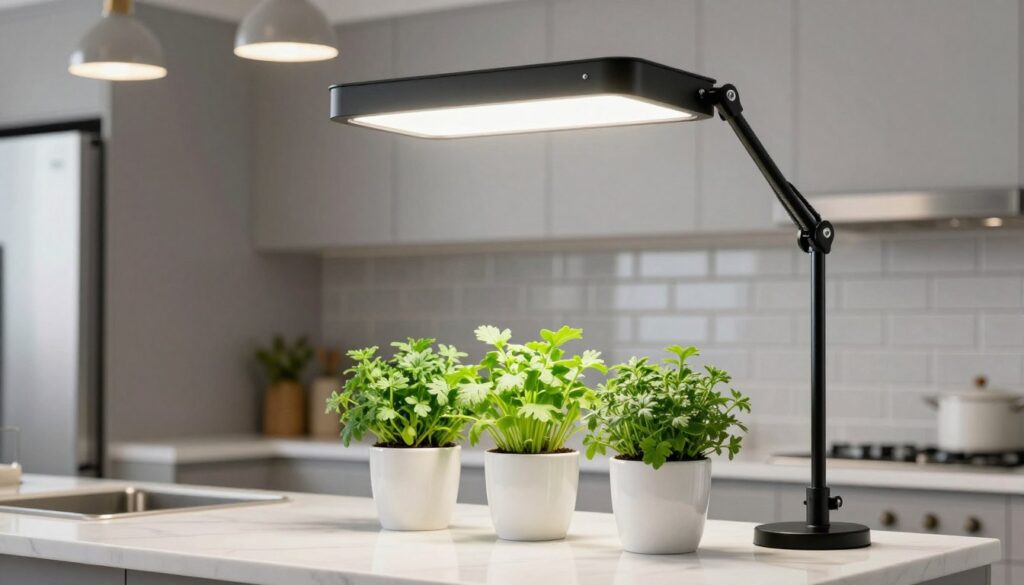
Some manufacturers specifically design grow lights as attractive fixtures that double as task lighting. These provide ambient illumination for your workspace while nurturing plants, serving dual purposes. Consider whether you prefer the light to be a decorative feature or prefer it to blend into the background. Under-cabinet installations offer the most discrete option, while desk-lamp-style fixtures can become attractive focal points.
Best Overall: AeroGarden Trio Grow Light
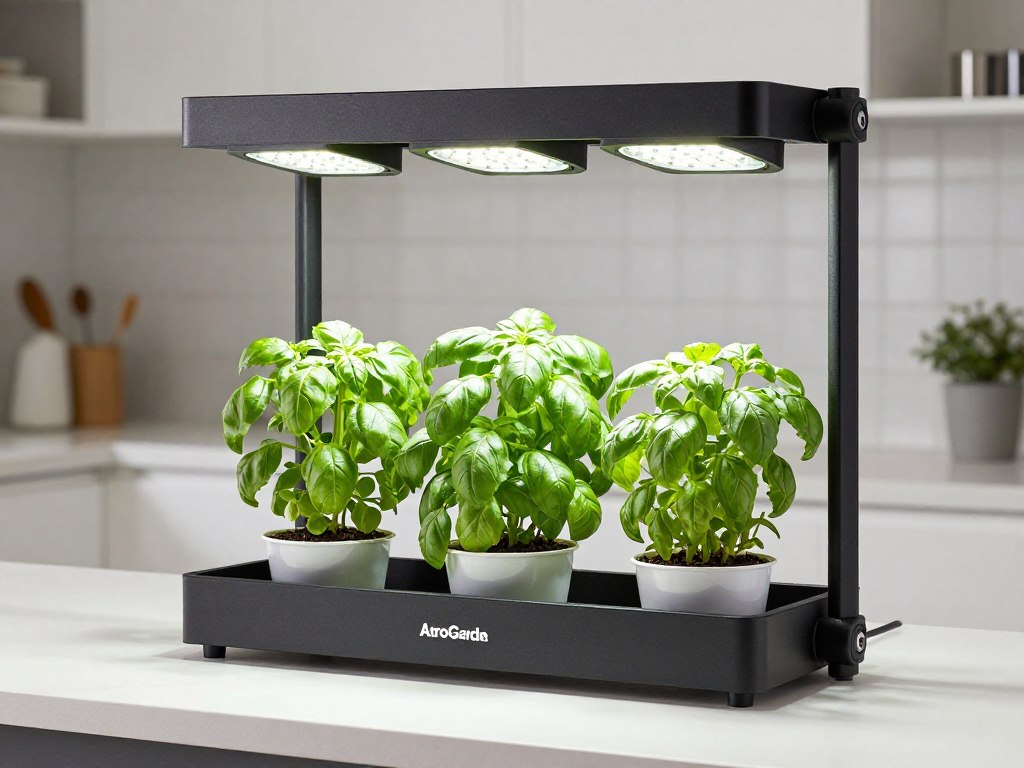 The AeroGarden Trio Grow Light earns our top recommendation for its perfect balance of functionality, design, and ease of use. This elegant fixture features three independently adjustable LED lamp heads, allowing you to customize light positioning for multiple plants or direct all three toward a single larger plant. Each arm extends from 11 to 17 inches and swivels freely, providing exceptional flexibility as your plants grow.
What sets this grow light apart is its intuitive control system. Touch controls on the base allow instant adjustment of light mode (full-spectrum, white, warm, or cool), while the companion smartphone app unlocks advanced features like sunrise/sunset fading and customized timer schedules up to 24 hours. Setup takes under three minutes—simply position the base, adjust the arms, and plug it in.
Advantages
- Three independently adjustable LED lamp heads
- Multiple light spectrum modes for different growth stages
- Smartphone app with advanced scheduling features
- Attractive design that complements kitchen décor
- Compact base fits easily on crowded counters
- Accurate timer maintains consistent photoperiod
Limitations
- Height limitation may not suit very tall plants
- Base can tip if arms positioned awkwardly
- App setup slightly confusing initially
- Higher price point than basic options
| Specification | Details |
| Dimensions | 17″ × 11″ × 24″ |
| Bulb Type | Full-spectrum LED |
| Wattage | 5 watts per bulb (15 watts total) |
| Coverage Area | Approximately 2 square feet |
| Timer Options | Up to 24 hours via app |
| Special Features | App control, multiple spectrum modes, sunrise/sunset fading |
During testing, the AeroGarden Trio excelled with small houseplants, succulents, and herb seedlings. Basil plants showed vigorous growth with deep green coloration, while propagated cuttings rooted faster than under natural window light. The adjustable spectrum proved genuinely useful—we used cooler light for seedling establishment, then switched to full spectrum for mature growth.
This fixture works best for plants under 12 inches tall, making it ideal for culinary herbs, microgreens, small peppers, and decorative houseplants. The quality construction and thoughtful design justify the higher price for gardeners seeking a fixture that enhances rather than clutters their kitchen space.
Best Value: Leoter 4 Head Grow Light
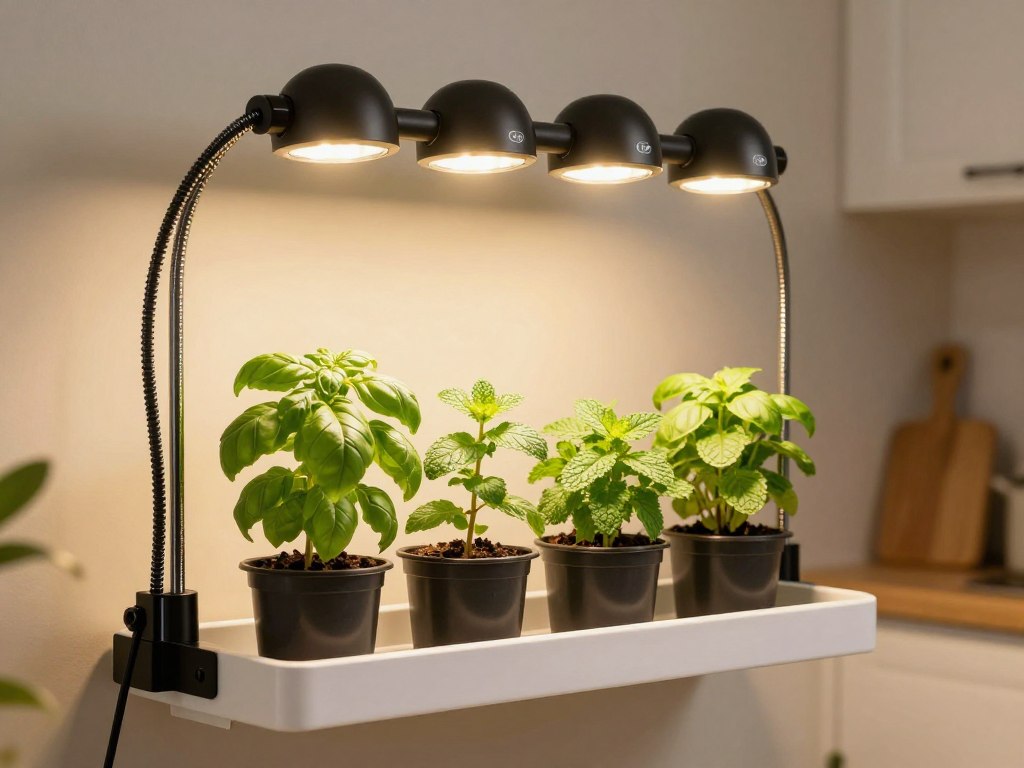 For budget-conscious gardeners who don’t want to compromise on features, the Leoter 4 Head Grow Light delivers exceptional value. This clip-on fixture provides four independently adjustable LED arms that bend and position wherever needed, offering remarkable flexibility for lighting multiple plants simultaneously. The strong clamp attachment secures firmly to shelves, tables, or countertop edges up to 2 inches thick.
Despite its affordable price, this light doesn’t skimp on functionality. The wired remote control provides 10 dimmer settings and three timer options (3, 9, or 12 hours), allowing precise control over light intensity and duration. You can also adjust the light spectrum, choosing between warm white, red and blue, or full spectrum depending on your plants’ growth stage.
Advantages
- Extremely affordable without sacrificing quality
- Four flexible arms cover multiple plants
- Adjustable spectrum for different growth phases
- 10 brightness levels provide fine control
- Strong clamp works on various surfaces
- Simple wired remote easy to understand
Limitations
- No stand included—requires clamping surface
- 12-hour maximum timer may be insufficient for some plants
- Basic design lacks aesthetic refinement
- Remote cord can clutter counter space
| Specification | Details |
| Dimensions | 13.46″ × 5.71″ × 3.27″ |
| Bulb Type | LED (380nm-800nm full spectrum) |
| Wattage | 80 watts total |
| Number of Arms | 4 flexible gooseneck arms |
| Timer Settings | 3, 9, or 12 hours |
| Dimmer Levels | 10 brightness settings |
Our six-month testing period demonstrated this light’s reliability and effectiveness. All test plants—tomato seedlings, houseplants, and culinary herbs—thrived under consistent illumination. The ability to combine all three light colors (red, blue, and warm) delivers optimal growth results across different plant types. Plants grown under the Leoter showed stronger stems and greener leaves compared to those receiving only natural light during Connecticut winter.
The flexible arms proved particularly useful for accommodating plants as they grew. We simply bent the arms upward to maintain proper distance as seedlings matured. The clip’s versatility allowed us to move the entire fixture between different locations—on a bookshelf for seedlings, then clamped to a kitchen shelf for herb maintenance.
Best Under-Cabinet: Soltech Solutions Grove LED Grow Light
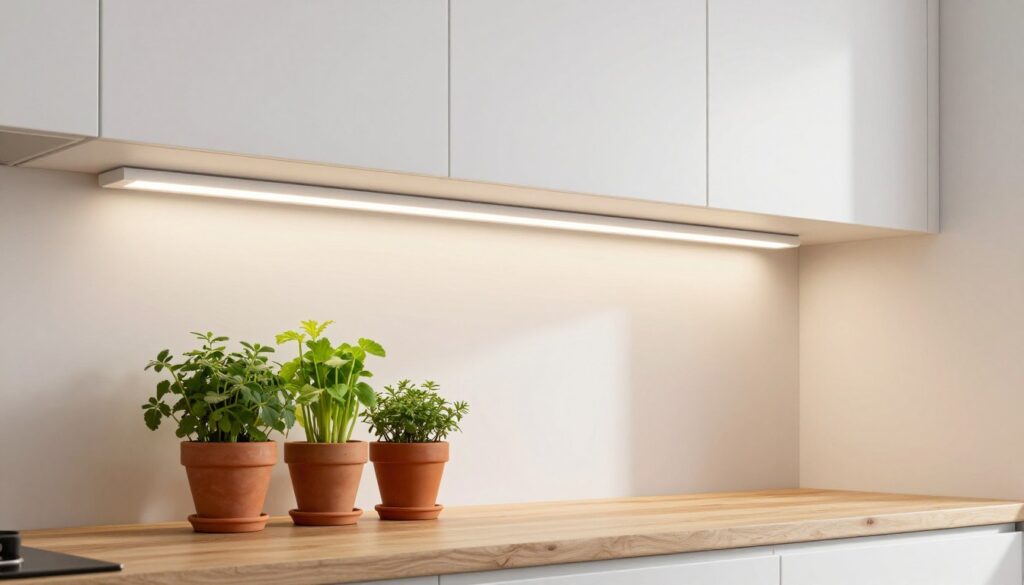 The Soltech Solutions Grove LED Grow Light maximizes kitchen counter space by mounting beneath overhead cabinets, eliminating any countertop footprint while providing excellent plant illumination. This slim, lightweight fixture delivers full-spectrum light through a rotatable bulb that directs output precisely where needed. Its discreet design blends seamlessly with cabinet undersides, looking more like task lighting than specialized growing equipment.
Installation flexibility stands out—you can use the included adhesive backing for temporary mounting, screw it in permanently, or simply rest it on a shelf. The touch-sensitive bulb allows instant brightness adjustment with a simple tap, cycling through multiple intensity levels. An integrated timer can be programmed for specific photoperiods, automatically turning lights on and off daily once set.
Advantages
- Zero countertop space required
- Slim, attractive design blends with cabinetry
- Rotatable bulb directs light precisely
- Touch control for easy adjustment
- Multiple mounting options
- Programmable timer maintains schedule
Limitations
- Adhesive mounting can fail on textured surfaces
- Timer setup somewhat unintuitive initially
- Fixed position limits use with growing plants
- May require additional adhesive for permanent hold
| Specification | Details |
| Dimensions | 18″ × 1″ × 1″ |
| Bulb Type | Full-spectrum LED |
| Weight | Lightweight (under 1 lb) |
| Mounting Options | Adhesive, screw-mount, or shelf placement |
| Control Method | Touch-sensitive bulb |
| Timer | Programmable 24-hour cycle |
During testing, we encountered initial mounting challenges on slightly textured walls—the included adhesive struggled to maintain hold, causing the light to fall several times. However, switching to removable Command strips solved this problem permanently, and the fixture proved durable despite multiple drops. For permanent installations, the included screw-mount hardware provides reliable attachment to cabinet undersides or walls.
After six months of use, we observed significant improvements in houseplant health that had previously struggled with insufficient natural light. Seedlings started under this fixture developed strong, compact growth before transplanting outdoors. The space-saving design proved ideal for small kitchens where every inch of counter space matters. This fixture works best for herbs and small plants that maintain consistent height, as the fixed installation doesn’t adjust as plants grow taller.
Best Adjustable Height: LBW LED Grow Light with Stand
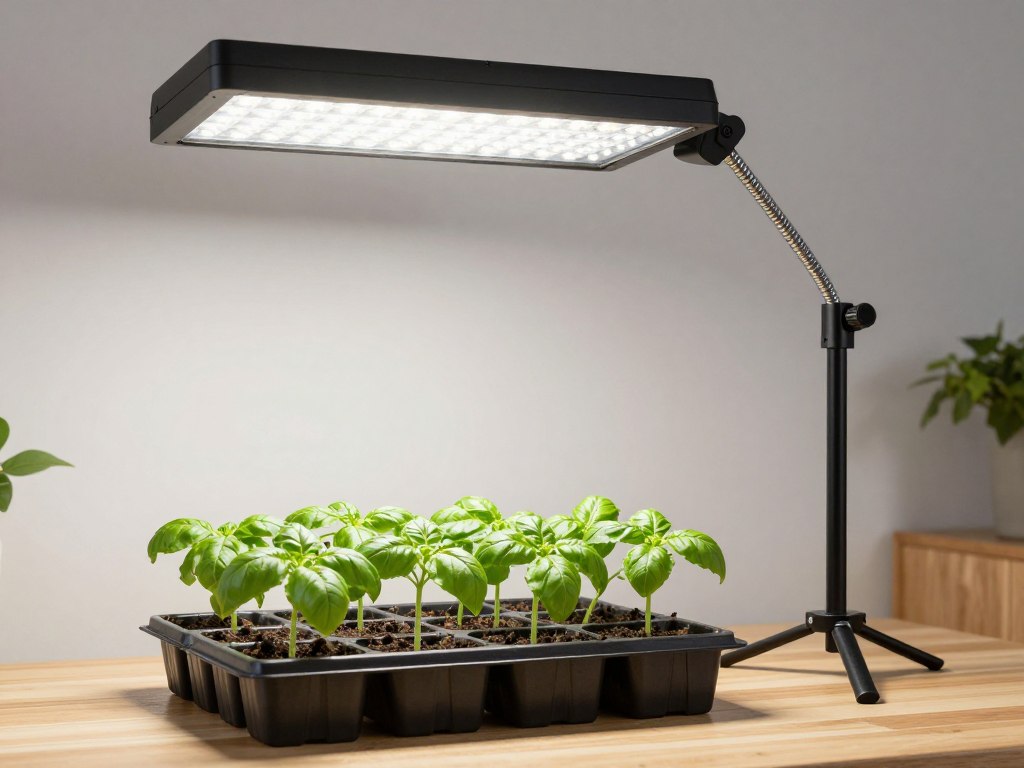 For gardeners growing plants from seed or maintaining herbs that vary in height, the LBW LED Grow Light with Stand offers unmatched adjustability. The sturdy tripod extends from 15 to 48 inches, easily accommodating seedlings on the counter or mature plants on the floor. A flexible gooseneck arm further refines positioning, directing light precisely where needed regardless of plant arrangement.
This versatile fixture delivers full-spectrum lighting (380nm to 800nm) suitable for all growth stages, from germination through flowering. The included controller provides six brightness settings and three timer options (4, 8, or 12 hours), giving precise control over light intensity and duration. While individual spectrum colors can’t be adjusted independently, the balanced output works excellently for herbs, vegetables, and houseplants.
Advantages
- Highly adjustable height (15-48 inches)
- Flexible gooseneck for precise positioning
- Full-spectrum suitable for all growth stages
- Six brightness levels
- Includes hanging hardware for ceiling mount
- Portable and easy to store when not in use
Limitations
- Industrial appearance may not suit all kitchens
- Tripod base requires floor or counter space
- Cannot adjust individual spectrum colors
- Stand visible—less discreet than under-cabinet options
| Specification | Details |
| Light Dimensions | 8.7″ × 4.9″ |
| Stand Height Range | 15″ to 48″ |
| Bulb Type | Full-spectrum LED (380-800nm) |
| Brightness Levels | 6 settings |
| Timer Options | 4, 8, or 12 hours |
| Additional Features | Ceiling hanging hardware included |
Our testing with basil, tomato, and spinach seeds demonstrated this light’s effectiveness across different plant types. Seedlings grown under the LBW developed noticeably stronger stems and deeper green leaves compared to those near windows. The ability to start with the light low for germination, then raise it as plants matured, proved invaluable for maintaining optimal light intensity throughout growth.
We also tested this fixture with houseplants during winter months in Iowa, where natural light becomes scarce. Spider plants, ivy, and other foliage plants that had shown signs of winter dormancy reinvigorated under consistent artificial lighting, producing new growth and maintaining healthy coloration. The tripod folds flat for storage, making this an excellent choice for seasonal use—intensive in spring for seedlings, then stored away during summer when natural light suffices.
Best Light Bulb: GE LED Grow Light Bulb
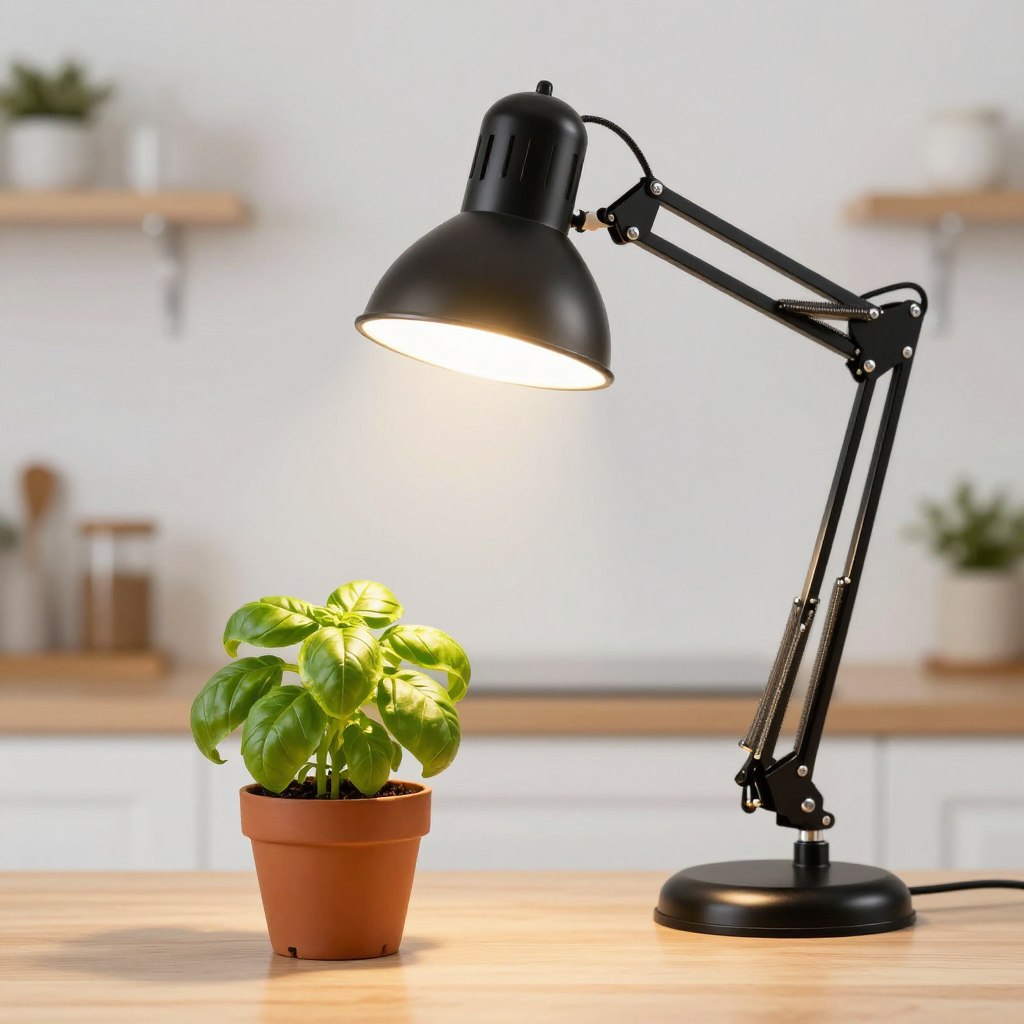 For gardeners who already own suitable lamp fixtures, the GE LED Grow Light Bulb provides an affordable, effective solution without requiring new equipment. This BR30-style flood bulb fits standard medium-base sockets and delivers advanced red spectrum lighting optimized for fruiting vegetables like tomatoes, cucumbers, and peppers, while also supporting leafy greens and herbs effectively.
The 9-watt LED bulb operates at 120 volts, making it compatible with virtually any table lamp, desk fixture, or clamp light. Unlike older grow light technology, it remains cool during operation and produces minimal heat, allowing safe positioning close to plants. The included instructions provide helpful height recommendations for different plant types based on their light requirements.
Advantages
- Very affordable entry point for grow lighting
- Works with existing lamp fixtures
- Cool operation—minimal heat generation
- Advanced red spectrum for vegetables
- Helpful instructions with setup guidance
- Available in multi-packs for replacement
Limitations
- Requires separate fixture (not included)
- No built-in timer or dimmer
- Noticeable high-pitched hum when operating
- Bulb lifespan shorter than full fixtures
| Specification | Details |
| Bulb Size | 4.75″ diameter (BR30) |
| Bulb Type | LED (advanced red spectrum) |
| Wattage | 9 watts |
| Voltage | 120 volts |
| Socket Type | Medium base (E26) |
| Recommended Use | 18 hours daily |
During testing, we installed this bulb in a desk lamp clamped to a bookshelf, creating an easily adjustable fixture that moved with plant growth. We successfully grew tomato seedlings, cucumber starts, cilantro, and a coleus plant overwintered from the garden. The tomato and basil seedlings performed particularly well, developing into stocky, robust plants ready for transplanting.
One notable drawback emerged during extended use—a slight humming sound becomes audible in quiet environments. While not loud enough to be distracting during normal kitchen activity, it becomes noticeable in silence. Position this light in areas where ambient noise masks the hum, or use it in spaces you don’t occupy during quiet times. Despite this minor issue, the bulb’s effectiveness and affordability make it an excellent choice for gardeners wanting to convert existing fixtures into grow lights.
Best Compact Option: iGrowtek 2ft Grow Light
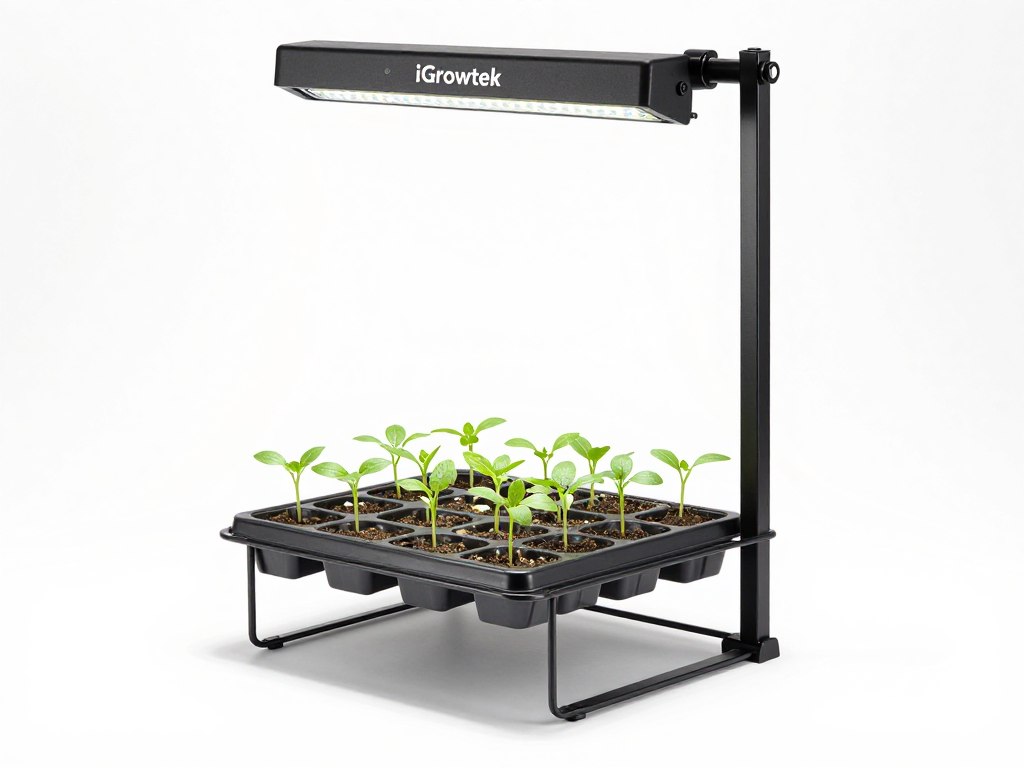 The iGrowtek 2ft Grow Light packs effective illumination into a remarkably compact footprint ideal for small kitchens or limited counter space. At just 2 feet long, this complete system includes an iron stand and LED panel that together fit a standard seedling tray or several small herb pots. The minimalist design eliminates unnecessary features, focusing purely on delivering reliable light at an affordable price.
Setup couldn’t be simpler—the light snaps onto the stand, adjustable straps set the proper height (6-7 inches above plants), and you plug it in. That’s it. No complicated controls, no apps, no timers. For gardeners who want straightforward functionality without bells and whistles, this direct approach appeals greatly. The system excels at its intended purpose: providing young plants or small herbs with consistent light in limited space.
Advantages
- Extremely compact footprint
- Complete system under five minutes setup
- Perfect for seed starting
- Adjustable height via straps
- Affordable basic functionality
- Easy to store when not in use
Limitations
- No timer—requires manual on/off
- No dimmer or brightness control
- Maximum height only 6-7 inches
- Basic appearance lacks aesthetic appeal
| Specification | Details |
| Dimensions | 27.2″ × 2.3″ × 19.7″ |
| Light Length | 2 feet |
| Bulb Type | LED |
| Wattage | 10 watts |
| Height Range | 6-7 inches maximum |
| Best For | Seedlings and small plants |
Our year-long testing confirmed this light’s reliability for its intended purpose. We used it exclusively for seed starting, growing multiple rounds of vegetable and herb seedlings from late winter through spring. Germination rates improved compared to window-grown seeds, and seedlings developed stronger, more compact growth with better root development.
The height limitation became apparent as seedlings matured—once plants exceeded 5-6 inches tall, we transferred them to different lighting or moved them outdoors. This isn’t a drawback for the intended use case but rather highlights the importance of matching equipment to specific growing needs. For seed starting and small herb maintenance, this fixture performs admirably. For growing larger plants from seedling to maturity, consider one of the adjustable-height options instead.
The lack of timer functionality proved manageable by adding an inexpensive external timer, which we recommend for anyone purchasing this light. This addition automates the lighting schedule, ensuring plants receive consistent photoperiods without manual intervention.
Quick Comparison: Top Kitchen Counter Grow Lights
To help you choose the right grow light for your kitchen, we’ve compiled key specifications and features in an easy-to-compare table. Consider your available space, plant types, and desired features when reviewing these options.
| Model | Best For | Size | Wattage | Key Feature | Price Range | Shop |
| AeroGarden Trio | Overall versatility | 17″ × 11″ × 24″ | 15W total | App control, adjustable spectrum | $$ | View Price |
| Leoter 4 Head | Budget value | 13.5″ × 5.7″ × 3.3″ | 80W | Four flexible arms, clip-on | $ | View Price |
| Soltech Grove | Under-cabinet mounting | 18″ × 1″ × 1″ | Not listed | Space-saving, touch control | $$$ | View Price |
| LBW LED Stand | Height adjustability | 15-48″ height range | Not listed | Tripod stand, gooseneck | $ | View Price |
| GE LED Bulb | Existing fixtures | 4.75″ diameter | 9W | Standard socket, cool operation | $ | View Price |
| iGrowtek 2ft | Compact spaces | 27.2″ × 2.3″ × 19.7″ | 10W | Complete system, seedling focus | $ | View Price |
Price Range Guide: $ = Under $30, $$ = $30-$100, $$$ = Over $100
Installation, Daily Use, and Plant Care Tips
Proper installation and consistent use patterns maximize your grow light’s effectiveness while ensuring healthy plant growth. Follow these practical guidelines to get the most from your kitchen counter garden.
Installation Best Practices
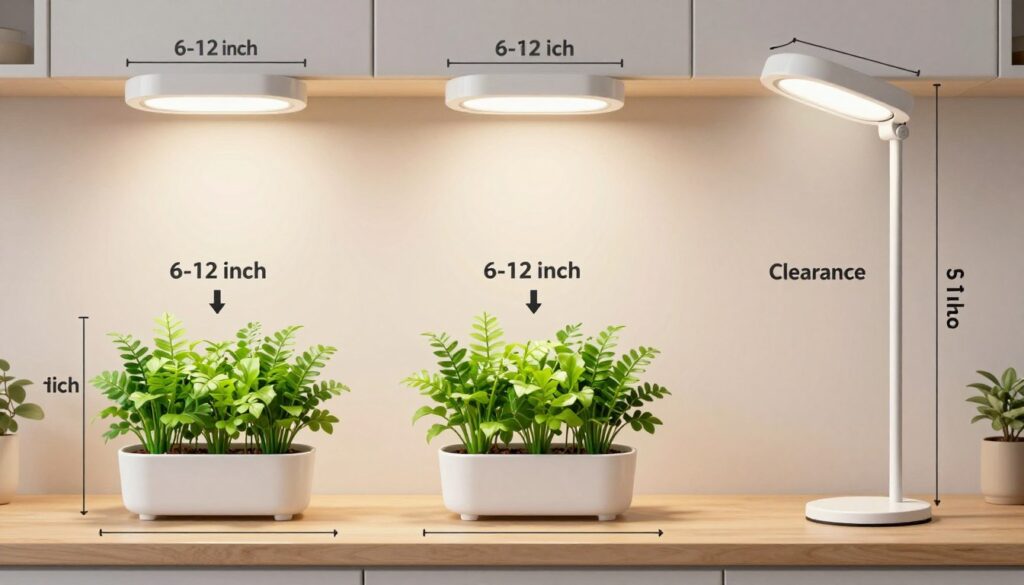
Position your grow light considering both plant needs and kitchen workflow. For under-cabinet installations, mount lights toward the rear of the countertop, leaving workspace at the front edge. This arrangement provides plants with light while keeping your primary work surface accessible. Ensure adequate clearance between the light fixture and any items you store on the counter—at least 2 inches prevents fire hazards and allows proper air circulation.
When mounting lights with adhesive, clean surfaces thoroughly with rubbing alcohol first to ensure strong bonding. For drywall installations, locate studs for screw-mounted fixtures heavier than 2 pounds. Test any clamp-style lights by applying moderate downward pressure—they should hold firm without sliding or loosening. If mounting permanently, consider future access for bulb replacement or cleaning when choosing locations.
Optimal Light Distance
The distance between light and plant canopy critically affects growth. Too close causes leaf burn and bleaching; too far results in stretched, leggy plants. Most LED grow lights perform optimally positioned 6-12 inches above plant tops. Seedlings and young plants tolerate closer positioning (6-8 inches), while mature plants with denser foliage prefer slightly more distance (10-12 inches).
Adjust height as plants grow, maintaining consistent distance from the light to the uppermost leaves. Check plants daily during rapid growth phases—seedlings can gain an inch overnight, quickly growing too close to fixtures. Signs of excessive light include bleached leaf tips, curling leaves, or burnt edges. If you observe these symptoms, immediately increase the distance or reduce light intensity if your fixture offers dimming capability.
Recommended Photoperiod
Different plants require different amounts of daily light, measured as photoperiod. Herbs and leafy greens typically need 12-16 hours of light daily. Fruiting plants like tomatoes and peppers perform best with 14-18 hours. Seedlings benefit from longer photoperiods (16-18 hours) during their first few weeks, promoting compact growth and strong root development.
Consistency matters more than precise duration. Plants develop circadian rhythms based on regular light/dark cycles. Erratic lighting schedules stress plants and reduce productivity. Use timers to maintain consistent photoperiods automatically—this proves especially important for busy home cooks who might forget to manually switch lights on and off.
Daily Light Requirements by Plant Type
- Leafy greens (lettuce, spinach, kale): 12-14 hours
- Culinary herbs (basil, cilantro, parsley): 14-16 hours
- Fruiting plants (tomatoes, peppers): 16-18 hours
- Seedlings (all types): 16-18 hours
- Houseplants (foliage): 12-14 hours
- Flowering houseplants: 12-16 hours (varies by species)
Kitchen Environment Considerations
Kitchens present unique growing challenges compared to dedicated plant rooms. Temperature fluctuates significantly—warm during cooking, cooler at night. Humidity spikes during dish washing or boiling, then drops in air-conditioned spaces. These variations typically don’t harm hardy herbs like basil, mint, or oregano, but more sensitive plants may struggle.
Protect plants from direct heat sources. Position your garden away from stoves, ovens, and heat vents that could stress foliage or dry soil rapidly. Similarly, avoid locations directly under air conditioning vents that blast cold air. Moderate, consistent temperatures between 65-75°F support healthy growth for most kitchen herbs and vegetables.
Water carefully on countertops—use saucers under all pots to catch drainage and prevent water damage to counters or cabinets. Check soil moisture daily by inserting your finger 1 inch deep; water when the top inch feels dry. Kitchen gardens typically require watering every 2-3 days, though this varies based on pot size, plant type, and environmental conditions.
Routine Maintenance
Clean light fixtures monthly to maintain maximum output. Dust accumulation on LED panels can reduce light intensity by 20-30% over time. Wipe surfaces gently with a soft, slightly damp cloth—never spray water directly on electrical components. Unplug fixtures before cleaning and allow them to cool completely.
Rotate plants weekly to ensure even growth. Plants naturally grow toward their light source, developing lopsided canopies if left in fixed positions. A quarter-turn each week promotes symmetrical development and prevents plants from leaning awkwardly. This simple habit significantly improves plant appearance and vigor.
Monitor plants for pest issues more carefully in indoor environments. Common pests like aphids, fungus gnats, and spider mites can establish quickly without natural predators. Inspect leaf undersides weekly for early signs of infestation. Catching problems early makes organic controls like insecticidal soap highly effective, avoiding the need for stronger interventions.
How to Choose the Right Grow Light for Your Kitchen
Selecting the ideal grow light depends on matching equipment capabilities to your specific growing goals and space constraints. Consider these factors to identify the perfect fixture for your needs.
Define Your Growing Goals
Start by clarifying what you want to grow. If you’re primarily interested in fresh culinary herbs like basil, cilantro, and parsley, compact fixtures with moderate light output suffice. These herbs tolerate a wide range of conditions and grow successfully under most basic grow lights. For more ambitious projects like fruiting tomatoes, peppers, or cucumbers, invest in higher-intensity fixtures with stronger red spectrum output to support flower and fruit development.
Seedling production requires different considerations. Young plants need consistent, moderate-intensity light positioned close to prevent stretching. Adjustable-height fixtures excel here, allowing you to maintain optimal distance as seedlings grow. If you plan to grow plants from seed to harvest, ensure your chosen light can accommodate both tiny seedlings and mature plants—either through height adjustment or by planning to transfer plants to different fixtures as they mature.
Assess Available Space
Measure your intended growing area carefully before purchasing. Note both horizontal counter space and vertical clearance. Under-cabinet spaces might provide only 12-15 inches of height, limiting you to low-growing herbs and greens. Open counter areas offer more flexibility but consume valuable workspace. Consider whether you’re willing to dedicate permanent counter space to plants or prefer temporary setups that move aside when you need the room.
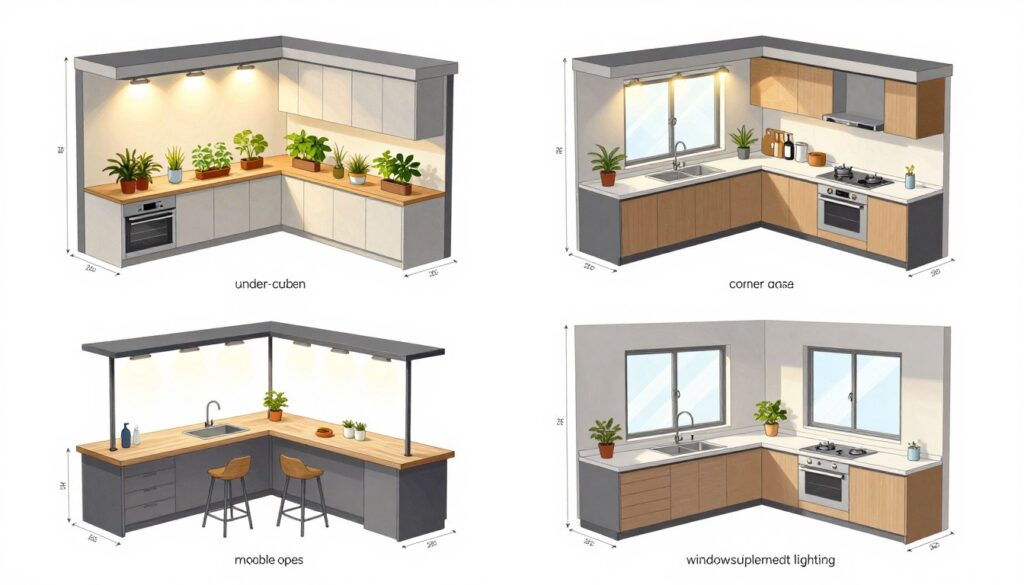
Corners often provide ideal locations for kitchen gardens. They’re typically underutilized for food prep, making them logical spots for permanent plant setups. A corner location also allows light to spread in two directions, potentially illuminating more plants than a linear arrangement. Evaluate traffic flow patterns, too—avoid placing plants where they’ll be constantly bumped during normal kitchen activities.
Match Light to Plant Requirements
Different plants have dramatically different light needs. Low-light houseplants like pothos, philodendron, or snake plants thrive with minimal supplemental lighting—sometimes just an LED bulb in a nearby lamp suffices. Medium-light herbs including mint, oregano, and chives perform well under most basic grow lights. High-light crops like basil, tomatoes, peppers, and fruiting plants demand more intense illumination from quality LED panels or higher-wattage bulbs.
When in doubt, choose slightly more light than you think necessary. You can always reduce intensity with dimmers or by increasing the distance between light and plants, but you cannot make an underpowered light provide more output. Full-spectrum LEDs offer the most versatility, supporting diverse plant types without spectrum adjustment.
Best for Culinary Herbs
- AeroGarden Trio (adjustable, attractive)
- Leoter 4 Head (affordable, flexible)
- Soltech Grove (space-saving)
- GE LED Bulb (existing fixture use)
Best for Seed Starting
- LBW LED Stand (adjustable height)
- iGrowtek 2ft (compact, complete)
- Leoter 4 Head (flexible positioning)
Best for Small Spaces
- Soltech Grove (under-cabinet)
- iGrowtek 2ft (minimal footprint)
- GE LED Bulb (uses existing lamps)
Budget Considerations
Grow light prices span from under $20 for basic bulbs to over $200 for premium fixtures with advanced features. Determine your budget, but also consider long-term value. Inexpensive lights may need replacement sooner, while quality LED fixtures can last 5-10 years with proper care. Factor in operating costs, too—LED efficiency saves money over time compared to older fluorescent technology.
For beginners uncertain about their commitment to indoor gardening, starting with an affordable option makes sense. The GE LED Bulb or Leoter 4 Head provide excellent entry points without major investment. If results motivate you to expand your growing efforts, you can upgrade to more sophisticated fixtures later. Experienced gardeners with proven dedication might prefer investing immediately in higher-end equipment like the AeroGarden Trio or Soltech options that offer superior features and durability.
Aesthetic Preferences
Since kitchen grow lights remain visible in your living space, appearance matters. Sleek, minimalist fixtures blend better with modern kitchen design than utilitarian industrial equipment. Consider whether you want the light to be a design feature or prefer it to disappear into the background. White or black finishes typically integrate most easily with various kitchen styles, while metallic or natural wood accents can complement specific décor themes.
Some fixtures, like the AeroGarden Trio, make attractive design statements that enhance rather than detract from kitchen aesthetics. Others, like clip-on work lights with basic LED panels, function perfectly well but look obviously utilitarian. Neither approach is wrong—it depends on your priorities and how prominently the fixture will be positioned in your space.
Additional Kitchen Counter Grow Light Options
Beyond our top picks, several other grow lights deserve consideration based on specific needs or preferences. These alternatives offer distinct advantages for particular growing situations.
Sansi 24W LED Grow Light Bulb
Similar to the GE bulb but with higher wattage, the Sansi 24W LED provides more intense illumination for existing fixtures. It performed excellently during testing, with basil plants reaching 5 inches in just six weeks—tied for highest growth among all tested lights. The higher output makes it better suited for plants with greater light requirements or for illuminating a larger area. However, it costs more than the GE option and may be overpowered for small herb gardens. Choose this if you have larger plants or more demanding varieties.
Soltech Aspect Large Grow Light
This pendant-style fixture hangs from the ceiling, providing attractive overhead lighting for floor plants or larger countertop arrangements. The 40-watt LED delivers powerful full-spectrum illumination over a substantial area. Its elegant design makes it a conversation piece that looks like decorative lighting rather than growing equipment. However, the higher price point and permanent installation requirements make it less practical for renters or those wanting portable solutions. Consider this for dedicated indoor gardens in kitchens with adequate ceiling height and for gardeners committed to year-round growing.
Mars Hydro TS1000
For serious indoor gardening enthusiasts, the Mars Hydro TS1000 provides professional-grade performance. This full-spectrum LED panel covers 2.5 × 2.5 feet and delivers exceptional intensity for fruiting plants. Multiple units can daisy-chain on a single control panel for expanded growing areas. The fixture performs admirably but proves oversized for typical kitchen counter applications. It works better mounted in basements, garages, or grow tents. Kitchen use is possible under bookcases or in dedicated corners, but its industrial appearance and size make it less practical than our primary recommendations.
Frequently Asked Questions About Kitchen Counter Grow Lights
How many hours per day should I run my kitchen grow light?
Most kitchen herbs and vegetables need 12-16 hours of light daily. Leafy greens like lettuce perform well with 12-14 hours, while basil and fruiting plants prefer 14-16 hours. Seedlings benefit from longer photoperiods of 16-18 hours during their first few weeks. Use timers to maintain consistent schedules, as plants develop circadian rhythms based on regular light/dark cycles. Consistency matters more than precise duration—avoid erratic lighting patterns that stress plants.
Can I use regular LED bulbs instead of grow lights?
Regular LED bulbs lack the specific wavelengths plants need for photosynthesis. While plants can survive under standard lighting, they won’t thrive or produce abundant growth. Grow lights emit balanced spectrum output including blue wavelengths (400-500nm) for vegetative growth and red wavelengths (600-700nm) for flowering and fruiting. Standard bulbs heavily emphasize yellow-green spectrum that plants use inefficiently. For successful kitchen gardening, invest in proper grow lights designed for plant cultivation.
Will grow lights increase my electricity bill significantly?
Modern LED grow lights consume minimal energy. A typical 20-watt fixture operating 14 hours daily costs approximately -4 per month, depending on your local electricity rates. Even larger 40-watt fixtures rarely exceed -8 monthly. This modest cost is offset by savings from growing your own herbs and vegetables rather than purchasing them repeatedly at grocery stores. LED efficiency means you can run lights extensively without dramatic energy bill increases.
How close should I position the grow light to my plants?
Most LED grow lights work optimally positioned 6-12 inches above plant canopy. Seedlings and young plants tolerate closer placement (6-8 inches) without burning, while mature plants with denser foliage prefer slightly more distance (10-12 inches). Monitor plants for signs of light stress—bleached leaf tips, curling leaves, or burnt edges indicate the light is too close or too intense. Adjust height as plants grow to maintain consistent distance from the uppermost leaves.
Do grow lights get hot like traditional grow lights?
Modern LED grow lights generate minimal heat compared to older fluorescent or HID technology. Quality LED fixtures remain cool enough to position close to plants without burning foliage. When placed 6-12 inches from plants, LED lights typically raise ambient temperatures only 2-5 degrees Fahrenheit. This cool operation makes them ideal for kitchen environments where excessive heat would be uncomfortable. Always choose LED grow lights over older technology for home gardening applications.
Can I grow vegetables to harvest on my kitchen counter?
Yes, many vegetables grow successfully on kitchen counters under proper lighting. Leafy greens like lettuce, spinach, and kale reach harvest size in containers. Herbs including basil, cilantro, parsley, and chives produce continuously with regular harvesting. Compact pepper varieties fruit in larger pots. Cherry tomatoes can grow on counters if you provide support structures. Microgreens offer the fastest harvest—ready to eat in 1-2 weeks. Choose compact varieties and provide adequate container size for root development.
What’s the difference between full-spectrum and red/blue grow lights?
Full-spectrum grow lights emit balanced wavelengths across the entire photosynthetically active radiation (PAR) range of 400-700 nanometers, mimicking natural sunlight. Red/blue lights provide only the specific wavelengths plants use most efficiently—blue (400-500nm) for vegetative growth and red (600-700nm) for flowering. While both work, full-spectrum lights support all growth stages without adjustment and produce more natural-looking white light. Red/blue fixtures create distinctive purple glow that some find aesthetically unpleasing in living spaces.
How long do LED grow lights last before needing replacement?
Quality LED grow lights typically last 30,000-50,000 hours of operation—approximately 5-10 years when used 14 hours daily. Light output gradually decreases over time rather than failing suddenly. When LEDs reach about 70% of original intensity, consider replacing the fixture or bulbs. Individual LED bulbs generally last shorter periods (10,000-20,000 hours) compared to integrated fixtures with better thermal management. Proper care including regular cleaning extends lifespan by preventing overheating from dust accumulation.
Start Your Kitchen Counter Garden Today
Growing fresh herbs, vegetables, and plants on your kitchen counter enriches your cooking while connecting you with the satisfaction of cultivating your own food. The right grow light transforms even the smallest counter space into a productive garden that provides fresh ingredients year-round, regardless of weather or season.
For most home gardeners, the AeroGarden Trio Grow Light offers the best combination of features, aesthetics, and performance. Its adjustable arms, spectrum control, and elegant design make it equally suitable for herbs and houseplants while enhancing rather than detracting from kitchen décor. Budget-conscious gardeners will find excellent value in the Leoter 4 Head Grow Light, which delivers flexible functionality at a fraction of the cost.
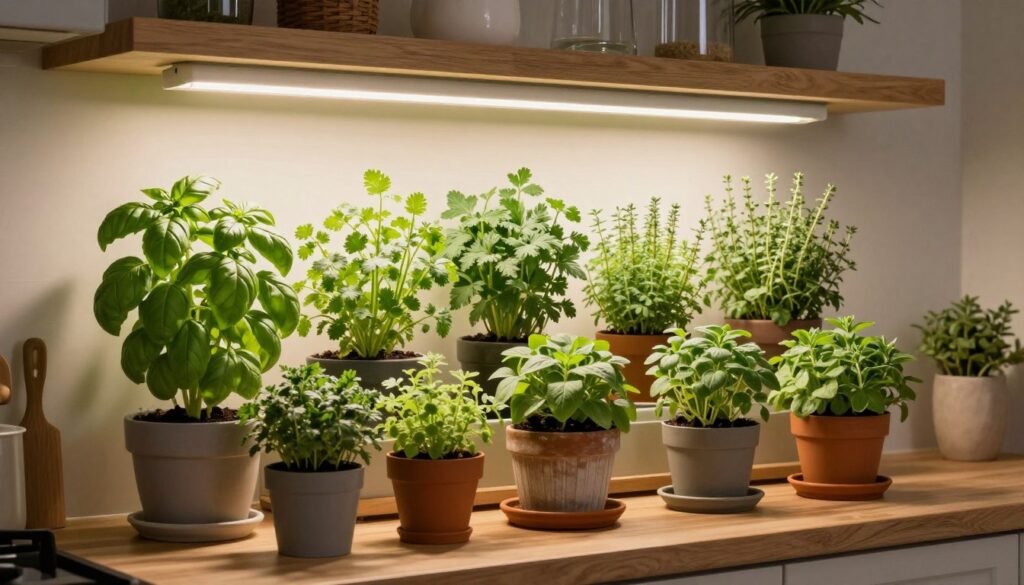
Space-constrained kitchens benefit from the Soltech Grove LED Grow Light’s under-cabinet installation that eliminates counter footprint entirely. And if you already own suitable fixtures, the GE LED Grow Light Bulb provides an affordable entry point without requiring new equipment.
Whatever your specific needs—herb cultivation, seedling production, or houseplant care—there’s a grow light perfectly suited to your kitchen environment. Start with our recommendations, follow the installation and care guidelines provided, and you’ll soon enjoy the incomparable flavor of home-grown herbs and vegetables fresh from your kitchen counter garden.
Ready to Start Growing?
Choose your ideal kitchen counter grow light and begin enjoying fresh herbs and vegetables year-round. Our tested recommendations ensure successful growing from day one.
Pro Tip: Start your indoor garden with easy-to-grow herbs like basil, mint, or oregano. These forgiving plants tolerate beginner mistakes while you learn optimal watering, light positioning, and care routines. Once you’ve gained confidence, expand to more challenging vegetables or flowering plants.