
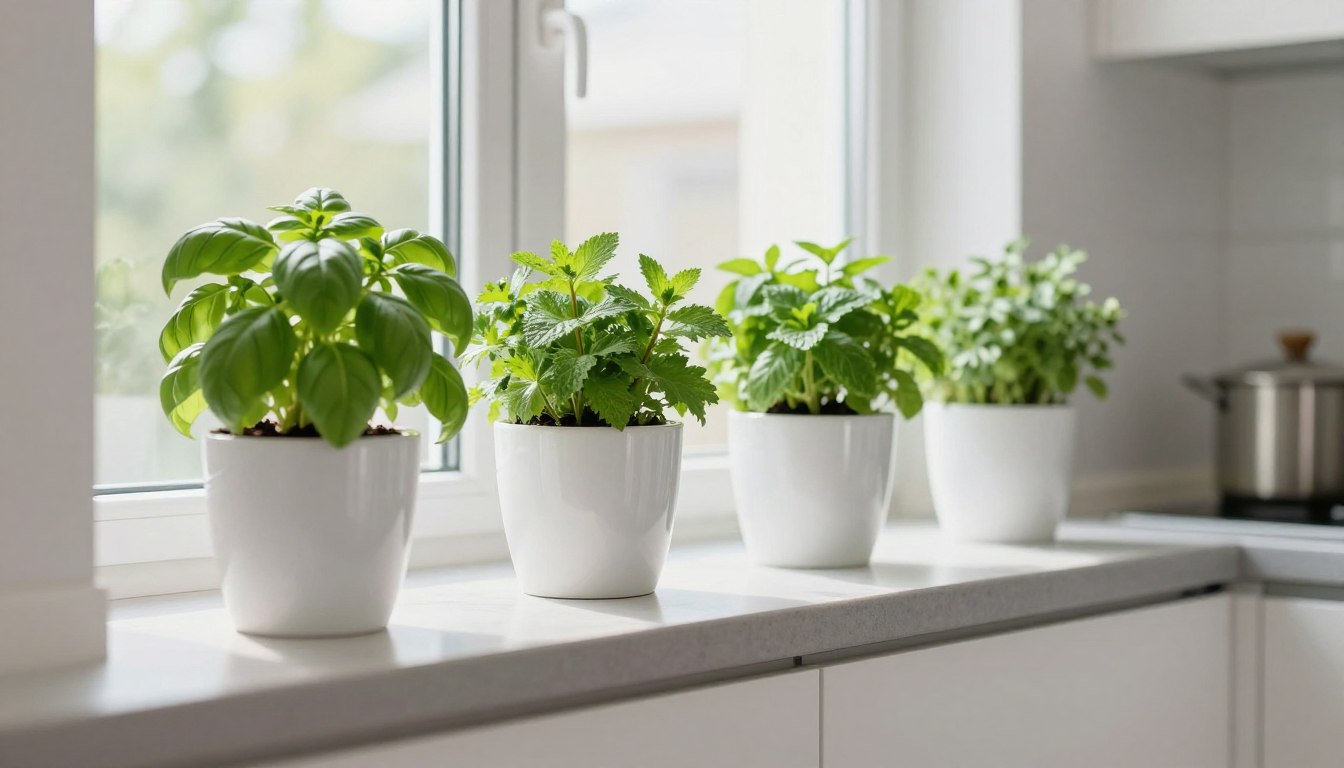
You don’t need a sprawling backyard or even a balcony to grow your own herbs. Small kitchens can become thriving herb gardens with the right setup.
This guide walks you through everything you need to create an indoor herb garden that fits perfectly in your compact space. From choosing the right herbs to maximizing every inch of counter space, you’ll discover practical ideas that work for beginners.
Why Small Kitchens Are Perfect for Herb Gardens
Small kitchens offer unique advantages for growing herbs indoors. The close proximity to your cooking space means you can snip fresh leaves while preparing meals. No running outside or digging through the refrigerator for wilted store-bought herbs.
Most herbs need only modest space to thrive. Their shallow root systems adapt well to compact containers. A single windowsill can support several herb plants without cluttering your kitchen.
Temperature and humidity in kitchens naturally support herb growth. Cooking generates warmth and moisture that many herbs love. Your kitchen already provides an ideal environment without extra equipment.
Benefits of Kitchen Herb Gardens
- Instant access to fresh herbs while cooking
- Reduced food waste from unused store-bought herbs
- Cost savings over buying packaged herbs weekly
- Natural air purification from living plants
- Aromatic fragrance throughout your space
- Satisfaction of growing your own food
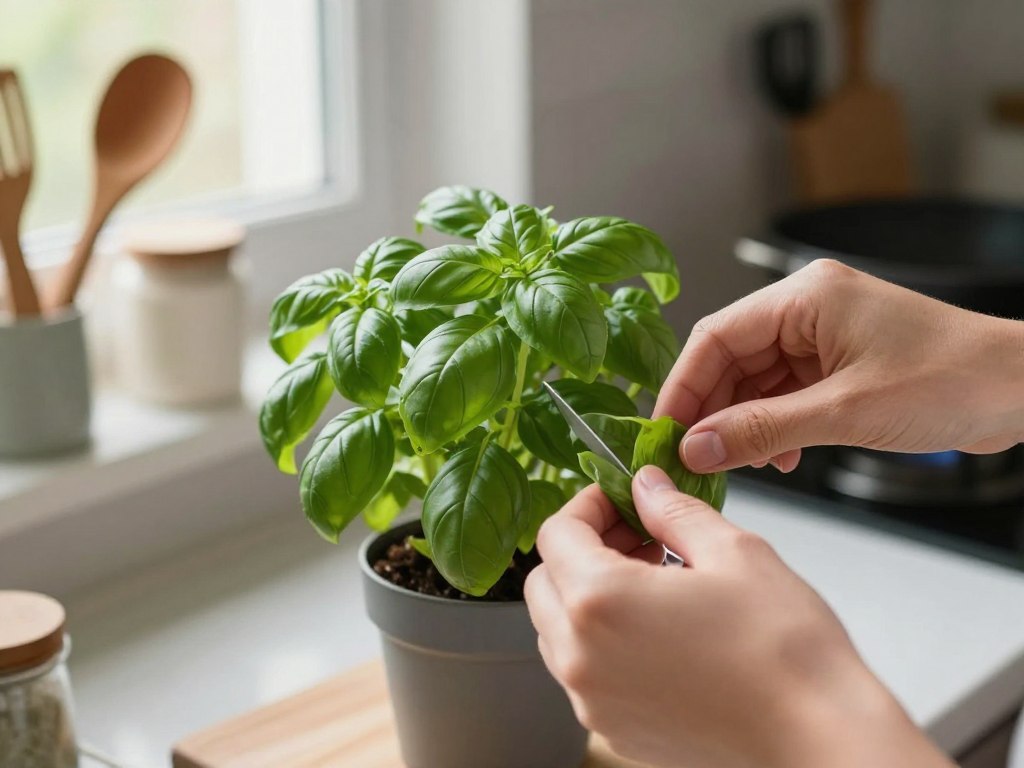
Indoor herb gardening connects you with nature even in urban apartments. The simple act of tending plants provides stress relief and mindfulness in your daily routine.
Start Your Herb Garden Journey
Download our free guide “10 Space-Saving Herb Garden Layouts for Tiny Kitchens” and discover exactly how to transform your small kitchen into a thriving herb paradise. Get step-by-step layouts, container recommendations, and beginner-friendly plant lists.
Choosing the Best Herbs for Small Spaces
Not all herbs adapt equally well to indoor container gardening. Some varieties thrive in compact spaces while others struggle without room to spread. Focus on herbs that deliver maximum flavor from minimal growing area.
Beginner-friendly herbs tolerate occasional watering mistakes and varying light conditions. These forgiving plants build your confidence while providing immediate culinary rewards.
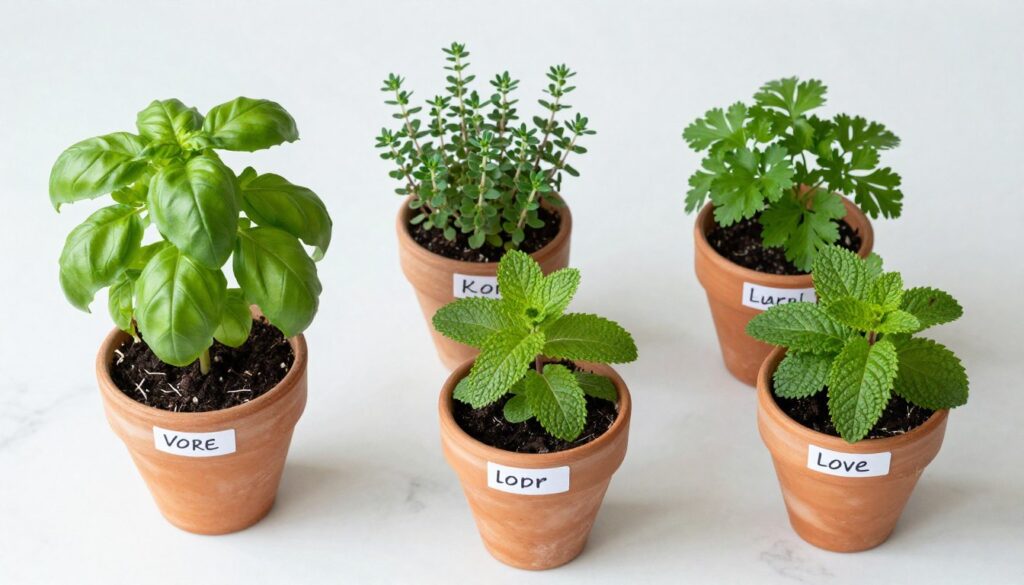
Top Herbs for Compact Indoor Growing
Basil
Fast-growing basil produces abundant leaves in just 28 days. This warm-weather herb needs consistent moisture and bright light. Pinch stem tips regularly to encourage bushy growth.
Perfect for Italian dishes, pesto, and fresh salads. Basil reaches 12 to 24 inches tall in containers.
Mint
Hardy mint tolerates partial shade and bounces back quickly from harvesting. This vigorous grower needs its own pot to prevent root spread. Harvest up to one-quarter of the plant at once.
Ideal for teas, cocktails, and desserts. Mint thrives with minimal attention.
Parsley
Reliable parsley grows steadily in medium light conditions. Cut outer leaves at the base to encourage center growth. This biennial herb provides fresh harvests for months.
Essential for garnishes, salads, and Mediterranean cooking. Parsley adapts to cooler temperatures.
Thyme
Compact thyme needs minimal water and tolerates drier soil. This Mediterranean herb grows 6 to 12 inches tall. Trim sprigs as needed throughout the growing season.
Perfect for roasted vegetables, soups, and meat dishes. Thyme handles lower humidity.
Chives
Quick-growing chives tolerate varying conditions. Cut stems at soil level for continuous regrowth. These onion-family herbs reach 8 to 12 inches in height.
Great for baked potatoes, eggs, and cream sauces. Chives produce attractive purple flowers.
Oregano
Low-maintenance oregano thrives with weekly watering. This aromatic herb grows steadily in bright light. Trim stems to maintain compact shape.
Essential for pizza, pasta, and Greek dishes. Oregano develops stronger flavor as it matures.
Herbs to Avoid in Very Small Spaces
Some popular herbs demand more space than small kitchens offer. Rosemary grows into large woody shrubs requiring 12-inch pots minimum. Dill and cilantro bolt quickly indoors and need frequent replanting.
Lemongrass reaches 3 feet tall with extensive root systems. Bay laurel eventually outgrows container limits. Save these space-hungry herbs for outdoor gardens or larger indoor areas.
Space-Saving Tip: Choose herbs you actually cook with regularly. Three well-used herbs provide more value than six neglected varieties crowding your windowsill.
Essential Supplies for Your Indoor Herb Garden
Setting up your indoor herb garden requires just a few basic supplies. Quality materials make the difference between thriving plants and constant frustration. Invest in proper containers and soil from the start.
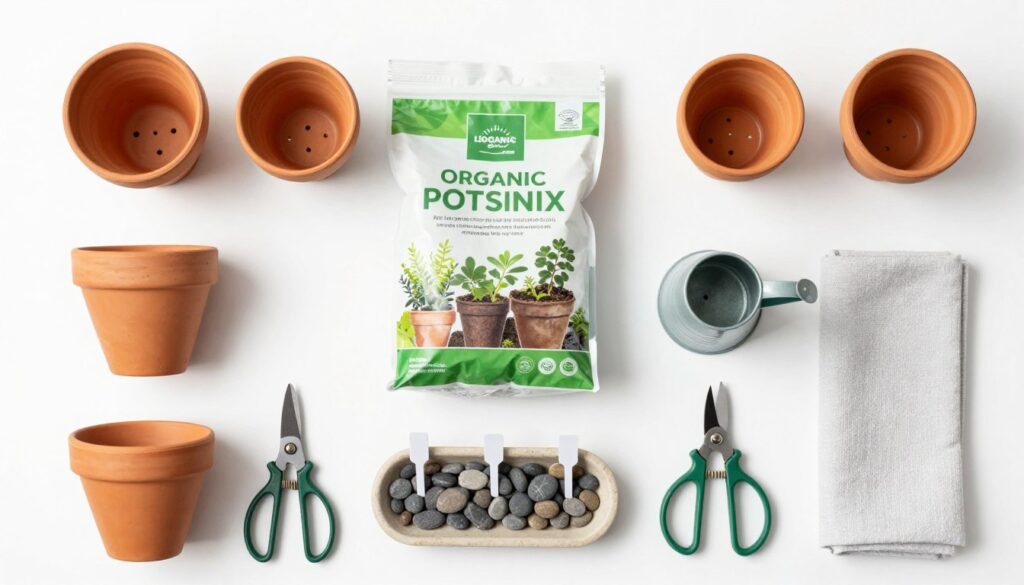
Containers That Work in Small Kitchens
Your containers must have drainage holes to prevent root rot. This single feature matters more than pot material or appearance. Water needs an escape route or your herbs will drown.
Terra cotta pots regulate moisture naturally and come with built-in drainage. These affordable clay containers suit most herbs perfectly. Their porous material allows roots to breathe.
Choose 6 to 8-inch diameter pots for vigorous growers like basil and mint. Compact herbs like thyme thrive in 4-inch containers. Match pot size to mature plant dimensions.
- Place saucers under pots to catch excess water
- Empty saucers within 30 minutes after watering
- Use weed barrier cloth over drainage holes to keep soil contained
- Select food-grade untreated materials for edible plants
- Avoid decorative pots without drainage unless used as outer sleeves
The Right Soil Mix Matters
Never use garden soil for indoor containers. Outdoor soil compacts in pots and retains excess moisture. Your herbs need lightweight growing medium designed for container use.
Quality potting mix drains well while holding enough moisture for root access. Look for organic blends with perlite or vermiculite. These amendments create air pockets that prevent waterlogging.
Mediterranean herbs like thyme and oregano prefer extra-fast drainage. Mix equal parts cactus soil with regular potting mix for these varieties. Moisture-loving basil and parsley thrive in standard potting soil enriched with compost.
Add 2 to 3 inches of organic compost to pot tops when planting. This nutrient boost gives herbs a strong start without chemical fertilizers.
Additional Tools for Success
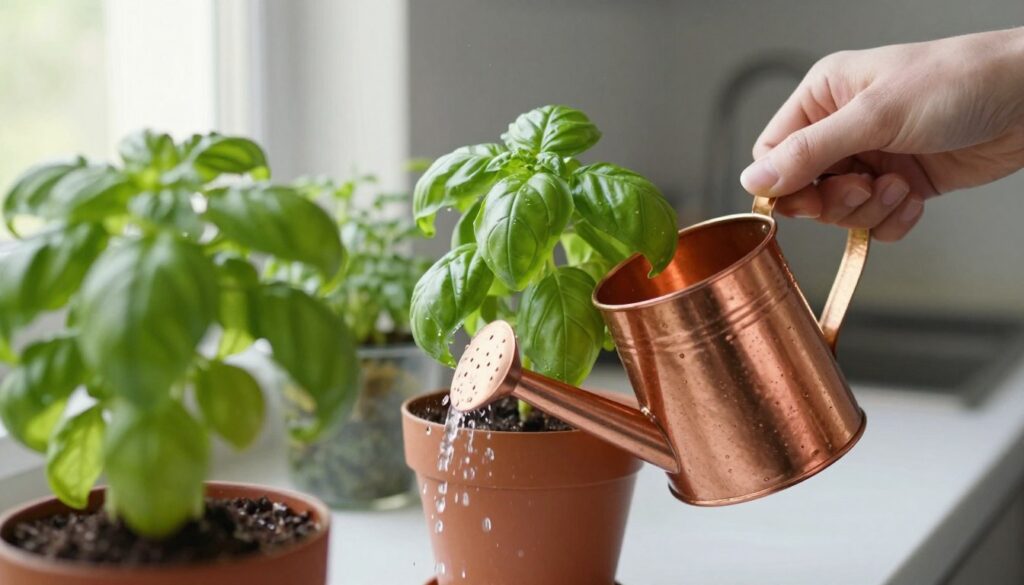
A small watering can with a narrow spout delivers water directly to soil without splashing leaves. Wet foliage invites fungal diseases in indoor environments.
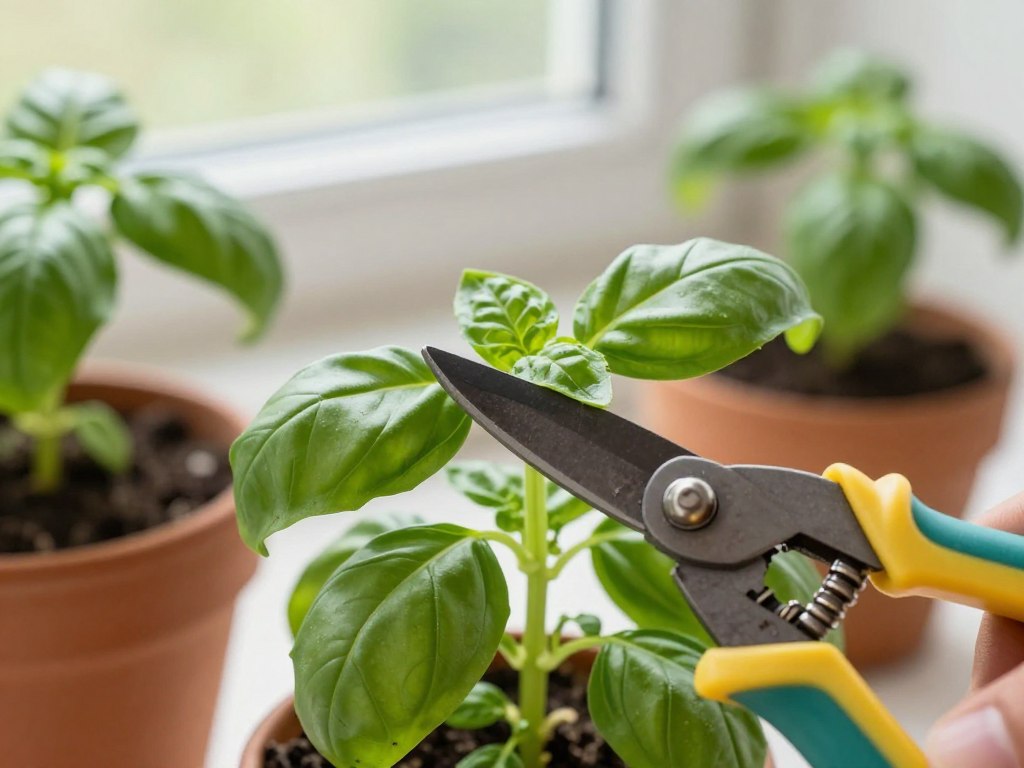
Clean pruning shears make precise cuts that heal quickly. Pinching herbs with fingers works but scissors give cleaner results. Sharp tools prevent stem damage.
Plant markers help track varieties when you grow multiple herbs. Simple wooden stakes or recycled materials work fine. Label plants when they look similar as seedlings.
Space-Saving Setup Ideas for Small Kitchens
Limited kitchen space demands creative thinking. Vertical solutions and strategic placement multiply your growing area without cluttering counters. Every wall and corner offers potential herb garden real estate.
Windowsill Gardens
South or southwest-facing windows provide ideal light for herb gardens. Position containers directly on wide sills where herbs receive 6 or more hours of direct sun daily.
Narrow sills accommodate specially designed windowsill planters. These long rectangular containers hold multiple herbs in one vessel. Space plants 2 to 3 inches apart for air circulation.
Rotate pots 90 degrees weekly so all sides receive equal light. This prevents lopsided growth toward the window. North or east-facing windows work for shade-tolerant herbs like mint and parsley.
Vertical Wall Gardens
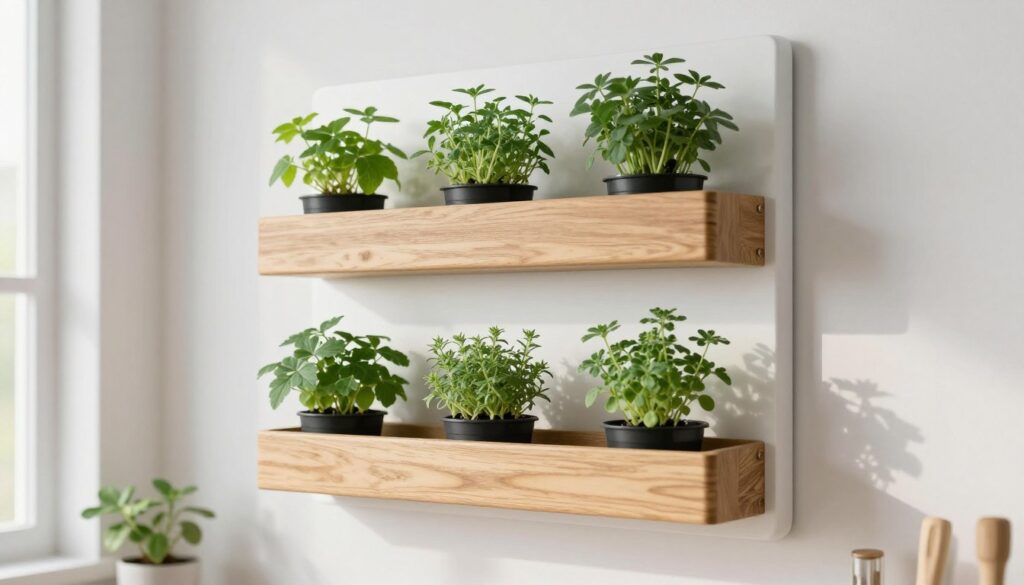
Wall-mounted systems create herb gardens in unused vertical space. Install tiered shelving 12 inches apart with shade-tolerant herbs on lower levels and sun-lovers above.
Hanging rail systems with S-hooks hold individual pots at varying heights. Adjust hook positions as plants grow. This flexibility adapts to changing garden needs.
Repurposed hanging shoe organizers become instant herb walls. Line fabric pockets with moisture-control cloth. Each pocket holds one 4-inch container perfectly.
Vertical Garden Options
- Wall-mounted floating shelves in staggered arrangements
- Ladder-style plant stands leaning against walls
- Magnetic containers on metal backsplashes
- Over-door hanging organizers with clear pockets
- Tension-rod systems between cabinets
- Pegboard walls with container hooks
Counter and Table Solutions
Tiered plant stands place herbs at different heights on limited counter space. Three-tier corner units fit perfectly in unused kitchen angles. These stands create visual interest while maximizing growing area.
Rolling carts move herb gardens to follow sunlight throughout the day. Position carts near windows during peak sun hours. Roll them aside when you need counter space for cooking.
Under-cabinet lighting supplements natural light for herbs positioned away from windows. LED grow light strips mount easily beneath cabinets. Run lights 12 to 14 hours daily for optimal growth.
Hanging Gardens
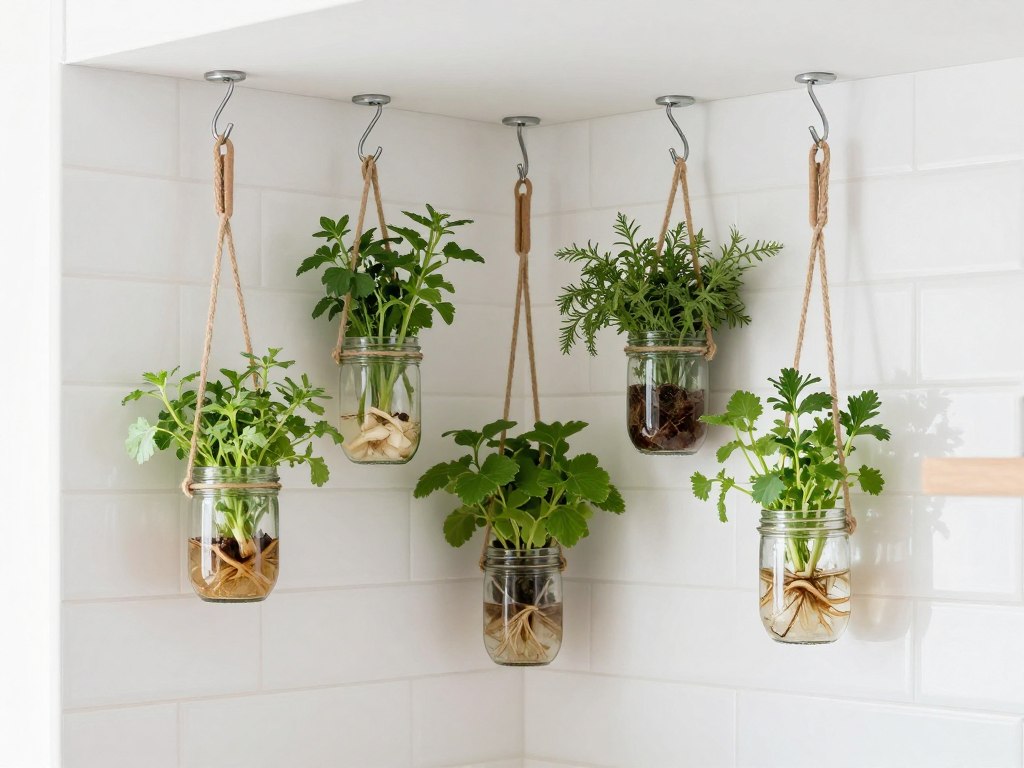
Ceiling hooks support hanging planters above counters or tables. Space hanging pots at different heights to create layered garden displays. Ensure planters have attached saucers to catch drips.
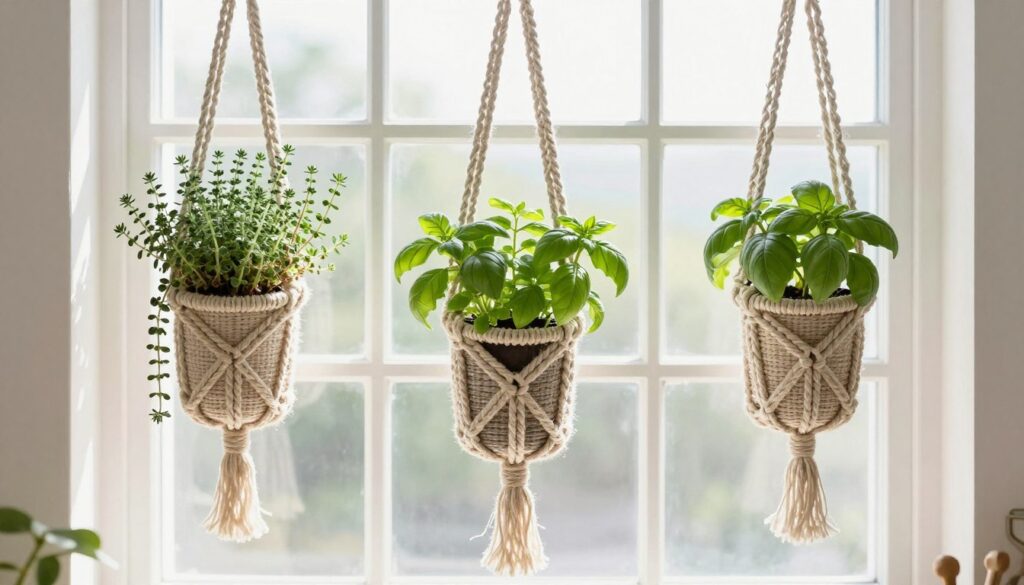
Macrame plant hangers add decorative appeal while saving space. These woven holders accommodate standard pots. Position trailing herbs like oregano in hanging containers where stems cascade attractively.
Get Weekly Herb Growing Tips
Join our community of indoor gardeners and receive practical tips every week. Learn troubleshooting techniques, seasonal care advice, and creative recipe ideas for your homegrown herbs. Perfect for beginners who want ongoing support.
Lighting Requirements for Indoor Herbs
Light determines whether your herbs thrive or merely survive. Most culinary herbs need 6 or more hours of direct sunlight daily for robust growth and strong flavors. Insufficient light produces pale leaves and leggy stems.
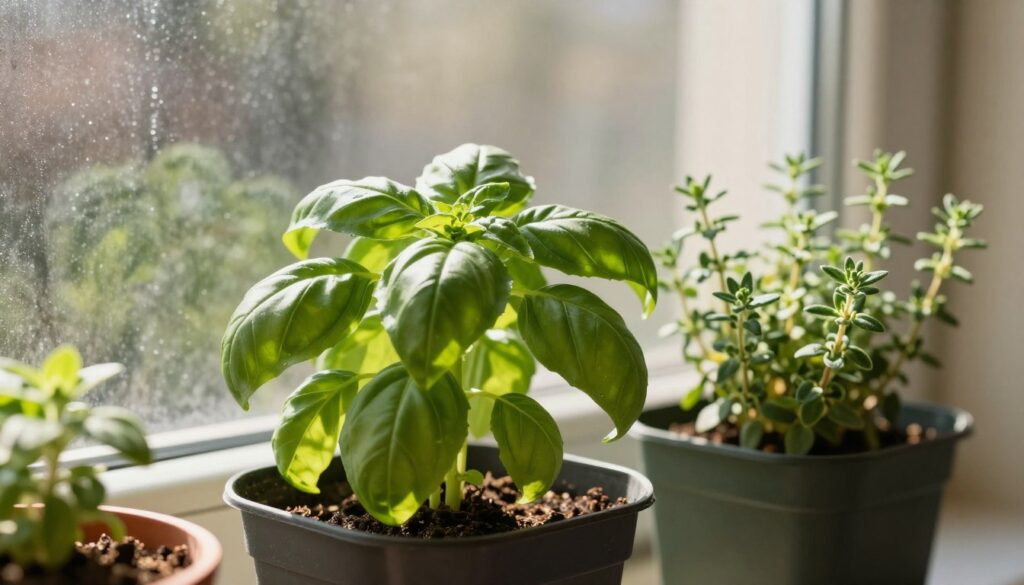
Windows facing south receive the most intense light throughout the day. West-facing windows capture afternoon sun. These orientations suit sun-loving herbs like basil, oregano, and thyme.
Maximizing Natural Light
Position herbs as close to window glass as safe without touching cold surfaces. In winter, 4 to 6 inches of space prevents leaf damage from temperature extremes.
Reflective surfaces amplify available light. White walls or aluminum foil placed behind plants bounce up to 30 percent more light onto foliage. This simple trick benefits herbs in moderate light conditions.
Keep windows clean for maximum light transmission. Dirty glass blocks significant sunlight. Wipe window surfaces monthly during peak growing season.
Signs Your Herbs Need More Light
- Long gaps between leaf sets on stems
- Pale green or yellowish leaf color
- Stems stretching toward light source
- Weak spindly growth instead of compact shape
- Reduced leaf production over time
- Loss of characteristic herb fragrance
These symptoms indicate insufficient light levels. Move herbs closer to windows or supplement with artificial lighting. Address light deficiency quickly before plants decline beyond recovery.
Rotate containers 90 degrees weekly to distribute light evenly. Plants naturally grow toward their light source. Regular rotation prevents one-sided development.
Supplemental Grow Lights
LED grow lights solve limited natural light in small kitchens. Full-spectrum bulbs provide the blue and red wavelengths plants need for photosynthesis. Position lights 12 to 14 inches above herb foliage.
Run grow lights 14 to 16 hours daily to compensate for lower intensity than natural sun. Timer switches automate on-off cycles. Consistent lighting schedules produce better results than irregular supplementation.
Clip-on LED fixtures attach easily to shelves or cabinet edges. These adjustable lights direct illumination exactly where needed. Choose models with flexible gooseneck arms for precise positioning.
Energy-Efficient Choice: Modern LED grow lights use minimal electricity compared to older fluorescent tubes. Monthly operating costs typically run under three dollars for continuous use.
Floor-standing grow light units work well for larger herb collections. These lamps provide consistent overhead lighting similar to natural sun. Position multiple herbs under one fixture to maximize efficiency.
Watering and Care Routine
Consistent care routines keep herbs healthy without requiring extensive time. Simple habits practiced regularly prevent most common problems. Your herbs need predictable conditions rather than perfect conditions.
Proper Watering Techniques
Check soil moisture before watering by inserting your finger one inch below the surface. Dry soil needs water while damp soil should wait. This finger test prevents both overwatering and underwatering.
Mediterranean herbs like thyme and oregano prefer drying between waterings. Moisture-loving basil and parsley need consistently damp but not soggy soil. Group herbs with similar water needs together for efficient care.
Water thoroughly until excess drains from pot holes. This complete soaking ensures entire root systems receive moisture. Shallow watering creates weak shallow roots.
Pour water directly onto soil rather than plant leaves. Wet foliage encourages fungal diseases in indoor humidity. Use narrow-spout watering cans for precise application.
Empty saucers within 30 minutes after watering. Standing water leads to root rot quickly. Never let pot bottoms sit in accumulated water.
Feeding Your Herbs
Container herbs exhaust soil nutrients faster than outdoor plants. Feed actively growing herbs every 2 weeks with half-strength organic fertilizer. This gentle approach prevents leaf burn while supplying needed nutrition.
Look for balanced organic formulas designed for edible plants. Avoid synthetic fertilizers that accumulate salts in containers. Fish emulsion or seaweed extracts provide excellent nutrition.
Reduce feeding to monthly during slower winter growth. Plants require fewer nutrients when not actively producing new foliage. Resume regular feeding when spring growth accelerates.
Yellow Leaves Signal Problems: Pale lower leaves indicate nitrogen deficiency requiring more fertilizer. Yellowing between leaf veins points to iron needs. Address nutrient issues promptly for recovery.
Temperature and Humidity Management
Most herbs thrive between 65 and 75 degrees Fahrenheit. Kitchens naturally maintain this range during cooking activities. Keep herbs away from cold window drafts and heating vents.
Basil demands consistent warmth around 70 degrees. Cooler temperatures slow growth and cause leaf blackening. Position temperature-sensitive basil in the warmest kitchen spots.
Maintain 40 to 60 percent humidity for optimal herb health. Dry indoor air during winter heating seasons stresses plants. Group containers on pebble-filled trays with water below pebble lines.
Mist Mediterranean herbs like rosemary twice weekly. Basil and parsley benefit from daily misting during dry periods. Light misting increases local humidity without soaking foliage.
Pruning and Harvesting
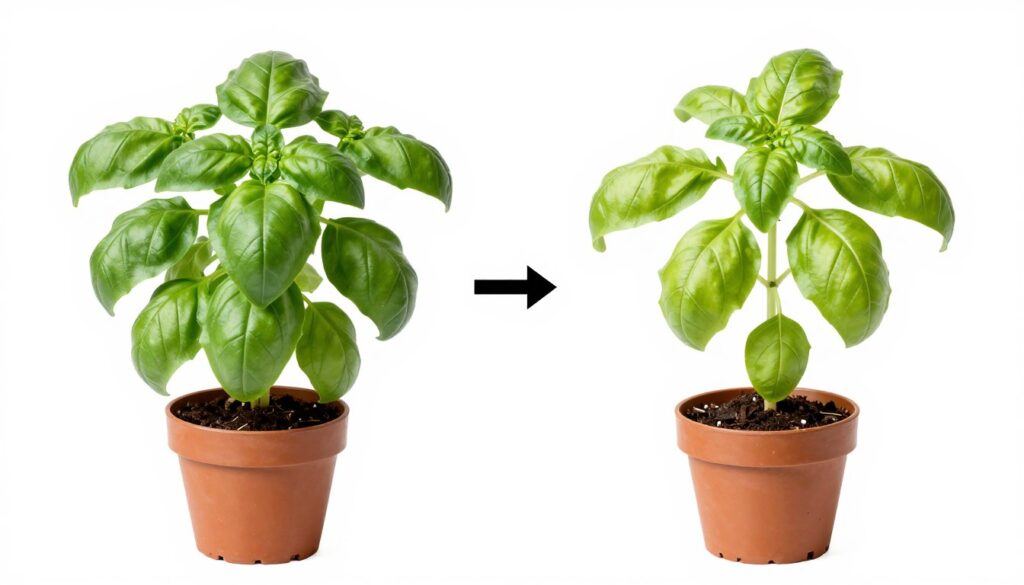
Regular harvesting encourages bushier growth and prevents flowering. Cut basil stems one-quarter inch above leaf pairs to trigger two new branches. This pruning technique multiplies leaf production.
Harvest woody herbs like thyme and oregano by trimming stems back by one-third when they reach 6 inches. Leave at least 3 sets of leaves for recovery. Clean cuts heal faster than tears.
Remove flower buds immediately on most herbs. Flowering signals the end of leaf production. Pinch off buds to extend harvest season.
Never remove more than one-third of any plant at once. Excessive harvesting weakens plants beyond recovery. Moderate pruning maintains plant vigor.
Troubleshooting Common Problems
Even well-maintained herb gardens encounter occasional issues. Quick identification and response prevent minor problems from becoming plant losses. Most challenges have straightforward solutions.
Pest Management Indoors
Indoor herbs attract fewer pests than outdoor plants but problems still occur. Inspect herbs weekly for early detection. Catching infestations early makes treatment simple.
Aphids
Tiny soft-bodied insects cluster on new growth. Leaves curl and distort under heavy infestation. Spray plants with room-temperature water to dislodge aphids. Repeat every 3 days until gone.
Spider Mites
Fine webbing under leaves signals spider mite presence. Leaves develop yellow stippling. Increase humidity and mist plants daily. Wash leaves with mild soap solution for severe cases.
Fungus Gnats
Small flying insects around soil indicate overwatering. Adult gnats annoy but larvae damage roots. Let soil dry between waterings. Yellow sticky traps catch adult gnats.
Prevent pest problems through proper spacing and air circulation. Keep herbs 2 to 3 inches apart for airflow between plants. Run a small fan 2 to 3 hours daily to strengthen stems and discourage pests.
Quarantine new herbs before adding to your collection. Inspect purchase plants thoroughly for hitchhiking pests. Two weeks of isolation prevents introducing problems.
Disease Prevention
Fungal diseases thrive in stagnant humid air and wet foliage. Water soil only and maintain good air movement. Proper watering practices prevent most disease issues.
Remove dead or yellowing leaves promptly. Decaying plant material harbors disease organisms. Keep soil surfaces clean of fallen debris.
Sterilize pruning tools between plants with rubbing alcohol. This prevents spreading diseases through contaminated shears. Simple sanitation protects your entire herb collection.
Growth Problems
Leggy stretched growth signals insufficient light. Move herbs closer to windows or add supplemental lighting. Increased light produces compact bushy plants.
Slow growth often indicates nutrient deficiency or root binding. Check whether roots circle pot bottoms. Transplant root-bound herbs to containers 2 inches larger with fresh soil.
Brown leaf tips result from low humidity or accumulated salts. Increase misting frequency and flush pots thoroughly with water monthly to remove salt buildup.
Creative Display Ideas
Functional herb gardens can also enhance your kitchen aesthetics. Creative displays turn practical plants into decorative focal points. Your herbs become conversation pieces while providing fresh flavors.
Mixed Container Arrangements
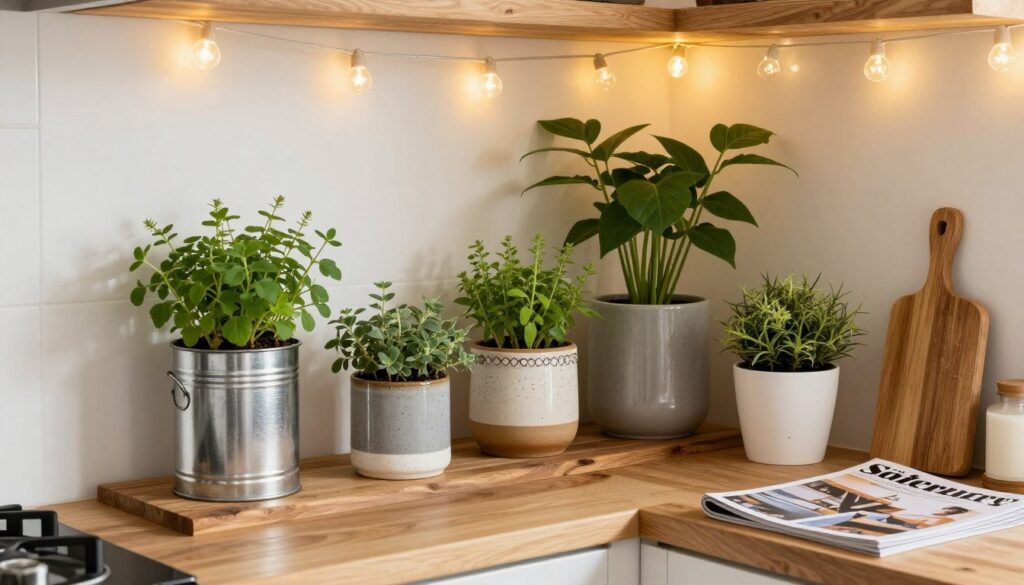
Combine different pot styles for visual interest. Group terra cotta alongside ceramic and metal containers. Varying heights and textures create dynamic displays without requiring more space.
Paint or decorate plain containers to match kitchen decor. Chalkboard paint allows writing herb names directly on pots. Coordinated container colors unify collections.
Repurpose kitchen items as planters. Vintage tin cans, mason jars, and ceramic creamers become charming herb containers. Drill drainage holes in waterproof vessels.
Themed Garden Collections
Create themed herb groupings for specific cuisines. An Italian collection includes basil, oregano, and parsley. Mediterranean gardens feature thyme, rosemary, and sage.
Tea herb gardens group mint, chamomile, and lemon balm together. Cocktail herb collections might include mint, basil, and cilantro. Themed groupings simplify cooking and add cohesive style.
Decorative Accents
Add plant markers with calligraphy or decorative tags. Handwritten labels add personal touches. Vintage spoons or painted stones make unique markers.
String fairy lights near herb displays for evening ambiance. Gentle lighting highlights plants after dark. Battery-operated lights avoid electrical cord clutter.
Place herbs on decorative trays or risers for layered presentation. Cake stands create instant tiered displays. Serving trays corral multiple pots while catching water drips.
Maximizing Your Harvest
Strategic harvesting increases herb production while maintaining plant health. Proper cutting techniques encourage herbs to produce more leaves for future harvests. Your first harvest sets the stage for months of continuous yields.
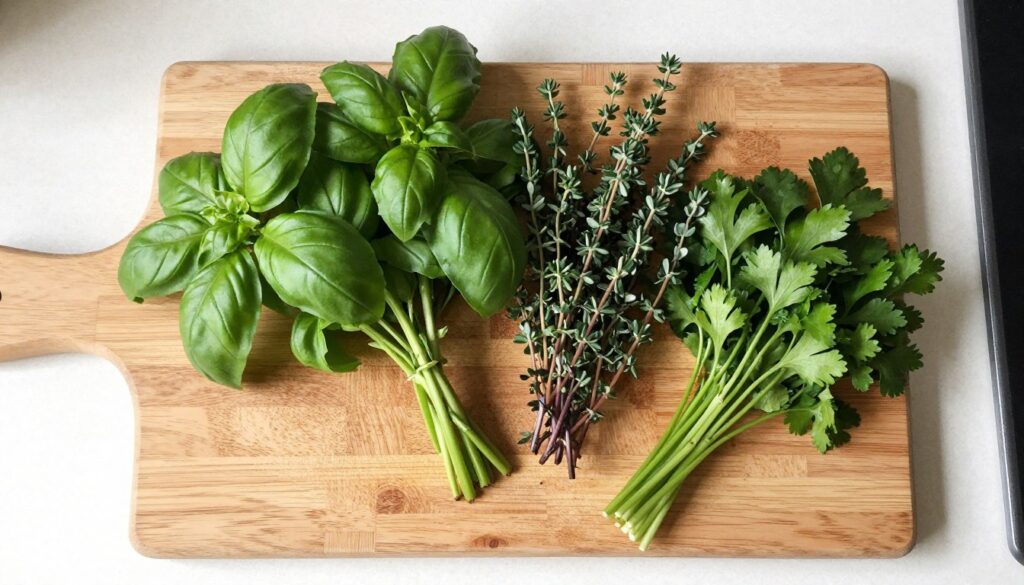
When to Start Harvesting
Wait until herbs reach 6 to 8 inches tall before first harvest. Young plants need time establishing strong root systems. Premature cutting weakens developing herbs.
Harvest in morning after dew dries but before afternoon heat. Early timing captures peak essential oil content. Herbs taste strongest during morning hours.
Avoid harvesting more than one-third of any plant at once. This golden rule maintains enough foliage for photosynthesis. Plants recover quickly from moderate harvesting.
Cutting Techniques by Herb Type
Bushy Herbs (Basil, Mint, Oregano)
Cut stems just above leaf pairs using clean sharp shears. This technique triggers two new branches from each cut. Make cuts at 45-degree angles for faster healing.
Remove flower buds immediately to maintain leaf production. Flowering reduces essential oils in leaves. Regular tip pruning prevents blooming.
Clumping Herbs (Chives, Parsley)
Cut outer stems at soil level to encourage center growth. Leave inner youngest growth intact. New leaves emerge continuously from plant centers.
Harvest entire stems rather than individual leaves. Partial stems heal poorly and invite disease. Complete stem removal looks cleaner.
Storing Your Herb Harvest
Use fresh herbs immediately for best flavor. Rinse leaves gently under cool water and pat dry with paper towels. Excess moisture causes rapid wilting.
Store short-term by placing stems in water glasses like cut flowers. Cover loosely with plastic bags. Herbs stay fresh 3 to 5 days refrigerated this way.
Freeze excess herbs in ice cube trays with water or olive oil. Frozen herb cubes drop easily into soups and sauces. This method preserves flavor for months.
Dry herbs by hanging small bundles upside down in dark warm locations. Proper air circulation prevents mold. Dried herbs maintain potency 6 to 12 months stored in airtight containers.
Seasonal Care Adjustments
Indoor herbs experience seasonal changes despite stable temperatures. Shorter winter days affect growth rates while summer heat increases water needs. Adjusting care routines matches seasonal patterns.
Winter Care Strategies
Reduce watering frequency as growth naturally slows. Herbs require less moisture during shorter day periods. Check soil more carefully before adding water.
Increase supplemental lighting to compensate for reduced daylight hours. Extend grow light duration by 2 to 4 hours daily. Additional light maintains steady growth through dark months.
Move herbs away from cold window glass on freezing nights. Temperature near windows drops significantly after sunset. Protect tender herbs from chill damage.
Boost humidity during heating season. Indoor heating systems dry air substantially. Mist herbs daily or run small humidifiers near plants.
Spring and Summer Growth
Increase watering as temperatures rise and growth accelerates. Herbs consume more moisture during active growing periods. Monitor soil daily during hot spells.
Resume regular fertilizer applications every 2 weeks. Growing herbs need consistent nutrition. Increase feeding slightly for vigorous summer production.
Prune more aggressively during peak growth. Herbs tolerate heavier harvesting when producing abundant new foliage. Regular cutting prevents woody overgrowth.
Consider moving herbs outdoors temporarily during summer months. Gradual acclimation over 7 days prevents shock. Outdoor time strengthens plants before returning inside for fall.
Ready to Transform Your Kitchen?
You now have everything you need to create your thriving indoor herb garden. Start with just 2-3 herbs that you love cooking with. Begin today and enjoy fresh flavors year-round. Download our complete “Small Space Herb Garden Starter Kit” including supply checklists, care calendars, and troubleshooting guides.
Start Growing Fresh Herbs Today
Small kitchens offer perfect opportunities for indoor herb gardening. Limited space actually simplifies care while keeping fresh flavors within arm’s reach during cooking. Your compact kitchen provides everything herbs need to thrive.
Begin with easy varieties like basil, mint, and parsley. These forgiving herbs tolerate beginner mistakes while delivering immediate culinary rewards. Success with starter herbs builds confidence for expanding your collection.
Remember the essentials: proper containers with drainage, quality potting soil, adequate light, and consistent watering. These fundamentals matter more than expensive equipment. Simple setups produce excellent results.
Space-saving vertical gardens and windowsill arrangements maximize growing area without cluttering counters. Creative solutions transform unused walls and corners into productive herb gardens. Every small kitchen has untapped potential.
Regular harvesting improves both plant health and your cooking. Frequent cutting encourages bushier growth and more abundant leaves. Your herbs become more productive the more you use them.
Start your indoor herb garden this week. Fresh basil for pasta tonight. Fragrant rosemary for tomorrow’s roasted chicken. Bright parsley whenever you need finishing touches. These simple pleasures await in your small kitchen.
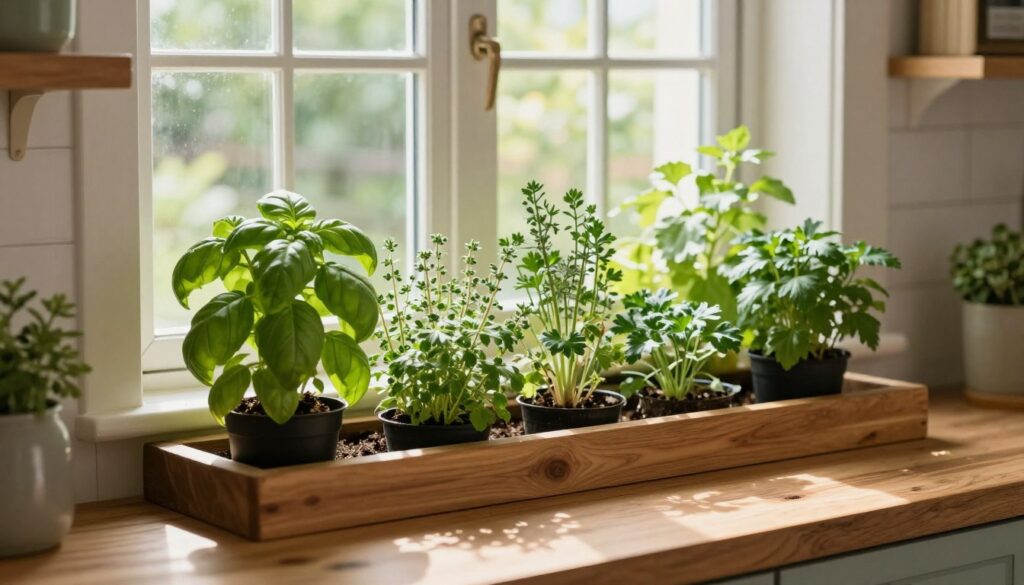
Your kitchen already has everything needed for growing fresh herbs year-round. The only missing ingredient is getting started. Plant your first herbs today and discover how satisfying homegrown flavors transform everyday cooking.