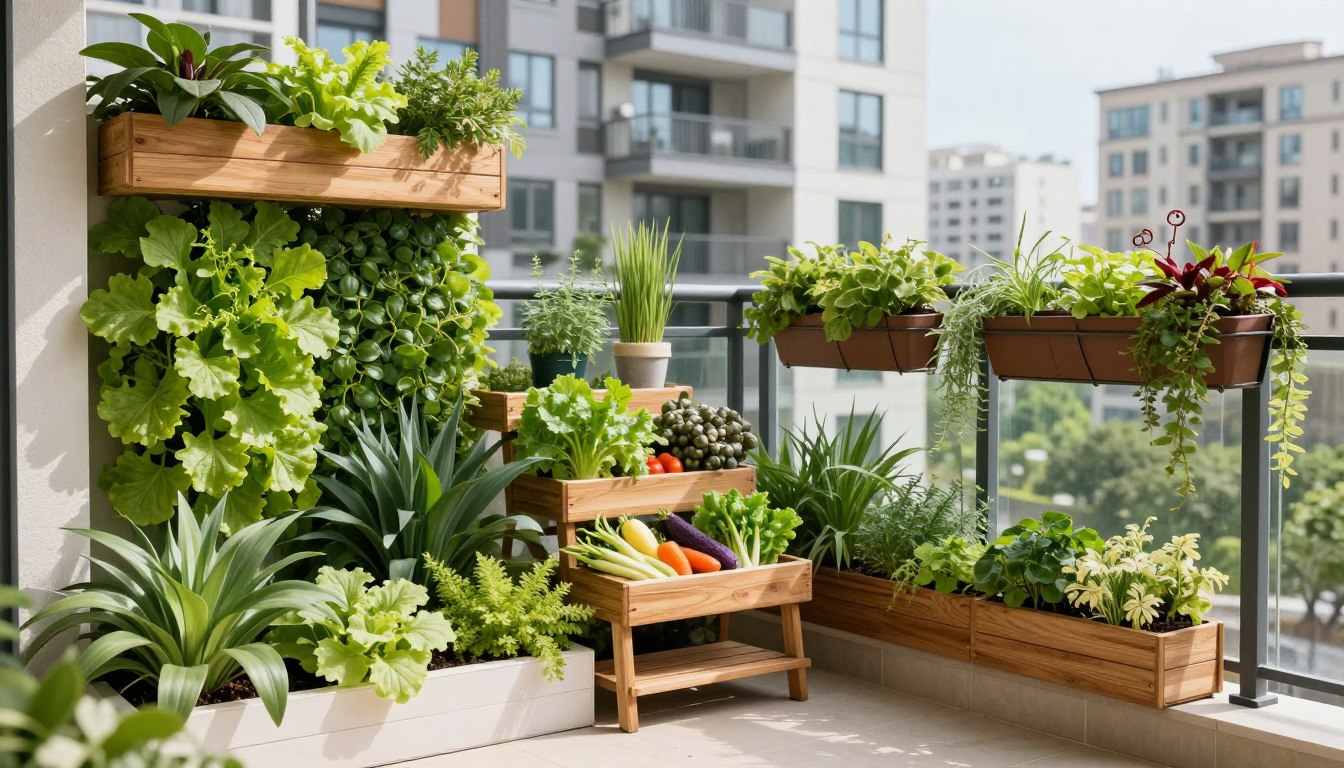
Whether you have a sunny south-facing balcony or a shaded corner space, strategic layout planning can multiply your growing potential by three to five times compared to random pot placement. This comprehensive guide reveals the most effective balcony garden layout ideas for maximum yield, combining vertical growing techniques, smart container selection, and companion planting principles.
From hanging baskets that capture overhead space to tiered systems that create mini-farm layers, you will discover proven layouts that working gardeners use to grow impressive quantities of fresh vegetables, herbs, and even fruits. These are not theoretical concepts but practical, tested approaches that accommodate real-world constraints like weight limits, wind exposure, and limited sun hours.
Understanding Balcony Garden Yield Potential
Before diving into specific layouts, understanding what determines productivity in container gardening helps you make informed decisions. Yield potential on a balcony depends on several interconnected factors that work together to create growing conditions.
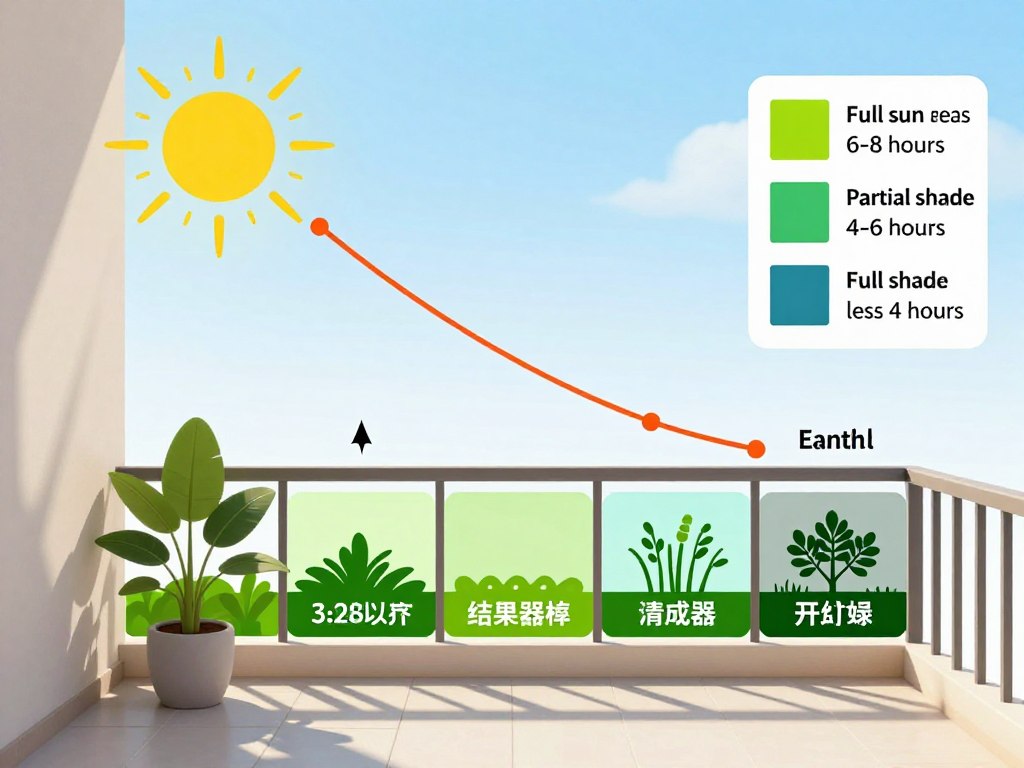
Sunlight availability tops the list as the most critical factor. Most productive vegetables and herbs require six to eight hours of direct sun daily. A south-facing balcony in the Northern Hemisphere captures maximum sunlight throughout the day, while east or west exposures provide partial sun conditions suitable for leafy greens and herbs. Even north-facing balconies can grow shade-tolerant plants like lettuce, spinach, and certain herbs.
Container volume directly impacts root development and plant size. Shallow planters restrict root growth and limit moisture retention, forcing you to water more frequently while producing smaller plants. Deep containers with twelve inches or more of soil depth support extensive root systems that access more nutrients and water, resulting in healthier plants with better yields.
The growing medium quality makes an enormous difference in container gardens. Standard garden soil compacts in pots and restricts drainage. Premium potting mix designed specifically for containers provides the light, fluffy texture that roots need to spread easily while retaining adequate moisture without becoming waterlogged.
Yield Multiplier Tip: Combining proper container depth, quality potting mix, and adequate sun exposure can increase your per-plant yield by 200-300% compared to suboptimal conditions. A single tomato plant in ideal conditions can produce 10-15 pounds of fruit versus just 3-4 pounds in poor conditions.
Weight restrictions on balconies require careful consideration for safety and structural integrity. Large containers filled with moist soil become surprisingly heavy. A standard plastic planter measuring 24 inches long, 12 inches wide, and 12 inches deep, when filled with wet potting mix, can weigh 60-80 pounds. Always verify your balcony’s weight capacity before installing multiple large planters.
Wind exposure affects both plant health and water requirements. Exposed balconies on higher floors experience stronger winds that dry out soil faster and can damage delicate plants. Windbreaks created through strategic plant placement or physical barriers help protect crops while reducing water needs.
Microclimate variations on a single balcony create diverse growing zones. The corner nearest to the building wall stays warmer and more protected, while the outer railing edge receives maximum sun but more wind. Understanding these microclimates allows you to match plants to ideal locations within your space.
Essential Principles for High-Yield Balcony Layouts
Successful balcony garden layouts follow specific design principles that maximize productivity regardless of space size. These foundational concepts apply whether you have a sprawling terrace or a modest Juliet balcony.
Vertical Space Utilization
The most underutilized dimension in balcony gardening is vertical space. While floor space limitations are fixed, growing upward multiplies your planting area dramatically. Walls, railings, and overhead structures offer valuable real estate for crops.
Wall-mounted planters transform blank vertical surfaces into productive growing zones. Modular pocket planters made from felt or plastic attach directly to walls and accommodate herbs, lettuce, and strawberries. These systems can hold twenty to thirty plants in the same footprint that a single floor container would occupy.
Trellises and climbing supports enable vining crops like cucumbers, pole beans, and peas to grow upward rather than sprawling horizontally. A simple bamboo teepee or wire mesh panel against a wall provides structure for these plants to climb, producing substantial harvests from minimal floor space.
Railing planters capitalize on existing balcony infrastructure by attaching containers directly to railings. These specialized planters straddle or hook onto railing bars, creating a productive border around the balcony perimeter without consuming floor area.
Companion Planting Strategies
Companion planting pairs mutually beneficial crops in close proximity to improve growth, deter pests, and maximize space usage. This practice becomes especially valuable in the confined environment of container gardening where plants grow closer together than in traditional gardens.
The classic “Three Sisters” combination demonstrates effective companion planting. Corn provides a natural trellis for climbing beans, while beans fix nitrogen in the soil that corn uses, and sprawling squash shades the soil to retain moisture. On a balcony, you might adapt this by growing pole beans with sunflowers and bush squash varieties.
Herbs and vegetables make excellent companions. Basil planted near tomatoes reputedly improves flavor while repelling aphids and whiteflies. Marigolds interspersed with vegetables deter many common pests through their strong scent. Lettuce grows well in the partial shade created by taller plants like tomatoes, extending its harvest period before bolting.
Beneficial Plant Combinations
- Tomatoes + Basil + Marigolds
- Cucumbers + Radishes + Dill
- Lettuce + Carrots + Chives
- Peppers + Swiss Chard + Oregano
- Beans + Corn + Squash
Plants to Keep Separated
- Tomatoes away from Brassicas (cabbage family)
- Onions away from Beans and Peas
- Fennel isolated from most vegetables
- Potatoes away from Tomatoes
- Cucumbers away from aromatic herbs
Succession Planting for Continuous Harvests
Succession planting staggers crop planting times to ensure continuous harvests rather than a single large harvest followed by empty planters. This technique proves particularly valuable for fast-growing crops with short harvest windows.
For lettuce and other salad greens, plant new seeds every two weeks throughout the growing season. As you harvest mature plants from one container, newly planted containers are growing to harvest size, providing a steady supply of fresh greens.
Quick-growing crops like radishes mature in just three to four weeks. Rather than planting an entire container at once, sow small sections weekly. This approach provides fresh radishes continuously instead of twenty radishes ready simultaneously that you cannot possibly consume before they become tough and woody.
Follow cool-season crops with warm-season replacements as temperatures change. After harvesting spring spinach, replant the same container with summer basil. When tomatoes finish in autumn, use those containers for winter lettuce or kale.
The Vertical Veggie Wall Layout
The vertical veggie wall represents the ultimate space-maximizing layout for balcony gardens. This design transforms a blank wall into a productive vertical farm capable of growing 30-50 plants in an area that might otherwise hold just three or four floor containers.
This layout works best on walls that receive at least six hours of sunlight daily and have adequate structural strength to support the weight of multiple planters. South or west-facing walls typically provide ideal conditions for most vegetables and herbs.
Structure and Components
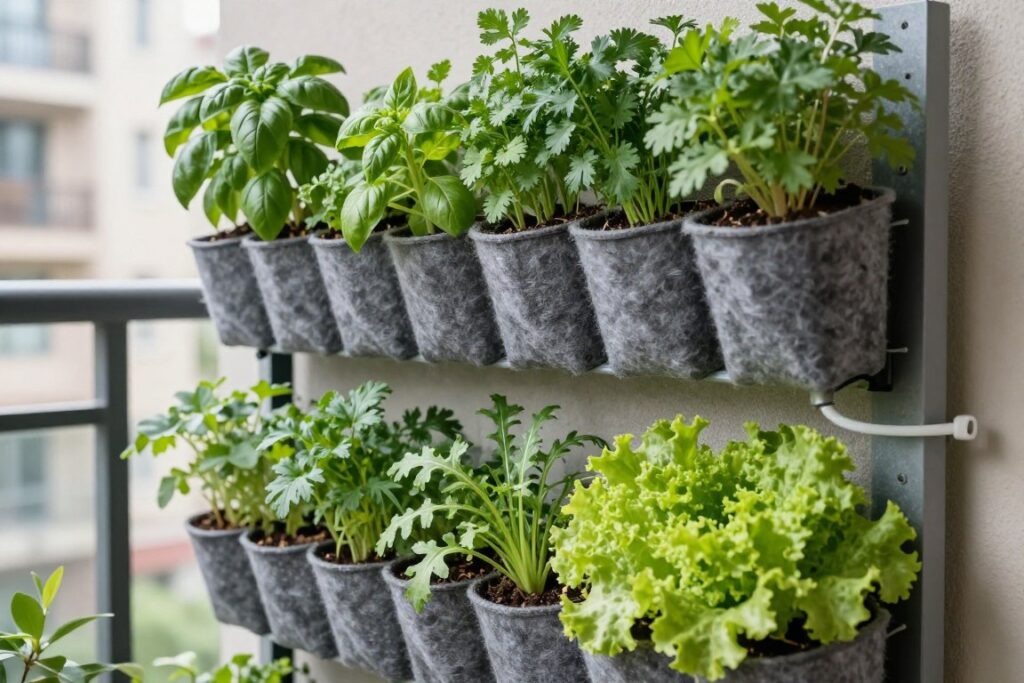
Several systems work well for creating vertical gardens. Modular pocket planters made from durable felt material feature multiple pockets that hang from a single point or rail. These flexible systems adapt to various wall sizes and allow easy rearrangement of plants.
Stackable planters with built-in water reservoirs offer another excellent option. These interlocking units create a tower of growing space while sharing a single irrigation system that waters all levels from the top reservoir.
Grid systems using wire mesh or wooden lattice provide structure for hanging individual pots. This approach offers maximum flexibility as you can position pots precisely where needed and easily swap out plants throughout the season.
Ideal Plant Selection
Vertical walls suit plants with relatively shallow root systems and compact growth habits. Leafy greens thrive in this environment as they need only six to eight inches of soil depth and tolerate some crowding.
Lettuce varieties, especially loose-leaf types, produce continuously when you harvest outer leaves while allowing the center to keep growing. Arugula grows rapidly and provides multiple harvests from the same plants. Spinach tolerates partial shade that may occur in lower sections of the wall.
Herbs excel in vertical gardens. Basil produces abundantly when regularly harvested, encouraging bushy growth. Cilantro and parsley develop well in relatively small spaces. Thyme and oregano cascade attractively from pockets while providing aromatic foliage.
Strawberries adapt beautifully to vertical growing, producing fruit that hangs down from planters making harvest easy while keeping berries clean and away from soil-dwelling pests. Each plant can produce a pound or more of berries per season.
Small-fruited cherry tomatoes work in vertical systems when properly supported. Choose determinate varieties that stay compact rather than indeterminate types that grow continuously. Provide sturdy stakes or cages even in vertical planters.
Pro Yield Tip: Install a simple drip irrigation system for vertical walls to ensure even watering across all levels. Upper pockets dry out faster than lower ones, and hand-watering multiple levels daily becomes tedious. A gravity-fed or small pump system with tubing to each pocket maintains consistent moisture and dramatically improves plant health and yields.
Implementation Strategy
Start by selecting a mounting system appropriate for your wall type. Brick or concrete walls require masonry anchors. Wooden walls or posts accept standard wood screws. Some systems attach to railings rather than walls, eliminating the need for wall penetrations.
Fill pockets or containers with high-quality potting mix formulated for containers. Avoid garden soil which compacts and drains poorly in vertical systems. Add slow-release organic fertilizer at planting to provide nutrients throughout the season.
Position sun-loving plants in the top and middle sections where light exposure is greatest. Place shade-tolerant crops in lower pockets that may receive less direct sunlight. This strategic placement optimizes growing conditions for each plant type.
Water vertical gardens more frequently than floor containers as smaller soil volumes dry out quickly, especially in upper sections. Check moisture daily by touching the soil in several pockets. If the top inch feels dry, water thoroughly until excess drains from the bottom.
Harvest regularly to encourage continued production. For leafy greens, pick outer leaves frequently rather than waiting for entire heads to mature. This “cut and come again” harvesting method extends production for months.
The Tiered Herb and Salad Station
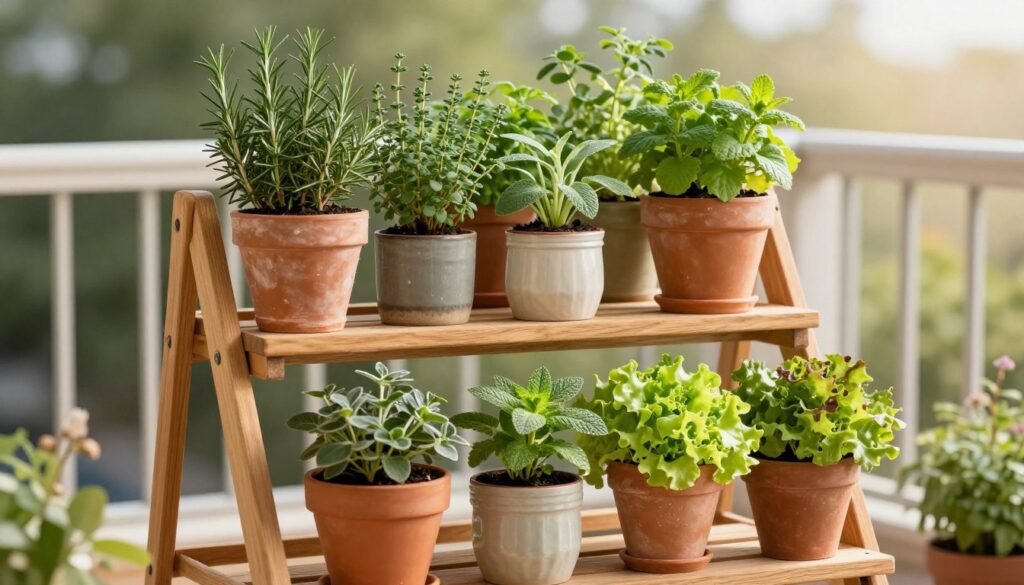
The tiered herb and salad station creates a compact, highly productive mini-farm using stepped or ladder-style shelving. This layout combines excellent accessibility with impressive yields, making it ideal for gardeners who want a dedicated culinary garden right outside their kitchen door.
This design works particularly well on balconies with partial to full sun exposure. The tiered structure ensures that each plant receives adequate light even when positioned behind other containers. The varied heights also create visual interest while maximizing growing area.
Structure Design
Purpose-built plant stands with three to five tiers provide ready-made solutions for this layout. Look for units constructed from weather-resistant materials like powder-coated metal, cedar, or composite materials that withstand outdoor conditions without rotting or rusting.
Ladder-style shelving creates an attractive, rustic appearance while offering excellent stability. These units lean against walls at an angle, with each rung serving as a shelf for containers. The sloped design ensures that upper plants do not completely shade lower ones.
Stair-step platforms built from weather-resistant wood or composite decking create custom solutions for awkward spaces. These platforms can fill corners or follow railing lines, adapting to your specific balcony configuration.
Optimal Plant Arrangement
Arrange plants on tiers according to height, light requirements, and harvest frequency. Place tall, sun-loving plants on upper tiers where they receive maximum light without shading lower plants. Position shorter plants and shade-tolerant varieties on lower levels.
Top tier plants should include tall herbs like rosemary, which can reach two feet or more in containers. Large-leafed basil varieties that grow bushy also work well here. Cherry tomatoes in compact determinate varieties fit nicely on top shelves with proper support stakes.
Middle tiers accommodate medium-height herbs and vegetables. Parsley develops into substantial plants over time. Cilantro grows quickly during cool weather. Bush-type peppers produce well in this position. Lettuce heads develop nicely with the partial shade from upper plants preventing premature bolting during warmer periods.
Bottom tiers suit shade-tolerant greens and low-growing herbs. Spinach tolerates less direct sun and appreciates cooler conditions near the balcony floor. Thyme spreads and cascades attractively from lower positions. Chives remain compact while producing both edible leaves and flowers.
Tier Placement Guide
- Top Tier: Full sun plants, tall herbs (rosemary, large basil), compact tomatoes
- Upper-Middle Tier: Heat-loving herbs (oregano, thyme), small peppers, trailing herbs
- Lower-Middle Tier: Medium herbs (parsley, cilantro), lettuce, arugula, bush beans
- Bottom Tier: Shade-tolerant greens (spinach, mustard), low herbs (thyme, chives), root vegetables in deep pots
Container Recommendations
Select containers that fit shelf dimensions while providing adequate root space. Rectangular planters maximize shelf space efficiency better than round pots. Ensure each container has drainage holes to prevent waterlogging.
Use lightweight potting mix rather than heavy garden soil to reduce weight load on shelving units. Quality potting mix provides better drainage and aeration in containers compared to standard soil.
Consider self-watering containers for middle and lower tiers where daily watering access might be less convenient. These containers have built-in reservoirs that reduce watering frequency to every few days.
Maintenance and Harvest Tips
Water tiered gardens thoughtfully to avoid runoff from upper tiers flooding lower ones. Water each tier separately and allow excess to drain before watering the next level. Alternatively, position drip trays under containers to catch runoff.
Rotate containers periodically to ensure even growth, especially for plants on lower tiers that may lean toward light sources. A quarter turn every week or two promotes balanced growth and prevents plants from becoming lopsided.
Fertilize herbs and salad greens every two to three weeks during active growth periods. Use diluted liquid fertilizer at half the recommended strength for vegetables to avoid over-fertilization that can reduce flavor in herbs and make lettuce bitter.
Harvest herbs in the morning after dew has dried but before afternoon heat intensifies essential oils. For most culinary herbs, regular harvesting encourages bushier growth and higher yields. Remove no more than one-third of the plant at any single harvest to maintain vigor.
Practice succession planting with salad greens by reserving space on one tier for new plantings every two weeks. As you harvest mature lettuce from one container, seeds germinating in another container will be ready to move up in a few weeks.
Get Your Free Seasonal Planting Calendar
Never miss the optimal planting window for your balcony garden. Download our comprehensive seasonal planting calendar designed specifically for container gardens. Includes planting dates, harvest timelines, and succession planting schedules for 30+ vegetables and herbs.
The Sun-Trapping Corner Farm
The sun-trapping corner farm layout capitalizes on the microclimate advantages that balcony corners naturally provide. Corners typically offer protection from wind, retain heat from adjacent walls, and when positioned correctly, capture extended sunlight exposure throughout the day.
This layout proves particularly effective on balconies with southeast or southwest corner exposure where morning or afternoon sun lingers longer than on flat wall sections. The corner creates a natural amphitheater effect that reflects and concentrates light while blocking harsh winds.
Layout Configuration
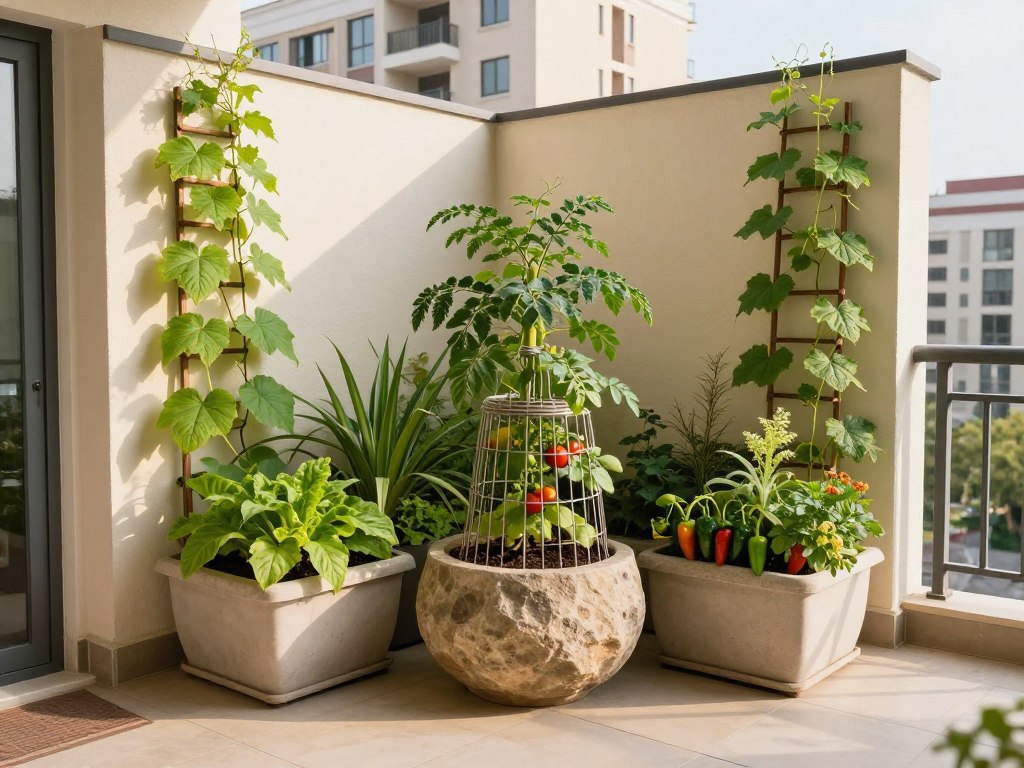
Arrange large containers in an L-shape or arc pattern that follows the corner’s natural geometry. This configuration creates depth and layering while maximizing the number of plants that receive direct sunlight. Position tallest plants at the back corner point with progressively shorter plants stepping down toward the balcony’s open edge.
Use the corner walls as vertical growing surfaces by mounting trellises or wall planters. Vining plants like cucumbers or pole beans climb these structures, producing food vertically while leaving floor space for additional containers.
Place a substantial cornerstone planter as the focal point. This larger container (20-30 gallon capacity) can support a single large tomato plant, a small fruit tree in dwarf variety, or a combination of complementary vegetables. The corner position provides stability for this heavier container while the walls protect from wind that could topple tall plants.
Ideal Crops for Corner Farms
Tomatoes thrive in corner placements where warmth accumulates and walls provide wind protection. Indeterminate varieties that grow tall throughout the season produce the highest yields but require sturdy cages or stakes. A single well-maintained tomato plant in ideal conditions can produce 15-25 pounds of fruit.
Peppers appreciate the warm microclimate corners provide. Both sweet bell peppers and hot chile varieties produce well in containers with adequate depth. Plants typically reach two to three feet tall, fitting nicely in the mid-layer of a corner arrangement.
Eggplants grow successfully in warm corner positions with good sun exposure. Choose compact varieties bred for containers rather than traditional large types. Each plant can produce six to ten fruits over the season when grown in large containers with consistent watering.
Dwarf fruit trees, including citrus varieties, apples, or figs, adapt well to very large corner containers. These miniature trees provide beauty, shade, and food production while serving as the dramatic focal point of the layout. Protection from the corner location extends the growing season for these more delicate plants.
Pole beans trained up corner trellises produce heavily in vertical space. Each vine can yield two to three pounds of beans over a six to eight week harvest period. Plant multiple vines on the same trellis for continuous harvest as some plants finish while others continue producing.
Microclimate Management
Monitor temperature in corner locations, especially during summer when heat can accumulate to levels stressful for plants. While most vegetables appreciate warmth, excessive heat above 95 degrees Fahrenheit can damage plants and reduce fruit set in tomatoes and peppers.
Provide shade cloth or temporary shading during extreme heat waves to protect plants. A simple shade cloth suspended above the corner during the hottest part of the day can reduce temperatures by 10-15 degrees while still allowing adequate light for photosynthesis.
Water corner gardens attentively as the warm microclimate and increased sun exposure accelerate evaporation. Large containers in corners may need watering daily during peak summer, whereas the same container in a more exposed location might need water every other day.
Take advantage of the extended growing season corners provide by starting warm-season crops earlier in spring and continuing harvests later into fall. The corner’s protection can extend your tomato season by two to four weeks on each end compared to more exposed locations.
The Rail Planter and Hanging Basket Combination
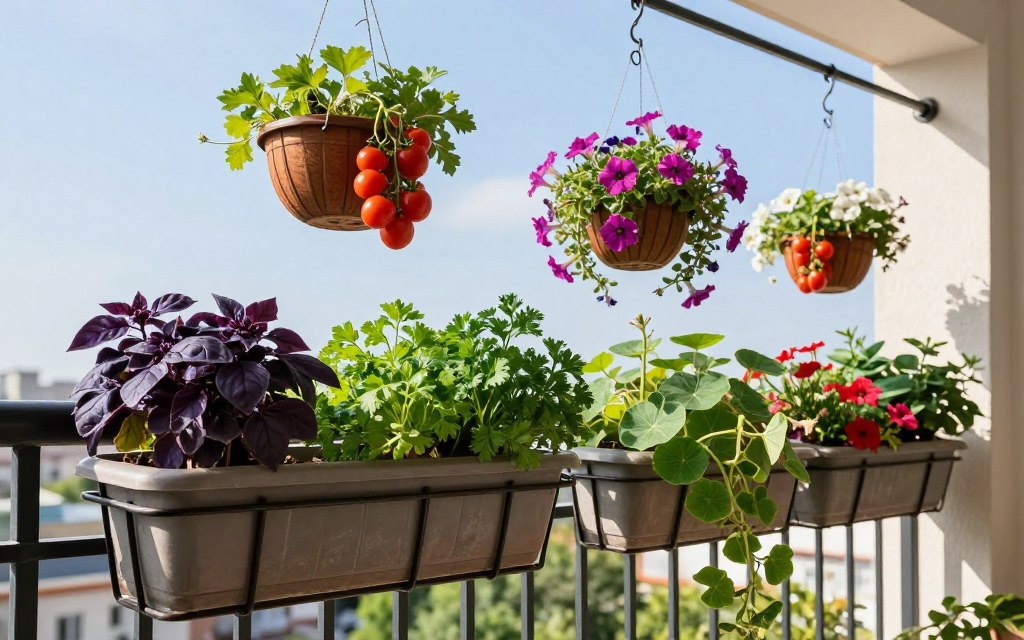
This layout maximizes balcony productivity by utilizing two often-overlooked growing zones: the railing perimeter and the overhead space. Railing planters and hanging baskets add substantial growing area without consuming any floor space, making this approach ideal for very small balconies where every square foot matters.
The combination creates three distinct growing levels: floor containers, mid-level railing planters at approximately waist height, and overhead hanging baskets. This vertical diversity accommodates a wide variety of crops with different growth habits and light requirements.
Railing Planter Selection and Installation
Railing planters come in several styles adapted to different railing types. Saddle-style planters straddle flat-top railings, hanging evenly on both sides for stability. Hook-style planters attach to vertical railing bars or horizontal top rails through adjustable brackets.
Window box style planters mounted to railings with brackets provide the most growing volume and stability. These longer, deeper containers support multiple plants while distributing weight across several mounting points.
Before installing railing planters, verify your building’s rules regarding railings. Some properties prohibit items attached to railings for safety or aesthetic reasons. Check weight capacity, especially for upper-floor balconies where railings may have specific load limits.
Install planters securely using all provided hardware. Test stability by gently pulling and pushing planters before adding soil and plants. A poorly secured planter can fall, endangering people below and losing your entire investment in plants and materials.
Hanging Basket Setup
Hanging baskets require secure overhead attachment points capable of supporting 15-30 pounds when containers are saturated with water. Locate ceiling joists or structural beams using a stud finder, and install heavy-duty hooks rated for outdoor use.
Self-watering hanging baskets dramatically reduce maintenance compared to standard baskets that dry out quickly. Built-in reservoirs provide moisture for several days, reducing the need to climb on stools for daily watering.
Position hanging baskets carefully to avoid creating too much shade on plants below. Hang baskets slightly toward the outer balcony edge so morning sun can reach both hanging plants and floor containers. Adjust heights so baskets hang at least six inches above railing planters to prevent crowding.
Plant Selection for Multi-Level Growing
Railing planters work beautifully for herbs and small vegetables. Compact basil varieties stay bushy without overwhelming neighboring plants. Parsley, cilantro, chives, and thyme all produce well in the relatively shallow depth of railing planters.
Trailing plants create attractive displays in railing planters as their foliage cascades down the balcony exterior. Trailing rosemary varieties, creeping thyme, and oregano soften the hard lines of railings while producing edible leaves. Nasturtiums provide edible flowers and leaves while creating a colorful border.
Hanging baskets excel with naturally cascading plants that take advantage of the suspended position. Cherry tomatoes in determinate varieties produce heavily while stems laden with fruit hang down for easy picking. Strawberries trail beautifully while keeping fruit clean and visible.
Peppers in compact varieties adapt well to hanging baskets when given adequate container depth. Choose smaller-fruited varieties that do not become too heavy as fruits develop. Each plant can produce eight to twelve peppers throughout the season.
Cucumbers grow successfully in hanging baskets when you select bush or container varieties rather than vining types. These compact plants produce full-size cucumbers from a small plant that fits in a standard hanging basket.
Advantages of Rail and Hanging Combination
- Adds 30-50% more growing space without using floor area
- Easy access for harvesting and maintenance at comfortable heights
- Excellent air circulation reduces disease problems
- Creates privacy screen from neighbors while producing food
- Trailing plants keep fruit clean and visible for timely harvest
- Flexible arrangement allows seasonal changes in plant selection
Considerations and Challenges
- Requires sturdy mounting points and proper installation for safety
- Hanging baskets dry out quickly and may need daily watering
- Limited soil depth in some railing planters restricts root growth
- Wind exposure on railings can damage delicate plants
- Weight accumulation requires monitoring on older balconies
- May violate building regulations on railing attachments
Maintenance for Multi-Level Systems
Establish a watering routine that checks all levels daily. Hanging baskets and railing planters typically dry out faster than floor containers due to increased air circulation and sun exposure. Touch soil in multiple containers to assess moisture levels rather than watering on a fixed schedule.
Fertilize railing and hanging plants more frequently than floor containers. The limited soil volume in these smaller containers holds fewer nutrients. Apply diluted liquid fertilizer weekly during active growth periods rather than relying solely on slow-release granular fertilizers.
Deadhead flowers and harvest produce regularly from hanging baskets to maintain access. Overgrown hanging plants become difficult to reach for maintenance and harvest. Keeping plants trimmed to manageable sizes ensures you can care for them properly without needing tall ladders.
Rotate hanging baskets occasionally to ensure even growth. Plants naturally grow toward the strongest light source, and hanging baskets receive light predominantly from one direction. A quarter turn every few days prevents lopsided growth patterns.
The Intensive Square Foot Balcony Method
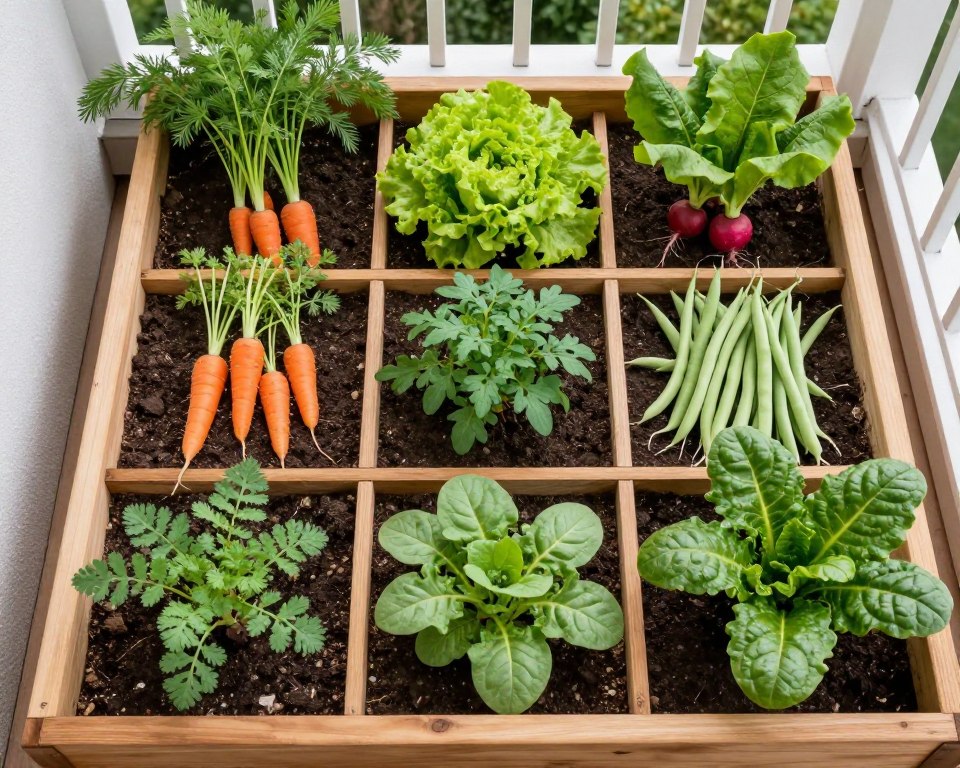
The square foot gardening method, adapted for balcony containers, maximizes production through intensive planting in organized grids. This approach divides large containers into one-foot squares, with each square dedicated to a specific crop planted at optimal spacing for that plant type.
This system proves especially effective for balcony gardens because it eliminates wasted space while simplifying planning, planting, and succession planting. The organized grid structure also creates visual appeal and makes maintenance straightforward.
Container Setup for Square Foot Method
Select large, deep containers that can be divided into a grid of one-foot squares. A 24-inch by 24-inch planter creates four squares. A 36-inch by 24-inch container provides six squares. Aim for containers at least 12 inches deep to support root development for most vegetables.
Create physical grid divisions using thin wooden slats, bamboo stakes, or even simply marking the soil surface with a stick. These divisions help you visualize the planting space and maintain proper spacing as plants grow.
Fill containers with a high-quality, nutrient-rich potting mix that combines peat moss or coco coir, compost, perlite, and vermiculite. This balanced mix provides excellent drainage while retaining adequate moisture, crucial for the intensive planting this method employs.
Planting Density by Crop Type
The square foot method assigns each crop a specific number of plants per square based on mature plant size. Large plants like tomatoes or peppers receive an entire square for one plant. Medium plants like lettuce might have four plants per square. Small plants like radishes or carrots can have sixteen plants per square.
| Plants per Square | Crop Examples | Spacing Within Square | Expected Yield |
| 1 plant | Tomato, Pepper, Eggplant, Broccoli | Center of square | 10-20 lbs per square (tomatoes) |
| 4 plants | Lettuce, Chard, Kale, Marigolds | 6-inch spacing, one in each quadrant | 4-8 lbs per square (greens) |
| 9 plants | Bush Beans, Spinach, Beets | 4-inch spacing in 3×3 grid | 2-4 lbs per square (beans) |
| 16 plants | Radishes, Carrots, Green Onions | 3-inch spacing in 4×4 grid | 1-3 lbs per square (root vegetables) |
Succession Planting in Square Foot Grids
The grid system makes succession planting remarkably simple. As you harvest one square of lettuce, immediately replant that square with new seeds or seedlings. The organized structure ensures you always know which squares are producing and which are ready for replanting.
Rotate crop families through different squares to prevent soil depletion and reduce pest problems. After harvesting tomatoes from a square, plant beans the next season. Beans fix nitrogen in the soil, replenishing nutrients tomatoes consumed. Follow heavy feeders with light feeders in a planned rotation.
Stagger planting times for crops that mature quickly. Plant one square of radishes, then plant another square two weeks later, and a third square two weeks after that. This approach provides harvests every two weeks rather than thirty radishes all at once.
Intensive Care Requirements
Intensive planting demands more attentive care than traditional spacing. Plants grown close together compete for nutrients, water, and light more aggressively than widely spaced plants. This competition requires diligent maintenance to achieve the high yields the method promises.
Water consistently to maintain even soil moisture throughout the container. The intensive plant density means roots quickly absorb available water. During hot weather, containers may need watering twice daily. Install a simple drip irrigation system if daily hand-watering becomes burdensome.
Fertilize more frequently than standard container gardens. Apply liquid fertilizer at half-strength every week rather than full-strength every two weeks. This approach provides constant nutrient availability without risking fertilizer burn from overapplication.
Monitor for pests and diseases carefully. Dense planting creates humid microclimates within the canopy that favor fungal diseases. Ensure adequate air circulation by spacing containers appropriately and pruning lower leaves that touch the soil. Inspect plants daily for early signs of pest infestation when problems are easiest to control.
Harvest regularly to prevent plants from crowding neighbors as they mature. Removing mature plants promptly provides remaining plants additional space and resources to continue growing. Quick-maturing crops like lettuce should be harvested as soon as they reach usable size rather than waiting for maximum size.
The Mobile Garden Cart Layout
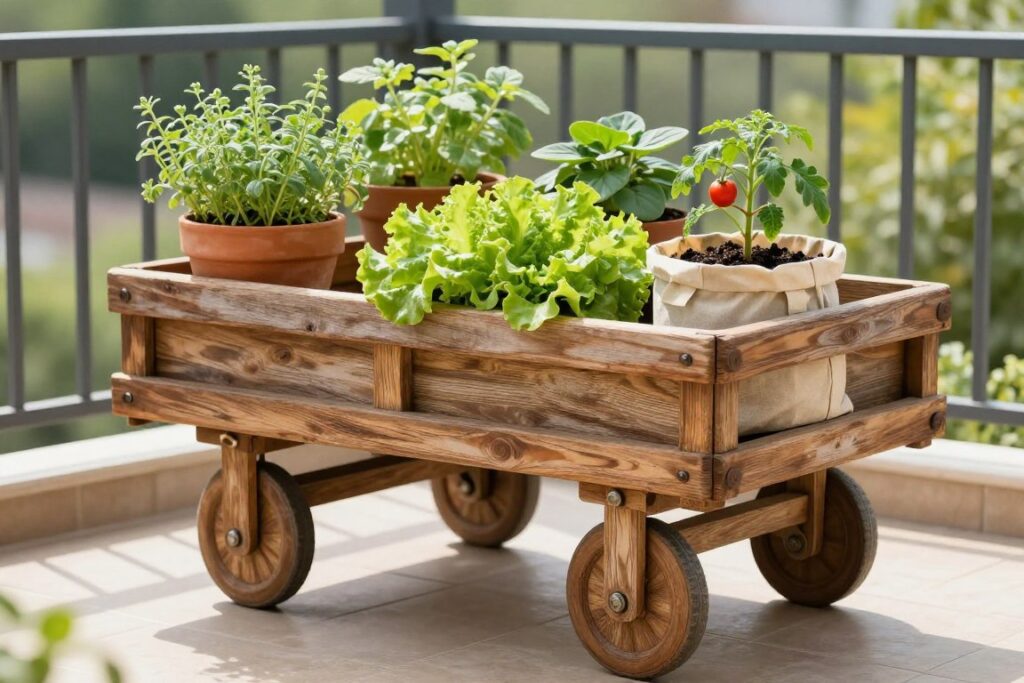
The mobile garden cart layout introduces flexibility to balcony gardening by placing containers on rolling carts or platforms with casters. This approach allows you to move plants easily to follow the sun’s path throughout the day or season, protecting them from harsh weather, and rearranging layouts as plants grow and your needs change.
This layout particularly benefits balconies with limited sun exposure or partially shaded conditions. By moving containers throughout the day, you can provide each plant with its ideal sunlight requirements even if no single location offers full sun all day.
Cart Selection and Setup
Choose rolling carts or platforms with locking wheels rated for outdoor use. Wheels must be large enough to roll easily over typical balcony surfaces, including expansion joints and drainage grates. Look for heavy-duty casters rated to support at least 100 pounds per cart to accommodate multiple containers with wet soil.
Wooden carts built from cedar or other weather-resistant lumber create attractive, functional platforms. Size these to fit your balcony layout while remaining small enough to maneuver easily. A cart approximately 24 inches by 18 inches provides adequate space for several medium containers while staying manageable.
Metal utility carts with multiple shelves offer vertical growing space on wheels. These carts allow you to stack containers at different heights, creating a mobile tiered system that maximizes the sun-following benefit for multiple plants simultaneously.
Strategic Plant Mobility
Create a sun map of your balcony by observing light patterns throughout the day and across seasons. Note which areas receive morning sun, afternoon sun, or consistent all-day exposure. Use this information to develop a daily or seasonal movement strategy for your mobile carts.
Move carts with full-sun crops like tomatoes, peppers, and eggplants to track the sun’s movement during the day. Position these carts in the sunniest spot available during morning hours, then rotate them to follow afternoon sun. This strategy can effectively increase sun exposure by two to three hours daily compared to a fixed position.
Relocate carts seasonally as the sun’s angle changes. Summer sun may hit different balcony areas compared to spring or fall when the sun’s path sits lower in the sky. Adjust cart positions every few weeks as you notice changing light patterns, ensuring optimal conditions as seasons transition.
Protect sensitive plants during extreme weather by wheeling carts to sheltered positions. During heatwaves, move plants to shadier locations during the hottest afternoon hours. Before storms with high winds or hail, relocate carts close to building walls where overhangs provide protection.
Companion Grouping on Mobile Carts
Group plants with similar water and light requirements on the same cart for simplified care. A cart dedicated to herbs requiring full sun and moderate water can be managed differently from a cart of shade-tolerant greens needing consistent moisture.
Create themed carts based on use or harvest timing. A “salad cart” might contain lettuce, tomatoes, cucumbers, and basil—everything needed for fresh salads in one convenient location. A “pizza garden cart” could feature tomatoes, basil, oregano, and peppers.
Use companion planting principles to combine mutually beneficial plants on single carts. Pair tomatoes with basil and marigolds. Group beans with corn and squash. These combinations benefit from proximity while remaining mobile as a unit.
Mobile Garden Maintenance
Check soil moisture before moving carts, especially those holding large plants in full containers. Saturated soil increases weight significantly, making carts harder to move and potentially stressing wheel assemblies. Water after repositioning carts rather than before when possible.
Secure tall plants before moving carts to prevent tipping or damage. Temporarily tie tall tomato plants to their cages, or hold stems while carefully wheeling carts to new positions. Even short movements can topple unstable plants if done carelessly.
Inspect wheels and casters regularly for wear, debris, or damage. Clean wheels periodically to remove accumulated dirt and plant debris that can impede rolling. Lubricate wheel bearings according to manufacturer recommendations to ensure smooth movement.
Plan cart routes thoughtfully to avoid damaging plants or containers during movement. Measure doorways and tight spaces to ensure carts fit through them if you need to move plants indoors during extreme weather or at season’s end.
Essential Supplies for Maximum Yield Success
Implementing these productive layouts requires specific supplies and materials beyond basic containers and soil. The right tools and amendments significantly impact both the ease of maintenance and the ultimate yield your balcony garden produces.
Container and Planter Essentials
Quality containers represent the foundation of successful balcony gardening. Invest in containers with adequate depth for root development—at least 12 inches for most vegetables and herbs. Deeper containers (16-24 inches) support larger plants like tomatoes and produce better yields through expanded root systems.
Self-watering containers with built-in reservoirs reduce maintenance while providing consistent moisture levels that plants prefer. These containers feature a water reservoir beneath the soil that plants can access as needed, preventing both underwatering and overwatering problems common with standard pots.
Fabric grow bags offer excellent alternatives to rigid containers. These breathable pots air-prune roots, encouraging denser, more fibrous root systems that improve nutrient uptake. They collapse flat for storage during off-season and weigh less than ceramic or plastic alternatives.
Ensure every container has adequate drainage holes. Without proper drainage, even the best potting mix becomes waterlogged, suffocating roots and promoting root rot diseases. Drill additional holes if purchased containers lack sufficient drainage.
Premium Potting Mix
Select potting mix specifically formulated for containers rather than garden soil. Quality mixes combine peat moss or coconut coir for moisture retention, perlite or vermiculite for drainage and aeration, and compost for nutrients. Avoid mixes with chemical fertilizers if you prefer organic gardening, as these can burn sensitive seedlings.
Organic Fertilizers
Container plants require regular fertilization as frequent watering leaches nutrients from potting mix faster than in-ground gardens. Organic options like fish emulsion, kelp meal, and compost tea provide balanced nutrition without chemical salts. Slow-release organic granular fertilizers supply steady nutrients over months with a single application.
Irrigation Systems
Drip irrigation kits designed for balcony and container gardens automate watering while using water more efficiently than hand-watering. Simple systems connect to outdoor faucets with timers controlling watering schedules. Drip lines deliver water directly to root zones, reducing evaporation and foliar diseases from wet leaves.
Support and Training Materials
Tomato cages, stakes, and trellises provide essential support for vining and tall plants. Without adequate support, heavy fruiting plants collapse under their own weight, damaging stems and reducing yields. Install supports at planting time rather than waiting until plants need them to avoid disturbing established root systems.
Soft plant ties, twine, or strips of fabric secure stems to supports without cutting into plant tissue as plants grow. Avoid wire or thin string that can girdle stems as they expand. Check and adjust ties periodically throughout the season as plants grow.
Netting or mesh materials create climbing surfaces for beans, peas, and cucumbers. These lightweight supports attach easily to railings or walls, providing vertical growing space without the bulk of traditional trellises.
Protection and Season Extension
Shade cloth protects plants during extreme heat when even sun-loving crops can suffer stress. Available in various densities from 30% to 70% shade, these materials reduce temperature and sun intensity during peak afternoon hours. Install shade cloth on temporary frames that you can easily remove when conditions moderate.
Row cover fabric extends growing seasons by protecting plants from light frosts and cold temperatures. This lightweight material allows sunlight and water to penetrate while trapping heat around plants. Drape over containers in early spring or late fall to protect tender plants from cold snaps.
Wind screens or barriers protect balcony gardens from harsh winds that damage plants and dry out soil. Lattice panels, bamboo screens, or even strategically placed tall plants create wind breaks without completely blocking airflow that plants need.
Common Challenges and Solutions in Balcony Gardens
Even well-planned balcony gardens encounter challenges unique to container growing in limited spaces. Understanding common problems and their solutions helps you troubleshoot issues quickly before they significantly impact yields.
Insufficient Sunlight
Limited sun exposure affects many balcony gardens, especially those facing north or shaded by surrounding buildings. While you cannot increase actual sunlight, several strategies help maximize the light available.
Use reflective surfaces to bounce light onto plants. Position white boards or aluminum foil-covered cardboard behind containers to reflect sunlight that would otherwise hit walls back onto your plants. This technique can increase effective light by 20-30%.
Choose shade-tolerant crops when sun is limited. Leafy greens like lettuce, spinach, arugula, and Asian greens produce well in partial shade with just three to four hours of direct sun. Many herbs including parsley, cilantro, mint, and chives tolerate shade better than full-sun vegetables.
Supplement natural light with LED grow lights for indoor seed starting or extending growing seasons. Modern LED technology provides full-spectrum light efficiently, allowing you to start seedlings indoors under lights before moving them outside when weather permits.
Water Management Issues
Containers present unique watering challenges compared to in-ground gardens. They dry out faster, especially small containers in hot weather or windy locations. Conversely, containers without adequate drainage can become waterlogged.
Install drip irrigation systems to automate watering and maintain consistent moisture levels. Even simple systems with timers eliminate the guesswork from watering while preventing under- or over-watering that hand-watering often creates.
Mulch container surfaces with organic materials like straw, shredded leaves, or coconut coir to reduce evaporation. A two-inch layer of mulch can reduce watering needs by 30-40% while keeping roots cooler and preventing weed seeds from germinating.
Use moisture meters to accurately assess soil moisture at root level rather than guessing from surface appearance. These inexpensive tools prevent overwatering that drowns roots or underwatering that stresses plants.
Overwatering Warning: More container plants die from overwatering than underwatering. Ensure containers have adequate drainage and allow soil to dry slightly between waterings. Constantly saturated soil suffocates roots and promotes root rot diseases. If container plants show yellowing leaves, wilting despite moist soil, or stunted growth, suspect overwatering rather than assuming they need more water.
Pest and Disease Management
Balcony gardens typically encounter fewer pests than ground-level gardens, but problems still occur. Container isolation makes pest management easier as you can quarantine affected plants or treat them individually without risking entire garden rows.
Inspect plants regularly for early signs of pest problems. Common balcony garden pests include aphids, spider mites, and whiteflies. Catching infestations early when populations are small makes control much simpler than waiting until pests are established.
Use organic pest control methods appropriate for small spaces. Insecticidal soap sprays effectively control soft-bodied insects without harmful residues. Neem oil addresses both insects and fungal diseases. Manual removal of pests by hand or with a strong water spray works well for isolated problems.
Encourage beneficial insects by including flowering plants in your layout. Marigolds, nasturtiums, and herbs that flower attract predatory insects that control pest populations naturally. Even a few companion flowers scattered among vegetables significantly increase beneficial insect presence.
Prevent fungal diseases through proper spacing and air circulation. Overcrowding plants creates humid conditions favorable to powdery mildew and other fungal problems. Space containers adequately and prune lower leaves that touch soil surfaces where fungal spores concentrate.
Year-Round Balcony Gardening Strategies
Balcony gardens need not sit dormant during cold months. With appropriate planning and crop selection, you can maintain productive gardens throughout the year, even in regions with distinct winter seasons.
Cool-Season Crop Succession
As summer crops finish in fall, transition containers to cool-season vegetables that thrive in lower temperatures. Many leafy greens actually taste better when grown in cool weather as moderate temperatures prevent the bitterness that develops in hot conditions.
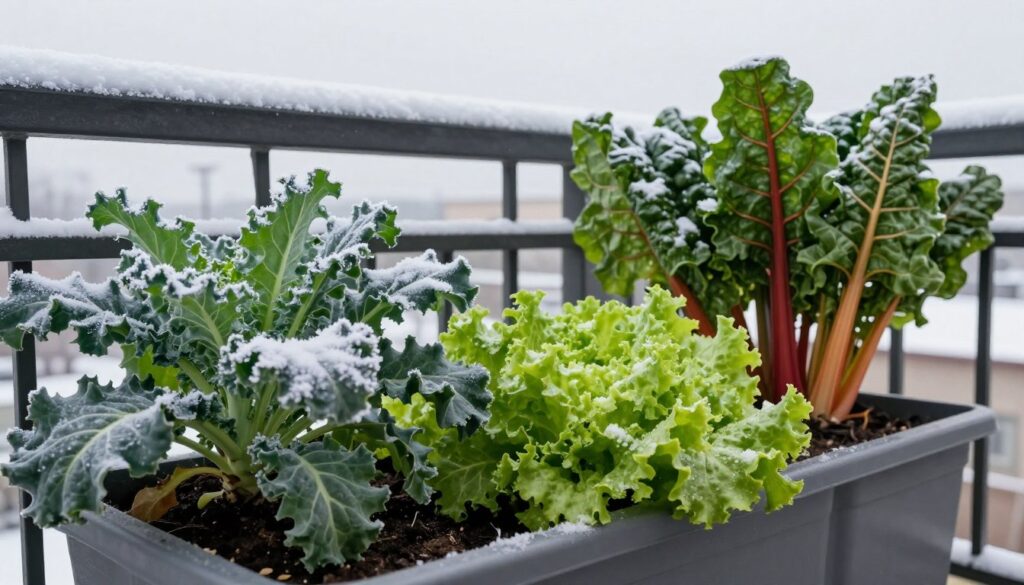
Plant lettuce, spinach, and Asian greens in late summer or early fall for harvest through winter in mild climates. These crops tolerate light frosts and continue producing through temperatures that would kill warm-season plants.
Kale and chard become sweeter after frost exposure, improving their flavor for winter harvests. These hardy brassicas survive temperatures well below freezing when properly acclimated, providing fresh greens throughout winter in many regions.
Root vegetables like carrots and beets develop slowly in cool weather but eventually produce sweet, flavorful harvests. Plant these in late summer, expecting harvest in late fall or even through winter in moderate climates.
Container Protection Methods
Protect marginally hardy plants through winter by creating microclimates around containers. Insulating pot exteriors prevents rapid temperature fluctuations that damage roots more than actual cold temperatures.
Wrap containers with bubble wrap, burlap, or horticultural fleece to insulate roots from temperature extremes. This simple protection allows roots to survive temperatures 10-15 degrees colder than they could tolerate in unprotected containers.
Group containers together to create a mass effect where plants shelter each other from wind and cold. Move containers to the most protected corner of your balcony during winter, ideally against building walls that radiate stored heat.
Use cold frames or mini-greenhouses designed for balconies to extend the season by several weeks on both ends. These transparent enclosures trap solar heat during the day while protecting plants from frost at night, creating a warmer growing environment without electricity.
Indoor-Outdoor Transition
Move tender perennials and herbs indoors before first frost to overwinter as houseplants. Rosemary, bay laurel, and dwarf citrus trees survive winter indoors near sunny windows, then return to outdoor balconies when spring weather stabilizes.
Start seeds indoors during late winter for transplanting outdoors in spring. This practice extends your effective growing season by six to eight weeks compared to direct seeding outdoors after frost danger passes.
Harden off indoor-started seedlings gradually before transplanting outside. Over seven to ten days, progressively increase outdoor exposure time and sun intensity to acclimate tender seedlings to outdoor conditions. This process prevents transplant shock that can set back growth significantly.
Maximizing Yield Through Proper Plant Care
The difference between moderate harvests and truly impressive yields often comes down to consistent, attentive plant care throughout the growing season. Small but regular maintenance tasks compound to create significantly more productive plants.
Fertilization Schedules for Containers
Container plants require more frequent fertilization than in-ground gardens because regular watering leaches nutrients from potting mix. Establish a consistent feeding schedule based on the fertilizer type you use.
Apply liquid fertilizers every one to two weeks during active growth periods. Dilute liquid fertilizers to half the recommended strength and apply more frequently rather than using full strength less often. This approach provides consistent nutrient availability without risking fertilizer burn.
Incorporate slow-release organic granular fertilizers at planting time and refresh every six to eight weeks. These fertilizers break down gradually, releasing nutrients as soil microorganisms decompose organic materials. They provide baseline nutrition supplemented by periodic liquid feeding.
Adjust fertilization based on plant performance. Yellowing leaves often indicate nitrogen deficiency requiring increased feeding. Lush foliage with few flowers or fruits suggests excessive nitrogen; reduce feeding frequency or switch to a lower-nitrogen formula.
Reduce or stop fertilizing as plants approach harvest or as growth slows in fall. Late-season feeding encourages tender new growth susceptible to frost damage and can reduce fruit quality in tomatoes and peppers.
Pruning and Training Techniques
Regular pruning and training keep plants productive, compact, and healthy throughout the season. Strategic removal of specific stems and leaves directs plant energy toward fruit production rather than excessive vegetative growth.
Prune tomato suckers—shoots that emerge between main stems and leaf branches—to focus plant energy on existing fruit clusters. Allowing all suckers to develop creates bushy plants with many small fruits. Removing most suckers produces fewer but larger fruits with earlier maturity.
Pinch herb tips regularly to encourage bushier growth with more stems to harvest. Removing the growing tip forces plants to develop side branches, creating fuller plants with two to three times more harvestable foliage than unpruned plants.
Remove lower leaves from tomatoes and peppers as plants mature to improve air circulation and reduce fungal disease risk. These shaded lower leaves contribute little to plant productivity but create humid conditions favorable to disease development.
Train vining plants onto supports rather than allowing them to sprawl. Vertical growth exposes more leaves to sunlight, improves air circulation, and makes harvest easier while conserving valuable balcony floor space.
Pest Monitoring and Early Intervention
Weekly inspection of plants allows you to catch pest and disease problems early when they are easiest to control. Check both upper and lower leaf surfaces, examining new growth where pests often congregate initially.
Hand-pick large pests like caterpillars and beetles immediately upon discovery. Drop pests into soapy water to kill them. This method works well for small infestations before populations explode.
Apply appropriate organic controls at the first sign of soft-bodied insects like aphids or whiteflies. Insecticidal soap or neem oil sprays control these pests effectively when applied early and repeated every five to seven days until populations are eliminated.
Remove diseased leaves promptly to prevent spread. Fungal and bacterial diseases spread rapidly from leaf to leaf through water splash or wind. Removing affected leaves as soon as symptoms appear contains infections before they affect entire plants.
Start Your High-Yield Balcony Garden Today
The journey from a bare balcony to a thriving productive garden begins with a single container and the decision to start growing your own food. The layouts and strategies presented in this guide provide proven pathways to transform limited urban space into abundant harvests that supplement your diet while connecting you to the satisfaction of growing what you eat.
Begin with one layout that matches your balcony conditions and appeals to your interests. The vertical veggie wall suits sunny walls, while the tiered herb station works well for partial shade. The mobile cart layout offers flexibility for experimenting with sun exposure. Choose a starting point, gather essential supplies, and plant your first containers.
Remember that balcony garden success builds through experience. Your first season provides invaluable lessons about your specific microclimate, which plants thrive in your conditions, and how much maintenance your schedule realistically accommodates. Each season improves on the last as you refine techniques and learn what works for your unique situation.
Start small rather than overwhelming yourself with ambitious plans that become burdensome. Three to five containers maintained well produce more food and enjoyment than fifteen neglected pots. Expand your garden gradually as you develop skills and discover the types of crops you most enjoy growing and eating.
Track your successes and challenges in a simple garden journal. Note planting dates, varieties that performed well, harvest quantities, and problems that arose. These records become invaluable references for planning future seasons and avoiding repeated mistakes.
Join Our Thriving Urban Gardening Community
Get weekly growing tips, seasonal planting reminders, pest solutions, and exclusive balcony garden layout templates delivered to your inbox. Join 12,000+ urban gardeners growing more food in less space.
The most rewarding aspect of balcony gardening extends beyond the practical harvest. Growing food reconnects urban dwellers with natural cycles and seasons. Morning coffee on your balcony becomes more pleasurable when surrounded by thriving plants. The simple act of stepping outside to harvest fresh basil for dinner or picking a sun-warmed tomato provides satisfaction that grocery store produce cannot match.
Your balcony garden contributes to environmental sustainability by reducing food transportation impacts and packaging waste. Homegrown produce travels inches instead of thousands of miles, arriving at your table fresher and more nutritious than store-bought alternatives. The plants themselves improve air quality and create habitat for beneficial insects and pollinators.
Share your harvest and knowledge with neighbors and friends. Balcony gardens often spark conversations and inspire others to start their own growing projects. Building community through shared gardening experiences enriches urban living while spreading the benefits of fresh, homegrown food throughout your neighborhood.
The layouts and techniques in this guide provide your roadmap, but your unique balcony garden will develop its own character as you experiment, learn, and adapt these principles to your specific space and preferences. Embrace the process, celebrate successes, learn from setbacks, and enjoy every step of transforming your balcony into a productive oasis that nourishes both body and spirit.