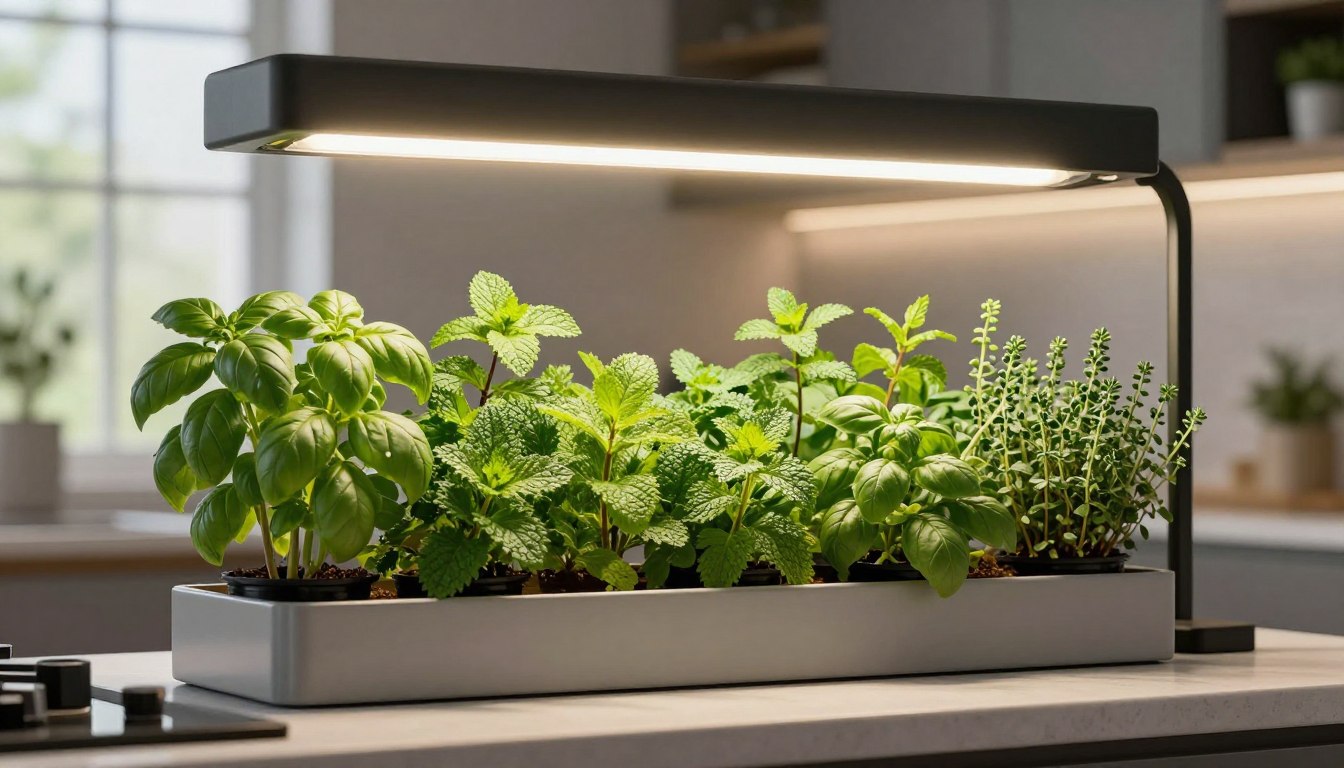
The solution lies in selecting the right grow lights for your indoor herb garden. Modern LED grow lights have revolutionized indoor gardening by providing full spectrum light that mimics natural sunlight. These energy-efficient fixtures allow you to grow thriving herbs in apartments, basements, or any space regardless of window availability.
This comprehensive buyer’s guide examines the best grow lights for indoor herbs available today. We’ll explore key considerations including light spectrum, energy efficiency, coverage area, and budget options. Whether you’re starting your first herb garden or upgrading your existing setup, you’ll discover practical recommendations to help your basil, mint, parsley, and other culinary favorites flourish indoors.
Why Grow Herbs Indoors with Proper Lighting
Indoor herb gardens offer remarkable advantages for home cooks and gardening enthusiasts. Fresh herbs elevate every meal with superior flavor compared to dried alternatives. The convenience of snipping fresh basil or cilantro steps from your kitchen cannot be overstated.
Light plays the most critical role in plant growth and development. Through photosynthesis, plants convert light energy into the food they need to grow. Herbs require specific wavelengths of light to thrive, particularly blue light for foliage growth and red light for flowering and essential oil production.
Benefits of Indoor Herb Growing
- Year-round fresh herb availability regardless of outdoor weather
- Complete control over growing conditions and plant health
- No pesticides or harmful chemicals on your culinary herbs
- Significant cost savings compared to purchasing fresh herbs
- Enhanced indoor air quality from living plants
- Therapeutic gardening activity accessible to apartment dwellers
Why Light Matters
Natural sunlight provides full spectrum light containing all wavelengths plants need. Most indoor environments receive only 10-20% of outdoor light intensity. South-facing windows offer the best natural light indoors, but even these locations often prove insufficient during winter months.
Without adequate light, herbs exhibit poor growth patterns. They stretch toward available light sources, becoming tall and spindly with sparse foliage. Leaf production slows dramatically, and plants like basil fail to develop the aromatic oils that provide their characteristic flavor and fragrance.
Understanding LED Grow Lights for Herbs
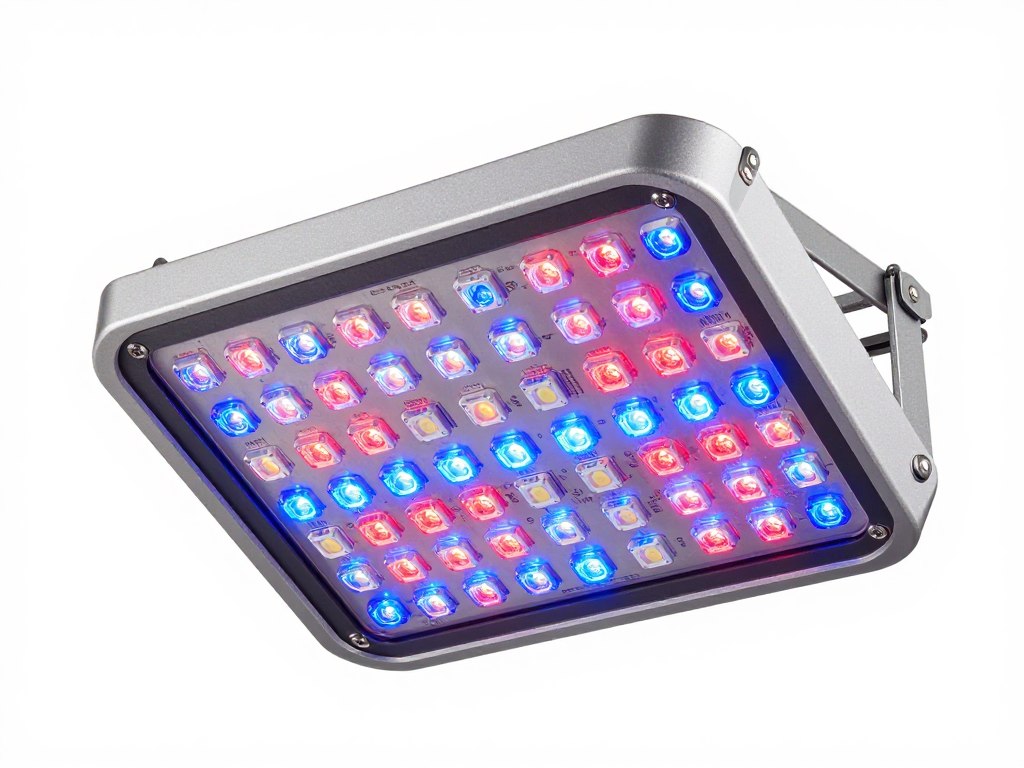
LED grow lights have become the gold standard for indoor herb gardening. These fixtures use light-emitting diodes to produce specific wavelengths of light that plants need for photosynthesis. Unlike older fluorescent grow lights or incandescent bulbs, LEDs offer superior energy efficiency and longer lifespans.
How LED Technology Benefits Indoor Plants
LED fixtures produce minimal heat compared to traditional lighting options. This cool operation allows placement closer to plant canopies without risk of leaf burn. The reduced heat output also decreases water evaporation from soil, creating more stable growing conditions.
Modern LED grow lights emit full spectrum light including blue wavelengths that promote compact, bushy growth and red wavelengths that encourage flowering and essential oil production in herbs. Some advanced fixtures allow spectrum adjustment for different growth stages.
Energy Efficiency Advantage
LED grow lights consume approximately 50-75% less energy than fluorescent fixtures while providing equivalent or superior light output. A typical 24-watt LED bulb delivers light intensity comparable to a 100-watt incandescent bulb. Over a growing season, this translates to significant electricity cost savings.
Light Spectrum Explained
Different wavelengths within the light spectrum serve distinct purposes in plant growth. Understanding these wavelengths helps you select grow lights matched to your needs:
- Blue Light (450-495 nm): Promotes vegetative growth, compact plant structure, and chlorophyll production. Essential for leafy herbs like basil and parsley.
- Red Light (620-720 nm): Encourages flowering, fruiting, and production of aromatic compounds. Critical for herbs grown for their flowers or seeds.
- Full Spectrum: Combines all visible wavelengths to mimic natural sunlight. Best option for mixed herb gardens and overall plant health.
- UV Light (100-400 nm): Small amounts stimulate protective compound production, enhancing flavor and aroma in culinary herbs.
Key Considerations When Choosing Grow Lights
Selecting the best grow lights for indoor herbs requires evaluating multiple factors beyond simple brightness. Your space, budget, plant types, and growing goals all influence which lighting solution works best for your situation.
Light Intensity and Coverage Area
Light intensity determines how much energy reaches your plants. Measured in PAR (Photosynthetically Active Radiation) or PPFD (Photosynthetic Photon Flux Density), this factor directly impacts plant growth rates. Most herbs require moderate light intensity between 200-400 PPFD for healthy growth.
Coverage area indicates how much growing space a fixture illuminates effectively. A 12-inch LED bar might cover a 10×20 inch tray, while larger panel lights can illuminate several square feet. Match fixture size to your growing area to ensure even light distribution.
Herb Light Requirements
- High Light Herbs: Basil, rosemary, sage, oregano, thyme (6+ hours daily)
- Medium Light Herbs: Cilantro, dill, fennel, tarragon (4-6 hours daily)
- Low Light Herbs: Mint, parsley, chives, lemon balm (3-4 hours daily)
Energy Efficiency and Operating Costs
Running grow lights adds to your electricity bill, making energy efficiency an important consideration. LED fixtures offer the best efficiency, converting more electrical energy into usable light for plant growth while producing less waste heat.
Calculate operating costs by multiplying wattage by hours of daily use and your electricity rate. A 24-watt LED fixture running 12 hours daily costs approximately $2-3 per month to operate in most areas. Fluorescent fixtures with equivalent output consume 40-50 watts, increasing monthly costs to $4-6.
Fixture Types and Mounting Options
Grow lights come in various form factors designed for different growing situations. Understanding these options helps you select fixtures that integrate seamlessly into your space.
Bulb Style Fixtures
- Screw into standard lamp sockets
- Most affordable entry option
- Ideal for 1-3 potted herbs
- Easy to replace and upgrade
- Limited coverage area
Bar and Strip Lights
- Rectangular fixtures for trays and shelves
- Excellent for seed starting
- Even light distribution
- Adjustable height options
- Good value for larger gardens
Panel Lights
- Large coverage area
- Professional-grade intensity
- Multiple spectrum options
- Higher initial investment
- Best for dedicated grow spaces
Heat Output and Placement
While LED lights emit minimal heat compared to older technologies, heat management remains relevant. Fixtures placed too close to foliage can cause leaf damage even with cool-running LEDs. Most manufacturers specify minimum mounting distances, typically 6-12 inches above plant canopies.
Proper air circulation helps dissipate any heat generated by fixtures and promotes healthy plant transpiration. Small fans improve air movement in enclosed growing spaces and prevent heat buildup around plants like basil that prefer good airflow.
Top Grow Light Recommendations for Indoor Herbs
After analyzing performance, value, and user feedback, we’ve identified the best grow lights for different indoor herb growing scenarios. These recommendations span various budgets and growing situations to help you find the perfect match.
Start Growing Today
Ready to transform your indoor space into a thriving herb garden? Explore our top-rated grow light selections and find the perfect system for your needs.
Best Overall: Full Spectrum LED Bulb
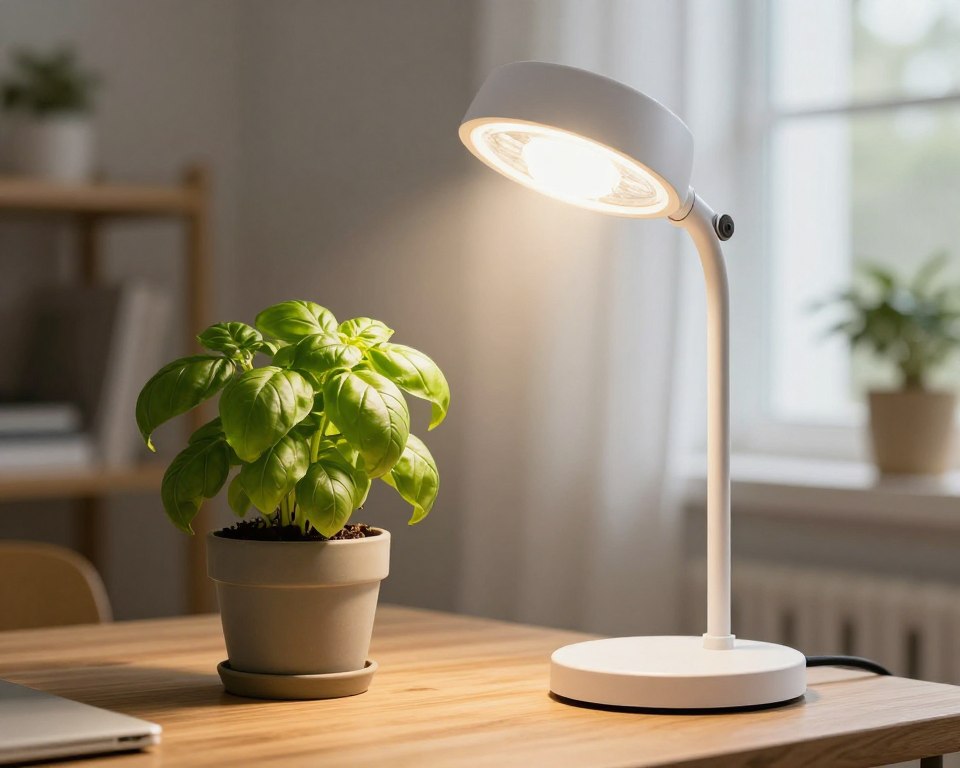
24W Full Spectrum LED Grow Bulb
This versatile LED grow light bulb offers exceptional value for small to medium herb gardens. The 24-watt full spectrum output provides adequate light intensity for 2-4 potted herbs while fitting standard E26 lamp sockets. Its balanced spectrum promotes healthy foliage growth in basil, parsley, cilantro, and other culinary favorites.
Advantages
- Fits any standard lamp socket for easy setup
- Cool operation allows close placement to plants
- Full spectrum light supports all growth stages
- Energy efficient 24-watt consumption
- Compatible with lamp timers for automated schedules
- Affordable price point under $30
Limitations
- Limited coverage area for larger gardens
- Requires separate lamp fixture
- No built-in timer function
- Bright light may be distracting in living spaces
Best Adjustable: Four-Head Clip-On System
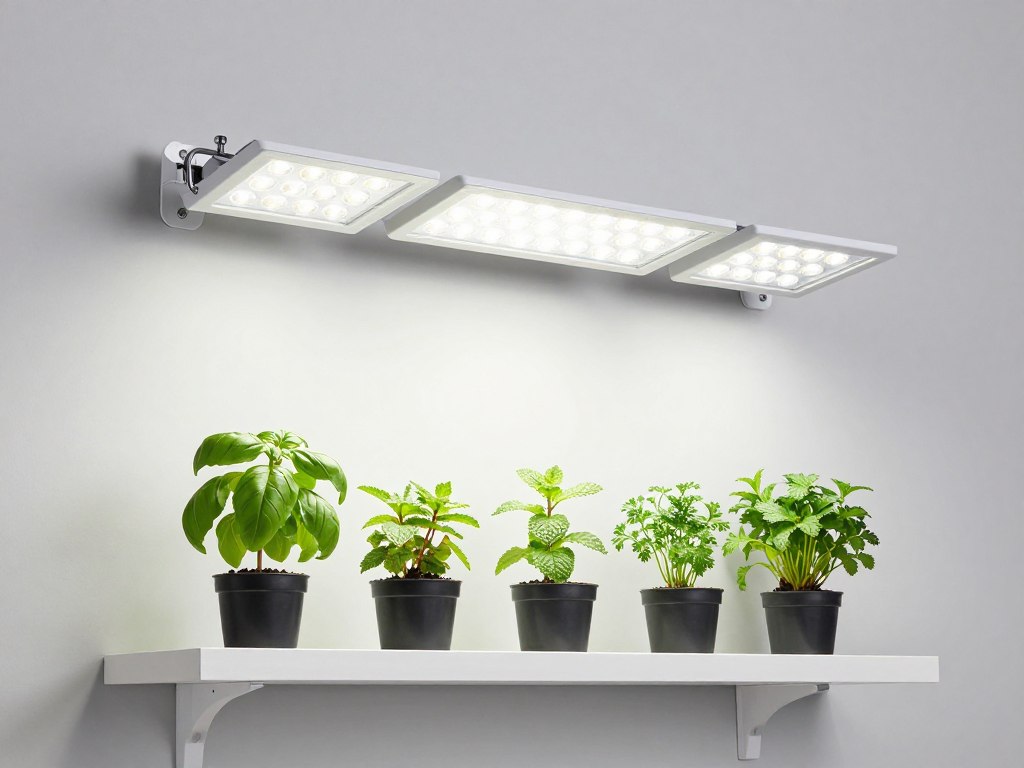
80W Four-Head Flexible Grow Light
This innovative clip-on design features four independently adjustable LED light heads on flexible gooseneck arms. The 80-watt total output divided across four 20-watt heads provides excellent coverage for shelf gardens or multiple plants at varying heights. Built-in timer functions offer 3, 9, or 12-hour automatic schedules.
Advantages
- Four flexible arms target light exactly where needed
- Built-in timer with multiple schedule options
- Space-saving clip design for shelves and tables
- Three light modes for different growth needs
- Cool operation prevents heat damage
- Good coverage area for multiple plants
Limitations
- Performance less impressive than dedicated fixtures
- Timer limited to 12-hour maximum
- Some units experience quality control issues
- Not suitable as sole light source for high-light herbs
Best for Seedlings: Tabletop Light Garden
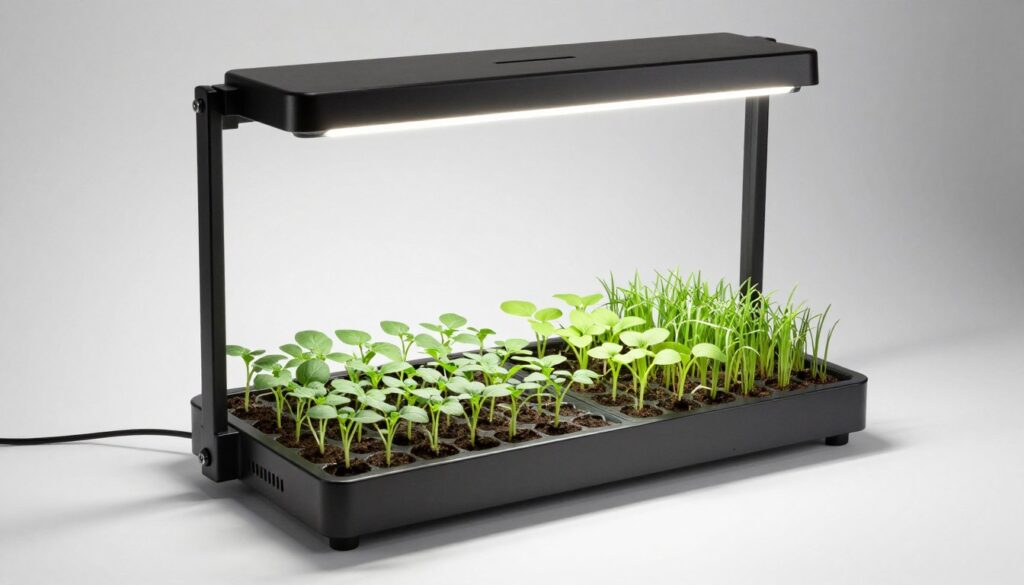
Compact Tabletop Grow Light System
Designed specifically for starting herbs from seed, this 10-watt tabletop system combines an adjustable LED bar with a compact stand. The elegant design fits on kitchen counters or small tables while providing sufficient light intensity for germination and early growth stages. Adjustable height accommodates plants as they grow.
Advantages
- Attractive design suits kitchen and living spaces
- Simple height adjustment as plants grow
- Wide coverage for multiple seedling pots
- Continuous operation without timer resets
- Cool operation safe near countertops
- Easy assembly without tools
Limitations
- Lower wattage limits mature plant growth
- Fixed spectrum not adjustable
- Premium price for features offered
- Requires dedicated counter or table space
Best Mounted: Sleek Bar Light
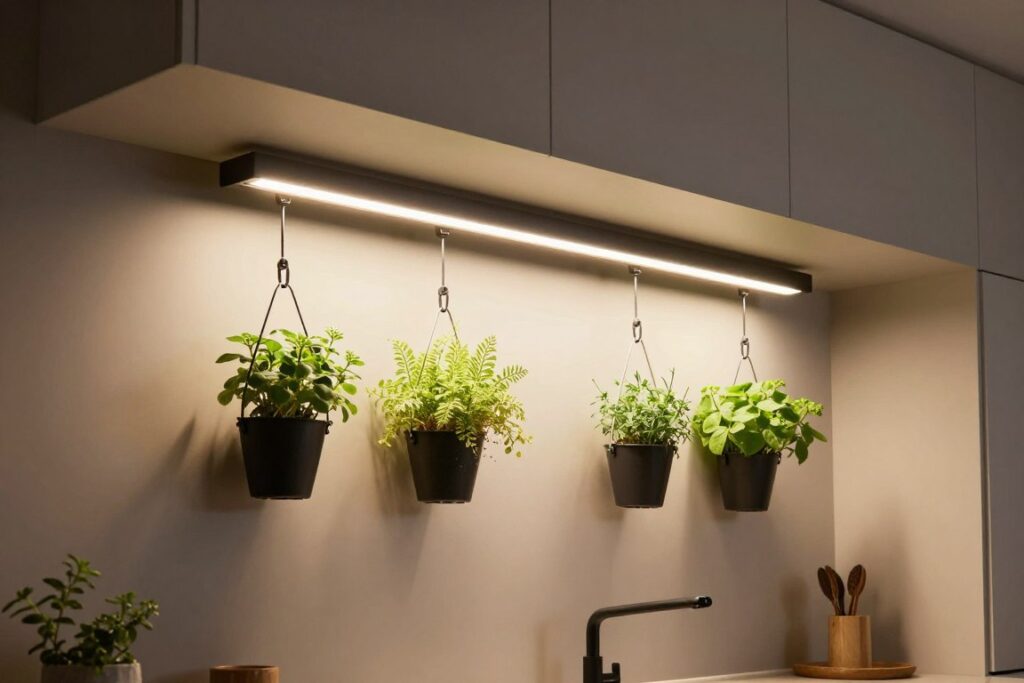
16-Inch Mounted LED Grow Bar
This sophisticated 11-watt LED bar mounts directly to walls, shelves, or ceilings using included magnetic hardware. The touch-sensitive controls allow easy brightness adjustment and on/off operation. An integrated timer with customizable schedules ensures consistent light exposure. The sleek design and warm light output blend seamlessly with modern interiors.
Advantages
- Elegant design enhances interior aesthetics
- Adjustable brightness for different plant needs
- Programmable timer maintains consistent schedules
- Magnetic mounting system simplifies installation
- Warm light spectrum pleasant in living spaces
- Touch controls easily accessible
Limitations
- Higher initial cost investment
- Short power cord may require extension
- Adhesive mounting less secure than screws
- Limited to 16-inch coverage area
Best Budget Option: Basic LED Strip
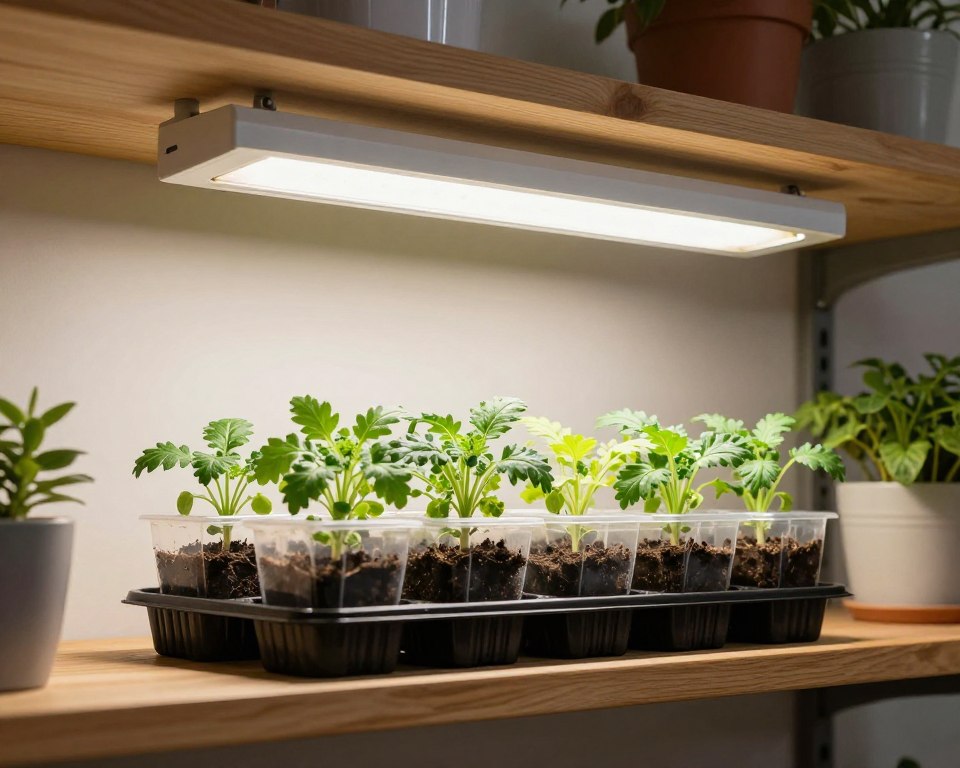
18-Inch T5 LED Grow Strip
This no-frills LED strip delivers reliable performance at an entry-level price point. The 18-inch fixture provides adequate light for a standard 10×20 inch growing tray or 3-4 small herb pots. Simple on/off operation keeps things straightforward, while the included mounting clips allow easy installation under shelves or in cabinets.
Advantages
- Extremely affordable entry price
- Simple installation with included clips
- Adequate light for low to medium light herbs
- Lightweight and portable design
- Works with standard outlet timers
- Low energy consumption
Limitations
- Basic construction quality
- No built-in timer or controls
- Limited light intensity for high-light plants
- Narrow coverage pattern
Best for Large Gardens: High-Output Panel
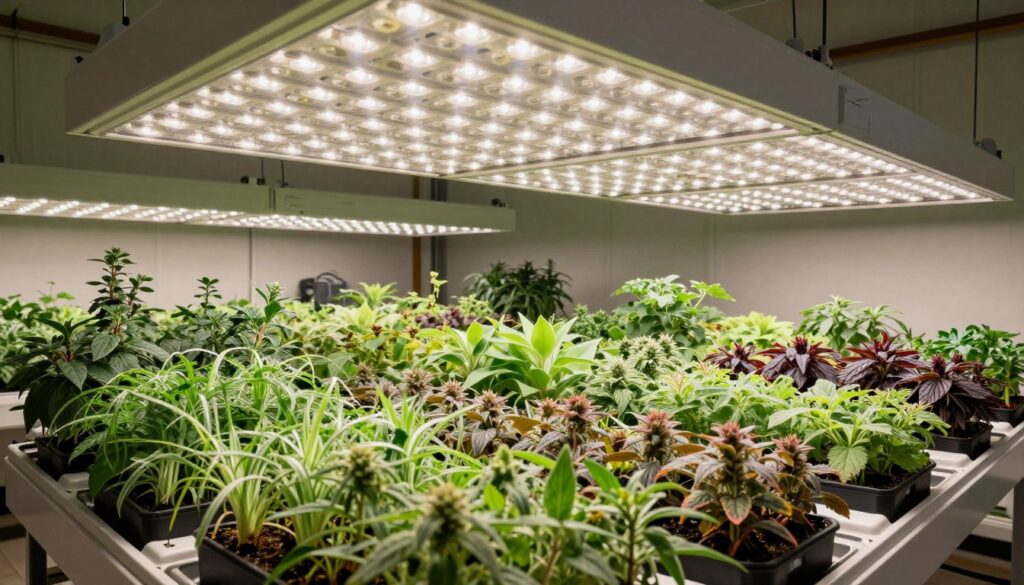
100W Full Spectrum LED Panel
Serious indoor herb gardeners need serious lighting. This 100-watt LED panel delivers professional-grade light intensity across a coverage area of 2-3 square feet. The full spectrum output with enhanced red wavelengths promotes vigorous growth and strong essential oil production. Daisy-chain capability allows linking multiple panels for even larger gardens.
Advantages
- Professional-level light intensity
- Large coverage area for multiple plants
- Enhanced red spectrum for herb flavor development
- Durable construction for long-term use
- Daisy-chain feature for garden expansion
- Excellent heat management system
Limitations
- Higher price point requires serious commitment
- Requires hanging installation
- Bright output not suitable for living areas
- Increased energy consumption
Grow Light Comparison: Quick Reference Guide
Compare key specifications across our top recommendations to find the best grow lights for indoor herbs that match your specific requirements and budget.
| Model Type | Wattage | Coverage Area | Timer | Price Range | Best Use |
| Full Spectrum LED Bulb | 24W | 2-4 plants | External only | $25-35 | Beginners, small spaces |
| Four-Head Clip-On | 80W total | 4-6 plants | Built-in (3/9/12 hr) | $30-45 | Flexible placement, shelves |
| Tabletop Light Garden | 10W | Seed tray size | No | $50-70 | Seedlings, microgreens |
| Mounted LED Bar | 11W | 16 inches linear | Built-in programmable | $120-140 | Design-conscious, permanent |
| Basic LED Strip | 15-20W | 10×20 inch tray | External only | $15-25 | Budget entry, testing |
| High-Output Panel | 100W | 2-3 sq ft | External recommended | $60-80 | Large gardens, serious growers |
Get Your Free Growing Guide
Download our comprehensive herb growing guide with light schedules, troubleshooting tips, and monthly maintenance checklists.
Setup and Usage Tips for Maximum Growth
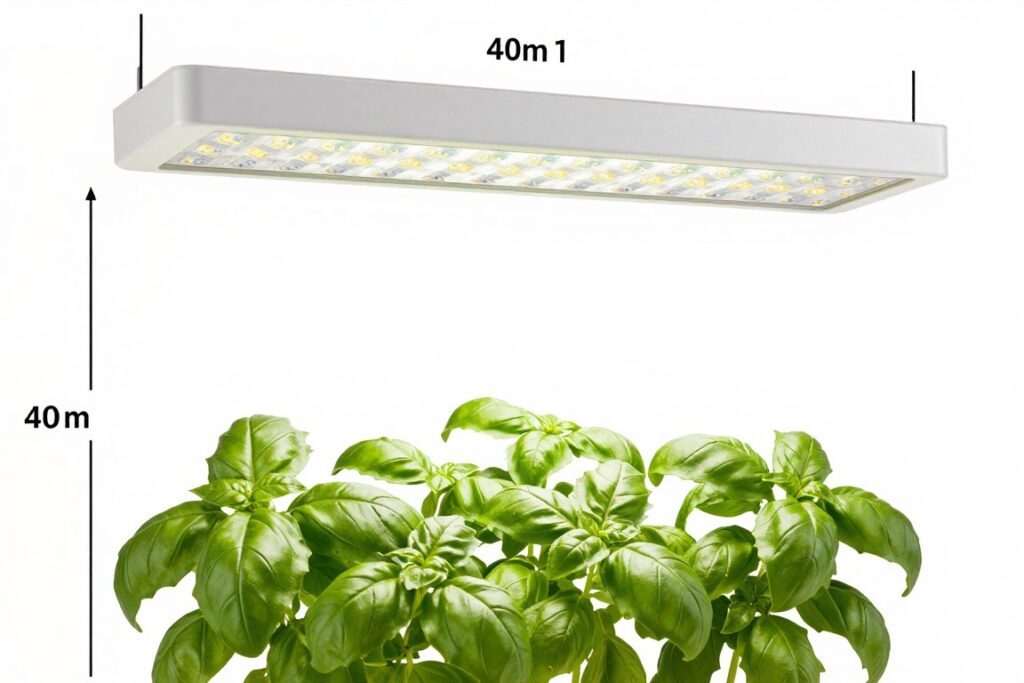
Proper setup and maintenance of your grow lights significantly impacts herb garden success. Following best practices ensures your plants receive optimal light exposure while maximizing fixture lifespan and energy efficiency.
Optimal Height and Distance
The distance between grow lights and plant canopies affects light intensity reaching foliage. Too close causes leaf burn and stress. Too far results in insufficient light and leggy growth. Most LED grow lights perform best positioned 6-12 inches above plants.
As herbs grow taller, adjust fixture height to maintain proper distance. Seedlings tolerate closer placement (4-6 inches) while mature plants need more space (8-12 inches). High-output panels may require 12-18 inches to prevent light stress.
Daily Light Duration: Finding the Right Schedule
Different herbs require varying amounts of daily light exposure for optimal growth. Most culinary herbs thrive with 12-16 hours of artificial light daily. This extended period compensates for lower intensity compared to outdoor sunlight.
High Light Herbs (14-16 hours)
Mediterranean herbs evolved in sunny climates and need extended light exposure.
- Basil (all varieties)
- Rosemary
- Oregano
- Sage
- Thyme
Medium Light Herbs (12-14 hours)
These versatile herbs adapt to moderate light conditions while still producing well.
- Cilantro
- Dill
- Fennel
- Tarragon
- Chervil
Low Light Herbs (10-12 hours)
Shade-tolerant varieties grow successfully with less daily light exposure.
- Mint (all varieties)
- Parsley
- Chives
- Lemon balm
- Chamomile
Photoperiod Considerations
Plants need darkness for proper metabolic processes. Avoid 24-hour lighting.
- 6-8 hours darkness essential
- Consistent schedules prevent stress
- Use timers for automation
- Adjust seasonally if desired
Using Timers for Consistency
Automated timers eliminate the need to manually control grow lights daily. Consistent light schedules promote healthier plant growth compared to irregular manual operation. Plants develop internal circadian rhythms synchronized with light cycles.
Simple mechanical outlet timers cost $10-15 and work perfectly with grow lights lacking built-in timers. Digital programmable timers offer more flexibility with multiple on/off cycles per day. Smart plugs controlled via smartphone apps provide remote control and advanced scheduling options.
Temperature and Air Circulation
While LED grow lights emit minimal heat, enclosed spaces may still experience temperature increases. Most herbs prefer temperatures between 65-75°F. Monitor growing area temperature, especially in small enclosed spaces or grow tents.
Gentle air circulation prevents heat buildup and strengthens plant stems through subtle movement. A small oscillating fan on low speed positioned to move air across plants without directly blasting them works well. Good airflow also reduces fungal disease risk in humid indoor environments.
Cleaning and Maintenance
Dust accumulation on LED fixtures reduces light output over time. Clean fixture surfaces monthly using a soft dry cloth. Avoid water or cleaning solutions that might damage electrical components. Unplug fixtures before cleaning.
Inspect power cords and connections regularly for wear or damage. Replace fixtures showing signs of electrical problems immediately. Most quality LED grow lights last 30,000-50,000 hours (approximately 8-12 years at 12 hours daily use) before requiring replacement.
Additional Factors for Indoor Herb Success
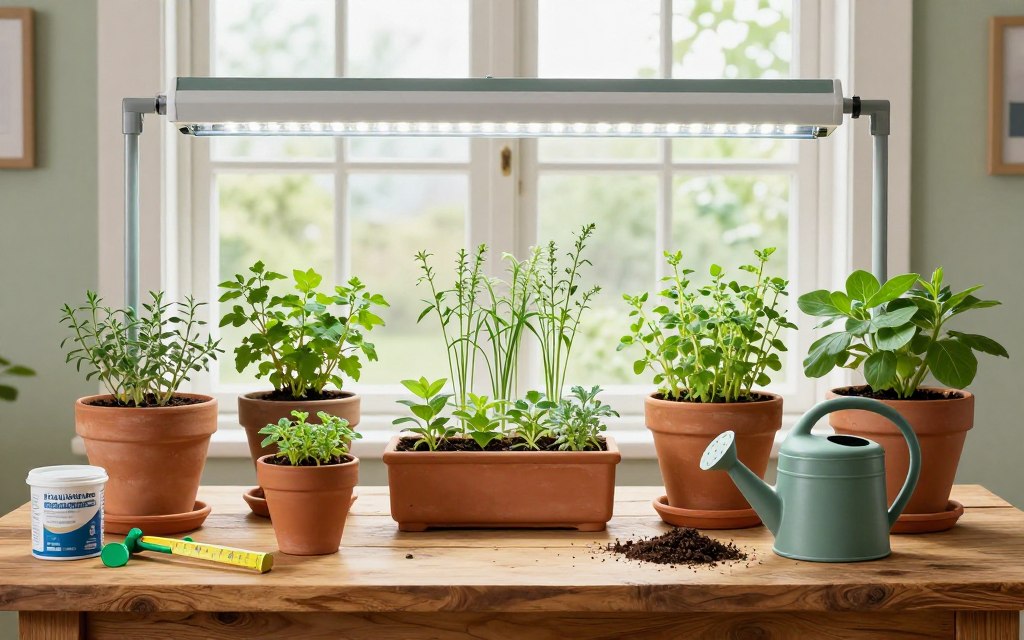
While proper lighting forms the foundation of successful indoor herb gardening, several other factors work together to create optimal growing conditions. Understanding these elements helps you develop a complete growing system.
Container Selection and Growing Media
Herbs thrive in containers with adequate drainage. Terra cotta pots offer excellent breathability and moisture management. Plastic containers work well but require more careful watering. Container size should match mature plant size, generally 6-8 inches for most culinary herbs.
Use quality potting mix formulated for containers rather than garden soil. Container mixes drain well while retaining appropriate moisture levels. Many gardeners add perlite or vermiculite to improve drainage and aeration. Some herbs like rosemary and thyme prefer faster-draining mixes.
Watering Indoor Herbs Under Grow Lights
Artificial lighting and indoor conditions affect watering requirements compared to outdoor growing. Extended light exposure increases plant transpiration and water consumption. However, indoor environments with lower humidity may cause soil to dry faster.
Water when the top inch of soil feels dry to touch. Most herbs prefer soil that dries slightly between waterings rather than constant moisture. Overwatering causes more herb deaths than underwatering. Ensure containers have drainage holes and never let pots sit in standing water.
Fertilizing Indoor Herb Gardens
Container-grown herbs under grow lights need regular fertilization as they exhaust soil nutrients faster than outdoor plants. Use balanced liquid fertilizer diluted to half strength every 2-3 weeks during active growth. Organic options like fish emulsion or seaweed extract work excellently.
Reduce fertilization frequency during slower winter growth periods even under grow lights. Excessive fertilizer leads to soft growth and reduced flavor in culinary herbs. When in doubt, err on the side of less fertilizer rather than more.
Humidity Considerations
Indoor heating and air conditioning reduce humidity levels below ideal ranges for many herbs. Most herbs prefer 40-60% relative humidity. Low humidity causes leaf tip browning and increased pest susceptibility.
Group plants together to create localized humidity zones through collective transpiration. Place trays filled with pebbles and water beneath pots. As water evaporates, humidity increases around plants. Avoid misting foliage, which can promote fungal diseases.
Troubleshooting Common Indoor Growing Issues
Even with optimal grow light setups, indoor herb gardens occasionally encounter problems. Recognizing symptoms early and understanding causes allows quick corrections before serious damage occurs.
Leggy or Stretched Growth
Elongated stems with excessive spacing between leaf sets indicate insufficient light. Plants stretch toward light sources attempting to increase exposure. This common issue has straightforward solutions.
- Move grow lights closer to plant canopy (maintain 6-12 inch distance)
- Increase daily light duration by 2-4 hours
- Upgrade to higher wattage fixtures for better intensity
- Ensure fixtures provide appropriate spectrum for vegetative growth
- Prune stretched growth to encourage bushier development
Yellowing or Pale Leaves
Chlorosis, or leaf yellowing, stems from multiple possible causes. Proper diagnosis requires examining affected leaves and considering recent care practices.
If Lower Leaves Yellow First:
- Nitrogen deficiency from nutrient depletion
- Natural aging process of older foliage
- Overwatering restricting root oxygen
Solutions: Apply balanced liquid fertilizer, improve drainage, and allow soil to dry between waterings.
If New Growth Yellows:
- Iron deficiency from pH imbalance
- Excessive light intensity causing bleaching
- Extreme temperature fluctuations
Solutions: Check growing media pH, raise grow lights higher, and maintain stable temperature ranges.
Slow or Stunted Growth
Plants showing minimal new growth despite adequate light often suffer from root zone problems or environmental stress. Several factors contribute to stunted development.
Pest Management Under Grow Lights
Indoor environments aren’t immune to pest problems. Aphids, spider mites, and fungus gnats commonly affect indoor herb gardens. Regular inspection catches infestations early when control is easier.
Examine leaf undersides and new growth weekly for pest activity. Spider mites appear as tiny specks with fine webbing. Aphids cluster on tender growth. Fungus gnats indicate overly moist soil conditions.
Address pest problems using least toxic methods first. Strong water spray removes many pests. Insecticidal soap controls soft-bodied insects effectively. Neem oil offers broader pest control. Yellow sticky traps capture flying insects like fungus gnats and whiteflies.
Frequently Asked Questions About Grow Lights for Herbs
Can regular LED bulbs work as grow lights for herbs?
Standard LED bulbs designed for home lighting lack the specific wavelengths plants need for photosynthesis. While cool white LEDs contain some blue wavelengths useful for foliage growth, they provide insufficient red light for healthy development. Warm white LEDs similarly lack adequate blue light. Purpose-built grow lights optimize spectrum output for plant growth and deliver much better results than household bulbs.
How long do LED grow lights last before needing replacement?
Quality LED grow lights typically last 30,000-50,000 hours of operation. At 12 hours daily use, this translates to approximately 7-11 years of service. Light output gradually decreases over time rather than failing suddenly. Replace fixtures when light intensity drops noticeably below original output levels, usually after 5-8 years of regular use. Cheaper fixtures may fail sooner due to lower quality components.
Do herbs grown under artificial light taste different than outdoor herbs?
Properly grown indoor herbs develop flavor profiles comparable to outdoor plants. The key lies in providing adequate light intensity and duration. Insufficient light produces herbs with reduced essential oil content and milder flavor. High-quality full spectrum grow lights that include some UV wavelengths can actually enhance aromatic compound production in herbs like basil and oregano, sometimes resulting in stronger flavor than outdoor plants.
Should I use fluorescent or LED grow lights for indoor herbs?
LED grow lights offer superior performance for most indoor herb gardens. They consume 40-60% less energy than comparable fluorescent fixtures while producing equivalent light output. LEDs generate less heat, allowing closer placement to plants. They also last 3-5 times longer than fluorescent tubes. Fluorescent lights cost less initially but higher operating costs and shorter lifespan make LEDs more economical long-term.
Can I leave grow lights on 24 hours a day for faster growth?
Plants require darkness periods for essential metabolic processes. Continuous 24-hour lighting stresses plants and reduces overall health and vigor. Most herbs grow best with 12-16 hours of light followed by 6-8 hours of darkness. This mimics natural day/night cycles and allows plants to properly process nutrients absorbed during light periods. Excessive light exposure can actually decrease growth rates and reduce flavor quality in herbs.
What’s the minimum wattage needed for growing herbs indoors?
For LED grow lights, 20-30 watts provides adequate light for 2-4 small herb plants. Each additional plant requires approximately 8-10 watts of LED lighting. Larger herbs like basil need more light than compact varieties like thyme. As a general rule, provide 30-40 watts per square foot of growing area for optimal herb production. Higher wattage fixtures allow greater mounting heights and more flexible placement options.
How close should grow lights be to herb seedlings versus mature plants?
Seedlings tolerate and benefit from closer light placement at 4-6 inches from fixture to plant tops. This prevents stretching during critical early growth stages. As herbs mature, increase distance to 8-12 inches to accommodate larger plant size and provide appropriate light intensity. High-output panels may require 12-18 inches distance for mature plants. Always monitor plants for signs of light stress and adjust accordingly.
Do I need different grow lights for seedlings versus mature herb plants?
Full spectrum LED grow lights work well for all growth stages from seed to mature harvest. Some advanced growers use higher blue spectrum lights for seedling and vegetative growth, then switch to red-enhanced fixtures for mature plants. However, this additional complexity isn’t necessary for home herb gardens. A quality full spectrum fixture provides appropriate wavelengths for complete herb lifecycle needs.
Final Recommendations: Choosing Your Perfect Grow Light
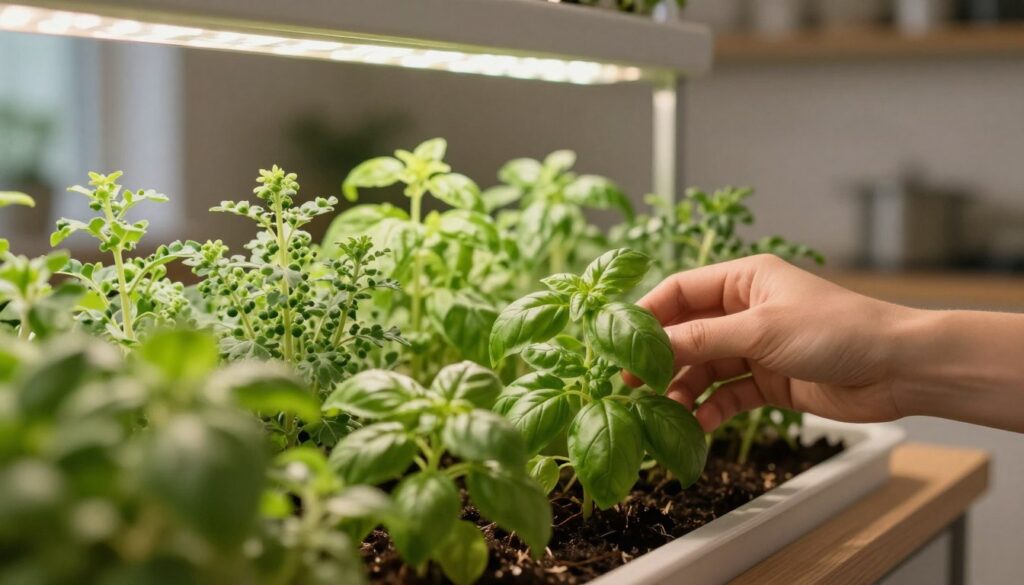
Selecting the best grow lights for indoor herbs transforms your ability to enjoy fresh culinary flavors year-round. The right lighting system matches your space, budget, and growing ambitions while providing plants with the energy they need to thrive.
Quick Decision Guide
Your ideal grow light depends on several personal factors. Consider these scenarios to narrow your choices:
- Complete Beginners: Start with a simple full spectrum LED bulb ($25-35) that screws into any lamp. This affordable entry point requires minimal setup and works great for 2-4 herbs.
- Small Space Gardeners: Choose clip-on flexible fixtures or compact tabletop systems. These space-efficient options integrate into existing shelves and counters without dedicated growing areas.
- Budget-Conscious Growers: Basic LED strips ($15-25) provide adequate lighting for low to medium light herbs and seed starting at minimal cost.
- Design-Focused Homeowners: Premium mounted fixtures ($120-140) offer elegant aesthetics with full functionality, perfect for visible locations in modern homes.
- Serious Herb Enthusiasts: High-output LED panels ($60-80) deliver professional results for larger gardens growing 15+ plants simultaneously.
Success Factors Beyond Equipment
Remember that grow lights form just one component of successful indoor herb gardening. Consistent care including appropriate watering, proper fertilization, good air circulation, and regular harvesting all contribute to healthy productive plants. The best grow light in the world cannot compensate for poor growing practices.
Start with a small setup and expand as you gain experience. Many successful indoor gardeners began with a single LED bulb and a few pots of basil. As confidence grows, adding more fixtures and trying new herb varieties becomes natural progression.
Ready to Start Your Indoor Herb Garden?
Browse our recommended grow lights and get growing today. Fresh herbs from your own indoor garden await!
Indoor herb gardening with proper lighting offers year-round access to fresh flavors, significant cost savings, and the satisfaction of growing your own food. Modern LED grow lights make this achievable for anyone regardless of living situation or outdoor space availability. With the information in this guide, you’re equipped to select lighting that suits your needs and start enjoying homegrown herbs within weeks.
The journey to fresh basil, mint, parsley, and dozens of other herbs begins with a single step: choosing the right grow light and planting your first seeds. Your indoor herb garden awaits.