
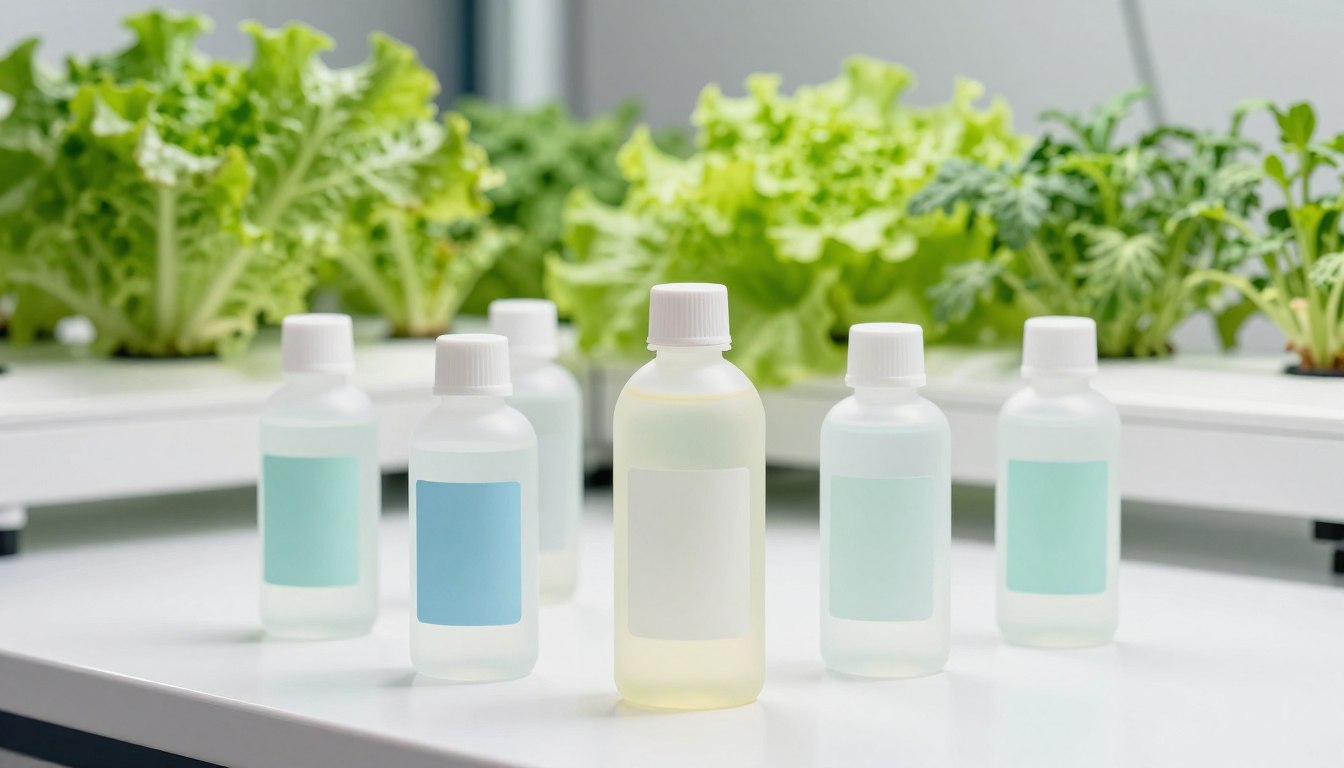
Unlike soil gardening where plants extract nutrients from organic matter, hydroponics requires you to provide every essential element directly. The nutrient solution you choose becomes the lifeblood of your entire system.
This comprehensive guide breaks down everything you need to know about hydroponic nutrients. You’ll discover the best nutrient solutions for different systems, learn how to choose the right formula for your plants, and master the mixing techniques that prevent common problems.
Understanding Hydroponic Nutrients: The Foundation
Hydroponic nutrients contain all the essential elements plants need to thrive. These solutions replace what plants would naturally extract from soil.
Essential Macronutrients Every Plant Needs
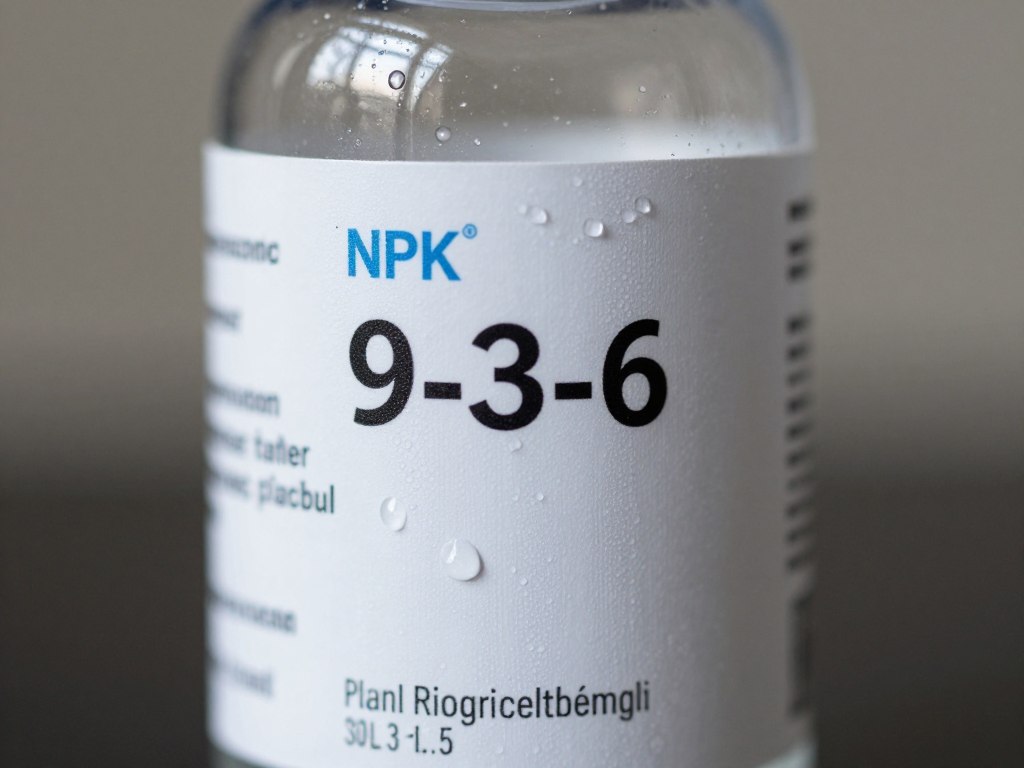
The three primary macronutrients drive plant growth and development. You’ll see these listed as NPK ratios on every nutrient bottle.
Nitrogen (N) powers vegetative growth. It creates the green leafy growth you see in plants. Leafy greens need high nitrogen levels throughout their life cycle.
Phosphorus (P) supports root development and flowering. Fruiting plants require increased phosphorus during bloom stages. This nutrient determines flower and fruit production.
Potassium (K) strengthens overall plant health. It improves disease resistance and enhances fruit quality. Potassium helps plants manage water efficiently.
Critical Micronutrients That Make the Difference
Plants need micronutrients in smaller quantities, but they’re equally important. Iron, manganese, zinc, copper, boron, and molybdenum all play specific roles.
Complete nutrient solutions include all necessary micronutrients in chelated form. This means the nutrients remain available to plants across different pH ranges. Quality formulas prevent common deficiencies before they start.
Pro Tip: Always choose complete nutrient solutions rather than trying to mix individual elements yourself. Complete formulas ensure proper nutrient ratios and prevent dangerous imbalances that damage crops.
Types of Nutrient Solutions: Finding Your Perfect Match
Hydroponic nutrients come in different formulations. Each type offers specific advantages depending on your experience level and growing goals.
Liquid vs. Powder Nutrients
Liquid Nutrients
- Extremely easy to measure and mix
- Dissolve instantly in water
- Perfect for beginners and small systems
- No risk of incomplete mixing
- Ready to use immediately
Liquid Drawbacks
- Higher cost per gallon of solution
- Heavy shipping costs due to water weight
- Shorter shelf life once opened
- Takes more storage space
Powder Nutrients
- Significantly lower cost per gallon
- Lightweight for affordable shipping
- Long shelf life when stored properly
- Ideal for large commercial systems
- Concentrated form saves storage space
Powder Challenges
- Requires careful measuring and mixing
- Two-part formulas need separate mixing
- Risk of incomplete dissolution
- Takes more time to prepare
One-Part vs. Multi-Part Systems
One-part nutrient solutions combine everything in a single bottle. You simply measure and add to water. These formulas work well for plants with consistent needs throughout their lifecycle.
Multi-part systems typically include two or three separate bottles. You adjust the ratio of each part based on growth stage. This gives you precise control over vegetative growth versus flowering.
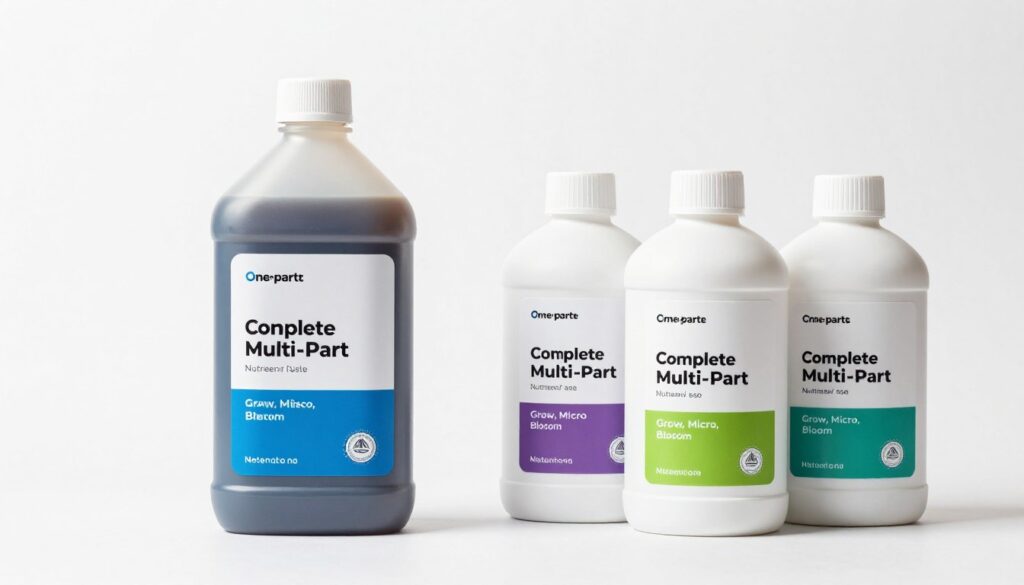
Three-part systems offer maximum flexibility. You can tailor nutrients to specific crop requirements and growth phases. Commercial growers often prefer this level of control.
Organic vs. Synthetic Formulations
Synthetic nutrients use mineral salts that dissolve completely in water. Plants absorb these immediately. Most hydroponic systems work best with synthetic formulas because they leave no residue.
Organic nutrients come from natural sources like fish emulsion or seaweed. These can work in hydroponics but require careful management. Organic matter may clog systems or create beneficial bacteria that need monitoring.
The choice between organic and synthetic rarely affects final crop quality. Plants absorb the same chemical elements regardless of source. Choose based on system compatibility rather than misconceptions about quality.
Factors for Choosing the Best Nutrient Solution
Selecting the right nutrients depends on several key factors. Consider these elements to match products with your specific growing conditions.
Plant Type Determines Nutrient Needs
Leafy greens like lettuce and herbs thrive with higher nitrogen ratios. Look for formulas with NPK ratios around 9-3-6 or similar. These plants focus on vegetative growth throughout their entire lifecycle.
Fruiting crops need different nutrition at different stages. Tomatoes, peppers, and strawberries require higher nitrogen during vegetative growth. When flowering begins, they need increased phosphorus and potassium.
Leafy Greens
Best with consistent high-nitrogen formulas throughout growth.
- Lettuce varieties
- Spinach and kale
- Basil and herbs
- Microgreens
Fruiting Plants
Require transition from vegetative to bloom formulas.
- Tomatoes and peppers
- Strawberries
- Cucumbers
- Melons
Root Vegetables
Need balanced nutrition with attention to phosphorus for root development.
- Radishes
- Carrots
- Beets
- Turnips
Flowers
Demand high phosphorus during bloom phase for flower production.
- Roses
- Orchids
- Petunias
- Marigolds
System Type Impacts Solution Choice
Deep water culture systems work well with most nutrient solutions. The large water volume provides stability and forgives minor mixing errors.
NFT systems and aeroponics need completely dissolved nutrients. Any particulate matter can clog channels or spray nozzles. Liquid nutrients or fully dissolved powders work best.
Ebb and flow systems tolerate a wider range of formulas. The flooding action helps dissolve and distribute nutrients evenly throughout the growing medium.
Water Quality Affects Nutrient Performance
Hard water contains dissolved minerals that alter nutrient availability. If your water has high calcium or magnesium levels, choose formulas designed for hard water. These account for minerals already present.
Soft water or reverse osmosis water contains almost no minerals. You’ll need complete nutrient solutions that provide calcium and magnesium. Some growers add Cal-Mag supplements to their base nutrients.
Important: Always test your source water before selecting nutrients. High EC readings indicate mineral content that affects which formula works best for your system.
Top 5 Best Nutrient Solutions for Hydroponics
After extensive testing across different systems and crops, these nutrient solutions consistently deliver excellent results. Each recommendation includes specific use cases to help you choose.
1. SuperThrive Foliage Pro – Best for Beginners Growing Greens
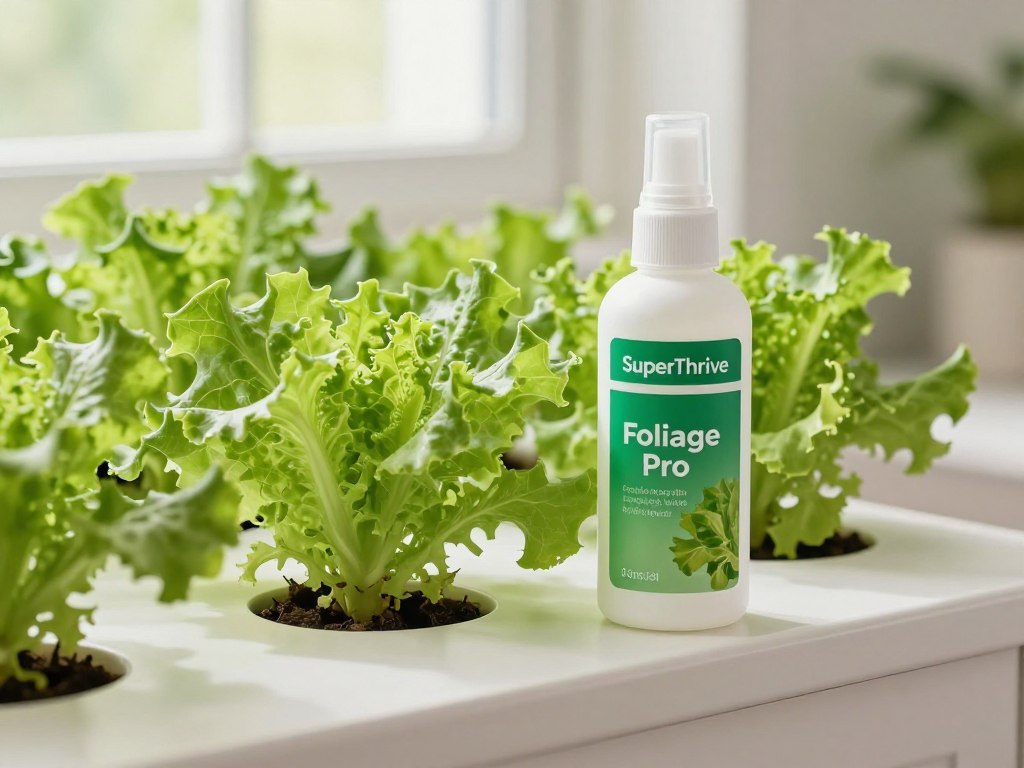
SuperThrive Foliage Pro delivers exceptional results for leafy greens and herbs. The 9-3-6 NPK ratio provides optimal nutrition for plants harvested during vegetative stages.
This one-part liquid formula eliminates mixing complexity. You simply measure and add to your reservoir. The complete micronutrient package prevents common deficiencies without additional supplements.
Why We Love It
- Incredibly simple one-part formula
- Perfect nitrogen levels for greens
- Complete micronutrient profile
- Trusted brand for decades
- Works in all hydroponic systems
Limitations
- Not ideal for flowering plants
- Higher cost than powder options
- Single bottle means less control
Best For: Hobby growers raising lettuce, spinach, basil, and other leafy crops in small to medium systems.
2. General Hydroponics Flora Series – Best Overall Versatility
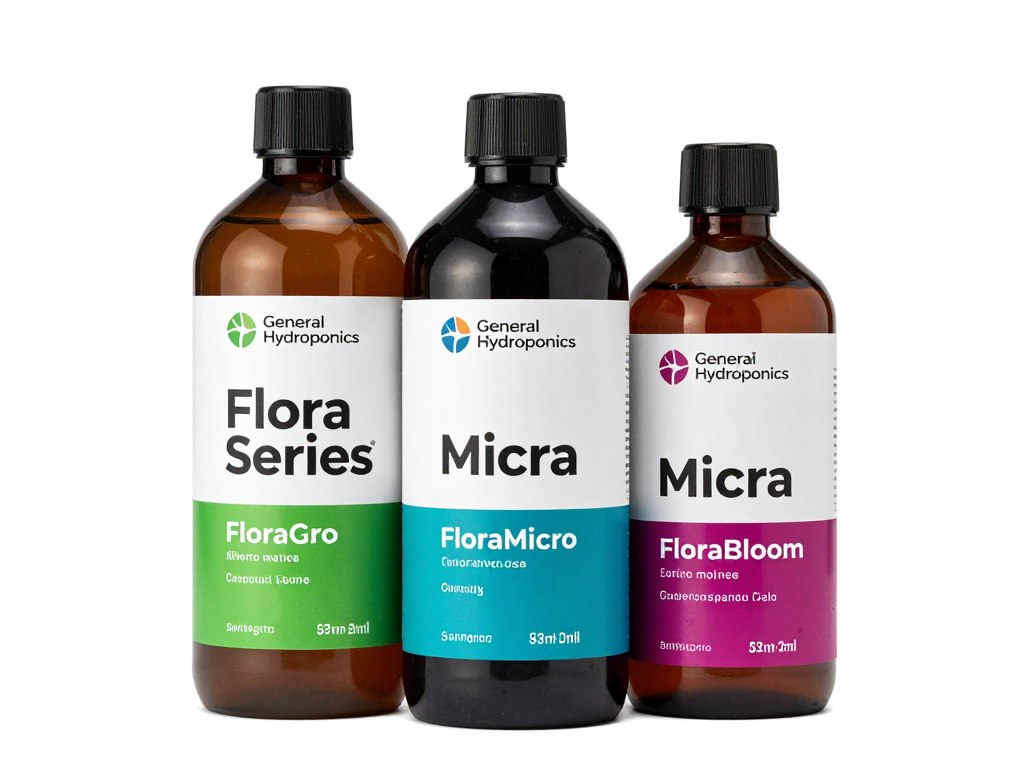
The Flora Series three-part system gives you complete control over plant nutrition. You adjust the ratio of FloraGro, FloraMicro, and FloraBloom based on growth stage.
This legendary formula has proven itself since the 1970s. NASA even used it for space station experiments. The flexibility works perfectly for growers managing multiple crop types simultaneously.
Strengths
- Unmatched flexibility for all crops
- Proven formula with decades of results
- Detailed feeding schedules available
- Works from seedling to harvest
- Excellent for flowering plants
Challenges
- Requires mixing three separate bottles
- More complex for beginners
- Easy to make ratio mistakes initially
Best For: Intermediate to advanced growers raising multiple crop types, especially those growing flowering and fruiting plants like tomatoes and peppers.
3. Masterblend 4-18-38 Complete Combo – Best Value for Large Systems
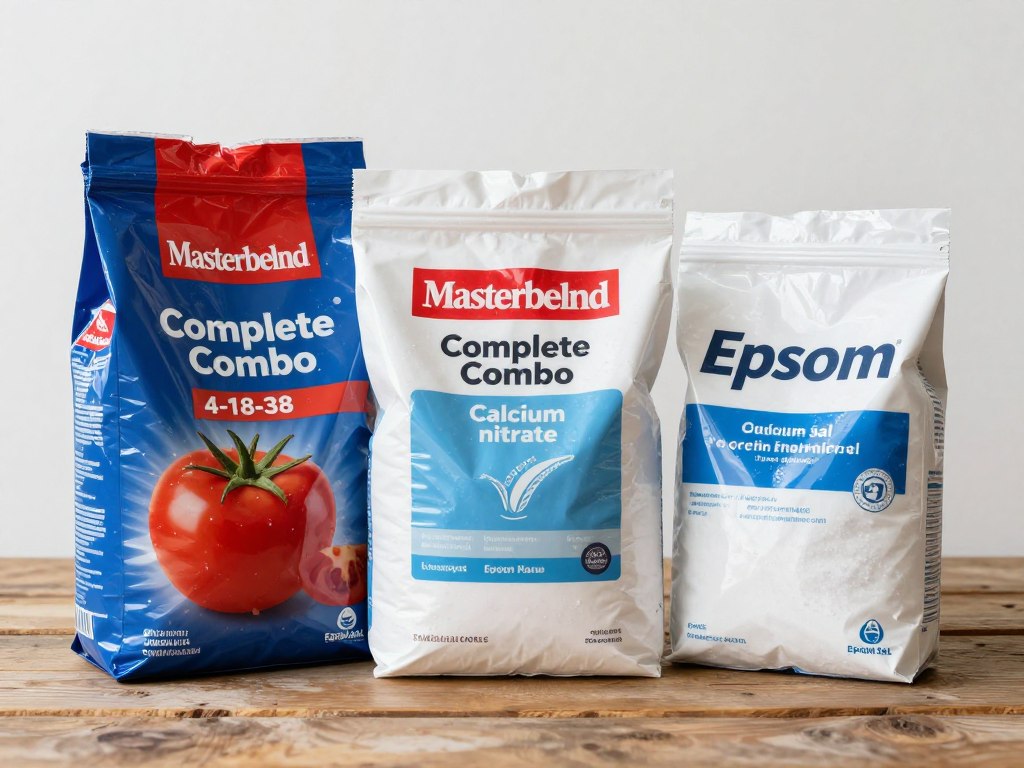
Masterblend offers exceptional value for money. This three-part powder system costs a fraction of liquid nutrients while delivering professional results.
The 4-18-38 tomato formula works excellently for fruiting crops. You mix it with calcium nitrate and magnesium sulfate to create a complete solution. One kit makes hundreds of gallons.
Advantages
- Incredible cost per gallon savings
- Long shelf life as powder
- Professional-grade formulation
- Lightweight shipping costs
- Ideal for large scale operations
Drawbacks
- Requires careful measurement
- Must mix parts separately first
- Learning curve for beginners
- Takes more preparation time
Best For: Budget-conscious growers with larger systems, commercial operations, and experienced hobbyists comfortable with powder mixing.
4. FoxFarm Liquid Nutrient Trio – Best for Organic-Leaning Growers

FoxFarm combines the best of both worlds. Their trio includes organic-based ingredients processed for hydroponic compatibility.
Grow Big powers vegetative growth with a 3-2-6 NPK ratio. Tiger Bloom transitions plants into flowering with increased phosphorus. Big Bloom adds organic matter and beneficial microbes that enhance flavor.
Benefits
- Enhanced flavor profiles in food crops
- Organic-based ingredients
- Excellent for flowering plants
- Beneficial microbe support
- Clear feeding schedules provided
Considerations
- Can leave residue in systems
- Requires more frequent cleaning
- Not fully organic certified
- Higher price point
Best For: Growers prioritizing flavor and quality in edible crops, those wanting organic-style inputs that work in hydroponic systems.
5. Advanced Nutrients pH Perfect – Best for Low-Maintenance Growing
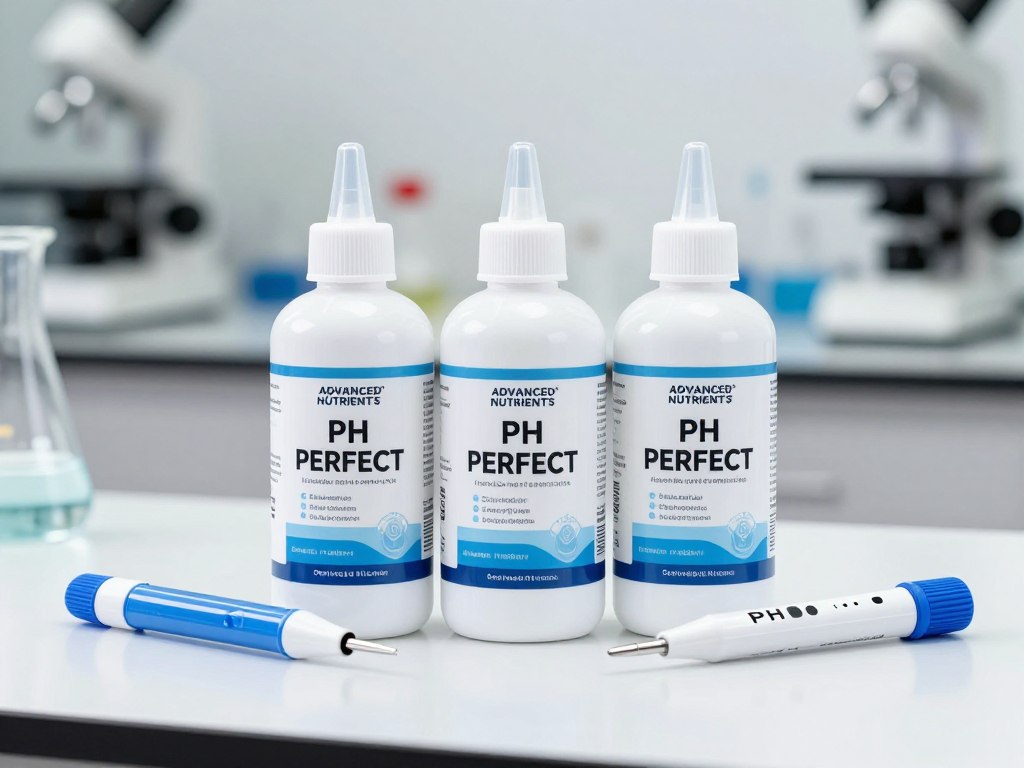
Advanced Nutrients eliminates the biggest hassle in hydroponics: pH adjustment. Their pH Perfect technology automatically buffers the solution between 5.5 and 6.3.
This three-part system includes Grow, Micro, and Bloom bottles. The formula maintains stable pH for up to one week in most systems. You save time and reduce the risk of pH-related nutrient lockout.
Unique Features
- Automatic pH buffering technology
- Reduces daily maintenance time
- Prevents nutrient lockout from pH drift
- Complete micronutrient chelation
- Excellent for busy growers
Trade-offs
- Premium pricing
- Still wise to monitor pH occasionally
- Three bottles to manage
- May not work with very hard water
Best For: Busy growers who want to minimize maintenance time, those struggling with pH stability, and anyone who wants to simplify their growing routine.
Mixing and Maintenance Best Practices
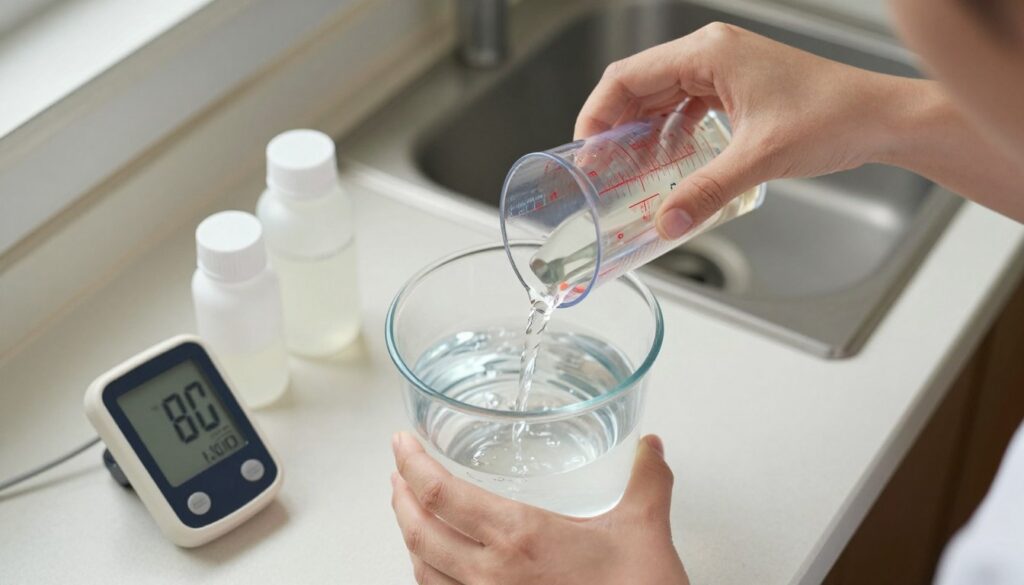
Proper mixing and maintenance determine nutrient solution effectiveness. Follow these proven techniques to maximize plant health and prevent common problems.
How to Mix Nutrients Correctly
- Start with clean water – Fill your reservoir with fresh water at room temperature. Cold water dissolves nutrients poorly.
- Add nutrients to water – Never add water to concentrated nutrients. This can cause chemical reactions and precipitation.
- Mix powder parts separately – If using powder nutrients, dissolve calcium nitrate in one container and the main nutrient mix in another. Combine only after both fully dissolve.
- Follow manufacturer ratios – Use the exact amounts specified on feeding schedules. More nutrients doesn’t mean faster growth.
- Stir thoroughly – Ensure complete mixing before testing EC or pH levels. Uneven mixing leads to inaccurate readings.
- Test and adjust – Measure EC and pH after mixing. Adjust pH to 5.5-6.5 range for optimal nutrient availability.
Monitoring EC and pH Levels
Electrical conductivity measures total dissolved solids in your solution. This tells you nutrient concentration strength.
Target EC ranges vary by crop and growth stage. Leafy greens typically thrive between 1.2 and 1.8 EC. Fruiting plants often need 1.8 to 2.5 EC during flowering.
| Plant Category | Vegetative EC | Flowering EC | Optimal pH |
| Leafy Greens | 1.2 – 1.8 | N/A | 5.5 – 6.0 |
| Herbs | 1.0 – 1.6 | N/A | 5.5 – 6.5 |
| Tomatoes | 1.5 – 2.0 | 2.0 – 2.5 | 5.8 – 6.3 |
| Peppers | 1.8 – 2.2 | 2.2 – 2.8 | 6.0 – 6.5 |
| Strawberries | 1.0 – 1.4 | 1.4 – 1.8 | 5.5 – 6.2 |
| Cucumbers | 1.7 – 2.0 | 2.0 – 2.5 | 5.8 – 6.0 |
pH controls nutrient availability. Each element becomes more or less available at different pH levels. The 5.5 to 6.5 range ensures maximum nutrient uptake.
Solution Change Schedule
Complete reservoir changes prevent nutrient imbalances. Plants absorb elements at different rates. Over time, some nutrients accumulate while others deplete.
Small systems under 20 gallons benefit from weekly changes. Larger systems can run two weeks between changes. Monitor EC drift to determine ideal timing for your setup.
Between changes, top off with plain pH-adjusted water. This prevents nutrient concentration from increasing as plants drink water faster than they consume nutrients.
Get Your Free Nutrient Mixing Guide
Download our comprehensive PDF guide with exact mixing ratios, maintenance schedules, and troubleshooting charts for all major nutrient brands.
Common Problems and Troubleshooting
Even experienced growers encounter nutrient-related issues. Recognizing symptoms early prevents crop damage and saves your harvest.
Nutrient Lockout Prevention
Nutrient lockout occurs when pH drifts outside the optimal range. Plants cannot absorb available nutrients even though the solution contains them.

Symptoms include stunted growth, yellowing leaves, and purple stems despite proper EC levels. Test pH immediately when you notice these signs.
Prevention requires consistent pH monitoring. Check levels daily in small systems. Automated pH controllers eliminate this concern but cost more initially.
Identifying Nutrient Deficiencies
Mobile Nutrient Deficiencies
These show in older leaves first as plants move nutrients to new growth.
- Nitrogen – Yellowing starts at bottom leaves, progresses upward
- Phosphorus – Dark green or purple leaves, especially underneath
- Potassium – Brown crispy edges on older leaves
- Magnesium – Yellowing between veins while veins stay green
Immobile Nutrient Deficiencies
These affect new growth because plants can’t relocate these elements.
- Calcium – Twisted or deformed new leaves, blossom end rot
- Iron – Yellowing of newest leaves while veins stay green
- Boron – Brittle, thick new growth, hollow stems
- Zinc – Small twisted leaves with yellow spots
Algae Growth Management
Algae competes with plants for nutrients and oxygen. Light exposure to the nutrient solution triggers rapid algae growth.
Block all light from reaching your reservoir. Use opaque containers and cover any openings. Clean systems thoroughly between crops to remove algae spores.
If algae develops, drain and clean the entire system. Scrub all surfaces with hydrogen peroxide solution. Refill with fresh nutrients in light-proof containers.
Salt Buildup and System Cleaning
Mineral salts accumulate on roots, growing media, and system components. This buildup interferes with water and nutrient absorption.
Flush systems monthly with plain pH-adjusted water. Run the flush for several hours to dissolve and remove salt deposits. Resume normal feeding after flushing.
Between crops, clean all components with a diluted hydrogen peroxide or vinegar solution. Rinse thoroughly before starting new plants to prevent chemical burns.
How often should I change my nutrient solution?
Change your complete nutrient solution every 1-2 weeks depending on system size. Small systems under 20 gallons need weekly changes. Larger systems over 50 gallons can run two weeks. Monitor EC drift to determine optimal timing for your specific setup.
Can I mix different nutrient brands together?
Avoid mixing different brands of base nutrients. Each formula balances elements differently and mixing can create imbalances or precipitates. You can use supplements from different brands with your base nutrients, but stick with one brand for your primary NPK solution.
Do organic nutrients work in hydroponic systems?
Some organic nutrients work in hydroponics but require careful management. They can leave residue that clogs systems and promotes bacterial growth. Choose organic formulas specifically designed for hydroponics. Expect more frequent system cleaning compared to synthetic nutrients.
Why is my pH constantly rising or falling?
pH drift happens as plants absorb nutrients at different rates. Rising pH often indicates plants consuming more acidic nutrients. Falling pH suggests excessive acid buildup from root respiration or organic matter breakdown. Regular solution changes prevent extreme drift. Consider pH Perfect nutrients if drift becomes problematic.
Still Unsure Which Nutrient Solution Fits Your System?
Every hydroponic setup has unique requirements. Our experienced growers can analyze your system, water quality, and crop goals to recommend the perfect nutrient solution. Get personalized advice that prevents costly mistakes and maximizes your yields.
Choosing Your Best Nutrient Solution
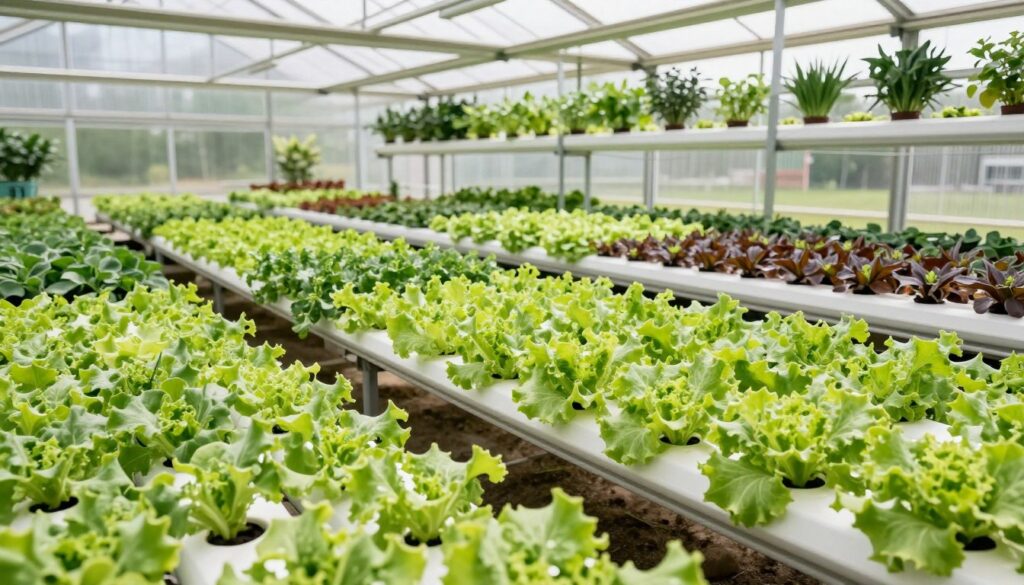
The best nutrient solution for hydroponics depends on your specific situation. Consider your experience level, crop types, system size, and available time for maintenance.
Beginners growing leafy greens should start with one-part liquid solutions like SuperThrive Foliage Pro. The simplicity prevents mistakes while you learn system management.
Intermediate growers raising multiple crop types benefit from three-part systems like General Hydroponics Flora Series. The flexibility supports different plants and growth stages simultaneously.
Budget-conscious growers with larger systems save significantly with powder formulas like Masterblend. The initial learning curve pays off through lower long-term costs.
Quality nutrients make the difference between struggling plants and abundant harvests. Invest in proven formulas from reputable brands rather than experimenting with unknown products.
Remember that proper mixing and maintenance matter as much as the nutrients themselves. Follow feeding schedules, monitor pH and EC levels, and change solutions regularly for consistent results.
Start with the recommendations in this guide based on your specific needs. Track your results and adjust as you gain experience with your system and crops.