
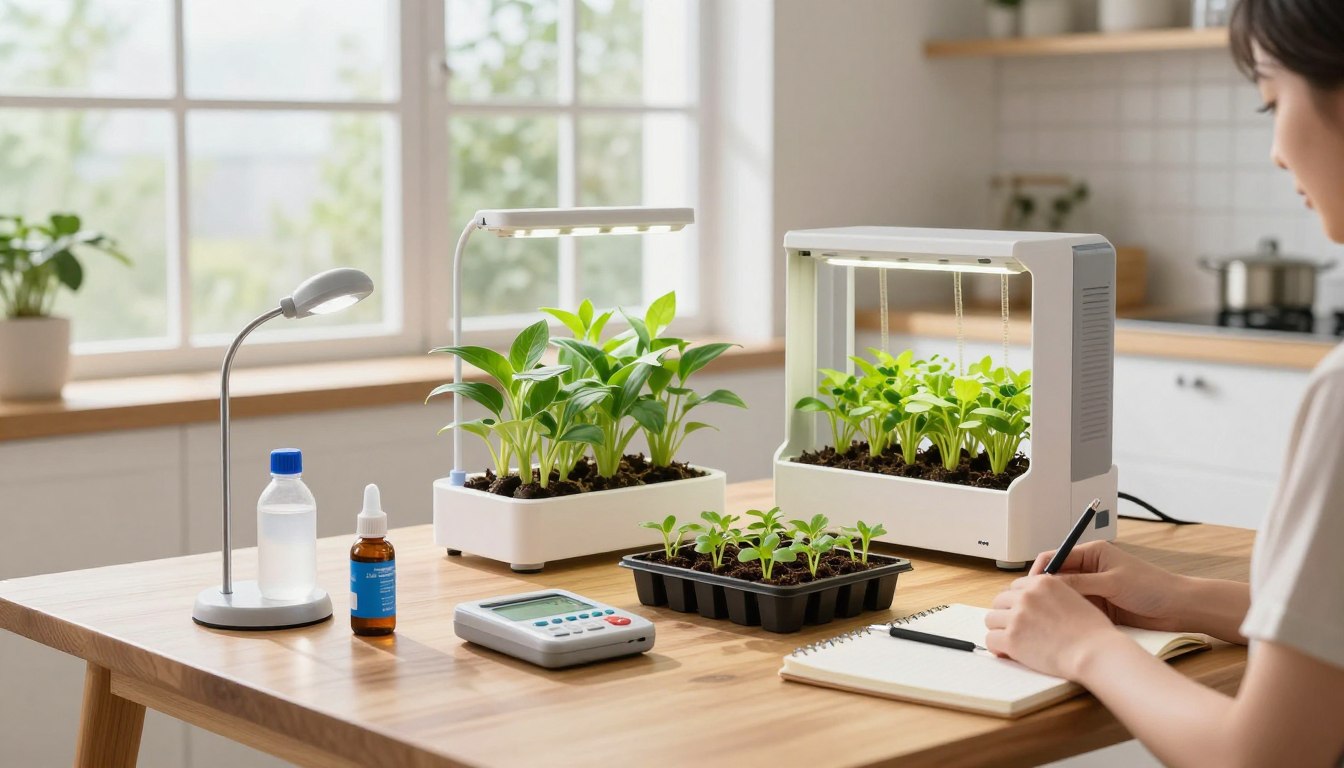
Here’s the truth: you can start hydroponics for as little as $50 or invest several thousand dollars. The wide range depends entirely on your goals, available space, and chosen approach.
This guide breaks down every expense you’ll encounter. We’ll explore beginner-friendly system types, compare price points, and show you exactly where your money goes. By the end, you’ll know what hydroponic gardening costs for someone like you.
Understanding the Investment in Hydroponic Systems
Before diving into specific numbers, let’s clarify what you’re actually paying for. Hydroponic systems replace soil with water and nutrients. Plants grow faster because they receive optimal nutrition directly to their roots.
What Drives Hydroponic Costs?
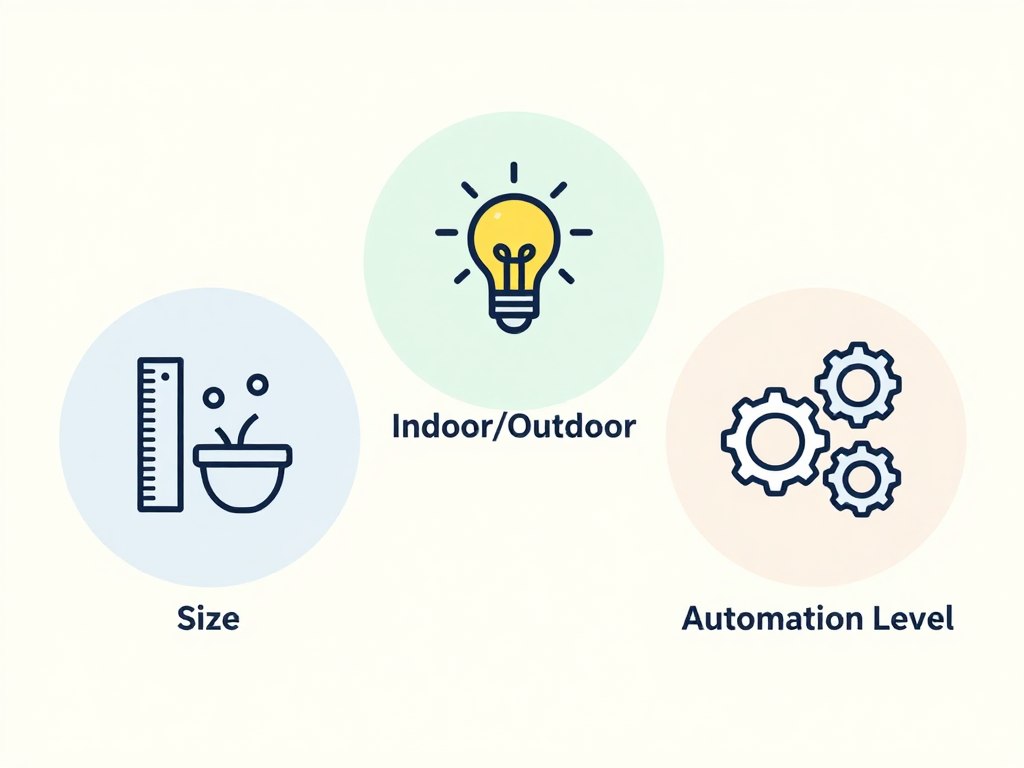
Several factors determine your total investment. The size of your growing space matters significantly. A countertop herb garden costs far less than a full basement setup.
Your choice between indoor and outdoor growing affects expenses dramatically. Indoor systems require artificial lighting, which represents the largest ongoing cost. Outdoor setups leverage free sunlight but may need greenhouse protection.
The level of automation you want also impacts the price. Manual systems cost less upfront but require more daily attention. Automated systems handle nutrients, water, and lighting schedules for you.
The type of hydroponic system you select fundamentally shapes your budget. Simple passive systems need minimal equipment. Active systems with pumps and timers cost more but deliver better results.
Whether you build DIY or buy pre-made kits creates another cost variation. DIY approaches save money but require time and research. Commercial systems cost more but include everything you need to get started immediately.
Important Note: Don’t confuse startup costs with ongoing expenses. Your initial investment purchases equipment that lasts years. Monthly costs for nutrients, seeds, and electricity remain relatively low.
Complete Breakdown of Hydroponic Startup Costs
Let’s examine each category of expense you’ll encounter. Understanding these components helps you budget accurately and prioritize spending.
Grow Space and System Components
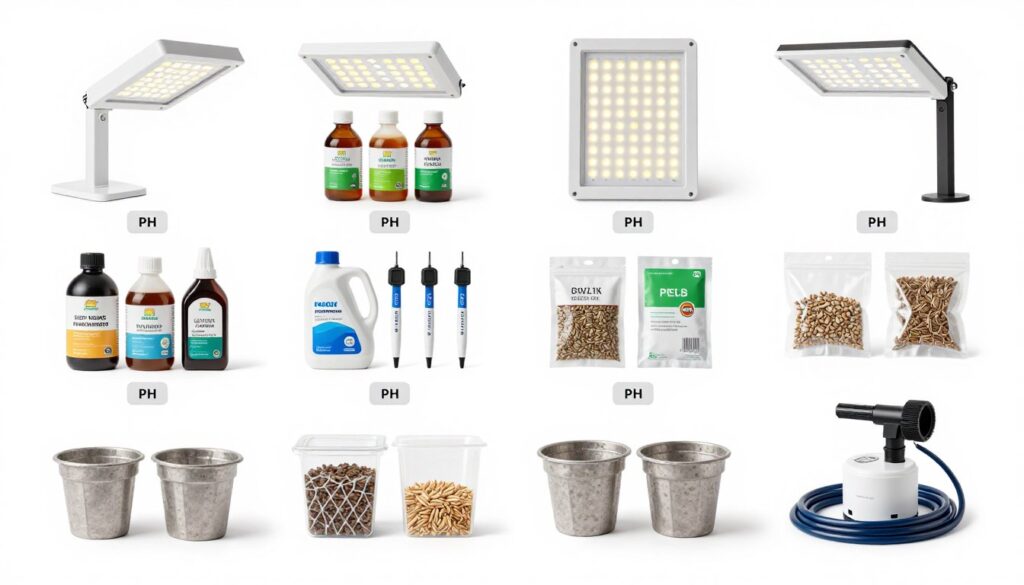
Your hydroponic system forms the foundation of your setup. This is where plants will live and grow. System costs vary dramatically based on type and size.
| System Type | Low-End Cost | Mid-Range Cost | High-End Cost |
| Simple Kratky Setup (DIY) | $20-50 | $50-100 | $100-150 |
| Deep Water Culture Kit | $50-100 | $100-200 | $200-400 |
| NFT System | $100-200 | $200-400 | $400-800 |
| Ebb and Flow System | $150-250 | $250-500 | $500-1,000 |
| Complete Countertop Garden | $100-200 | $200-500 | $500-1,200 |
Basic DIY systems using food-grade buckets and simple containers represent the most affordable entry point. You’ll need containers, net pots or cups, an air pump for water circulation, and tubing to connect components.
Pre-built starter kits include everything needed but cost more than piecing together components yourself. These kits save time and reduce beginner mistakes. Popular brands offer countertop systems perfect for herbs and leafy greens.
Lighting Equipment
Outdoor hydroponic systems harness free sunlight and need no grow lights. Indoor systems require artificial lighting, which becomes your largest single expense after the system itself.
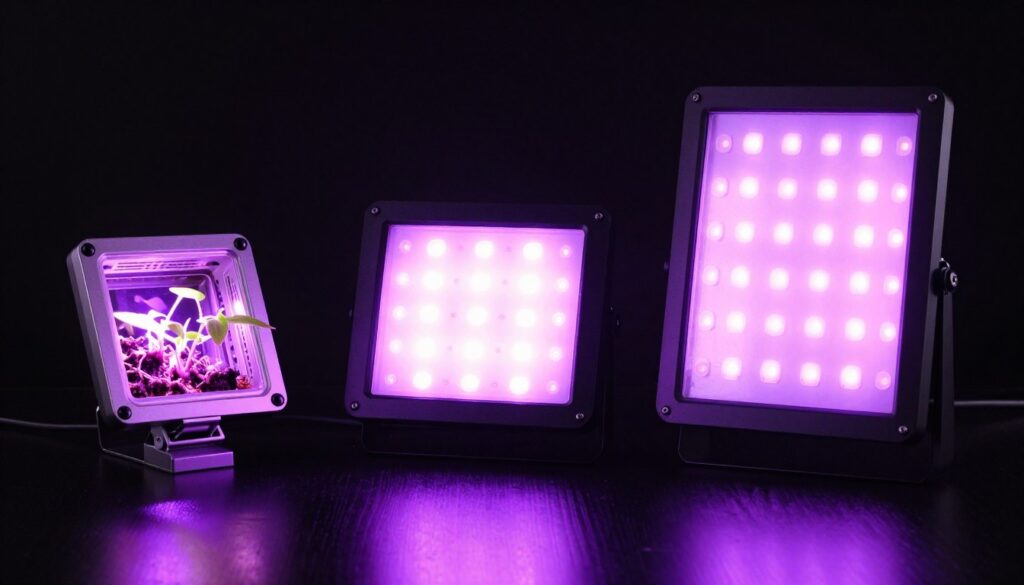
Budget Lighting ($30-80)
- Basic LED bulbs or strips
- Suitable for 1-4 plants
- Lower light intensity
- Good for herbs and microgreens
- Typically 20-40 watts
Mid-Range Lighting ($80-200)
- Quality LED panels
- Covers 6-12 plants
- Full-spectrum options
- Better for fruiting plants
- Typically 40-100 watts
Premium Lighting ($200-500+)
- Professional LED systems
- Supports 12+ plants
- Programmable features
- Commercial-quality results
- 100-300+ watts
Modern LED technology has revolutionized indoor growing. These lights consume far less electricity than older fluorescent or HID bulbs. They also produce less heat, reducing cooling requirements.
The wattage you need depends on plant type and quantity. Leafy greens like lettuce need less intense light. Fruiting plants like tomatoes or peppers require stronger lighting for productive growth.
Nutrients and Growing Medium
Hydroponic plants depend entirely on you for nutrition. Specialized nutrient solutions provide all essential minerals that soil would normally supply.
Nutrient Solutions
- Starter nutrient kit: $15-30
- Quality 1-quart bottles: $25-45
- Professional 1-gallon size: $60-100
- Organic options: 20-40% more expensive
Growing Medium
- Rockwool cubes (50-count): $10-20
- Clay pebbles (10-liter bag): $15-25
- Coco coir (compressed block): $8-15
- Perlite (large bag): $12-20
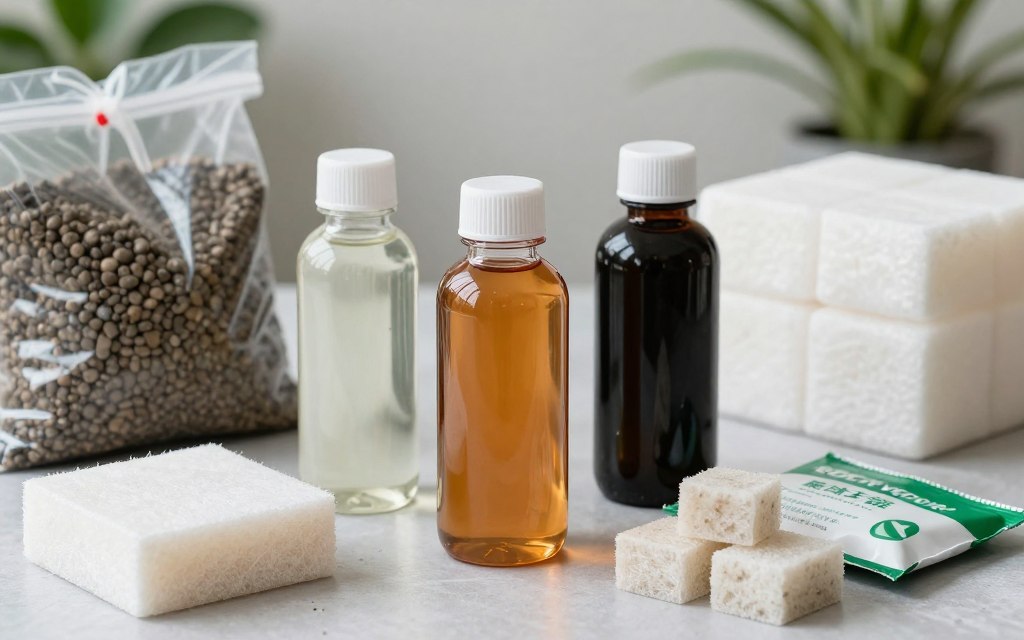
Most beginners start with liquid nutrients that dissolve easily in water. These come in one-part or multi-part formulations. One-part nutrients simplify mixing but offer less control. Multi-part systems let you adjust formulas for different growth stages.
Growing medium supports plant roots while allowing water and oxygen flow. Each type has advantages. Rockwool works well for starting seeds. Clay pebbles provide excellent aeration. Coco coir offers a soil-like feel that many beginners prefer.
Seeds and Seedlings
Starting from seeds costs significantly less than purchasing seedlings. However, seedlings give you a head start and higher success rates for beginners.
| Plant Type | Seed Packet Cost | Seedling Cost Each | Best for Beginners |
| Lettuce varieties | $2-4 (200+ seeds) | $2-3 each | Seeds |
| Basil and herbs | $3-5 (100+ seeds) | $3-5 each | Seeds |
| Tomatoes | $3-6 (25-50 seeds) | $4-7 each | Seedlings |
| Peppers | $3-6 (20-40 seeds) | $4-7 each | Seedlings |
| Strawberries | $4-8 (50+ seeds) | $5-10 each | Seedlings |
Budget around $15-30 for an initial seed selection. This gives you enough variety to experiment with different plants and discover what grows well in your system.
Monitoring and Testing Tools
Success in hydroponics requires monitoring water quality. Plants thrive within specific pH and nutrient concentration ranges. Testing tools help you maintain optimal conditions.
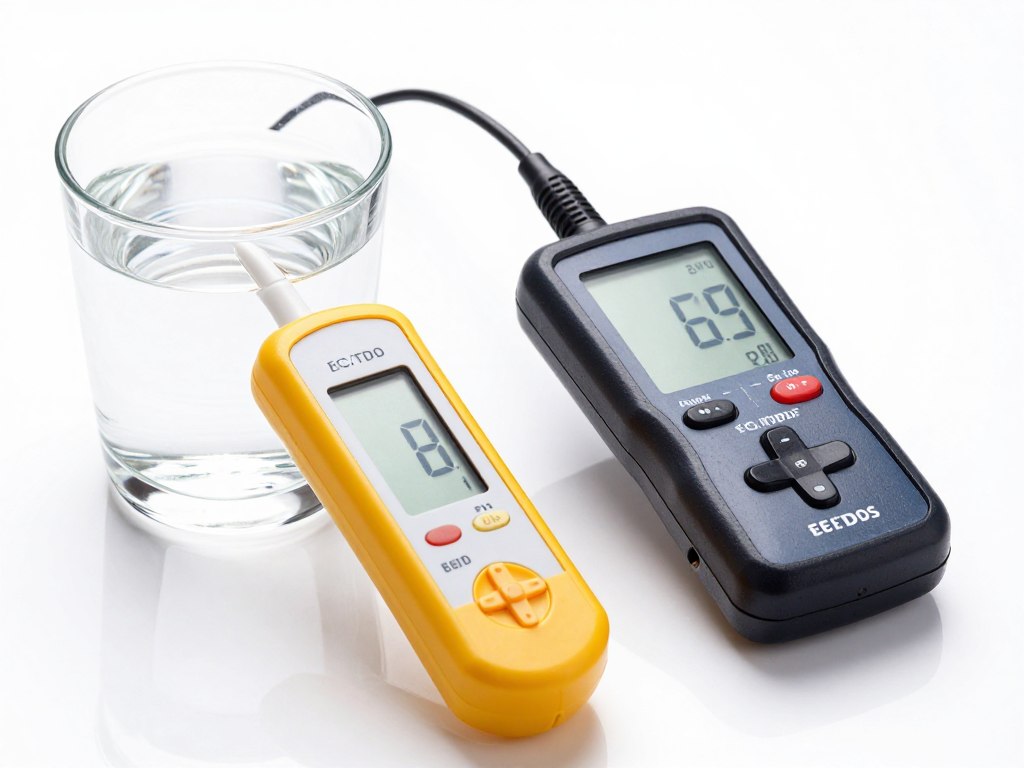
- pH Test Kit: Liquid drop tests cost $8-15, while digital pH meters range from $15-60
- EC/TDS Meter: Measures nutrient concentration, essential for preventing overfeeding ($15-50)
- Thermometer: Water temperature affects oxygen levels and nutrient uptake ($5-15)
- Calibration Solutions: Keep meters accurate over time ($10-20 annually)
Digital meters provide faster, more accurate readings than liquid tests. However, they require occasional calibration and battery replacement. Many beginners start with affordable digital meters and upgrade if they expand their growing operation.
Comparing Costs of Beginner-Friendly Hydroponic Systems
Understanding different system types helps you choose based on your budget, space, and experience level. Each approach offers distinct advantages and challenges.
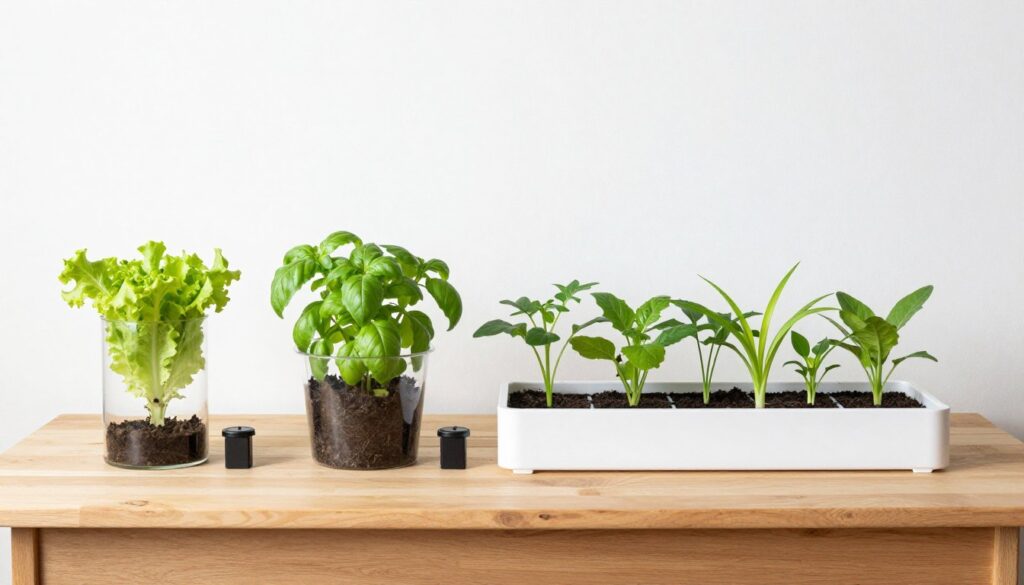
Kratky Method (Passive System)
Best for: Absolute beginners on tight budgets
The Kratky method requires no electricity or pumps. Plants sit in containers with nutrient solution that gradually depletes as roots grow. This passive system works beautifully for lettuce, herbs, and other fast-growing leafy greens.
Typical Costs:
- Mason jars or containers: $5-15
- Net pots and lids: $5-10
- Growing medium: $8-12
- Nutrients (starter): $15-25
- Seeds: $3-5
Total Investment:
$36-67 for a basic 3-6 plant setup
No ongoing electricity costs. Perfect for windowsill growing outdoors or in bright indoor spaces.
Advantages
- Lowest startup cost
- Zero electricity usage
- Nearly silent operation
- Perfect for learning basics
- Minimal maintenance required
Limitations
- Limited to smaller plants
- Slower growth rates
- Not suitable for large-scale growing
- Requires system reset between crops
- More sensitive to temperature changes
Deep Water Culture (DWC)
Best for: Beginners wanting faster growth and better yields
DWC systems suspend plant roots in oxygenated nutrient solution. An air pump continuously bubbles oxygen through the water, promoting rapid growth. This active system produces impressive results for both leafy greens and fruiting plants.
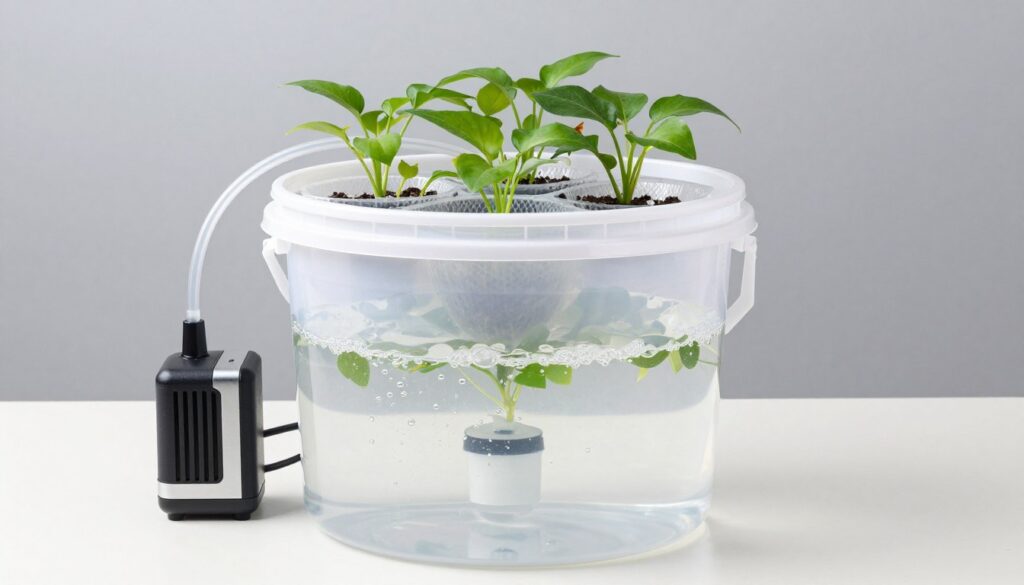
Typical Costs:
- 5-gallon bucket kit: $30-60
- Air pump and stones: $15-30
- Growing medium: $10-15
- Nutrients (quality): $25-40
- Seeds or seedlings: $10-20
- pH/EC testing: $25-40
Total Investment:
$115-205 for a 4-6 plant system
Minimal electricity costs (air pump uses 5-10 watts). Requires indoor space with grow light ($50-150 additional) unless placed near bright windows.
Advantages
- Faster plant growth than passive systems
- Higher yields per plant
- Works for most crop types
- Simple to monitor and maintain
- Easy to scale up
Limitations
- Requires continuous power
- Air pump creates low noise
- More components that can fail
- Vulnerable to power outages
- Needs regular water level monitoring
Nutrient Film Technique (NFT)
Best for: Growers wanting to maximize production in limited space
NFT systems circulate a thin film of nutrient solution through sloped channels or tubes. Plants sit in the channels with roots partially exposed to the flowing water. This efficient design supports many plants in compact spaces.
Typical Costs:
- Basic NFT kit (6-12 sites): $80-150
- Water pump: $20-40
- Reservoir container: $15-30
- Growing medium: $10-15
- Nutrients: $25-40
- Seedlings: $15-30
- Testing equipment: $25-40
Total Investment:
$190-345 for a 12-plant system
Low electricity costs (pump uses 10-25 watts). Best suited for indoor growing with supplemental lighting ($80-200 additional).
Advantages
- High plant density possible
- Excellent for leafy greens
- Water and nutrient efficient
- Professional results
- Scalable design
Limitations
- Higher initial investment
- More complex setup
- Pump failure affects all plants
- Requires precise leveling
- Not ideal for large plants
Complete Countertop Systems
Best for: Convenience-focused beginners with moderate budgets
All-in-one countertop gardens include everything needed in a single purchase. These systems integrate lighting, automated watering, and often smartphone controls. They deliver foolproof results but cost more than DIY alternatives.
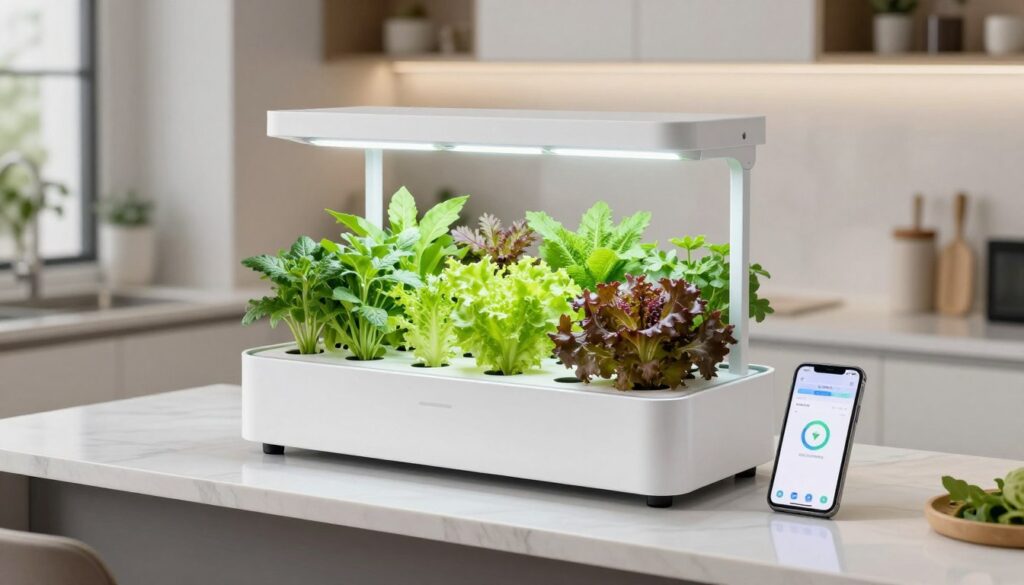
Typical Costs:
- Basic 3-pod system: $80-130
- Mid-range 6-9 pod: $150-300
- Premium 12+ pod: $300-600
- Replacement seed pods: $15-25 per set
- Nutrients (included initially): $15-25 refills
Total Investment:
$150-600 depending on size
Moderate electricity costs ($5-15 monthly). Everything included except ongoing seed pod purchases. Perfect plug-and-play solution.
Advantages
- Zero technical knowledge required
- Attractive, furniture-quality design
- Automated growing features
- Smartphone app controls
- Consistent, reliable results
- Great gift option
Limitations
- Higher cost per plant site
- Proprietary seed pod systems
- Limited customization
- Ongoing subscription costs
- Less learning experience
- Difficult to repair
Key Factors That Affect Your Total Hydroponic Investment
Several variables dramatically influence your final cost. Understanding these factors helps you make strategic choices aligned with your budget and goals.
Scale of Your Operation
The number of plants you want to grow directly determines system size and cost. A countertop herb garden costs vastly less than a basement full of vegetables.
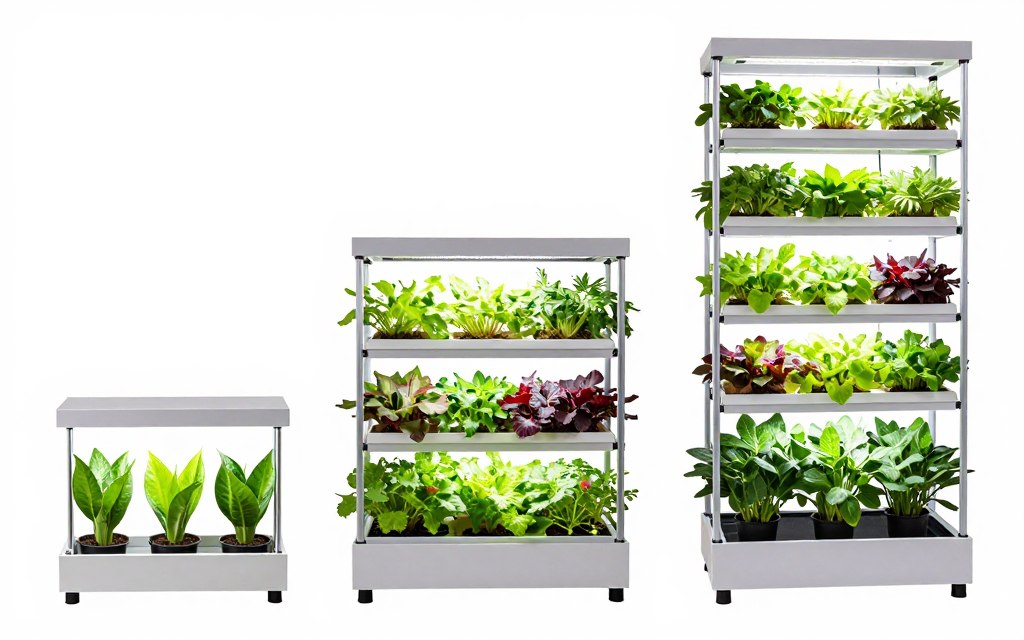
| Scale | Plant Capacity | Typical Cost Range | Best For |
| Micro (Experimental) | 1-6 plants | $30-150 | Learning, herbs for personal use |
| Small (Hobby) | 6-15 plants | $150-400 | Family salads, regular harvests |
| Medium (Serious Hobby) | 15-40 plants | $400-1,200 | Year-round vegetable production |
| Large (Semi-Commercial) | 40-100+ plants | $1,200-5,000+ | Selling produce, self-sufficiency |
Starting small makes sense for beginners. You’ll learn essential skills without overwhelming financial commitment. Many successful growers began with a single bucket system before expanding to larger operations.
Scaling up becomes more cost-effective per plant site. Larger systems share infrastructure like pumps, reservoirs, and lighting. However, they require more space, time management, and technical knowledge.
Indoor versus Outdoor Location
Your growing location profoundly impacts costs. Outdoor hydroponic systems leverage free sunlight, eliminating the largest ongoing expense. Indoor systems require artificial lighting but offer year-round production and climate control.
Outdoor Growing Costs
- No lighting equipment needed
- Zero electricity for lights
- Natural temperature regulation
- Lower initial investment
- Seasonal limitations in cold climates
- Weather dependency
- Potential pest issues
Typical savings: $100-500 on startup costs
Indoor Growing Costs
- Grow lights required ($50-500)
- Electricity costs ($5-30 monthly)
- Climate control may be needed
- Higher initial investment
- Year-round growing possible
- Complete environmental control
- Minimal pest problems
Typical addition: $150-700 for lighting and climate control
Many growers combine approaches. They run outdoor systems during warm months and move operations indoors for winter. This strategy maximizes cost efficiency while maintaining year-round food production.
DIY Build versus Pre-Made Kits
Assembling your own system from individual components costs less than purchasing complete kits. However, DIY requires research time, technical skill, and troubleshooting ability.
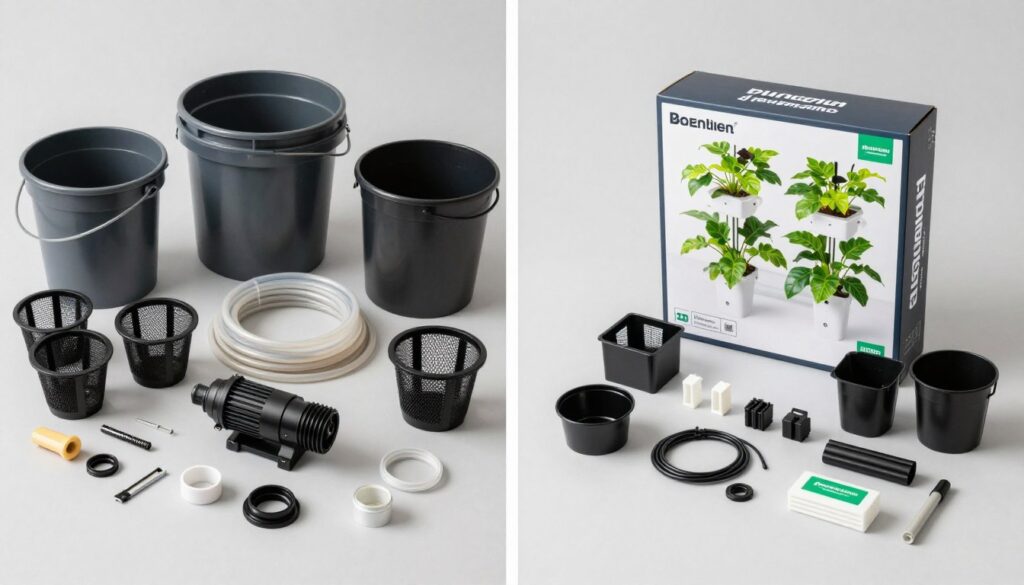
DIY Advantages
- 30-50% cost savings possible
- Complete customization freedom
- Deep learning experience
- Use readily available materials
- Easy to repair or modify
- No proprietary components
Kit Advantages
- Everything included and compatible
- Detailed instructions provided
- Faster setup time
- Manufacturer support available
- Proven designs that work
- Professional appearance
First-time growers often benefit from starting with a small kit. This approach builds confidence and knowledge. After gaining experience with a working system, DIY expansion becomes much easier and more cost-effective.
Level of Automation
Automation reduces daily labor but increases initial costs. Manual systems require checking water levels, mixing nutrients, and adjusting pH regularly. Automated systems handle these tasks through timers, sensors, and controllers.
Automation Options and Costs
- Basic Manual System ($0 extra): You check and adjust everything daily, requiring 10-20 minutes of attention
- Timer-Based Automation ($15-40): Programmable timers control pumps and lights automatically, reducing daily work to 5-10 minutes
- pH Auto-Dosing ($100-300): Systems automatically adjust pH levels, eliminating frequent manual testing and adjustment
- Smart Monitoring ($50-200): Smartphone-connected sensors alert you to problems and track growing conditions remotely
- Full Automation ($300-1,000+): Complete systems manage nutrients, pH, lighting schedules, and climate without daily intervention
Most beginners start with basic manual systems or simple timer automation. As your operation grows or your schedule becomes busier, strategic automation investments pay dividends in time savings and consistent results.
Smart Strategies for Starting Hydroponic Gardening on a Budget
You don’t need thousands of dollars to begin hydroponics. Strategic choices and creative solutions let you start growing for minimal investment while maintaining good results.
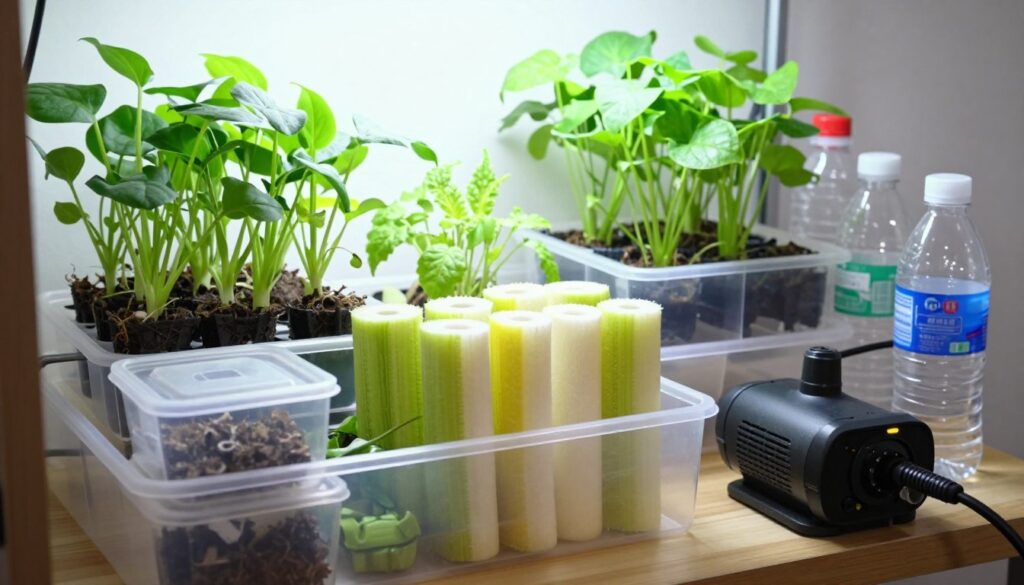
Start with the Kratky Method
The simplest passive system lets you begin for under $50. Use mason jars, food containers, or any light-blocking vessels you already own. This approach proves hydroponics works before you invest in expensive equipment.
Focus on fast-growing leafy greens like lettuce and basil. These plants provide quick results that build confidence. Success with simple crops motivates further investment in your hydroponic journey.
Leverage Natural Sunlight
Position your system near bright windows or outdoors during appropriate seasons. Natural light eliminates the need for grow lights, cutting startup costs by $100-500 immediately.
Pro Tip: South-facing windows in the Northern Hemisphere (or north-facing in the Southern Hemisphere) receive the most consistent light. Even 4-6 hours of direct sunlight daily supports healthy leafy green growth.
Prioritize Essential Equipment First
Not every tool matters equally when starting. Focus spending on components that directly affect plant health and growth.
Must-Have Investments
- Quality nutrients (plants can’t grow without proper nutrition)
- pH testing kit (prevents nutrient lockout)
- Reliable growing medium (supports healthy root development)
- Adequate water circulation or oxygenation
Can Wait Initially
- EC/TDS meter (useful but not critical at first)
- Automated dosing systems (manual works fine)
- Expensive monitoring equipment (observe plants instead)
- Premium specialty nutrients (basic formulas work well)
Use Food-Grade Containers You Have
Many household items work perfectly for hydroponics. Five-gallon buckets from home improvement stores cost just a few dollars. Large yogurt containers, storage totes, and even plastic bottles can become grow chambers.
Ensure containers are food-safe and opaque or painted to block light. Light-blocking prevents algae growth in your nutrient solution. This simple step saves money on specialized hydroponic containers.
Buy Seeds Instead of Seedlings
Seed packets cost $2-5 but provide dozens or hundreds of plants. Seedlings cost $3-7 each. The math heavily favors seeds for budget-conscious growers.
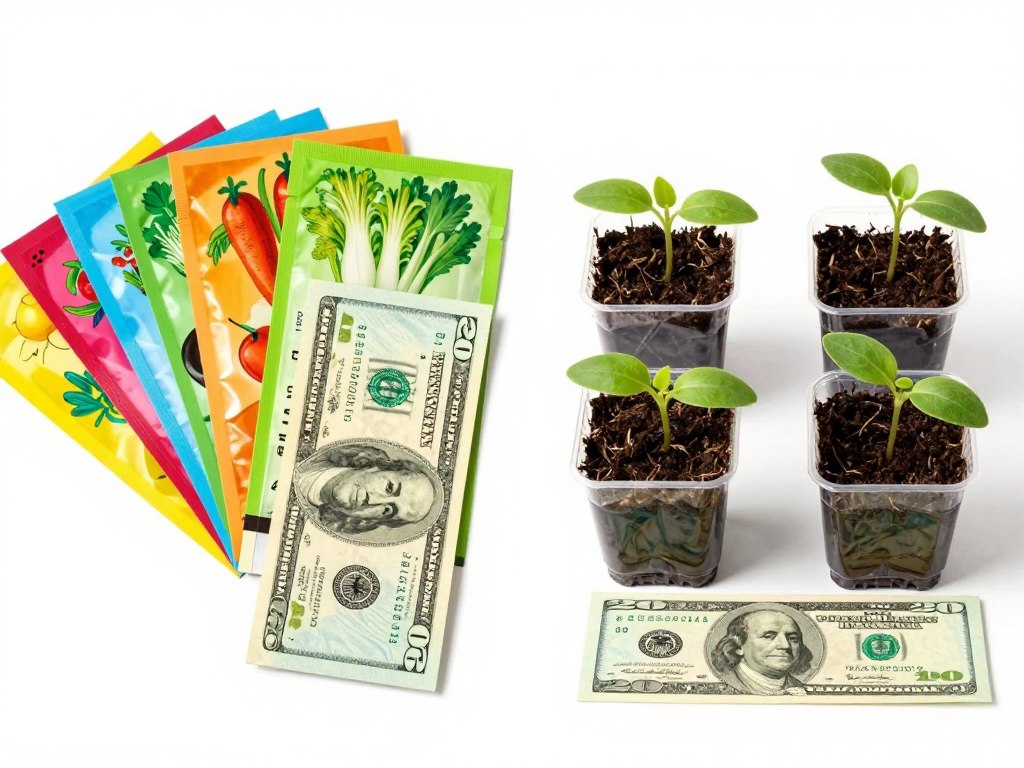
Starting from seed requires patience but costs far less. Use egg cartons, small cups, or seed starter trays you already own. Most seeds germinate easily with basic attention to moisture and warmth.
Join Online Hydroponic Communities
Experienced growers share money-saving tips, system designs, and troubleshooting advice freely. Many communities organize seed swaps and equipment exchanges that reduce costs significantly.
- Reddit communities like r/hydro provide daily advice and inspiration
- YouTube channels offer free tutorials for building budget systems
- Local gardening groups often have members interested in hydroponics
- Online forums archive years of solutions to common beginner problems
Phase Your Purchases
You don’t need everything immediately. Start with a minimal system and add components as you gain experience and identify needs.
Smart Purchasing Timeline
- Month 1: Basic system, growing medium, nutrients, seeds, pH test kit ($50-150)
- Month 2-3: Additional grow sites as you master the basics ($30-80)
- Month 4-6: Improved lighting if growing indoors ($80-200)
- Month 6+: Automation, monitoring equipment, system expansion as needed ($50-300)
This graduated approach spreads costs over time while ensuring you invest in equipment you’ll actually use. Many impulse purchases by beginners gather dust because the grower wasn’t ready for that level of complexity.
Get Your Free Hydroponic Budget Planner
Download our comprehensive budget worksheet that helps you calculate personalized startup costs based on your space, goals, and preferred system type. Includes cost comparison calculators and money-saving checklists.
Understanding Ongoing Expenses After Initial Setup
Startup costs represent a one-time investment. Understanding monthly operational expenses helps you budget realistically for long-term success.
Monthly Operating Costs Breakdown
| Expense Category | Small System | Medium System | Large System |
| Electricity (lighting) | $3-8 | $10-25 | $25-60 |
| Electricity (pumps) | $1-3 | $3-6 | $6-12 |
| Nutrients | $5-10 | $15-25 | $30-60 |
| Growing medium replacement | $3-8 | $8-15 | $15-30 |
| Seeds | $2-5 | $5-12 | $12-25 |
| pH/EC solutions | $2-5 | $5-8 | $8-15 |
| Total Monthly | $16-39 | $46-91 | $96-202 |
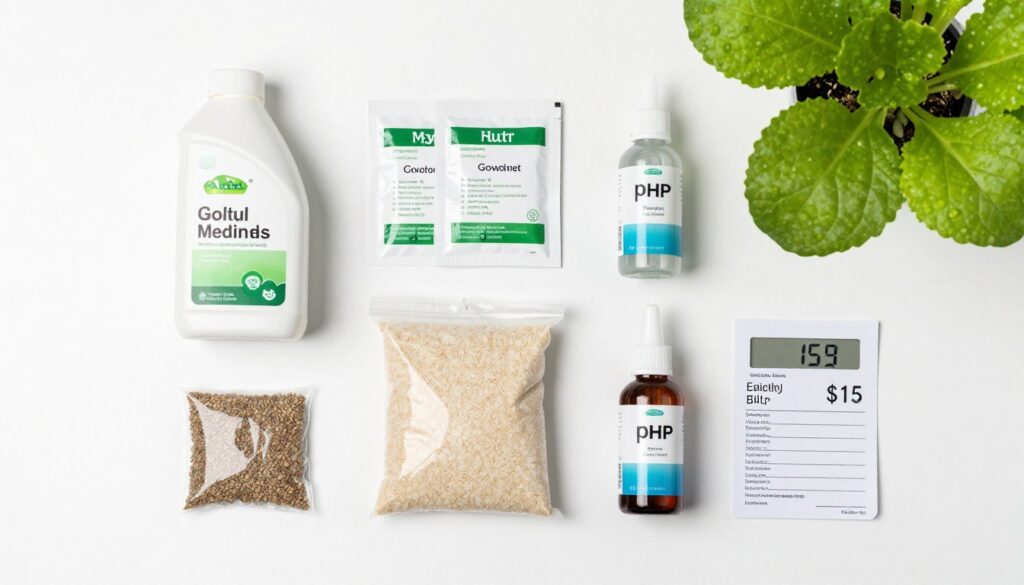
These costs remain remarkably low compared to grocery produce prices. A medium system producing 15-20 plants monthly costs less than buying equivalent organic produce at retail prices.
Comparing Home-Grown Value to Store-Bought Produce
Hydroponics pays for itself through food savings over time. The exact timeline depends on what you grow and local produce prices.
Monthly Hydroponic Production Example
- 12 heads of lettuce (3 lbs)
- Large bunch of basil (4 oz)
- 8 servings of kale (1 lb)
- 6 servings of chard (12 oz)
Operating cost: $46-91 monthly
Equivalent Retail Value (Organic)
- Lettuce: $36-48 ($3-4 per head)
- Basil: $12-16 ($3-4 per bunch)
- Kale: $16-24 ($2-3 per bunch)
- Chard: $12-18 ($2-3 per bunch)
Retail value: $76-106 monthly
This example shows a medium hydroponic system potentially saving $30-60 monthly on groceries. These savings accumulate quickly, often recovering startup costs within 6-12 months of consistent production.
Minimizing Long-Term Operational Costs
Several strategies reduce monthly expenses without sacrificing plant health or yields.
- Use LED lighting exclusively: LEDs consume 40-60% less electricity than older fluorescent or HID bulbs while producing better light spectrum
- Recycle growing medium when possible: Clay pebbles, for example, can be cleaned, sanitized, and reused many times
- Buy nutrients in bulk: Large bottles provide much better per-ounce value than small starter sizes once you know what works
- Collect rainwater: Free water reduces municipal water costs and often has better mineral profiles for plants
- Save your own seeds: Letting some plants mature and produce seeds provides free planting material for future crops
- Maintain equipment properly: Regular cleaning and preventive maintenance extends lifespan and prevents expensive replacements
Real-World Budget Examples for Different Scenarios
Seeing complete cost breakdowns helps you plan realistically. These examples reflect actual spending patterns for typical hydroponic setups.
Ultra-Budget Beginner Setup
Goal: Learn hydroponics for minimal investment
System: DIY Kratky method with 6 plants
Location: Sunny windowsill (outdoor during warm months)
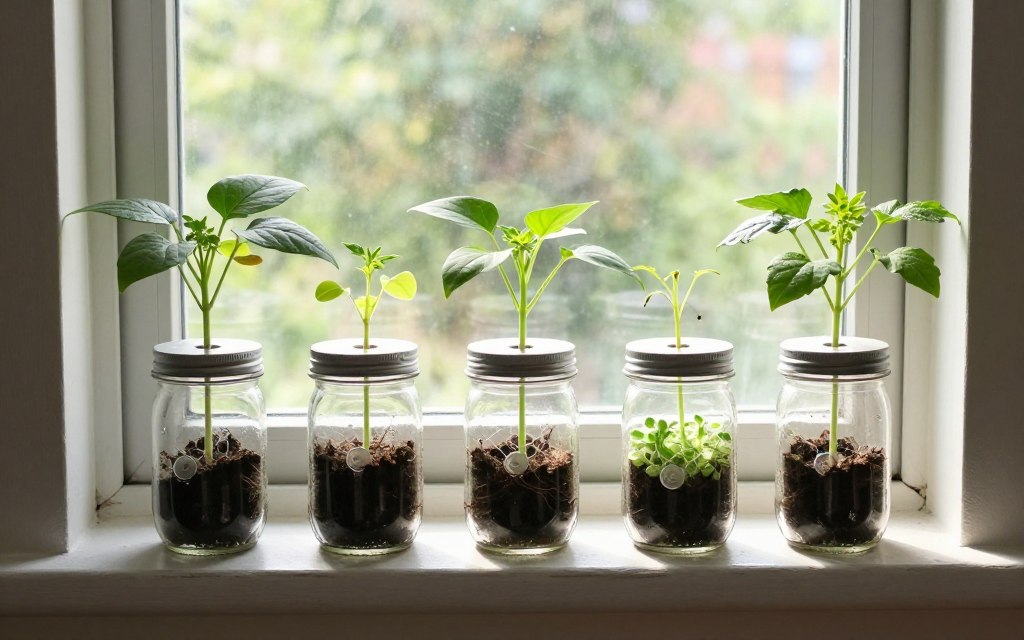
| Item | Cost |
| 6 quart-size mason jars (reused from home) | $0 |
| Net pots and lids (6-pack) | $12 |
| Rockwool cubes (50-pack) | $14 |
| Basic liquid nutrients (16 oz) | $18 |
| pH test drops | $10 |
| Lettuce and herb seeds (3 packets) | $9 |
| Total Startup Cost | $63 |
Monthly operating cost: $8-12 (nutrients, seeds, growing medium)
Expected production: 6 heads lettuce or herb harvests every 4-6 weeks
Best for: Absolute beginners wanting to test hydroponics without financial risk
Practical Home Garden Setup
Goal: Regular family salad production year-round
System: Deep Water Culture (DWC) with 12 plants
Location: Indoor with LED grow lights
| Item | Cost |
| DWC kit with 2 buckets (6 sites each) | $85 |
| Air pump and stones | $25 |
| LED grow light (65-watt panel) | $95 |
| Clay pebbles (10-liter bag) | $18 |
| Quality 3-part nutrients (quart) | $38 |
| Digital pH meter | $22 |
| TDS meter | $18 |
| Seeds variety pack | $24 |
| pH up/down solutions | $16 |
| Total Startup Cost | $341 |
Monthly operating cost: $25-35 (electricity $12, nutrients $8, seeds/medium $5-15)
Expected production: 12-16 heads lettuce or equivalent monthly, year-round
Best for: Families wanting consistent fresh greens without ongoing grocery store purchases
Serious Hobby Garden Setup
Goal: Maximum production with diverse crops
System: NFT system with 24 plant sites
Location: Dedicated indoor grow room
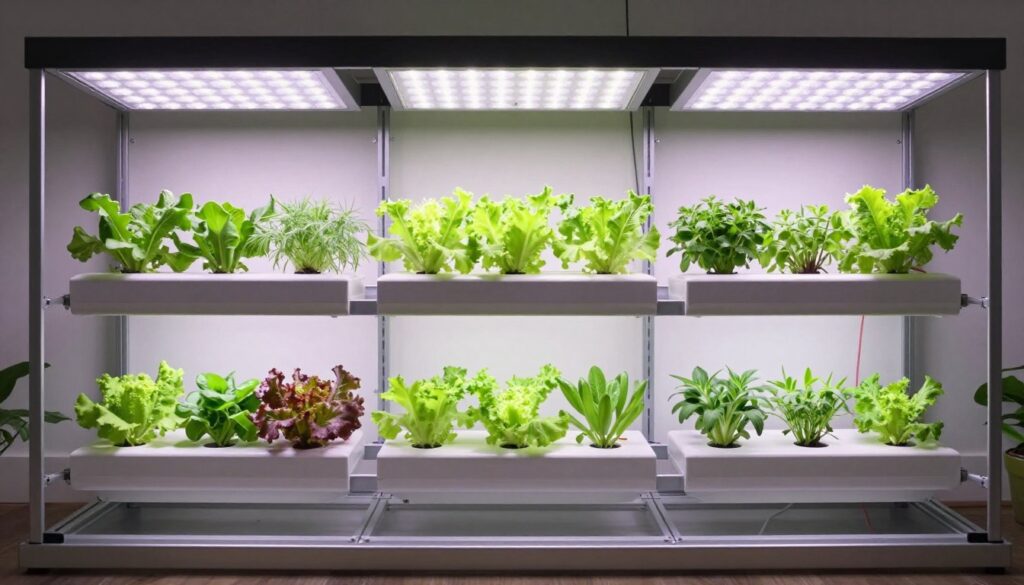
| Item | Cost |
| NFT system (24 sites, 3 channels) | $185 |
| Water pump and timer | $45 |
| 20-gallon reservoir | $35 |
| Two LED grow lights (130-watt each) | $240 |
| Circulation fan | $28 |
| Clay pebbles (large bag) | $32 |
| Professional nutrient system (gallon) | $85 |
| Quality pH/EC meter combo | $55 |
| Seedlings (24 plants) | $60 |
| Growing supplies and accessories | $45 |
| Total Startup Cost | $810 |
Monthly operating cost: $55-75 (electricity $35, nutrients $12, seedlings/medium $8-28)
Expected production: 24-32 heads of lettuce or equivalent monthly
Best for: Serious hobbyists, those considering selling produce, or families wanting food security
When Does Hydroponic Gardening Pay for Itself?
Understanding the financial timeline helps set realistic expectations. Hydroponics isn’t a get-rich-quick scheme, but it does provide measurable returns.
Calculating Your Break-Even Point
The payback period depends on three variables: initial investment, monthly operating costs, and the retail value of produce you grow.
Break-Even Formula
Months to Break Even = Startup Cost ÷ (Monthly Produce Value – Monthly Operating Cost)
Example Calculation (Practical Home Garden):
- Startup cost: $341
- Monthly produce value: $80 (organic lettuce and herbs)
- Monthly operating cost: $30
- Net monthly savings: $50
- Break-even time: 341 ÷ 50 = 6.8 months
Most home hydroponic systems break even within 6-15 months of consistent use. After this point, every harvest represents pure savings on grocery bills.
Beyond Financial Returns
Money isn’t the only measure of value. Hydroponics provides benefits that don’t appear in spreadsheets but significantly improve quality of life.
Health Benefits
Fresh vegetables just minutes from harvest contain more vitamins and phytonutrients than store-bought produce that traveled thousands of miles.
- Maximum nutrient density
- Zero pesticide exposure
- Complete control over growing methods
- Encourages eating more vegetables
Environmental Impact
Home hydroponics eliminates transportation emissions and reduces packaging waste associated with conventional produce supply chains.
- Minimal food miles
- Efficient water usage
- No agricultural runoff
- Reduced plastic packaging
Educational Value
Children and adults gain hands-on understanding of plant biology, chemistry, and sustainable food systems.
- STEM learning opportunities
- Responsibility and routine building
- Understanding food origins
- Problem-solving skills
Personal Satisfaction
Growing your own food delivers psychological rewards that money can’t buy but significantly enhance well-being.
- Pride in self-sufficiency
- Stress relief and mindfulness
- Creative expression
- Connection to natural cycles

Common Cost Mistakes Beginners Make
Learning from others’ mistakes saves money and frustration. Avoid these common pitfalls that inflate startup costs unnecessarily.
Overbuying Equipment Initially
New growers often purchase every gadget and automation tool available. Most of these items sit unused while you learn fundamentals.
Reality Check: You don’t need automated pH dosing, smartphone-connected monitors, or commercial-grade equipment for your first system. Start simple and add complexity only when you understand why you need it.
Choosing Systems Too Large for Experience Level
Ambitious beginners buy 40-plant systems before successfully growing six plants. Large systems demand proportionally more time, knowledge, and ongoing costs.
Start with capacity that matches your available time and current skill. Success with a small system builds confidence for expansion. Struggling with an overwhelming setup often leads to abandonment and wasted investment.
Ignoring Ongoing Electricity Costs
Powerful grow lights seem impressive but might cost $40-80 monthly in electricity. Calculate long-term operating costs before purchasing lighting.
- Check wattage specifications carefully
- Calculate actual monthly electricity cost using your local rates
- Consider LED efficiency ratings
- Factor in hours of daily operation (12-18 hours typical)
Buying Cheap, Low-Quality Nutrients
Nutrients directly affect plant health and yield. Bargain-basement formulations often lack micronutrients or use poor-quality ingredients. Plants struggle, grow slowly, or develop deficiencies.
Quality nutrients cost more upfront but deliver better results and often last longer because you use less per gallon. This is one area where spending an extra $10-20 pays substantial dividends.
Not Planning for Replacement Costs
Growing medium degrades over time. Pumps eventually fail. pH meters require calibration solutions. Budget for periodic replacements to avoid interrupted growing.
Typical Replacement Timeline
- Growing medium: Replace or sanitize every 2-4 crops (2-6 months)
- pH meters: Calibrate monthly, replace every 1-2 years ($20-40)
- Air pumps: Replace every 2-3 years ($15-30)
- Water pumps: Replace every 2-4 years ($20-50)
- LED lights: Last 50,000+ hours (5-10 years) but may dim over time
Making Your Hydroponic Investment Decision
So what does it cost to start hydroponic gardening? The honest answer ranges from $50 for an experimental Kratky setup to $1,000+ for serious production systems.
Most beginners spend between $150-400 for practical setups that produce meaningful food quantities. This investment includes the system, lighting (if needed), nutrients, testing equipment, and initial seeds or seedlings.
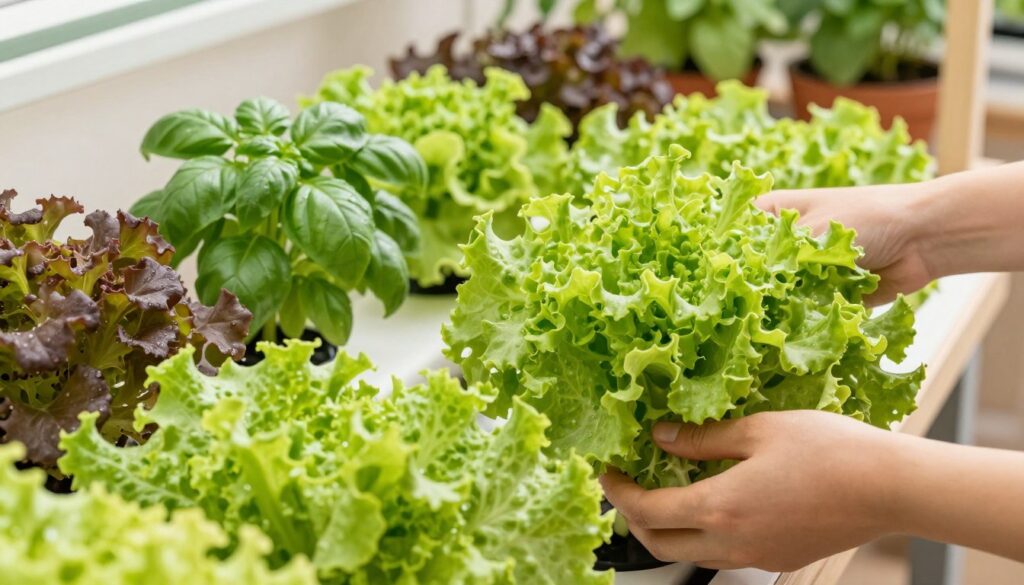
Monthly operating expenses remain surprisingly low, typically $15-70 depending on system size. These costs get recovered quickly through grocery savings when you consistently harvest fresh produce.
The real question isn’t whether you can afford hydroponics. It’s whether hydroponics fits your goals for fresh food, sustainability, and self-sufficiency. If those values resonate with you, the cost becomes an investment rather than an expense.
Your Next Steps
Starting doesn’t require perfect knowledge or unlimited budget. It requires taking the first small step with what you have now.
- Decide your budget range based on the examples in this guide
- Choose a system type matching your experience level and space
- Purchase essential equipment first, delaying nice-to-have items
- Start with fast-growing, forgiving crops like lettuce or basil
- Expect some trial and error as you learn
- Expand gradually as your skills and confidence grow
Thousands of people grow food hydroponically at home. Some started with mason jars and $50. Others invested in complete systems. All of them began exactly where you are now: wondering if it’s possible.
It is possible. And now you know exactly what it costs.
Ready to Start Your Hydroponic Journey?
We’ve created a comprehensive beginner’s resource package including detailed system assembly guides, crop selection recommendations, and ongoing growing support to ensure your success.