How Much Space Do You Really Need to Grow Herbs Indoors?
You don’t need a sprawling greenhouse or dedicated garden room to enjoy fresh herbs year-round. The truth is, you can start an indoor herb garden with as little as one square foot of space. Whether you live in a studio apartment with a single sunny window or have an entire spare room to dedicate to growing, there’s an indoor gardening solution that fits your situation.
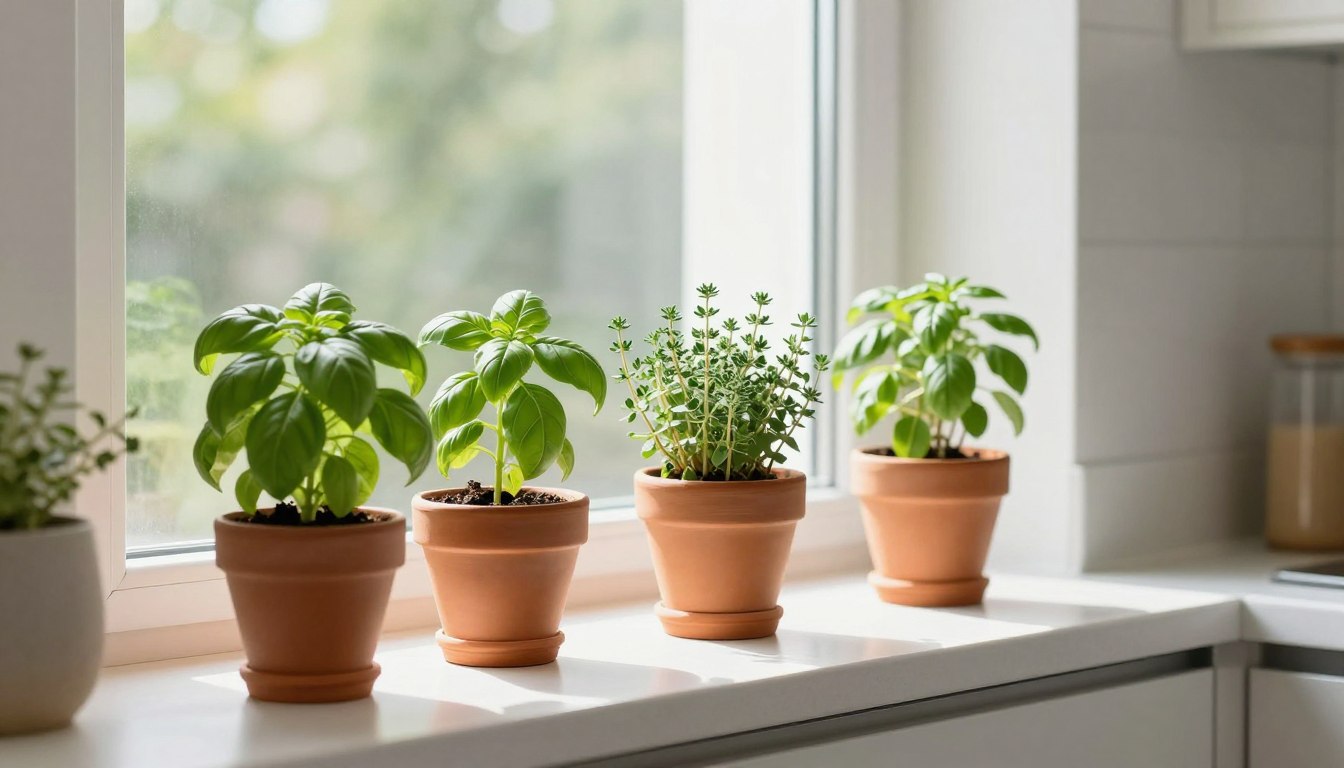
The space required depends on what you want to grow, how much you plan to harvest, and which growing method you choose. A windowsill garden might accommodate three small pots of herbs in just twelve inches of space. A tiered shelf system can multiply your growing area vertically, fitting dozens of plants into a two-by-four-foot footprint. Even a corner of your kitchen counter can become a productive herb garden with the right setup.
This guide breaks down exactly how much space different herbs need, shows you how to maximize limited areas, and helps you plan the perfect indoor herb garden for your home. You’ll learn which factors truly matter for space planning and discover practical layouts that work in real apartments and houses across the United States.
The Direct Answer: Minimum Space Requirements for Indoor Herb Garden Space
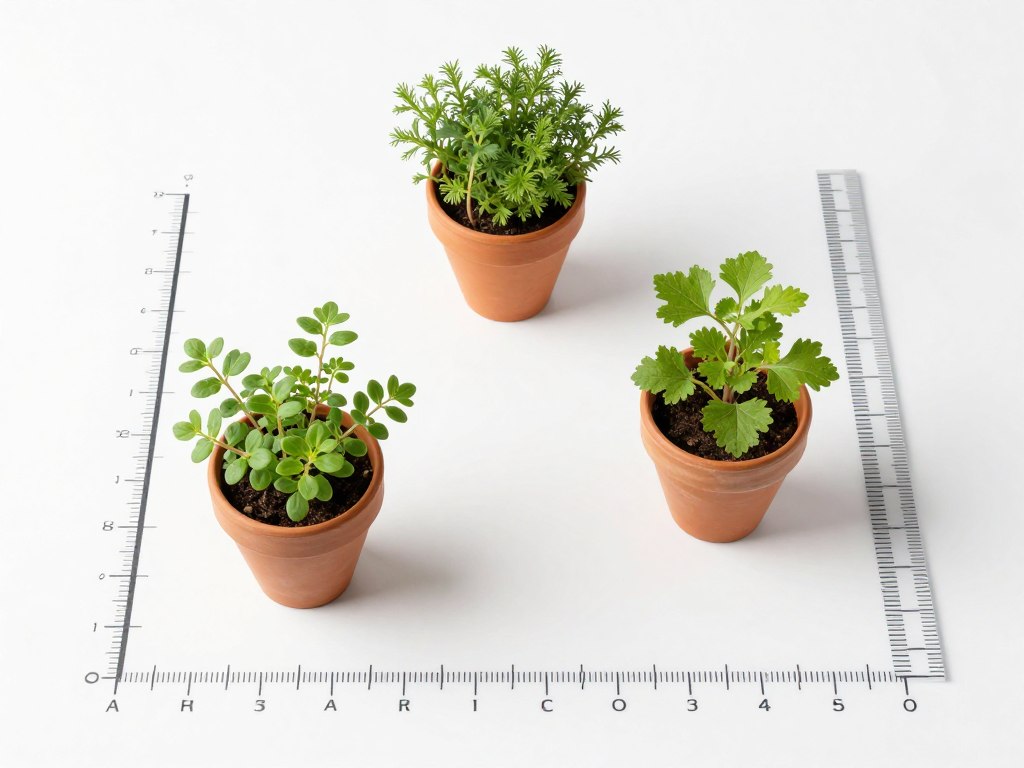
Start your indoor herb garden with as little as one square foot of horizontal surface area. This compact space can support three small pots measuring four inches in diameter, giving you fresh basil, thyme, and chives for cooking. Most herbs grow vertically rather than spreading out, which means you can pack more plants into a small footprint than you might expect.
A standard windowsill measuring twenty-four inches wide and six inches deep provides two square feet of growing space. This area accommodates six to eight small containers or two to three larger pots measuring six to eight inches in diameter. Place moisture-loving herbs like basil and parsley together on one side, with drought-tolerant rosemary and thyme grouped on the other for easier care.
For gardeners wanting a more substantial harvest, allocate four to six square feet of space. This gives room for twelve to sixteen herb plants in various container sizes, supporting weekly harvests for a household that cooks regularly. Position this garden near a south-facing window or supplement with LED grow lights mounted twelve inches above the plants.
Absolute Minimum Setup
- One square foot of space
- Three four-inch pots
- Compact herbs like thyme, oregano, chives
- Sufficient for occasional harvesting
- Works on narrow windowsills
Comfortable Growing Area
- Four to six square feet
- Twelve to sixteen plants total
- Mix of pot sizes from four to eight inches
- Weekly harvests for regular cooking
- Room for plant rotation and growth
Remember that vertical space matters as much as floor area when planning your indoor herb garden. Herbs need twelve to fourteen inches of clearance above soil level for healthy growth. Basil can reach eighteen to twenty-four inches tall, while compact varieties of thyme stay under eight inches. Account for this vertical dimension when selecting your growing location, especially if placing plants on shelves or under cabinets.
Key Factors That Determine Your Indoor Herb Garden Space Needs
The amount of space your indoor herb garden requires depends on several interconnected variables. Understanding these factors helps you make smart decisions about container selection, plant spacing, and growing methods that maximize your available area.
Herb Type and Growth Habits
Different herbs have distinct space requirements based on their mature size and root systems. Compact herbs like thyme, oregano, and chives thrive in four-inch containers with shallow root zones extending just six inches deep. These plants grow primarily upward and outward in tight rosettes, making them perfect for crowded windowsills and small indoor spaces.
Basil grows more aggressively, reaching twelve to twenty-four inches tall with a similar spread. Give basil plants six to eight-inch pots with at least eight inches of soil depth for robust root development. Fast-growing basil produces continuous harvests when you pinch leaves from stem tips, but it needs space to branch out and generate new growth points.
Mint and lemon balm spread vigorously through underground runners, quickly filling any available soil space. Contain these aggressive herbs in individual six-inch pots rather than planting them with other varieties. Without containment, mint will overtake neighboring plants within days, monopolizing water and nutrients.
Compact Herbs
Thyme, oregano, chives, sage
- Four-inch pot minimum
- Six-inch soil depth
- Eight-inch height clearance
- Can be grouped closely
Medium Herbs
Basil, parsley, cilantro
- Six to eight-inch pots
- Eight-inch soil depth
- Eighteen to twenty-four-inch height
- Space six inches apart
Spreading Herbs
Mint, lemon balm, rosemary
- Six to ten-inch pots
- Ten-inch soil depth
- Twelve to eighteen-inch spread
- Isolate from other plants
Growing Method Selection
Traditional container gardening in soil requires the most horizontal space but offers flexibility in arrangement. Each pot needs its own footprint plus a catch tray underneath for drainage water. Space individual containers two to three inches apart for adequate air circulation between plants, preventing fungal issues that develop in crowded conditions.
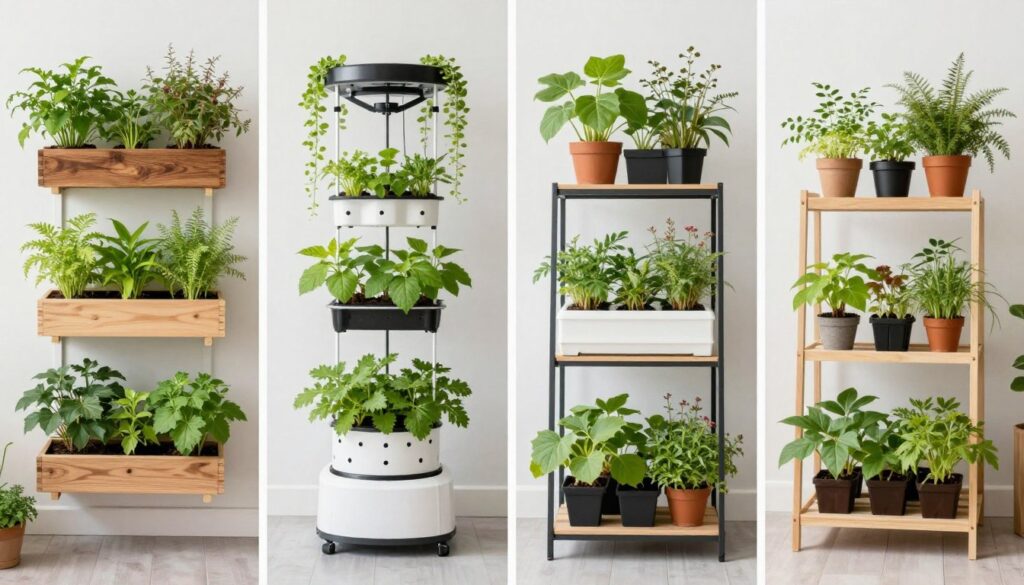
Vertical growing systems multiply your growing capacity without expanding floor space. Wall-mounted planters, tiered shelving units, and hanging arrangements transform unused vertical areas into productive gardens. A three-tier shelf measuring twenty-four inches wide creates six square feet of growing surface in just two square feet of floor space.
Hydroponic and aeroponic systems deliver the highest yields per square foot by eliminating soil and optimizing root zone conditions. Compact countertop hydroponic units measuring twelve by eighteen inches can grow six to nine herb plants that produce thirty percent more leaves than soil-grown equivalents. These systems include built-in LED grow lights and automated watering, making them ideal for spaces without natural sunlight.
Light Source Availability
Natural sunlight from windows determines both placement and plant density in your indoor herb garden. South-facing windows receive six-plus hours of direct sun daily, supporting maximum plant growth and tighter spacing. Position herbs within twelve inches of window glass to capture peak light intensity, rotating pots ninety degrees weekly for even exposure.
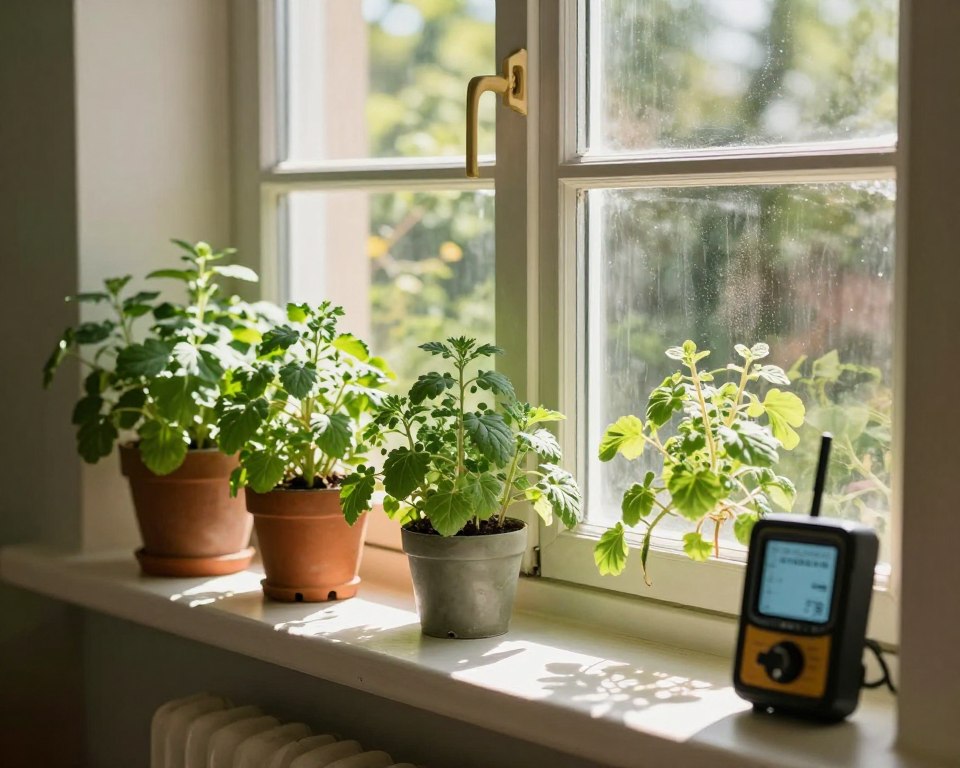
North or east-facing windows provide gentler indirect light or morning-only direct sun. These lower-light conditions require wider spacing between plants and limit you to shade-tolerant varieties like mint, parsley, and chives. Expect slower growth and less vigorous leaf production compared to full-sun locations.
LED grow lights eliminate space constraints related to window location. Position fixtures twelve to fourteen inches above plants, running lights fourteen to sixteen hours daily to replicate full-sun conditions. This artificial lighting allows you to establish herb gardens in windowless kitchens, basements, or interior rooms, multiplying your potential growing locations throughout your home.
Harvest Goals and Frequency
Occasional harvesting for garnishes and light seasoning requires minimal space allocation. Three to four small pots of mixed herbs provide enough leaves for weekly cooking without overwhelming your kitchen. Harvest up to one-third of each plant at once, allowing two weeks for recovery before the next cutting.
Regular cooking demands and daily harvests need larger plants and more variety. Allocate twelve to sixteen pots containing multiple plants of frequently used herbs like basil, parsley, and cilantro. This abundance supports continuous harvesting while giving individual plants adequate recovery time between cuttings.
Preservation and bulk harvesting for drying or freezing requires dedicating more space to fewer herb varieties. Grow four to six large basil plants in eight-inch pots for pesto production, or establish multiple rosemary and thyme plants for dried herb storage. These preservation-focused gardens produce seasonal gluts that you harvest heavily before allowing plants to regenerate.
Plan Your Perfect Indoor Herb Garden Space
Not sure how to map out your available space? Download our free space planning template with grid layouts, container size guides, and herb placement recommendations. Get started with confidence knowing exactly what fits in your home.
Windowsill Garden Layouts
Standard windowsills measuring twenty-four to thirty-six inches wide provide the foundation for simple indoor herb gardens. Maximize this space by selecting containers that fit the depth of your windowsill, typically four to eight inches from window glass to edge. Arrange three four-inch pots across a twenty-four-inch sill, leaving two-inch gaps between containers for air circulation.
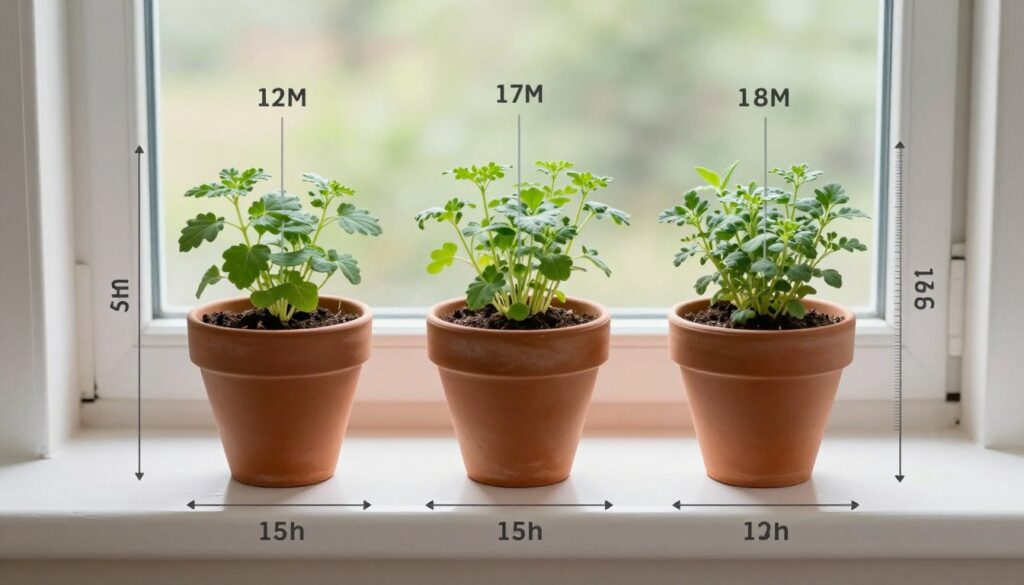
Wider windowsills accommodate larger eight-inch pots or increased plant quantities. Position drought-tolerant Mediterranean herbs like rosemary, thyme, and oregano closest to window glass where sun intensity peaks. Place moisture-loving basil and parsley slightly back from the glass to prevent leaf scorching during intense afternoon sun.
North-facing windowsills receive limited direct sunlight, restricting plant selection to shade-tolerant herbs. Grow mint, parsley, and chives in these lower-light locations, spacing containers four inches apart since slower growth reduces competition for light and resources. Supplement with small clip-on LED grow lights positioned six inches above plants to boost leaf production.
Small Windowsill Setup
Dimensions: 24 inches wide × 6 inches deep
- Three four-inch diameter pots
- Compact herbs: thyme, oregano, chives
- Two-inch spacing between pots
- Total footprint: one square foot
- Best for: occasional harvesting
Extended Windowsill Garden
Dimensions: 36 inches wide × 8 inches deep
- Four six-inch pots or six four-inch pots
- Mixed herbs: basil, parsley, rosemary, thyme
- Three-inch spacing between containers
- Total footprint: two square feet
- Best for: regular cooking needs
Kitchen Counter Garden Stations
Dedicate eighteen to twenty-four inches of counter space near your sink for convenient herb access while cooking. This prime location provides easy watering access and keeps herbs within arm’s reach during meal preparation. Establish a permanent station using a decorative tray or shallow basin that contains spills and protects counter surfaces.
Group six four-inch pots on a twenty-four-inch tray, creating a compact herb garden that delivers variety without monopolizing prep space. Arrange pots in two rows of three, with taller herbs like basil positioned in the back row and lower-growing thyme and oregano in front for easy access to all plants.
Counter gardens benefit from proximity to kitchen humidity generated by cooking and dishwashing. Position your garden eighteen to twenty-four inches from the sink to capture moisture without exposing plants to direct water splashes or excessive heat from the stove. Rotate the entire tray ninety degrees weekly if natural light comes from only one direction.
Vertical Wall Garden Systems
Wall-mounted growing systems maximize space efficiency by stacking plants vertically instead of spreading horizontally. A three-tier vertical planter measuring thirty-six inches tall by twelve inches wide creates three square feet of growing space while occupying just one square foot of wall area. Mount these systems on any wall that receives adequate light or position LED grow light strips between tiers.
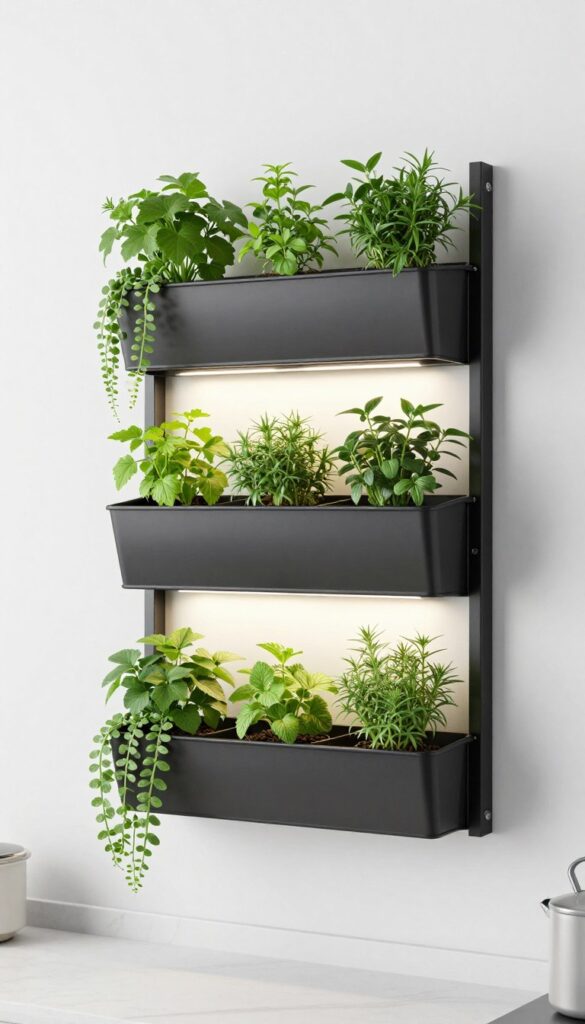
Install wall planters at eye level for easy harvesting and maintenance access. Space individual planting pockets six inches apart vertically to prevent upper-tier plants from shading lower levels. Drill quarter-inch drainage holes in each pocket and position a catch system at the bottom tier to manage excess water.
Tiered shelving units offer more flexibility than fixed wall planters. Adjustable shelf systems measuring forty-eight inches wide by eighteen inches deep create nine square feet of growing surface across three shelves. Position the bottom shelf thirty inches from the floor for easy access, spacing subsequent shelves fourteen inches apart to accommodate herb height plus grow lights.
Pro Tip: Paint vertical growing systems in light colors or position reflective surfaces behind plants to bounce light back onto leaves. This simple modification increases effective light exposure by twenty to thirty percent, promoting bushier growth and higher yields in vertical configurations.
Dedicated Growing Cart Solutions
Rolling garden carts transform any room into a growing space while maintaining mobility for cleaning and rearrangement. Three-tier metal utility carts measuring thirty inches wide by eighteen inches deep provide maximum versatility. The rolling design allows you to chase sunlight throughout the day, moving the entire garden from east-facing morning sun to south or west-facing afternoon light.
Equip each shelf with a waterproof liner and arrange six to eight four-inch pots per tier. Install LED grow light strips beneath upper shelves to illuminate lower tiers, creating consistent light distribution across all three levels. This setup generates six square feet of growing space within a compact footprint that fits easily in corners, along walls, or near windows.
Position the top tier for herbs requiring the most light intensity, like basil and cilantro. Middle and bottom tiers accommodate shade-tolerant herbs such as mint, parsley, and chives. The mobility of cart systems makes them ideal for renters or anyone wanting to relocate their garden seasonally without dismantling the entire setup.
Minimum Viable Indoor Herb Garden Space Setups That Actually Work
You don’t need elaborate systems or significant space investments to start growing fresh herbs indoors. These minimal setups prove that anyone can begin an indoor herb garden regardless of space limitations or budget constraints.
The Windowsill Garden for Three Herbs
Start your indoor herb gardening journey with the most basic setup requiring just one square foot of windowsill space. This minimal configuration supports three four-inch terracotta pots positioned side by side on any sunny window ledge. Choose compact herbs that tolerate close spacing: thyme for savory dishes, oregano for Italian cooking, and chives for versatile garnishing.
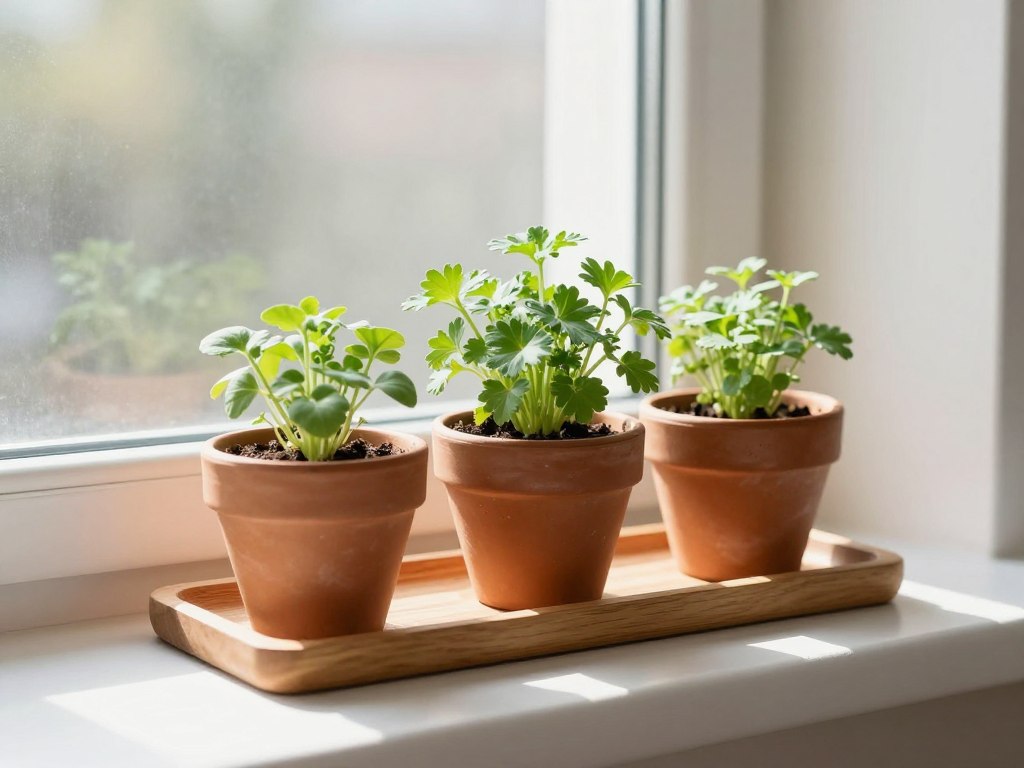
Fill each pot with well-draining potting soil mixed with perlite at a four-to-one ratio. Position catch saucers beneath pots to protect your windowsill from water damage. This basic garden costs less than twenty dollars to establish and provides fresh herbs within two weeks after planting nursery transplants.
Water when the top inch of soil feels dry to touch, usually every three to four days depending on indoor humidity levels. Rotate pots ninety degrees twice weekly to promote even growth on all sides. Harvest outer leaves and stem tips once plants reach six inches in height, cutting no more than one-third of any plant at once.
The Compact LED Grow Light Station
Create an independent growing station in any room using a small shelving unit with LED grow lights. This setup eliminates dependence on natural sunlight, allowing you to establish herb gardens in windowless kitchens, basements, or interior spaces. A basic two-tier shelf measuring twenty-four inches wide creates four square feet of growing space in just two square feet of floor area.
Mount full-spectrum LED grow light strips to the underside of the upper shelf, positioning lights twelve inches above the soil surface of lower-tier plants. Run lights fourteen to sixteen hours daily to replicate outdoor summer conditions. The bottom tier holds six four-inch pots, while the top shelf accommodates decorative items or additional plants if you add a second light fixture.
Equipment Needed
- Two-tier metal shelf unit
- Two LED grow light strips
- Six four-inch pots with drainage
- Potting soil and perlite mix
- Digital timer for lights
- Catch trays for water management
Recommended Herbs
- Basil for continuous harvesting
- Parsley for steady leaf production
- Thyme for compact growth
- Oregano for low maintenance
- Chives for quick regrowth
- Mint contained in separate pot
Setup Time and Cost
- Assembly: 30 minutes
- Shelf unit: $40-60
- LED lights: $30-50
- Pots and soil: $20-30
- Plants or seeds: $15-25
- Timer: $10-15
The Single-Container Herb Collection
Maximize limited space by growing multiple herbs together in one large container measuring twelve to sixteen inches in diameter. This approach works best with herbs sharing similar water and light requirements. Combine three to four herbs in one pot, spacing them four inches apart in a circular arrangement.
Plant moisture-loving herbs together: basil, parsley, and cilantro thrive with consistent soil dampness and frequent watering. Alternatively, group Mediterranean herbs preferring drier conditions: rosemary, thyme, oregano, and sage tolerate drought between waterings. Never mix these two groups in the same container, as their opposing moisture needs create management conflicts.
Position the tallest herb in the container center, with shorter varieties around the perimeter. This arrangement ensures even light distribution and prevents taller plants from shading smaller neighbors. A single large container requires less frequent watering than multiple small pots since greater soil volume retains moisture longer.
The Hydroponic Countertop Unit
Compact hydroponic systems represent the ultimate space-efficient indoor garden solution. Countertop units measuring twelve by eighteen inches grow six to nine herb plants in less than two square feet of space. Built-in LED grow lights eliminate window requirements, while automated watering systems reduce daily maintenance to simple weekly tasks.
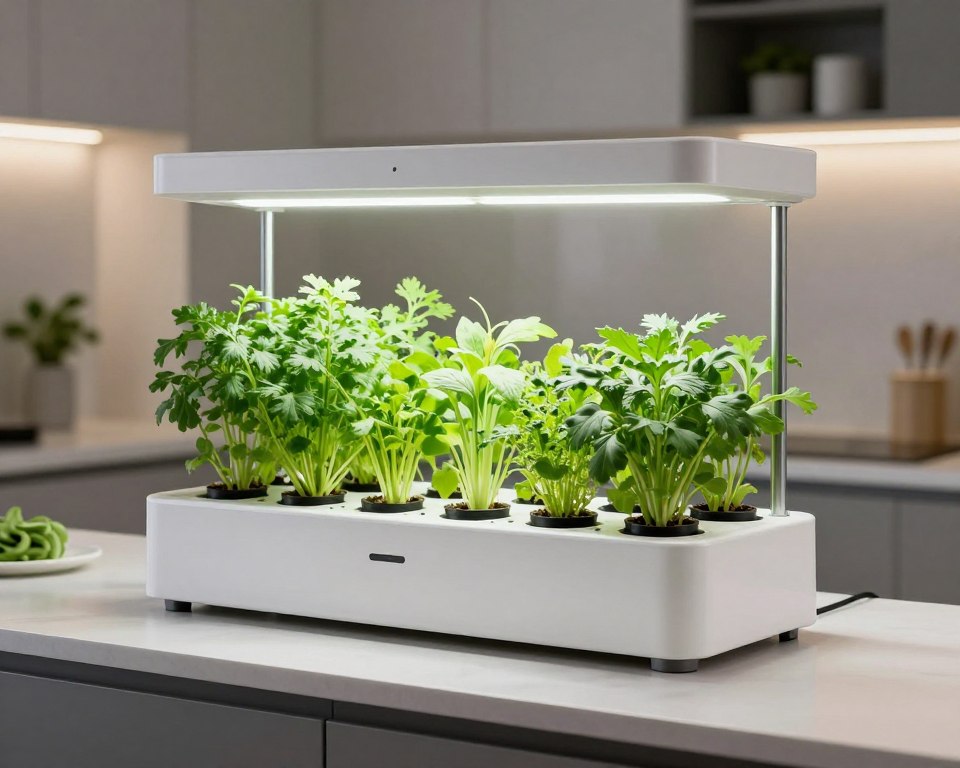
These plug-and-play systems cost one hundred fifty to three hundred dollars but deliver impressive results. Plants grown hydroponically mature thirty percent faster than soil-grown equivalents, producing larger harvests from the same footprint. The controlled environment prevents pest issues common in traditional soil gardens, reducing plant losses and increasing overall productivity.
Refill water reservoirs weekly and add liquid nutrients according to manufacturer schedules. Harvest leaves as needed, cutting stems just above leaf nodes to encourage branching. Most hydroponic units include smartphone apps tracking plant growth, water levels, and nutrient timing, making them ideal for beginners uncertain about indoor gardening care requirements.
Common Space Mistakes and Pro Tips for Tight Areas
Avoid these frequent errors that waste space and limit your indoor herb garden’s productivity. Learn from experienced gardeners who’ve optimized small growing areas through trial and refinement.
The Overcrowding Trap
New indoor gardeners consistently underestimate how much space herbs need for healthy growth. Cramming too many pots together creates immediate visual appeal but leads to long-term problems. Plants competing for light stretch vertically, developing weak leggy stems instead of bushy productive growth. Crowded herbs also experience poor air circulation, creating humid microclimates where fungal diseases thrive.
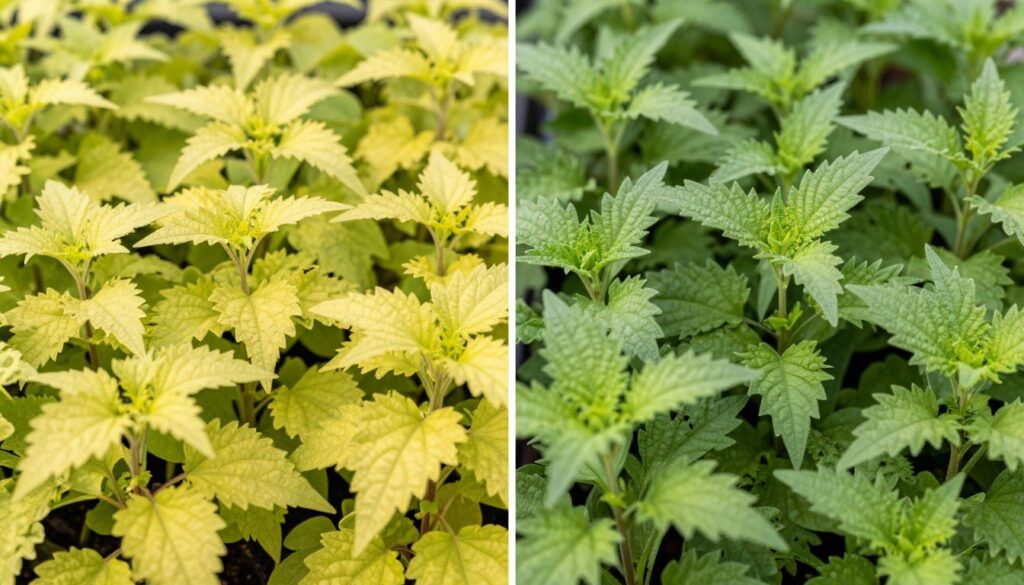
Maintain two to three inches of empty space between container edges, allowing air to flow freely around all plants. This spacing prevents leaves from different plants touching and transferring moisture or disease between herbs. While the gaps may seem wasteful initially, properly spaced plants quickly grow fuller and healthier, ultimately producing more leaves than crowded gardens.
Start with fewer plants than your space could theoretically hold. You can always add more herbs later, but removing plants from an overcrowded garden creates gaps and disrupts established arrangements. Begin with three to four pots in a two-square-foot area rather than attempting to pack in six or seven containers.
Ignoring Vertical Growth Potential
Most beginners focus exclusively on horizontal space without considering vertical dimensions. Herbs grow upward as much as outward, with basil reaching eighteen to twenty-four inches tall and rosemary potentially hitting thirty-six inches in ideal conditions. Placing tall-growing herbs under shelves or in areas with limited overhead clearance stunts growth and reduces harvest potential.
Measure vertical clearance before establishing your garden location. Allow minimum twelve-inch clearance above soil level for compact herbs, with eighteen to twenty-four inches for vigorous growers like basil. Factor in additional space if using grow lights, which require twelve to fourteen inches of distance from plant tops to prevent leaf burning.
Position the tallest herbs at the back of arrangements or in container centers, with shorter varieties in front or around perimeters. This tiered approach maximizes light capture across all plants while maintaining easy access to every herb for watering and harvesting.
Best Herbs for Extremely Limited Spaces
When space constraints become severe, strategic herb selection makes the difference between success and frustration. These compact varieties deliver maximum flavor and harvest potential from minimal space investments.
Thyme
The champion of tight spaces, thyme grows just six to eight inches tall with minimal spread. Plant in four-inch pots spaced as close as one inch apart.
- Drought tolerant between waterings
- Thrives in partial sun conditions
- Continuous harvest for months
- Multiple cuttings per week possible
Chives
Vertical growth habit makes chives perfect for narrow windowsills. Hollow tubular leaves grow twelve inches tall without spreading horizontally.
- Cut entire stems near soil level
- Regrows within seven to ten days
- Tolerates lower light than most herbs
- Never needs pruning or training
Oregano
Low-growing Mediterranean herb forms compact mounds under eight inches tall. Hardy nature tolerates occasional neglect without dying back.
- Prefers drying out between waterings
- Intense flavor from small harvests
- Rarely affected by indoor pests
- Lives for years with minimal care
Compact Basil Varieties
Dwarf basil varieties like ‘Spicy Globe’ reach only eight to ten inches tall while producing abundant flavorful leaves.
- Bush habit prevents sprawling growth
- Same flavor as full-size varieties
- Faster maturity than standard basil
- Perfect for four-inch containers
Strategic Container Selection
Container choice dramatically impacts how efficiently you use available space. Wide shallow pots waste surface area while providing minimal soil volume for root growth. Select containers that balance diameter with depth, maximizing vertical soil space without spreading unnecessarily across horizontal surfaces.
Four-inch diameter pots measuring five to six inches deep provide optimal space efficiency for compact herbs. These containers fit closely together while offering adequate root room for healthy plant development. Standardizing on one pot size simplifies arrangement and creates visual cohesion across your garden.
Square or rectangular containers pack more efficiently than round pots, eliminating wasted gaps between circular edges. A rectangular planter measuring eighteen inches long by six inches wide holds the same soil volume as three six-inch round pots but occupies twenty percent less surface area. Consider switching to rectangular containers when working with extremely limited window or counter space.
Space-Saving Container Rule: Choose containers where depth equals or exceeds diameter. A six-inch wide pot should be at least six inches deep. This ratio maximizes soil volume while minimizing horizontal footprint.
Light Optimization in Small Spaces
Limited space often correlates with insufficient natural light, especially in apartments where single windows provide the only sun exposure. Supplemental LED grow lights transform dark corners and interior walls into productive growing areas, multiplying your usable space beyond window locations.
Clip-on LED lights measuring six to twelve inches long bring professional growing capability to the smallest spaces. These affordable fixtures attach to shelf edges, cabinet lips, or wall-mounted brackets, positioning light exactly where plants need it. Position lights twelve inches above herbs, running them fourteen hours daily to replace absent natural sunlight.
Reflective surfaces behind plants bounce light back onto rear-facing leaves, increasing effective light exposure without adding fixtures. Place white poster board, aluminum foil, or mirrors behind your herbs to capture and redirect wasted light. This simple modification boosts growth rates fifteen to twenty percent while maintaining your compact footprint.
Ready to Start Growing in Your Space?
Discover compact growing systems designed specifically for small spaces. From windowsill kits to complete LED growing stations, find the perfect solution that fits your available area and delivers fresh herbs year-round.
Room-by-Room Space Assessment for Indoor Herb Gardens
Different rooms in your home offer unique advantages and challenges for indoor herb cultivation. Assess each space based on light availability, humidity levels, temperature stability, and accessibility for daily care.
Kitchen Growing Spaces
Kitchens provide ideal conditions for indoor herb gardens through consistent warmth, elevated humidity from cooking activities, and convenient access during meal preparation. Counter space near sinks offers premium growing locations, combining natural light from nearby windows with easy water access for maintenance.
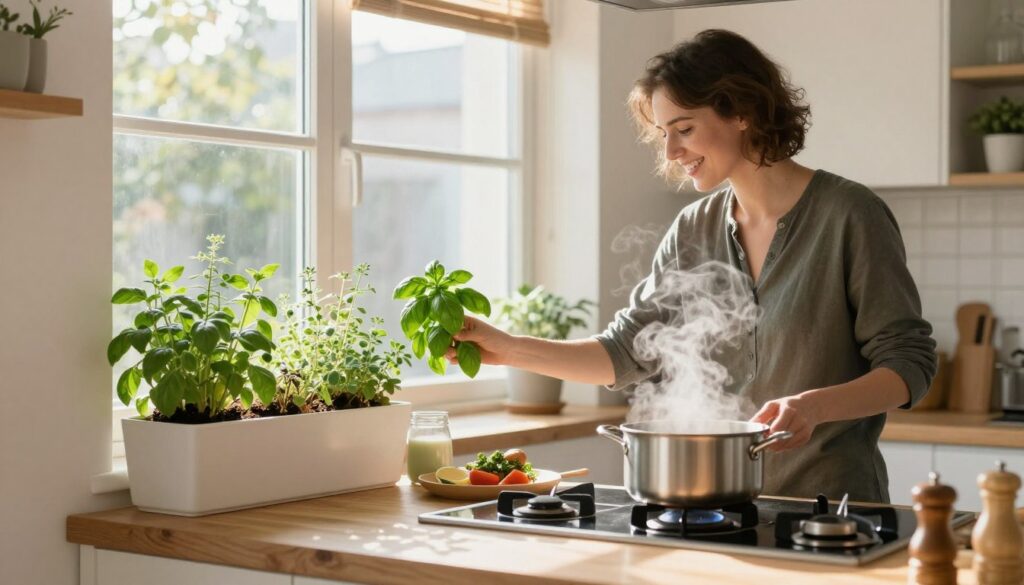
Allocate twelve to eighteen inches of permanent counter space for a compact herb station. Position this garden at least twenty-four inches from the stove to prevent heat damage from cooking while remaining close enough to grab herbs mid-recipe. A twenty-four-inch-wide area accommodates six four-inch pots or four six-inch containers providing variety for diverse recipes.
Under-cabinet lighting rarely provides sufficient intensity for herb growth despite appearing bright. Test light levels by placing your hand six inches above the counter at midday—if you don’t see a defined shadow, supplemental grow lights are necessary. Mount LED light strips to cabinet undersides, running them fourteen hours daily to support healthy growth in this convenient location.
Windowsill Opportunities Throughout the Home
South-facing windows deliver maximum growing potential with six-plus hours of direct sunlight daily. These premium locations support sun-loving herbs like basil, rosemary, and cilantro that produce the most flavorful leaves under intense light. Measure windowsill depth to determine container sizes—standard six-inch-deep sills accommodate four to six-inch pots comfortably.
East-facing windows receive gentler morning sun, making them suitable for shade-tolerant herbs such as mint, parsley, and chives. Morning light prevents excessive heat buildup that can scorch leaves during summer months. These windows work well for herbs you harvest heavily, as slightly lower light intensity encourages leafier growth with less intense flavor concentration.
West-facing windows get hot afternoon sun that can stress heat-sensitive herbs during summer. Position containers four to six inches back from window glass to moderate temperature extremes. Install sheer curtains to filter intense light while maintaining bright conditions suitable for Mediterranean herbs that tolerate heat stress better than leafy varieties.
North-facing windows provide the most challenging conditions with minimal direct sunlight. Reserve these locations for the most shade-tolerant herbs or supplement with grow lights positioned six to eight inches from plants. Consider these windows primarily for decorative plants rather than production-focused herb gardens.
Bathroom Growing Conditions
Bathrooms offer naturally elevated humidity levels beneficial for moisture-loving herbs, though limited light often restricts growing success. If your bathroom includes a window receiving at least four hours of indirect light daily, establish a small garden with humidity-loving mint, parsley, or lemongrass.
The humid environment from showers creates ideal conditions but requires careful container selection. Use plastic or glazed ceramic pots rather than terracotta, which wicks moisture into bathroom air and causes excessive soil drying. Ensure proper drainage remains critical even in humid conditions—wet roots rot regardless of air moisture levels.
Install a small LED grow light above the sink or toilet tank area if natural light proves insufficient. The combination of supplemental lighting and bathroom humidity produces lush growth in herbs that struggle in drier kitchen or living room environments. Dedicate four to six square feet of shelf or counter space near moisture sources for optimal results.
Bedroom and Living Room Gardens
These spaces typically offer ample room for larger garden installations but may lack kitchen convenience and water access. Establish gardens near bright windows where you’ll see plants daily, making it easier to maintain consistent care routines. Living rooms often provide south or west-facing window exposure perfect for sun-loving Mediterranean herbs.
Protect furniture and flooring from water damage by using deep catch trays under all pots. Consider decorative trays or baskets that blend with room decor while containing spills. Position gardens on waterproof mats or plant stands with built-in water collection systems for additional protection during watering sessions.
Bedrooms work well for aromatic herbs like lavender, rosemary, and mint that release pleasant scents throughout the day. These fragrant plants improve air quality while adding living decoration to personal spaces. Allocate nightstand or dresser top space for small three to four-pot arrangements, ensuring furniture placement doesn’t block natural light from reaching plants.
Basement and Interior Room Solutions
Windowless spaces require complete artificial lighting solutions but offer unlimited placement flexibility. Dedicate a corner measuring three feet by three feet for a comprehensive growing station with tiered shelving and LED lights. This nine-square-foot footprint supports thirty to forty herb plants across three shelf levels, producing enough herbs for extensive cooking and preservation.
Temperature stability in interior rooms benefits herb growth by eliminating the fluctuations common near windows. Maintain daytime temperatures between sixty-five and seventy degrees Fahrenheit with nighttime drops to fifty-five to sixty degrees. This temperature differential triggers essential oil production, intensifying herb flavors beyond what constant temperatures achieve.
Basement humidity levels may exceed ideal ranges during summer, potentially encouraging fungal problems. Run a small fan two to three hours daily to circulate air around plants, preventing moisture accumulation on leaves. Position the fan to create gentle movement without directly blasting plants, which can cause leaf damage and excessive soil drying.
How to Assess Your Available Indoor Herb Garden Space
Before purchasing containers or herbs, conduct a thorough assessment of your actual growing space. This systematic evaluation prevents costly mistakes and ensures your garden design matches real-world conditions in your home.
Measuring and Mapping Your Space
Measure potential growing areas with a tape measure, recording both horizontal surface dimensions and vertical clearance. Create simple sketches showing measurements, noting which direction windows face and how far light penetrates into the room throughout the day. Mark obstacles like cabinet overhangs, electrical outlets, and water sources that influence garden placement.
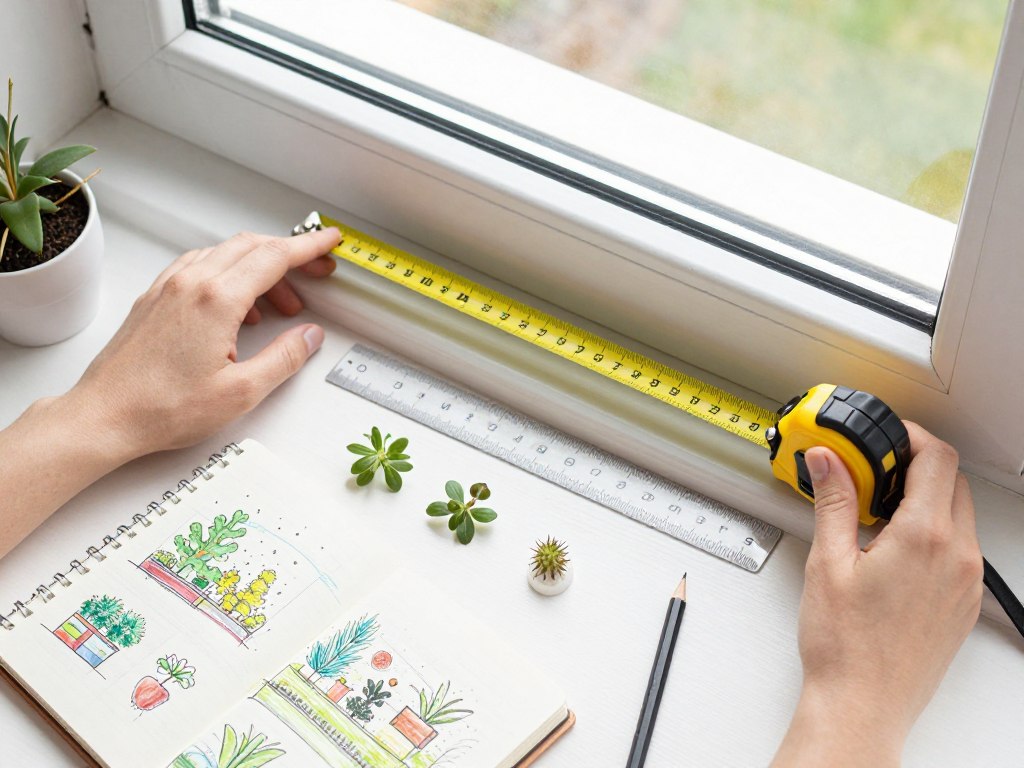
Track sunlight patterns for two to three days before finalizing garden location. Mark the floor or surface with tape at different times of day, showing how far direct sun reaches at morning, noon, and afternoon. This reveals whether a location receives sufficient light hours for your chosen herbs or requires supplemental grow lights.
Photograph potential growing spaces from multiple angles. These images help visualize how gardens will look once established and allow you to experiment with different arrangements digitally before committing to physical setup. Share photos with experienced gardeners or nursery staff for additional placement advice.
Light Level Testing
Most herbs need six to eight hours of bright light daily for optimal growth. Test light intensity in potential growing locations using the shadow test: place your hand six inches above the surface at midday—a sharp, well-defined shadow indicates sufficient light for sun-loving herbs. Fuzzy, faint shadows suggest lower light suitable only for shade-tolerant varieties or spaces requiring supplemental lighting.
Smart phone light meter applications provide more precise measurements if you want specific data. Herbs requiring full sun need measurements between ten thousand and fifty thousand lux, while shade-tolerant varieties manage with five thousand to ten thousand lux. Take readings at plant height level rather than floor or counter level for accurate assessments.
Remember that light intensity changes with seasons. South windows providing abundant light in summer may deliver insufficient illumination during winter when sun angles drop and day length shortens. Plan for worst-case winter conditions by adding grow lights to any location receiving marginal natural light during peak summer months.
Accessibility and Workflow Considerations
Choose garden locations you pass multiple times daily, increasing the likelihood you’ll notice when plants need water or harvesting. Herbs tucked away in spare bedrooms or basement corners often suffer neglect despite good growing conditions. Kitchen gardens succeed partially because you see them constantly while preparing meals.
Ensure you can comfortably reach all plants for watering, harvesting, and maintenance. Gardens requiring you to stretch, bend awkwardly, or move obstacles become chores rather than pleasures. Position the tallest shelf at or slightly below eye level for easy viewing and access to upper-tier plants.
Water source proximity significantly impacts maintenance ease. Carrying water across rooms increases effort and spillage risk, making gardens feel burdensome. Locate gardens within fifteen feet of sinks when possible, or keep a dedicated watering can filled near the garden to minimize trips. Consider self-watering containers or hydroponic systems if water access poses challenges.
Space Assessment Checklist
- Measure horizontal surface dimensions
- Record vertical clearance height
- Map natural light patterns and duration
- Note proximity to water sources
- Check temperature stability throughout day
- Assess accessibility for daily care
- Identify potential obstacles or limitations
- Photograph space from multiple angles
Decision Factors
- Can the space support your herb quantity goals?
- Does natural light meet herb requirements?
- Is supplemental lighting necessary and feasible?
- Can you reach all plants easily for care?
- Will the garden interfere with room function?
- Does the location protect surfaces from water?
- Will you see the garden daily for monitoring?
- Does the space allow for garden expansion?
Climate Control and Environmental Factors
Temperature fluctuations near windows challenge herb health during winter and summer extremes. Cold window glass can drop temperatures fifteen degrees below room levels on winter nights, while summer afternoon sun creates hot zones exceeding eighty-five degrees. Test these extremes with a basic thermometer placed at plant level before committing to window locations.
Heating vents and air conditioning returns create drafts that stress herbs through rapid temperature changes and excessive drying. Position gardens at least three feet from active vents, or redirect airflow using deflectors. Plants near vents require more frequent watering due to accelerated soil drying from constant air movement.
Humidity levels in most homes range from thirty to fifty percent—adequate for Mediterranean herbs but marginal for moisture-loving basil and mint. Measure humidity with an inexpensive hygrometer placed near your garden location. Readings below forty percent suggest grouping plants closely on pebble-filled water trays to create localized humidity zones.
Advanced Techniques for Maximizing Limited Indoor Herb Garden Space
Push the boundaries of small-space growing with these creative strategies that multiply productivity without expanding your footprint. These techniques help serious indoor herb gardeners achieve commercial-level yields from residential spaces.
Succession Planting for Continuous Harvests
Plant new herbs every two to three weeks to maintain constant harvest availability from limited space. This staggered approach ensures mature plants ready for cutting always exist alongside younger herbs reaching peak productivity. Dedicate one-third of your space to seedlings, one-third to actively growing herbs, and one-third to mature plants at harvest stage.
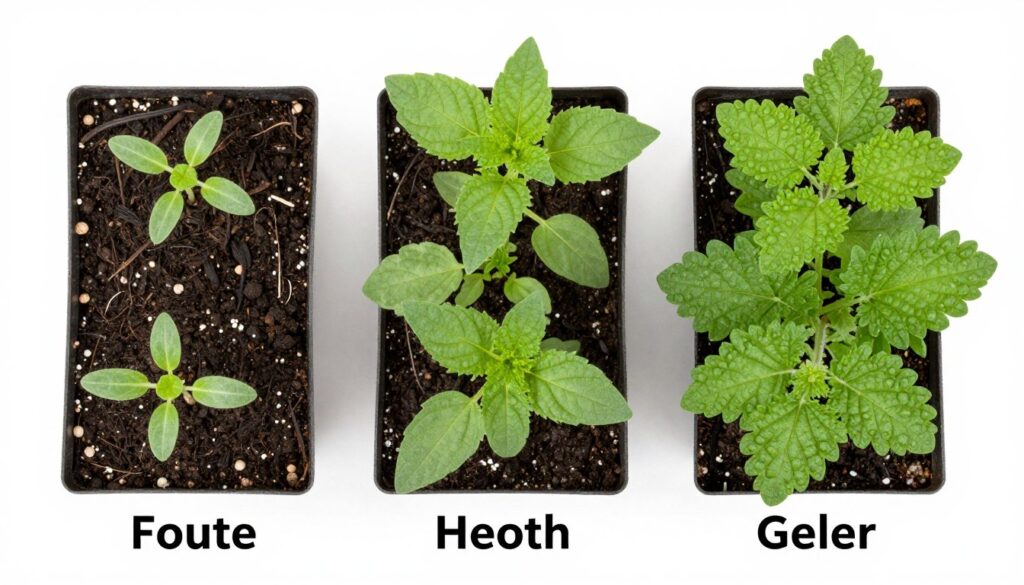
Start basil seeds every fourteen days in small two-inch pots, transplanting to larger containers when seedlings show four true leaves. Maintain three generations simultaneously—young seedlings replacing recently harvested mature plants. This rotation prevents gaps in availability when you harvest heavily or lose plants to age or disease.
Quick-maturing herbs like cilantro and dill complete their life cycle in forty-five to sixty days before bolting. Sow new seeds while current plants remain in early growth stages, ensuring replacements reach maturity as older plants decline. This succession prevents the boom-and-bust cycle where you harvest heavily for two weeks then face weeks without fresh herbs.
Intensive Square-Foot Spacing
Mel Bartholomew’s square-foot gardening method translates perfectly to indoor herb cultivation. Divide growing space into twelve-by-twelve-inch grids, then plant specific quantities per square based on mature herb size. Grow sixteen chive plants per square foot, four basil plants, or one large rosemary bush following spacing recommendations.
This intensive approach increases yield per square foot thirty to fifty percent compared to traditional spacing methods. The key lies in frequent harvesting that maintains plants at optimal size rather than allowing them to reach full mature dimensions. Regular cutting prevents overcrowding while encouraging compact, bushy growth patterns.
Mark square-foot grids on container surfaces using permanent marker or tape to maintain proper spacing as plants grow. This visual guide prevents gradual spacing drift where you unconsciously push pots closer together over time. Preserve two to three inches of empty space between grid sections for critical air circulation.
Vertical Training and Pruning Techniques
Shape herbs vertically rather than allowing natural spreading growth patterns. Pinch out lateral shoots on basil to encourage single-stem upward growth, reducing horizontal spread by fifty percent while maintaining leaf production. This technique fits more plants per square foot without sacrificing harvest potential.
Install small bamboo stakes or wire cages around herbs prone to flopping or spreading. Train growth upward by gently tying stems to supports with soft plant ties, creating compact vertical columns instead of sprawling bushes. Rosemary, in particular, benefits from this treatment, growing two feet tall in a six-inch pot when properly supported.
Prune herbs regularly to maintain target sizes rather than allowing unchecked expansion. Cut plants back by one-third when they reach maximum desired height, forcing energy into leaf production rather than additional stem growth. This aggressive pruning keeps plants productive within space limitations while preventing the legginess that reduces harvest quality.
Pruning Caution: Never remove more than one-third of any herb plant in a single pruning session. More aggressive cutting stresses plants and may prevent recovery, especially in lower-light indoor conditions where photosynthesis already operates below outdoor levels.
Companion Planting for Space Efficiency
Combine compatible herbs in single containers to maximize pot usage and create mutually beneficial growing relationships. Pair shallow-rooted thyme with deep-rooted rosemary in one large container—their different root zones minimize competition while both share identical care requirements.
Group moisture-loving herbs together in one area of your garden for simplified watering routines. Basil, parsley, and cilantro share similar preferences for consistent soil moisture and bright light. Watering this group daily or every other day becomes automatic, preventing the confusion of remembering which herbs need water and which prefer drying out.
Separate aggressive spreaders like mint and lemon balm into dedicated containers regardless of space pressures. These vigorous herbs overtake neighbors within weeks when planted together, ultimately reducing total harvest as they monopolize container space. The time saved avoiding replanting failures outweighs any perceived space efficiency from combining incompatible herbs.
Microgreens and Quick-Crop Integration
Fill temporary gaps between herb plantings with fast-maturing microgreens that harvest in seven to fourteen days. Sow arugula, mustard, or radish seeds thickly in four-inch pots positioned anywhere in your garden with adequate light. These quick crops provide fresh greens while slower-growing herbs establish themselves.
Microgreens require minimal space—a single four-inch pot produces one to two cups of densely packed greens ready for salads or garnishes. Establish a two-week succession schedule, starting new microgreen pots as previous batches reach harvest size. This continuous production supplements your herb garden without requiring dedicated permanent space.
Recycle spent microgreen soil by composting or using it as bottom layers in larger herb pots. The frequent turnover of microgreen containers provides opportunities to refresh soil, add compost, and maintain optimal growing conditions across your entire indoor garden space.
Start Your Indoor Herb Garden Today
You now have the knowledge to create a thriving herb garden in your available space. Whether you have a tiny windowsill or an entire room, fresh herbs are within reach. Take the first step by measuring your space and selecting your starter herbs.
Your Space Is Enough to Start Growing Herbs Indoors
The amount of indoor herb garden space you need depends entirely on your goals, growing methods, and willingness to optimize vertical areas. Begin with as little as one square foot holding three small pots, or expand to six square feet supporting a dozen herbs for serious cooking. No space is too small to start—only your ambition and available light truly limit what you can grow.
Measure your available areas, assess light conditions honestly, and choose herbs matching your space constraints. Start with compact varieties like thyme, oregano, and chives if you’re working with minimal room. Add basil and parsley once you understand basic care requirements and can dedicate slightly more space to these vigorous growers.
Remember that successful indoor herb gardens evolve over time through experimentation and adjustment. Your first setup rarely represents your final configuration. Start small, learn what works in your specific conditions, then expand gradually as confidence and space allow. The fresh basil on tonight’s pasta or the thyme sprigs flavoring tomorrow’s chicken prove that even the smallest indoor herb garden space delivers real value and satisfaction.
Take action today by measuring one potential growing location in your home. Mark that space, imagine three pots of herbs thriving there, and take the first step toward year-round fresh herbs grown in your own indoor garden space.