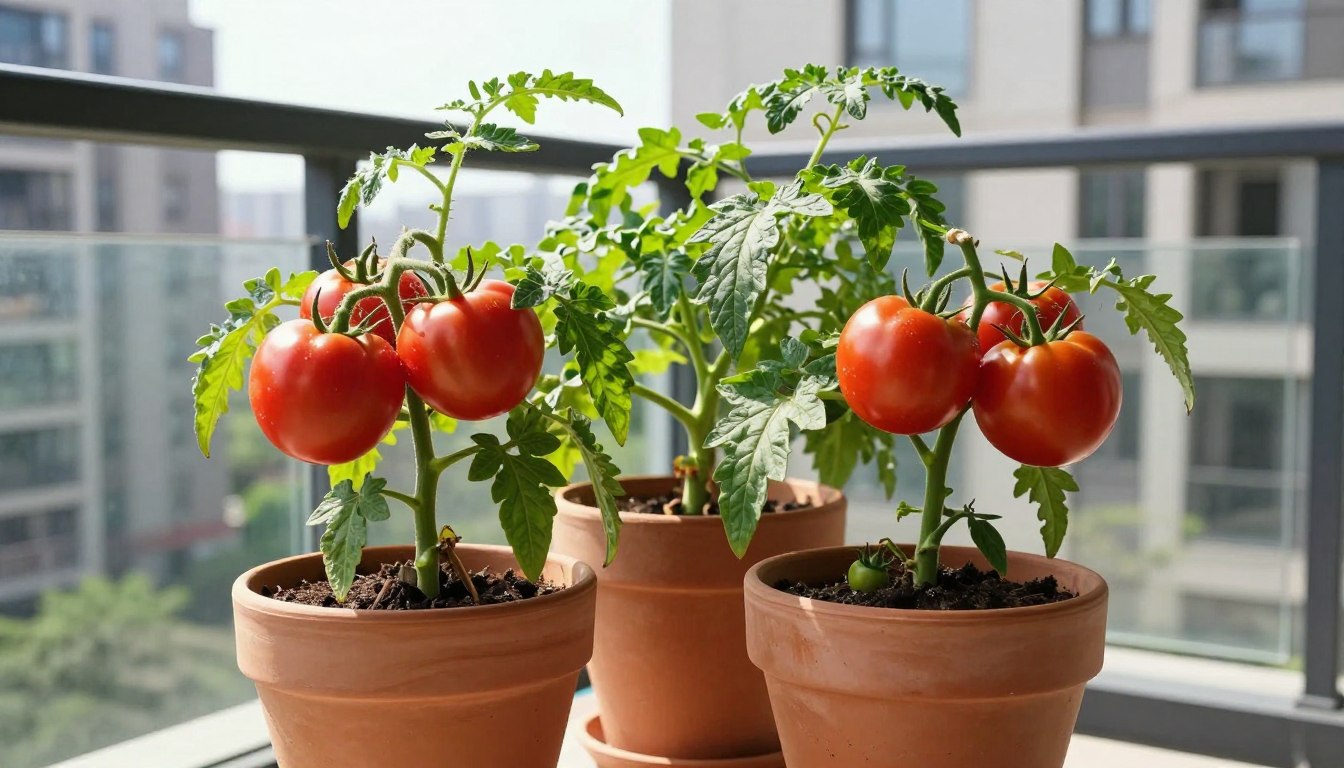
Growing tomatoes on a balcony isn’t just possible—it’s one of the most rewarding ways to garden in small spaces. Whether you’re living in a high-rise apartment, a condo with limited outdoor access, or simply want to maximize your balcony space, tomatoes adapt beautifully to container life. The taste of a homegrown tomato, picked at peak ripeness, far surpasses anything you’ll find at the grocery store.
This comprehensive guide will walk you through everything you need to know to successfully grow tomatoes on your balcony. From selecting the right varieties and containers to mastering watering schedules and troubleshooting common problems, you’ll discover that balcony gardening offers unique advantages. Container-grown tomatoes can actually be easier to manage than traditional garden plots, with better control over soil quality, drainage, and pest management.
In this article, you’ll learn the fundamentals of balcony tomato gardening, including how to choose tomato varieties suited for pots, select appropriate containers, prepare the perfect soil mix, and provide the care your plants need to thrive. We’ll cover essential topics like sunlight requirements, watering techniques, fertilizing schedules, and how to support your plants as they grow. You’ll also discover solutions to common challenges and tips for maximizing your harvest in limited space.
Let’s transform your balcony into a productive tomato garden that provides fresh, delicious fruit throughout the growing season.
Why Growing Tomatoes on a Balcony Makes Sense
Balcony gardening offers several distinct advantages over traditional in-ground gardening. For urban dwellers and those with limited outdoor space, containers provide the perfect solution to enjoy fresh, homegrown tomatoes without needing a backyard.
Space Efficiency and Flexibility
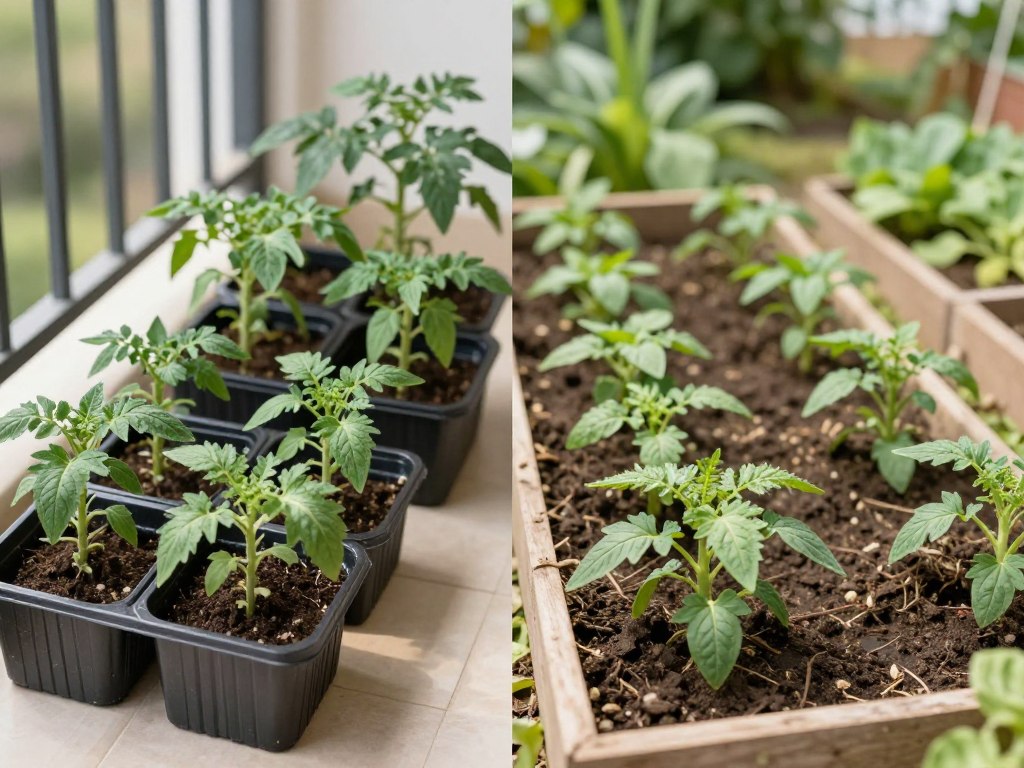
Container gardening allows you to maximize every square foot of available space. You can arrange pots along railings, in corners, or even use vertical growing techniques. Unlike permanent garden beds, containers can be moved to follow the sun, protect plants from harsh weather, or simply rearrange your outdoor living space.
This flexibility is particularly valuable during the growing season. If a heat wave threatens your tomatoes, you can relocate pots to a shadier spot. When cool nights arrive late in the season, moving containers closer to your building can provide extra warmth and extend your harvest.
Better Control Over Growing Conditions
When you grow tomatoes in pots, you have complete control over the soil quality, something impossible with in-ground gardening. You can create the ideal growing medium without dealing with poor native soil, heavy clay, or soil-borne diseases. This control extends to drainage, nutrients, and pH levels.
Containers also elevate plants off the ground, reducing exposure to soil-borne pests and diseases. You won’t battle slugs, many soil-dwelling insects, or fungal problems that plague ground-level plants. This cleaner growing environment often results in healthier plants and better yields.
Accessibility and Maintenance
Balcony gardens put everything at a comfortable working height. No bending, kneeling, or back-breaking work required. Watering, pruning, and harvesting become simple tasks you can accomplish in minutes. This accessibility makes gardening more enjoyable and sustainable as a daily practice.
For renters, container gardening is perfect because you can take your garden with you when you move. Your investment in soil, containers, and expertise transfers to your next home without leaving anything behind.
Advantages of Balcony Tomato Growing
- No yard or garden space required
- Complete control over soil quality and nutrients
- Reduced pest and disease pressure
- Mobility to optimize sun exposure
- Easy accessibility for care and harvesting
- Portable garden for renters
- Extended growing season with microclimate control
- Efficient use of limited space
Challenges to Consider
- More frequent watering required
- Limited root space affects plant size
- Initial investment in containers and soil
- Weight considerations for balconies
- Regular fertilizing necessary
- Sun exposure may be limited by building orientation
Selecting the Best Tomato Varieties for Container Growing
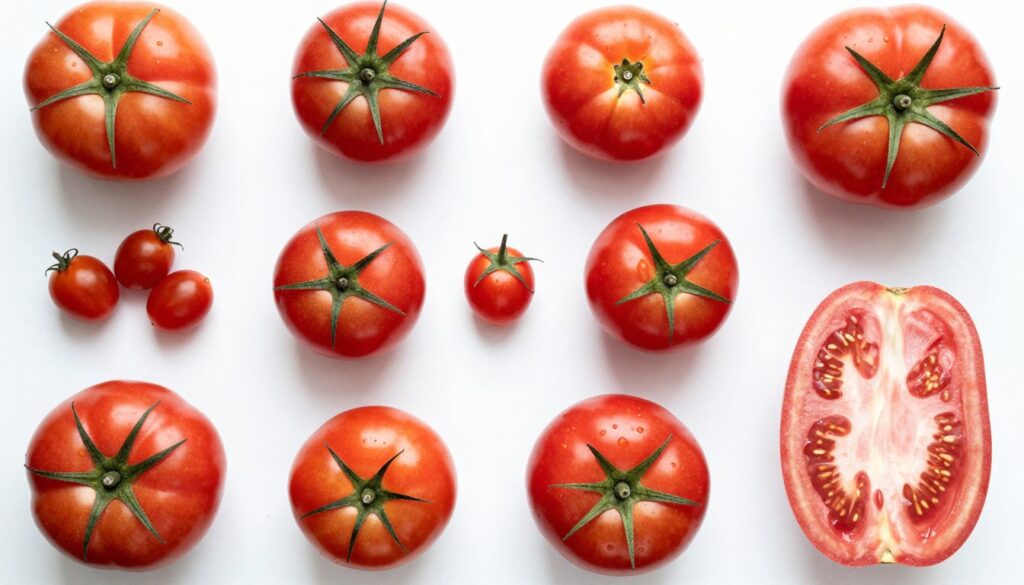
Not all tomatoes are created equal when it comes to growing in pots. Understanding the difference between tomato types will help you choose varieties that thrive in containers and match your growing conditions and taste preferences.
Understanding Tomato Growth Habits
Tomatoes fall into three main categories based on their growth patterns. Each type has distinct characteristics that affect their suitability for container growing and the space they require.
Determinate Tomatoes
Determinate varieties grow to a predetermined height, usually between 3 to 4 feet, then stop growing and set all their fruit within a relatively short period. These compact, bushy plants are ideal for growing tomatoes in pots because they stay manageable and don’t require extensive support structures.
The concentrated fruit production of determinate tomatoes means you’ll get a large harvest over a few weeks, perfect if you plan to make sauce, can tomatoes, or want several ripe tomatoes at once for recipes. Popular determinate varieties include Roma, Celebrity, and Bush Early Girl.
Indeterminate Tomatoes
Indeterminate tomatoes are vigorous vines that continue growing and producing fruit throughout the growing season until frost kills them. These plants can reach 6 to 8 feet or taller and require substantial support structures like tall cages or stakes.
While more challenging in containers due to their size, indeterminate varieties can be grown successfully in large pots with proper support. They provide a steady supply of tomatoes over months rather than weeks. Popular indeterminate varieties include Better Boy, Big Beef, and most heirloom types like Cherokee Purple.
Dwarf and Patio Varieties
Specially bred for container growing, dwarf and patio tomatoes combine compact growth with excellent fruit production. These varieties typically grow 12 to 24 inches tall and work perfectly in smaller spaces. Despite their small size, many produce full-sized tomatoes with outstanding flavor.
Look for varieties labeled as “patio,” “bush,” or “dwarf” on seed packets or plant labels. These tomatoes often perform exceptionally well in containers and hanging baskets.
Best Varieties for Balcony Growing
Based on growth habit, flavor, and container performance, here are top tomato varieties for balcony gardens, organized by fruit type and use.
Cherry Tomatoes
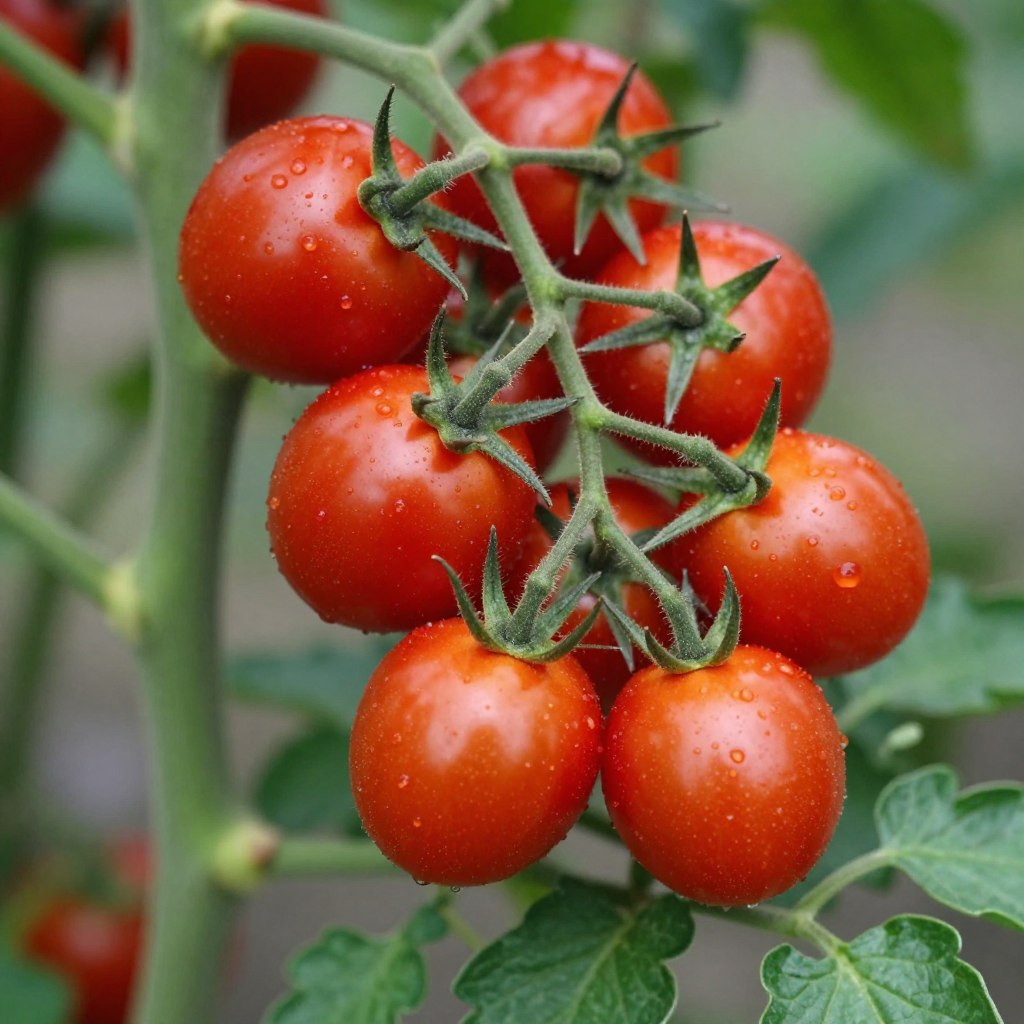
Small, sweet, and prolific. Perfect for snacking and salads.
- Sun Sugar – Incredibly sweet orange cherry tomatoes, indeterminate
- Sweet Million – Disease-resistant red cherry, indeterminate
- Husky Cherry Red – Compact plant, full flavor, semi-determinate
- Tumbling Tom – Cascading variety perfect for hanging baskets
- Tiny Tim – Ultra-compact dwarf, 12-15 inches tall
Slicing Tomatoes
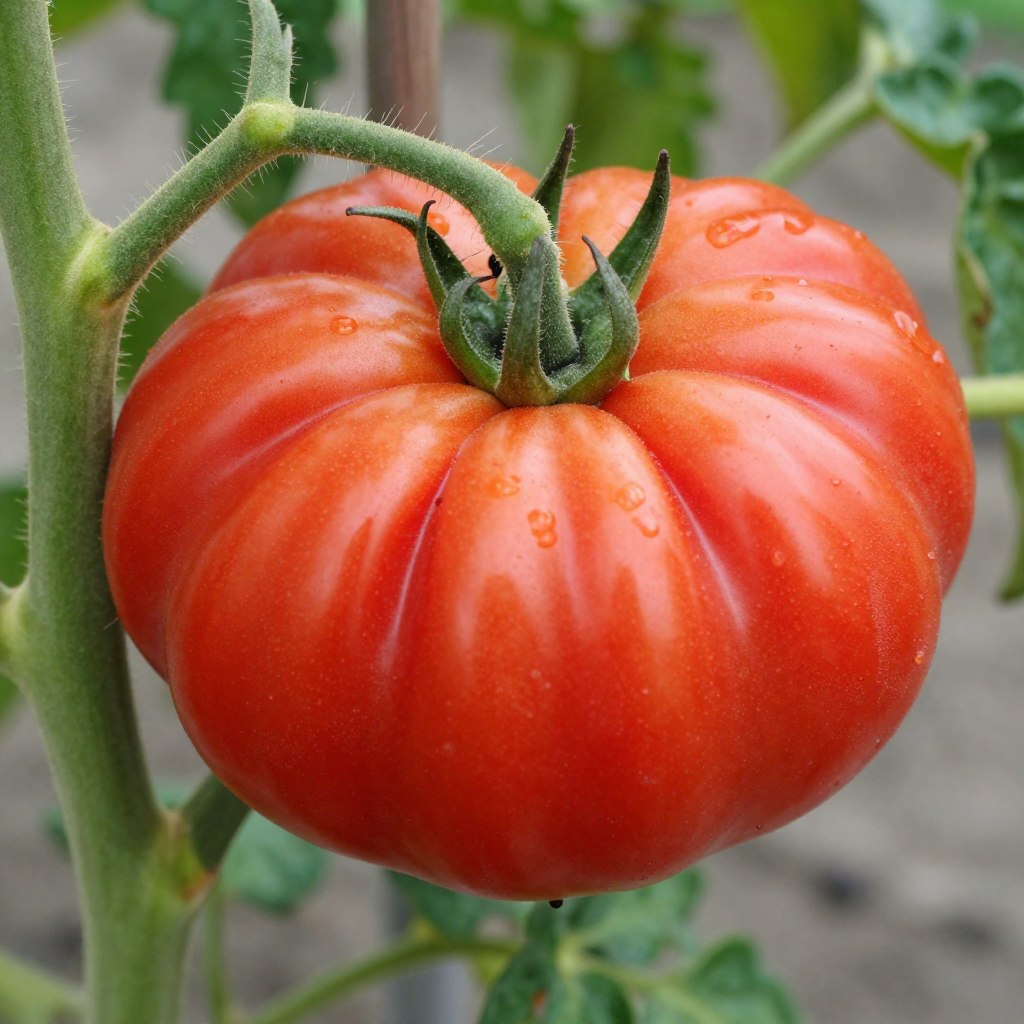
Medium to large fruits ideal for sandwiches and fresh eating.
- Bush Early Girl – Early harvest, determinate, 4-6 oz fruits
- Patio – Specifically bred for containers, determinate
- Celebrity – Reliable producer, semi-determinate, disease-resistant
- Better Bush – Compact plant with full-sized tomatoes
- Bush Goliath – Large fruits on compact vines
Paste/Sauce Tomatoes
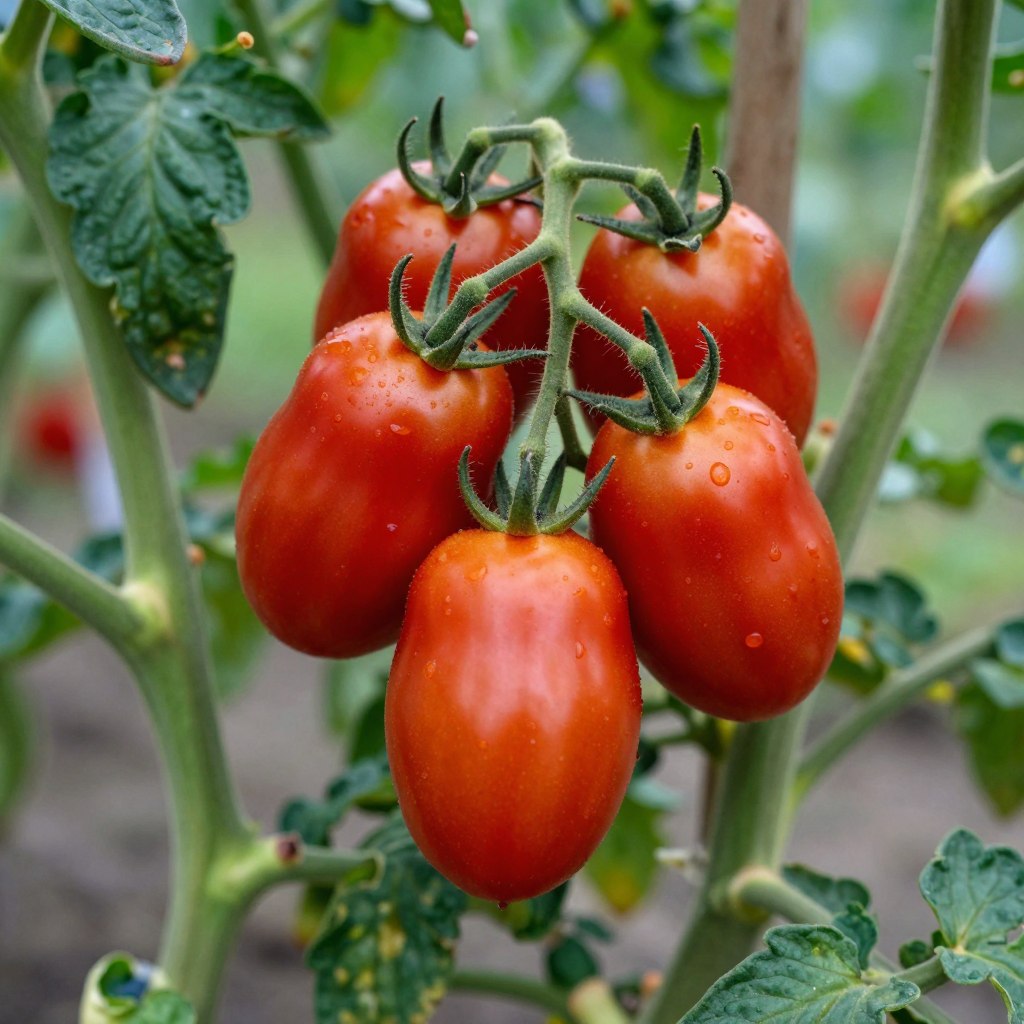
Meaty, low-moisture tomatoes perfect for sauces and preserving.
- Roma – Classic paste tomato, determinate, disease-resistant
- Monica Roma – Improved Roma variety with better flavor
- Sunrise Sauce – Orange paste tomato, compact plant
- San Marzano – Italian heirloom, indeterminate (needs support)
- Plum Regal – Compact paste tomato variety
Choosing Based on Your Balcony Conditions
Your specific balcony environment should influence your variety selection. Consider these factors when choosing which tomatoes to grow:
- Sun exposure: Full-sun balconies (6-8+ hours) can grow any variety. Partial sun (4-6 hours) works best with cherry tomatoes that produce well in slightly lower light.
- Space available: Limited space calls for determinate or dwarf varieties. Larger balconies can accommodate indeterminate vines with proper support.
- Container size: Smaller pots (5 gallons) suit compact varieties. Larger containers (10+ gallons) can support bigger plants with more extensive root systems.
- Wind exposure: High balconies with wind should use sturdier, bushier determinate types rather than tall indeterminate vines.
- Growing season length: Short seasons benefit from early-producing varieties. Long seasons can support indeterminate types that fruit continuously.
Pro Tip: Start with at least two different varieties in your first season. Try one cherry tomato for early, abundant production and one slicer for sandwich-worthy fruits. This diversity ensures success even if one variety struggles with your specific conditions.
Choosing the Right Containers for Balcony Tomatoes
The container you choose directly impacts your tomato plant’s health, growth, and productivity. Tomatoes develop extensive root systems, and restricting root space limits the plant’s ability to grow and produce fruit. Understanding container requirements is crucial for success when growing tomatoes in pots.
Container Size Requirements
Size matters significantly when selecting containers for tomatoes. Larger containers provide more soil volume, which translates to more nutrients, better moisture retention, and space for the root system to develop properly.
The minimum container size for growing tomatoes should hold 5 gallons of soil and measure at least 12 inches in width and depth. However, bigger is genuinely better for tomato containers. Most varieties perform best in pots that hold 10 to 20 gallons of soil.
As a general rule, determinate and dwarf varieties need containers holding 5 to 10 gallons. Semi-determinate varieties perform best in 10 to 15-gallon pots. Indeterminate varieties require 15 to 20 gallons or more for optimal production. Cherry tomatoes, despite producing abundant fruit, can thrive in slightly smaller containers than larger-fruited varieties.
Why Larger Containers Perform Better
Bigger containers provide several advantages. They hold more soil, which buffers against rapid moisture fluctuations. Small pots dry out quickly, sometimes requiring watering twice daily during hot summer weather. Larger pots maintain more consistent moisture levels, reducing plant stress.
More soil volume also means more nutrients available to the plant and better insulation for roots against temperature extremes. The larger root system possible in bigger containers supports more vigorous top growth and heavier fruit production.
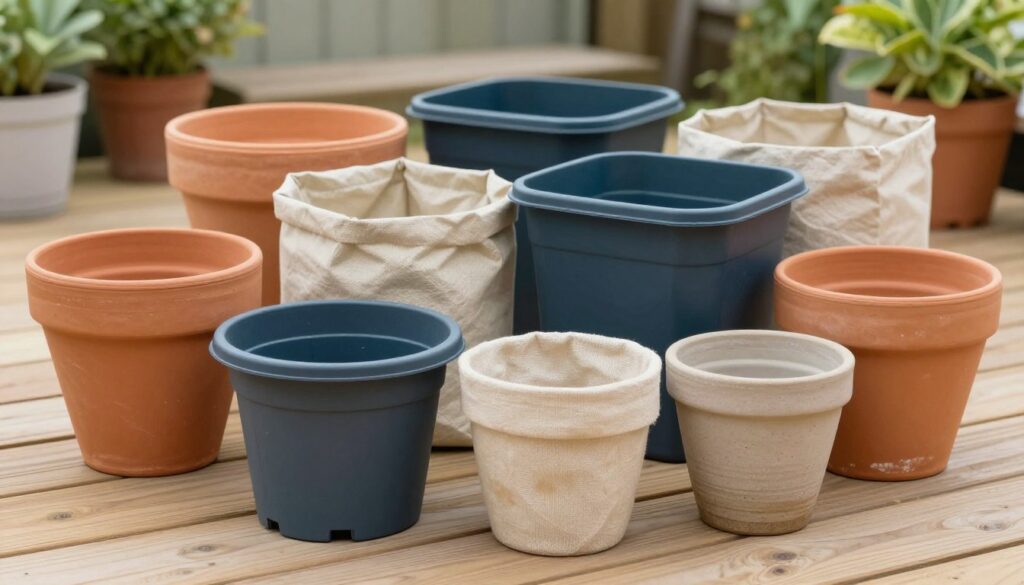
Container Materials and Their Properties
Different container materials offer distinct advantages and disadvantages for growing tomatoes on a balcony. Your choice should consider weight, durability, aesthetics, and how each material affects soil temperature and moisture.
Plastic Containers
- Lightweight and easy to move
- Excellent moisture retention
- Affordable and widely available
- Durable and long-lasting
- Dark colors may overheat in direct sun
- Can become brittle over time
Fabric Grow Bags
- Superior drainage and aeration
- Air-prunes roots for healthier system
- Lightweight and collapsible for storage
- Prevents root circling issues
- Dries out faster than solid pots
- Less durable, may last 1-3 seasons
Terracotta/Ceramic
- Attractive, traditional appearance
- Porous material allows air exchange
- Heavy weight provides stability
- Excellent for moisture regulation
- Dries out more quickly
- Heavy and difficult to move
- Can crack in freezing weather
Essential Container Features
Regardless of the material you choose, certain features are non-negotiable for successful tomato growing in containers.
Drainage Holes
Adequate drainage is absolutely critical. Containers must have multiple drainage holes in the bottom to allow excess water to escape. Without proper drainage, soil becomes waterlogged, depriving roots of oxygen and creating conditions for root rot.
Most commercial containers include drainage holes, but if you’re repurposing buckets or other containers, drill several holes (at least 4-6 holes for a 5-gallon container) in the bottom. The holes should be approximately half an inch in diameter.
Saucer Considerations
Place saucers or trays under containers to catch drainage water. This protects your balcony surface and allows plants to reabsorb some moisture during hot weather. However, don’t let water sit in saucers for extended periods, as this defeats the purpose of good drainage. Empty saucers within a few hours of watering.
Container Color and Heat
Dark-colored containers absorb more heat, which can be beneficial in cooler climates but problematic in hot regions. In areas with intense summer sun, black or dark brown containers may heat soil excessively, stressing plants and damaging roots. Light-colored containers reflect heat and keep soil cooler.
If you have dark containers in a hot climate, consider placing them where they receive afternoon shade, or wrap the outside with light-colored fabric during the hottest part of summer.
Weight and Balcony Safety
Before filling multiple large containers with soil, consider the weight load on your balcony. Moist soil weighs approximately 75 pounds per cubic foot. A 20-gallon container (about 2.7 cubic feet) filled with wet soil can weigh 200 pounds or more.
Check your balcony’s weight capacity if you’re planning an extensive container garden. Distribute weight evenly across the balcony floor, placing heavier containers near walls or support columns rather than along unsupported edges. When in doubt, consult your building management or a structural engineer.
For weight-conscious situations, use lightweight containers like fabric grow bags or plastic pots, and consider lighter soil mixes with more perlite or vermiculite. These amendments maintain structure while reducing overall weight.
Budget-Friendly Option: Five-gallon buckets from hardware stores make excellent, inexpensive tomato containers. They’re typically food-grade, durable, and the perfect size for compact varieties. Just drill drainage holes in the bottom and you’re ready to plant. Many stores sell them for just a few dollars each.
Preparing the Perfect Soil for Container Tomatoes
Soil is the foundation of successful container gardening. Unlike in-ground plants that can extend roots to find nutrients and water, container tomatoes depend entirely on the soil you provide. Creating the right growing medium is one of the most important factors in growing healthy, productive tomatoes in pots.
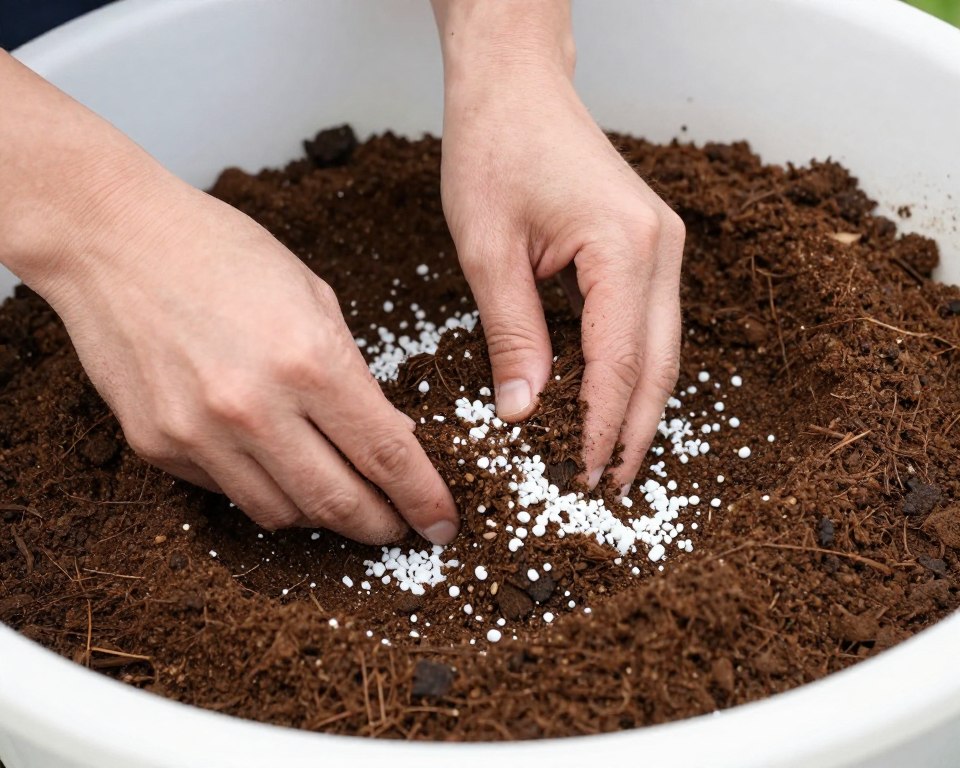
Why Garden Soil Doesn’t Work in Containers
Never use garden soil alone in containers, even if it’s excellent quality. Garden soil is too heavy and dense for pots. When confined to a container, it compacts over time, restricting water flow, preventing air circulation to roots, and creating an environment where roots struggle to develop.
Garden soil may also harbor soil-borne diseases, weed seeds, and pest larvae that become problematic in the confined space of a container. While these issues might be manageable in a large garden bed, they become concentrated and severe in pots.
Components of Quality Potting Mix
The best potting mix for tomatoes is light, fluffy, and well-draining while retaining adequate moisture. Professional potting mixes combine several components that work together to create the ideal growing environment.
Base Ingredients
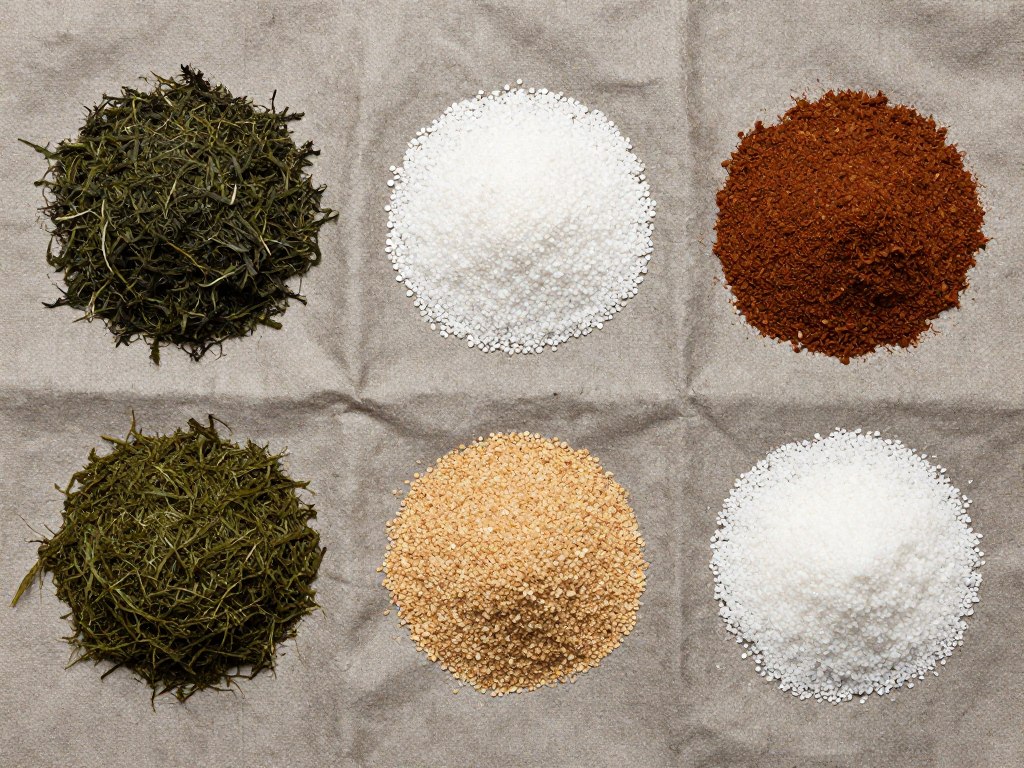
Quality potting soil typically contains peat moss or coconut coir as the primary component. These materials are lightweight, hold moisture well, and have a slightly acidic pH suitable for tomatoes. Coconut coir is increasingly popular as a sustainable peat alternative.
Perlite or vermiculite provides aeration and improves drainage. These lightweight minerals create air pockets in the soil, ensuring roots receive adequate oxygen. Perlite excels at drainage, while vermiculite holds more moisture and nutrients.
Many potting mixes include compost or aged bark for organic matter. These components provide some initial nutrients and improve the soil’s water-holding capacity. They also introduce beneficial microorganisms that support plant health.
Selecting Pre-Made Potting Mix
When purchasing potting mix, choose products specifically labeled for vegetables or containers. Avoid products labeled as “topsoil” or “garden soil.” Look for mixes that contain fertilizer, as these provide nutrients for the first few weeks of growth.
Premium organic potting mixes often contain compost, worm castings, and other organic amendments that improve soil structure and provide slow-release nutrients. These mixes cost more initially but often perform better and require less supplemental fertilizing.
Creating Your Own Potting Mix
Making your own potting mix allows you to customize the blend and often costs less when planting multiple containers. A basic recipe for tomato potting mix includes equal parts peat moss or coconut coir, perlite or vermiculite, and compost.
For every five gallons of this basic mix, add one cup of worm castings and half a cup of organic all-purpose fertilizer or bone meal. Mix all components thoroughly before filling containers.
DIY Potting Mix Recipe
- 5 gallons peat moss or coconut coir
- 5 gallons perlite or vermiculite
- 5 gallons quality compost
- 1 cup worm castings
- 1/2 cup organic fertilizer
- 1/4 cup bone meal (for calcium)
Mix all ingredients thoroughly in a large container or wheelbarrow. Moisten the mix slightly before using—it should be damp but not soggy. This recipe makes approximately 15 gallons of potting mix, enough for 2-3 large containers.
Soil pH and Nutrients
Tomatoes prefer slightly acidic soil with a pH between 6.0 and 6.8. Most potting mixes fall within this range, but if you’re experiencing problems, testing pH can be helpful. Inexpensive pH test kits are available at garden centers.
If pH is too high (alkaline), sulfur can lower it. If too low (acidic), lime raises pH. Make adjustments gradually and retest after a few weeks.
Essential Nutrients
Tomatoes are heavy feeders requiring substantial nutrients throughout the growing season. The three primary nutrients are nitrogen (N) for leafy growth, phosphorus (P) for root development and fruit production, and potassium (K) for overall plant health and disease resistance.
Calcium is another critical nutrient for tomatoes. Adequate calcium prevents blossom end rot, a common problem where the bottom of fruits develops dark, sunken spots. Adding bone meal or crushed eggshells to potting mix provides supplemental calcium.
Preparing Containers Before Planting
Before filling containers with soil, ensure they’re clean. New containers can be used immediately, but previously used pots should be scrubbed to remove old soil and potential disease organisms. Wash with a solution of one part bleach to ten parts water, then rinse thoroughly.
Fill containers with potting mix to within one to two inches of the rim. This space allows for watering without overflow. Moisten the soil thoroughly before planting. Dry potting mix can be difficult to wet initially and may repel water. Add water gradually, stirring the soil until it’s evenly moist throughout.
Some gardeners add a slow-release fertilizer to the soil at planting time. These granular products release nutrients gradually over weeks or months, providing steady nutrition with less frequent application than liquid fertilizers.
Planting Tomatoes in Containers: Step-by-Step
Proper planting technique sets the foundation for healthy growth and abundant harvests. Tomatoes have unique characteristics that allow—and benefit from—planting methods you wouldn’t use with other vegetables. Understanding these techniques maximizes your plants’ potential from day one.
Timing Your Planting
Timing is crucial when planting tomatoes outdoors. These warm-season plants are extremely sensitive to cold temperatures and will suffer damage or death if exposed to frost. The soil must also be adequately warm for roots to grow actively.
Plant tomatoes on your balcony after the last expected frost date for your area and when nighttime temperatures consistently stay above 55 degrees Fahrenheit. Soil temperature should be at least 60 degrees. Planting too early into cold soil causes plants to sit dormant, stressed and vulnerable to disease.
Check your local frost dates online or contact your cooperative extension office for specific information. In most regions, this means planting in mid to late spring. Southern gardeners may plant as early as March, while northern gardeners might wait until late May or early June.
Starting from Seeds vs. Transplants
You can grow tomatoes from seed or purchase nursery-grown seedlings. Each approach has advantages.
Starting from Seeds
Growing tomatoes from seed offers the widest variety selection and costs less per plant. However, seeds require starting indoors 6 to 8 weeks before your planting date. You’ll need grow lights or a very sunny window, seed-starting mix, and attention to watering and temperature.
Seeds germinate best at temperatures between 75 and 85 degrees Fahrenheit. Once seedlings emerge, they need strong light to prevent becoming leggy and weak. Gradually acclimate seedlings to outdoor conditions over 7 to 10 days before planting—a process called hardening off.
Using Transplants
Purchasing transplants from nurseries or garden centers is simpler for beginners and provides a head start on the season. Select stocky, dark green plants with strong stems. Avoid plants that are tall and spindly, yellowing, showing flower buds, or already setting fruit. These stressed plants take longer to establish and may produce less overall.
Look for plants labeled with their variety name rather than just “tomato.” Check leaves for signs of disease or pest damage. Healthy transplants have no spots, holes, or discoloration.
The Deep Planting Technique
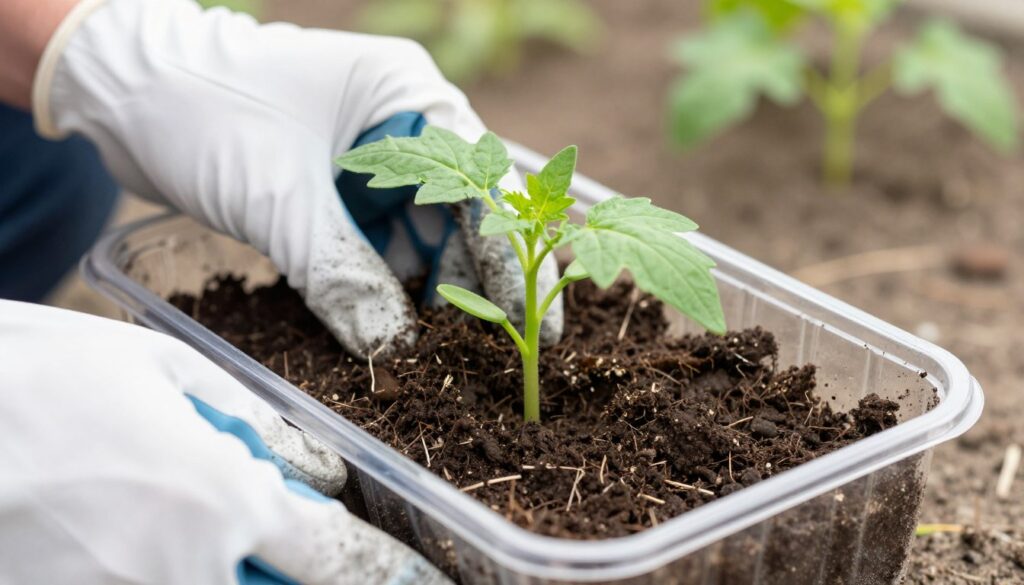
Here’s where tomatoes differ dramatically from most plants. Tomatoes can grow roots all along their stems. When you bury part of the stem below ground, it develops into additional roots, creating a more extensive root system that supports better growth and higher yields.
Remove the lower leaves from your tomato plant, leaving only the top cluster of leaves. You can safely remove leaves from the bottom half to two-thirds of the stem. These leaves would end up below soil level and serve no purpose.
Dig a hole deep enough to bury the stem up to just below the remaining leaves. For small transplants, this might mean burying half the stem. For larger plants, you might bury two-thirds of the stem.
Position the plant in the hole and fill around it with potting mix. Gently firm the soil around the stem to eliminate air pockets, but don’t compact it too firmly. The top of the soil should reach just below the remaining leaves.
Alternative Method for Large Transplants
If your transplant is particularly tall or leggy, you can plant it horizontally. Dig a shallow trench and lay the plant on its side, bending the top portion gently upward. Bury the stem along the trench, leaving only the top leaves exposed. The stem will naturally turn upward toward the sun within days, and the entire buried portion will develop roots.
Initial Care After Planting
Water thoroughly immediately after planting. Water should flow out the drainage holes, ensuring the entire root ball is moistened. This initial watering settles soil around roots and eliminates air pockets.
Newly planted tomatoes benefit from protection from intense sun for the first few days. If your balcony receives harsh afternoon sun, provide temporary shade with a light sheet or umbrella during peak heat. This reduces transplant shock and allows roots to establish before supporting full photosynthesis.
Don’t fertilize immediately after planting if you used quality potting mix with added nutrients. Wait two weeks before beginning supplemental feeding. Early fertilization can stress plants still recovering from transplanting.
- Check soil temperature: Ensure soil temp is above 60°F and nighttime air temps stay above 55°F consistently
- Prepare containers: Fill with moist potting mix to 1-2 inches below rim
- Remove lower leaves: Strip leaves from bottom half to two-thirds of stem
- Dig deep hole: Make hole deep enough to bury stem up to remaining leaves
- Plant deeply: Place plant in hole, bury stem, leaving only top leaf cluster exposed
- Firm soil gently: Fill around stem and gently press to remove air pockets
- Water thoroughly: Water until it drains from bottom holes
- Provide temporary shade: Protect from intense sun for 2-3 days after planting
Spacing Multiple Plants
If you’re planting multiple containers, space them so air can circulate freely between plants. Good air circulation reduces disease risk, especially fungal problems that thrive in humid, stagnant conditions. Leave at least 12 to 18 inches between containers.
Never plant multiple tomatoes in the same container unless it’s exceptionally large. Each tomato needs its own pot with adequate soil volume for the root system. Crowding multiple plants in one container results in competition for nutrients and water, reducing yields for all plants.
Sunlight and Positioning Your Container Tomatoes
Light is the energy source that powers tomato growth and fruit production. Without adequate sunlight, even perfectly planted and fertilized tomatoes will struggle, producing sparse foliage, few flowers, and minimal fruit. Understanding your balcony’s sun exposure and positioning plants optimally makes the difference between disappointing results and a bountiful harvest.
How Much Sun Do Tomatoes Really Need?
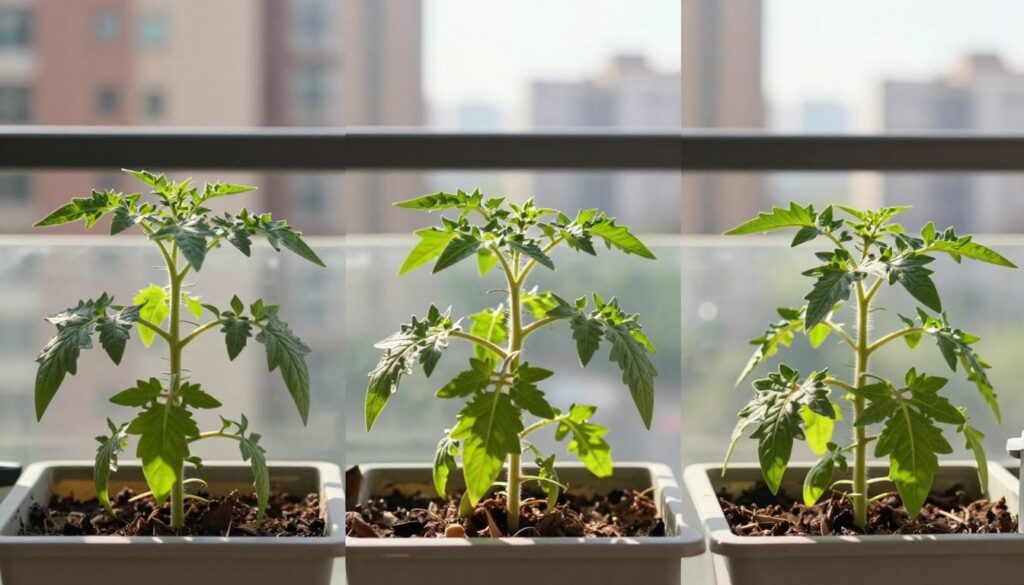
Tomatoes require at least 6 to 8 hours of direct sunlight daily for optimal growth and fruit production. “Direct sunlight” means unobstructed sun reaching the leaves—not filtered through windows, shade cloth, or nearby trees.
With 6 hours of sun, tomatoes will grow and produce fruit, though yields may be lower than with more sun. Eight or more hours provides ideal conditions for maximum production. Cherry tomatoes generally tolerate partial shade better than large-fruited varieties, making them a better choice if your balcony receives limited sun.
More sun also means earlier ripening and better flavor. Tomatoes grown in partial shade produce fruit that ripens more slowly and may lack the intense flavor of sun-grown tomatoes.
Assessing Your Balcony’s Sun Exposure
Before planting, spend time observing your balcony’s sun patterns throughout the day. Balcony orientation dramatically affects sun exposure and, therefore, tomato success.
South-Facing Balconies
In the Northern Hemisphere, south-facing balconies receive the most intense and longest-duration sun exposure throughout the day. These locations are ideal for growing tomatoes in pots and can support all tomato varieties. However, in extremely hot climates, intense afternoon sun might require some shade protection during heat waves.
West-Facing Balconies
West-facing balconies receive afternoon and evening sun. While this can be intense and hot, it typically provides sufficient light for tomatoes. These locations work well in most climates, though you may need to provide extra water during hot afternoons.
East-Facing Balconies
East-facing balconies get morning and early afternoon sun, typically 5 to 7 hours depending on nearby obstructions. This can work for tomatoes, especially cherry varieties. Morning sun is less intense than afternoon sun, so heat stress is rarely an issue. However, fruit production may be slightly reduced compared to south or west exposures.
North-Facing Balconies
North-facing balconies receive the least direct sun in the Northern Hemisphere, often getting only indirect light or a few hours of morning or evening sun. Growing traditional tomatoes is challenging in these conditions. If you have a north-facing balcony, consider dwarf cherry varieties, which tolerate lower light better, or look into supplemental grow lights.
Maximizing Available Sunlight
Even with less-than-ideal sun exposure, several strategies can help you maximize the light your tomatoes receive.
Use Light-Colored Surfaces
Light-colored walls, floors, and surfaces reflect sunlight back onto plants, increasing the total light they receive. If possible, position containers near white or light-colored walls. You can even use reflective materials like white fabric or aluminum foil to bounce additional light onto shaded portions of plants.
Rotate Containers Regularly
One advantage of container growing is mobility. Rotate pots regularly so all sides of the plant receive equal sun exposure. This prevents lopsided growth and ensures all branches have the opportunity to flower and set fruit. A quarter turn every few days keeps plants growing evenly.
Keep Plants Pruned
Removing excess foliage allows more light to penetrate to the interior branches and developing fruit. While we’ll discuss pruning in detail later, know that strategic leaf removal improves light distribution throughout the plant.
Consider Container Placement Height
Sometimes raising containers on plant stands or blocks increases sun exposure by lifting plants above balcony railings or other obstructions that cast shade. Even a few inches of additional height can make a difference in the amount of sun plants receive.
Dealing with Too Much Sun
In extremely hot climates or on balconies with intense all-day sun exposure, tomatoes may actually suffer from too much heat. Symptoms include wilting despite adequate water, leaf edges curling or browning, and fruit developing sun scald—pale, papery patches on the side facing the sun.
If heat becomes excessive, provide afternoon shade during the hottest part of the day using a lightweight shade cloth that blocks 30 to 50 percent of sun. Alternatively, move containers to a location that receives morning sun but afternoon shade. Ensure consistent moisture, as water stress compounds heat stress.
Heat Warning: When temperatures exceed 95°F regularly, tomato flowers may fail to set fruit. Pollen becomes non-viable in extreme heat, and plants focus energy on survival rather than reproduction. Choose heat-tolerant varieties if you garden in hot climates, and provide some afternoon shade during the hottest weeks.
Mastering the Art of Watering Container Tomatoes
Watering is simultaneously the simplest and most challenging aspect of growing tomatoes in pots. Unlike in-ground plants that access moisture deep in the soil, container tomatoes depend entirely on you for water. Too much or too little creates serious problems, yet finding the right balance becomes intuitive with experience.
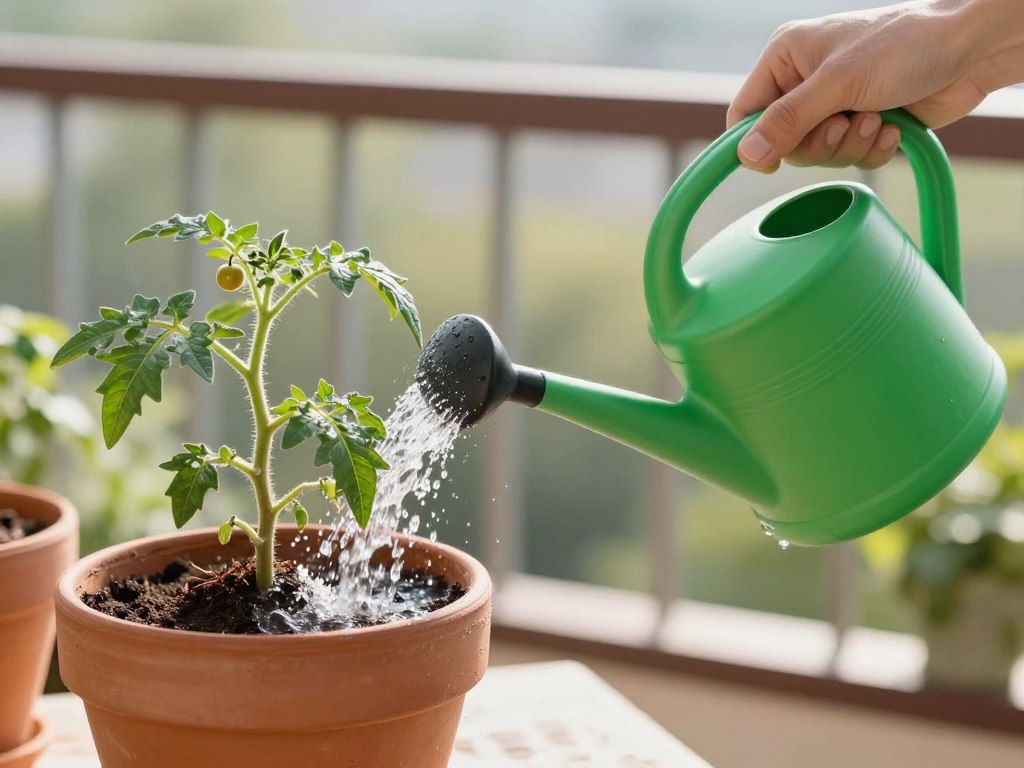
Why Container Watering Differs
Containers create a fundamentally different water environment than garden beds. The limited soil volume dries out much faster, especially during hot summer weather. Roots can’t extend deeper to find moisture, making consistent watering critical.
The container material, size, weather conditions, and plant size all affect how quickly soil dries. A small terracotta pot on a hot, windy balcony might need water twice daily, while a large plastic container in mild conditions might stay moist for several days.
The “Wrung-Out Sponge” Principle
The goal is maintaining soil moisture similar to a wrung-out sponge—damp throughout but not dripping wet. This consistency ensures roots always have access to water while still receiving the oxygen they need. Roots can’t breathe in waterlogged soil, leading to root rot and plant death.
Unlike in-ground tomatoes that benefit from deep, infrequent watering to encourage deep root growth, container tomatoes thrive with more frequent watering that keeps soil consistently moist. The root system already fills the available space and can’t grow deeper, so there’s no advantage to letting the soil dry out between waterings.
How to Determine When to Water
Rather than watering on a fixed schedule, learn to read your plants and soil. Several indicators tell you when tomatoes need water.
The Finger Test
Insert your finger into the soil to the second knuckle (about 2 inches deep). If the soil feels dry at this depth, it’s time to water. If it still feels moist, wait another day and check again. This simple test works reliably for most situations.
Container Weight
Experienced gardeners often gauge watering needs by lifting containers. Dry soil weighs significantly less than moist soil. After watering, lift your container to feel its weight. Check again when you think it needs water. The difference becomes obvious with practice.
Visual Cues
Wilting leaves are an obvious sign of water stress, but don’t wait for this symptom. By the time plants wilt, they’re already stressed, which can impact fruit production. Look instead for subtle signs like leaves losing their perky appearance or the soil pulling away from the sides of the container.
Proper Watering Technique
How you water matters as much as when you water. Follow these techniques for best results.
Water Deeply and Thoroughly
When watering, continue until water flows from the drainage holes. This ensures the entire root ball receives moisture, not just the top few inches. Shallow watering encourages shallow root development and weak plants.
Add water slowly, allowing it to absorb rather than running across the surface and out the sides. If water runs through very quickly without absorbing, the soil may have become hydrophobic (water-repelling), which can happen when potting mix dries out completely. In this case, water multiple times, allowing a few minutes between applications for absorption.
Water the Soil, Not the Leaves
Direct water at the soil surface around the base of the plant. Avoid splashing water on leaves and stems, as wet foliage promotes fungal diseases. If you must use overhead watering, do so in the morning so leaves have time to dry before evening.
Best Time of Day to Water
Early morning is ideal for watering tomatoes. Plants have the entire day to absorb moisture and use it during active growing hours. Morning watering also allows any water that splashes on leaves to dry quickly, reducing disease risk.
If you miss the morning window, early evening is the second-best option. Avoid watering in full midday sun, as water droplets can magnify sunlight and burn leaves. Late evening watering leaves plants wet overnight, increasing disease susceptibility.
Watering Frequency Guidelines
While no fixed schedule works for all situations, these guidelines provide a starting point.
- Early season: Small plants in large containers may need water only every 2-3 days
- Mid-season: Established plants with developing fruit typically need daily watering
- Peak summer: Large plants in hot weather may require twice-daily watering
- Cooler weather: Water less frequently when temperatures drop below 75°F
- Cloudy/rainy days: Check soil before watering; plants may not need additional moisture
Avoiding Common Watering Mistakes
Overwatering
More tomato plants die from overwatering than underwatering. Constantly soggy soil suffocates roots, leading to root rot, yellowing leaves, and eventual plant death. If soil stays wet for days after watering, you’re watering too frequently or the container has inadequate drainage.
Symptoms of overwatering include yellowing lower leaves, slow growth, and a general unhealthy appearance despite regular care. If you suspect overwatering, let soil dry out more between waterings and check drainage holes for blockages.
Inconsistent Watering
Allowing soil to dry out completely, then flooding it with water, then drying out again creates stress that manifests in several problems. Inconsistent moisture is a primary cause of blossom end rot, where calcium can’t move properly through the plant. It also causes fruit cracking when sudden water availability causes fruit to expand faster than skin can stretch.
Maintain consistent soil moisture throughout the growing season for best results. If you travel frequently or have an unpredictable schedule, consider installing a simple drip irrigation system or self-watering containers.
Solutions for Consistent Watering
Several products and techniques help maintain consistent moisture, especially helpful during the busy summer season or if you travel.
Self-Watering Containers
Self-watering containers feature a built-in reservoir that holds water below the soil level. A wicking mechanism draws water up into the soil as needed. These containers reduce watering frequency and maintain more consistent moisture levels. They’re particularly useful for patio tomato growing if you can’t water daily.
Drip Irrigation
Simple drip irrigation systems designed for container gardens connect to an outdoor faucet and deliver water directly to each pot through small tubes. Timers automate watering, ensuring plants receive consistent moisture even when you’re away. These systems are remarkably affordable and easy to install.
Mulching
Adding a 1 to 2-inch layer of mulch on top of the soil slows evaporation, keeping soil moist longer. Suitable mulches include straw, shredded bark, coconut coir, or compost. Mulch also helps regulate soil temperature and suppresses weeds. Keep mulch a few inches away from the plant stem to prevent moisture-related diseases.
Signs of Proper Watering
Healthy, well-watered tomatoes exhibit these characteristics:
- Dark green, turgid leaves
- Steady, vigorous growth
- Abundant flowers and fruit set
- Soil slightly moist to 2 inches deep
- No wilting during the day
Signs of Water Problems
Watch for these symptoms indicating watering issues:
- Wilting leaves (underwatering)
- Yellowing lower leaves (overwatering)
- Fruit cracking (inconsistent watering)
- Blossom end rot (inconsistent moisture)
- Slow growth (water stress)
Morning Watering Benefits
Watering early in the day provides multiple advantages:
- Plants hydrated for peak growing hours
- Foliage dries quickly, reducing disease
- Less water lost to evaporation
- Cooler temperatures easier on plants
- Consistent morning routine develops
Container Size and Watering
Larger containers provide watering advantages:
- More soil retains more water
- Less frequent watering required
- More stable moisture levels
- Better buffer against heat
- More forgiving of missed waterings
Supporting Your Tomato Plants as They Grow
As tomato plants mature and develop heavy fruit loads, they need support to prevent branches from breaking and keep fruit off the ground. Proper support also improves air circulation around the plant, reduces disease risk, and makes harvesting easier. Installing support structures at planting time prevents disturbing roots later.
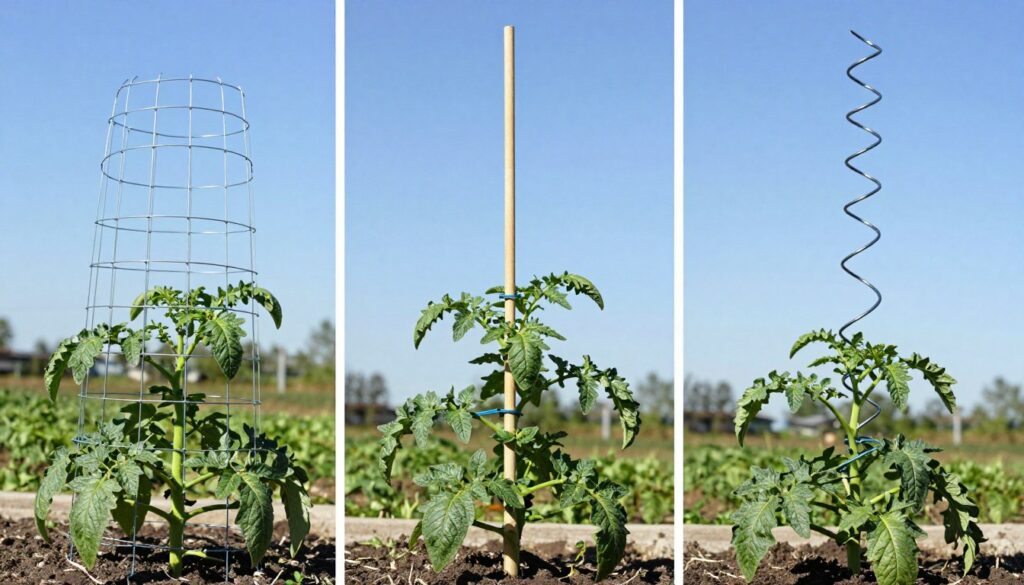
Types of Support Structures
Several support options work well for container tomatoes. Your choice depends on tomato type, container size, and balcony space.
Tomato Cages
Wire cages surround the plant and support branches as they grow through the rings. Standard cages sold at garden centers stand 3 to 4 feet tall and work adequately for determinate varieties. However, they’re often too short and flimsy for indeterminate tomatoes.
For better results, look for heavy-duty cages at least 5 feet tall made from thick wire. These provide support throughout the season without tipping or bending. Position the cage around the plant at planting time, pushing the legs deep into the soil for stability.
You can make your own sturdy cages from concrete reinforcing wire or cattle panels. Cut a 6-foot section and form it into a cylinder about 24 inches in diameter. Secure the ends with wire ties. These homemade cages are inexpensive, very sturdy, and last for years.
Stakes
Staking involves driving a tall stake into the soil next to the plant and tying the main stem to the stake as it grows. Stakes work well for indeterminate tomatoes that grow as a single stem or are pruned to one or two main stems.
Use stakes at least 6 feet tall for indeterminate varieties, 4 to 5 feet for determinates. Wood, bamboo, or metal stakes all work well. Drive the stake 6 to 8 inches into the soil, about 3 to 4 inches from the plant stem, being careful not to damage roots.
Tie the stem to the stake every 8 to 12 inches as the plant grows. Use soft material like cloth strips, old t-shirts, or specialized plant ties. Create a figure-eight loop, with the tie crossing between the stem and stake to prevent the stem from rubbing against the stake.
Spiral Supports
Spiral supports consist of a tall stake with a spiral of wire around it. As the tomato grows, you thread the main stem through the spiral, which supports it without tying. These work particularly well for single-stem indeterminate varieties.
Insert the spiral support at planting time and gently guide the stem through the spiral as it grows. The spiral design allows the plant to move naturally with the wind while still providing support.
String Trellis
In limited balcony space, a vertical string trellis maximizes growing area. Secure a horizontal support above your containers (to a balcony ceiling, overhead beam, or sturdy frame). Hang strong twine or soft plastic garden tape from the overhead support to each plant.
As plants grow, wrap the main stem around the string every week or so, always in the same direction. The plant will naturally grip the string, and this method provides excellent support for indeterminate varieties while using minimal horizontal space.
When and How to Install Support
Install support structures at planting time before roots spread throughout the container. Attempting to install stakes or cages later damages roots and can stress plants.
Position stakes or cage legs about 3 to 4 inches from the plant stem. Push supports at least 6 to 8 inches deep into the soil for stability. In very large containers, you can push them all the way to the bottom for maximum stability.
For extra-tall supports in windy locations, secure the top of the support to your balcony railing or a fixed structure. This prevents the entire support from tipping in strong winds when plants are loaded with fruit.
Supporting Determinate vs. Indeterminate Varieties
Determinate tomatoes have a bushy growth habit and typically need less intensive support. A standard cage or short stake usually suffices. These compact plants set most fruit at once, creating a heavy load for a brief period. Ensure your support can handle multiple pounds of fruit simultaneously.
Indeterminate varieties continue growing taller throughout the season and produce fruit continuously. They require taller, sturdier support. Plan for supports at least 6 feet tall, and don’t be surprised if vigorous varieties grow even taller. These plants develop extensive foliage and fruit over months, creating significant weight. Use heavy-duty cages, tall stakes, or string trellis systems.
Securing Top-Heavy Plants
Even with good support, top-heavy plants loaded with fruit can tip over, especially in windy balcony conditions. If your container is relatively lightweight, add weight to the bottom for stability. Place bricks, rocks, or a layer of gravel at the bottom of the container before adding soil.
Alternatively, secure the container itself. In windy locations, tie containers to balcony railings or place them against walls to prevent tipping. Some gardeners use bungee cords or rope to secure pots to railings without permanently attaching anything.
Wind Protection Tip: Balconies higher than the second floor often experience strong winds that can damage plants and topple containers. Choose determinate or dwarf varieties for high balconies, and position containers behind railings or other windbreaks. Installing a temporary windbreak with shade cloth or plastic netting can protect plants without blocking too much sun.
Fertilizing Container Tomatoes for Maximum Production
Tomatoes are among the heaviest feeding vegetables, demanding substantial nutrients to support their rapid growth and abundant fruit production. While the potting mix you planted in provides initial nutrition, it won’t sustain plants throughout the growing season. Regular fertilizing is essential for healthy plants and maximum yields when growing tomatoes in pots.
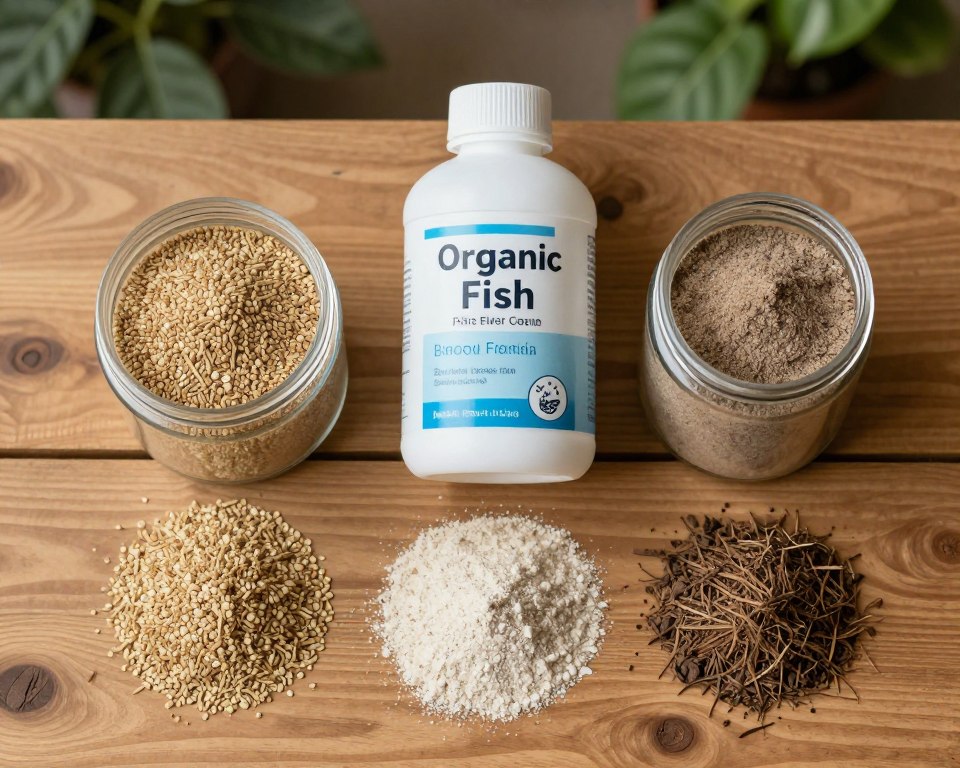
Understanding Tomato Nutrient Needs
Tomatoes require three primary macronutrients plus several important secondary nutrients and micronutrients. Understanding these needs helps you choose appropriate fertilizers and avoid common deficiency problems.
Primary Macronutrients (N-P-K)
Nitrogen (N) promotes leafy green growth and overall plant vigor. However, too much nitrogen creates lush foliage at the expense of flowers and fruit. Young plants need more nitrogen to establish, while flowering and fruiting plants need less.
Phosphorus (P) supports root development, flower formation, and fruit production. Adequate phosphorus is crucial during flowering and fruiting stages. Bone meal is an excellent organic phosphorus source.
Potassium (K) strengthens plant tissues, improves disease resistance, and enhances fruit quality and flavor. Potassium is especially important as fruit develops and ripens. Wood ash and greensand are organic potassium sources.
Secondary Nutrients and Micronutrients
Calcium prevents blossom end rot, a common tomato problem. Add bone meal, crushed eggshells, or calcium-specific supplements to ensure adequate levels.
Magnesium is essential for chlorophyll production and overall plant health. Epsom salt (magnesium sulfate) can supplement magnesium if deficiency symptoms appear (yellowing between leaf veins).
Trace minerals like iron, manganese, zinc, and boron are needed in tiny amounts but are essential for plant health. Most complete fertilizers include these micronutrients, or you can use kelp or seaweed products that naturally contain them.
Types of Fertilizers for Container Tomatoes
Both organic and synthetic fertilizers work for tomatoes. Many gardeners prefer organic options for growing food crops, though synthetic fertilizers provide faster results. Often, a combination approach works best.
Slow-Release Granular Fertilizers
These fertilizers release nutrients gradually over weeks or months. Mix them into soil at planting time, then supplement with liquid fertilizers during the growing season. Slow-release fertilizers provide baseline nutrition with less frequent application.
Look for balanced formulations like 5-5-5 or 10-10-10 for initial planting. During flowering and fruiting, switch to formulations lower in nitrogen and higher in phosphorus and potassium, such as 5-10-10.
Liquid Fertilizers
Liquid fertilizers are diluted in water and applied during regular watering. They provide nutrients immediately and allow you to adjust feeding based on plant needs. This flexibility makes them ideal for container tomatoes.
Common liquid fertilizers include fish emulsion (high in nitrogen, good for early growth), seaweed or kelp extracts (rich in micronutrients), and complete liquid fertilizers formulated specifically for tomatoes. Apply liquid fertilizers every one to two weeks during active growth.
Compost Tea
Compost tea is a liquid made by steeping compost in water. It provides gentle nutrition and beneficial microorganisms. While not as high in nutrients as commercial fertilizers, compost tea improves soil health and plant disease resistance.
To make compost tea, place several handfuls of finished compost in a bucket, fill with water, and let steep for 24 to 48 hours. Strain out solids and use the liquid to water plants. Apply weekly as a soil drench or foliar spray.
Organic Amendments
Several organic materials provide specific nutrients. Worm castings offer balanced nutrition and improve soil structure. Bone meal supplies phosphorus and calcium. Blood meal provides nitrogen. Kelp meal adds potassium and trace minerals.
Work amendments into the top few inches of soil or apply as side dressing around plants. These materials release nutrients slowly as soil microorganisms break them down.
Fertilizing Schedule Throughout the Season
Tomato nutrient needs change as plants grow. Adjust your fertilizing program to match each growth stage.
| Growth Stage | Fertilizer Type | Frequency | Notes |
| Planting | Slow-release granular (balanced NPK) | Once at planting | Mix into potting soil, use bone meal for calcium |
| Early Vegetative (Weeks 1-4) | Liquid fertilizer higher in nitrogen | Every 7-10 days | Promotes strong leafy growth and establishment |
| Pre-Flowering (Weeks 5-6) | Balanced liquid fertilizer or compost tea | Every 7 days | Transition to flowering nutrition |
| Flowering & Fruiting (Week 7+) | Low nitrogen, high P-K formula | Every 7-10 days | Supports flower and fruit development |
| Heavy Fruit Production | Continue low nitrogen formula, add calcium | Every 7 days | Maintain nutrients during peak production |
Signs of Nutrient Deficiencies
Learning to recognize nutrient deficiency symptoms allows you to address problems quickly before they seriously impact production.
- Nitrogen deficiency: Older leaves turn pale green or yellow, growth slows, plant appears stunted
- Phosphorus deficiency: Leaves develop purple tint, especially on undersides, slow growth, delayed flowering
- Potassium deficiency: Leaf edges brown and crispy, fruit ripens unevenly, poor flavor
- Calcium deficiency: Blossom end rot (dark, sunken spots on bottom of fruit), distorted new growth
- Magnesium deficiency: Yellowing between leaf veins while veins stay green, older leaves affected first
- Iron deficiency: Yellowing of youngest leaves while veins remain green, stunted growth
Avoiding Over-Fertilization
More is not better with fertilizer. Over-fertilization causes several problems that reduce yields and harm plants.
Excess nitrogen creates lush, dark green foliage with few flowers and little fruit production. The plant puts all its energy into leaves rather than reproduction. If you see extremely vigorous vegetative growth but few flowers, reduce nitrogen in your fertilizer.
Fertilizer burn occurs when salt concentrations become too high, causing brown, crispy leaf edges and root damage. If you see these symptoms, flush soil with plain water several times to leach out excess salts, then resume fertilizing at a lower rate.
Always follow package instructions for dilution rates and application frequency. When in doubt, use slightly less than recommended rather than more.
Pruning and Maintaining Healthy Tomato Plants
Regular maintenance keeps tomato plants healthy, productive, and manageable, especially important when growing in the limited space of a balcony. While pruning isn’t strictly necessary, strategic removal of growth directs the plant’s energy toward fruit production and improves air circulation, reducing disease risk.
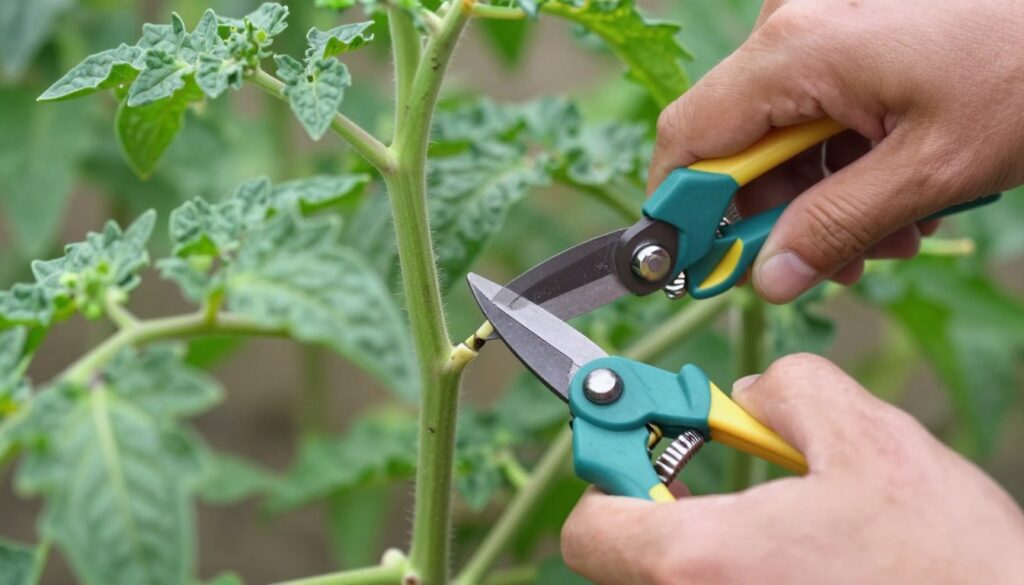
Understanding Tomato Plant Structure
Tomato plants have a main stem, branches, and suckers. The main stem grows vertically, with branches growing from the main stem at leaf nodes. Suckers are secondary shoots that emerge at the junction between the main stem and branches.
If left unpruned, suckers grow into full branches with their own leaves, flowers, and fruit. While this increases total plant foliage, it also divides the plant’s energy among more growth points, potentially resulting in smaller fruit and delayed ripening.
Pruning Indeterminate Varieties
Indeterminate tomatoes benefit most from pruning. These vigorous vines can become unmanageably large in containers if not controlled. Regular pruning keeps plants at a reasonable size while directing energy toward fruit production.
Removing Suckers
The most common pruning technique is removing suckers. Check plants weekly and pinch or cut out suckers when they’re small (2 to 4 inches long). Small suckers can be pinched off with your fingers; larger ones require clean pruning shears.
Many gardeners remove all suckers below the first flower cluster. This keeps the lower portion of the plant more open, improving air circulation and reducing soil-splash that spreads disease. Suckers above the first flower cluster can be removed or left, depending on your space and how much fruit you want.
Leaving more suckers means more foliage and potentially more fruit, but each individual fruit may be smaller and ripen later. Removing most suckers results in fewer but larger fruits that ripen earlier. For container growing where space is limited, removing most suckers creates a more manageable plant.
Single-Stem vs. Multiple-Stem Training
Single-stem training involves removing all suckers, leaving only the main stem. This creates a tall, narrow plant perfect for tight spaces. Single-stem plants require less horizontal space and can be grown closer together. They produce fewer but larger fruits and ripen earlier.
Two-stem training allows one strong sucker (usually the first one below the first flower cluster) to develop into a second main stem. Remove all other suckers. This provides more fruit than single-stem training while still maintaining control over plant size.
Removing Lower Leaves
As plants grow taller, gradually remove lower leaves that touch or are close to the soil. These leaves are most susceptible to soil-borne diseases. Removing them improves air circulation and directs energy upward to actively growing portions of the plant.
Remove only a few leaves at a time, never stripping more than one-third of the plant’s foliage at once. The plant needs leaves for photosynthesis, so removing too many can shock it and reduce productivity.
Pruning Determinate Varieties
Determinate tomatoes require little pruning. These compact, bushy plants have a predetermined number of growth points and will naturally stop growing at a certain size. Removing suckers from determinate plants can actually reduce yields since each sucker would produce fruit.
Limit pruning of determinate varieties to removing lower leaves that touch soil and any obviously diseased or damaged foliage. Otherwise, let these plants grow naturally.
Topping Plants
Topping means cutting off the growing tip of the main stem. This stops upward growth and forces the plant to direct energy toward ripening existing fruit rather than producing new growth.
Top indeterminate varieties 4 to 6 weeks before your expected first frost date. This gives existing fruit time to ripen before cold weather ends the season. Cut the main stem just above a leaf cluster, leaving at least two leaf clusters above the top fruit cluster.
Topping isn’t necessary for determinate varieties since they stop growing naturally. In regions with long growing seasons, you may not need to top indeterminate varieties either.
Regular Maintenance Tasks
Beyond pruning, several regular maintenance activities keep plants healthy and productive throughout the growing season.
Inspecting for Pests and Diseases
Examine plants weekly for signs of pests or disease. Check both upper and lower leaf surfaces, stems, and developing fruit. Early detection allows you to address problems before they become serious.
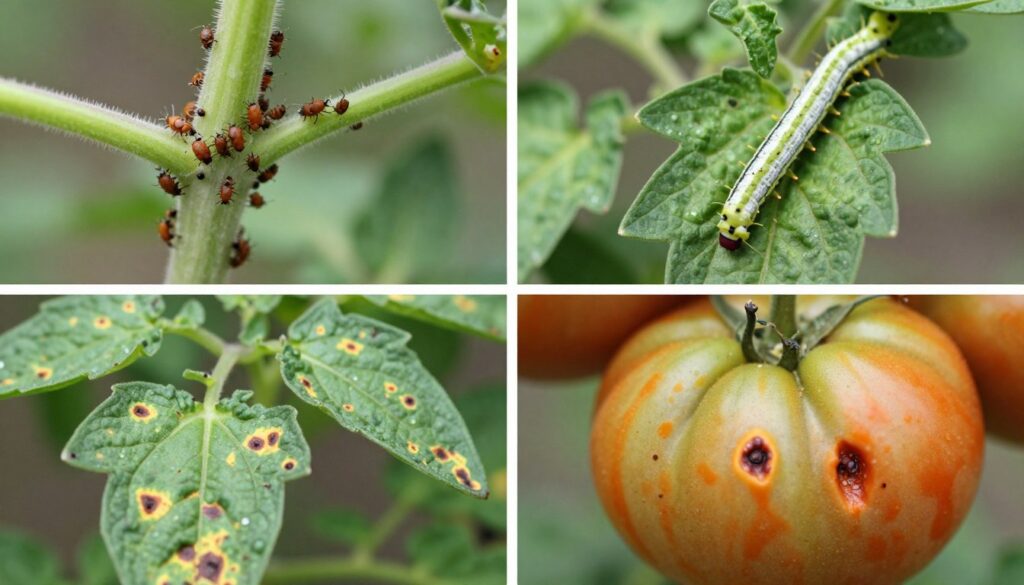
Look for common pests like aphids (tiny insects clustered on new growth), hornworms (large green caterpillars), and whiteflies (tiny white flying insects). Examine leaves for spots, discoloration, or unusual patterns that might indicate disease.
Deadheading Flowers
Remove flowers that don’t set fruit. If a flower cluster has been open for more than two weeks without developing into small fruit, pinch it off. This prevents the plant from wasting energy on non-productive flowers.
However, during extreme heat (above 95°F), flowers naturally fail to set fruit because pollen becomes non-viable. Don’t remove these flowers if temperatures will cool soon, as the plant may set fruit when conditions improve.
Supporting Heavy Fruit Clusters
As fruit develops, clusters can become very heavy, bending or breaking branches. Provide additional support by tying heavy branches to your support structure or fashioning small slings from old pantyhose or fabric strips to support individual fruit clusters.
Cleaning Up Dropped Leaves and Fruit
Remove any leaves or fruit that fall to the ground or into saucers. Decaying plant material can harbor diseases and pests. Keep the area around your containers clean to reduce disease pressure.
- Weekly sucker removal: Check for new suckers and remove when small (under 4 inches)
- Monthly lower leaf trimming: Remove leaves touching soil or showing disease symptoms
- Bi-weekly pest inspection: Carefully examine all plant surfaces for pest activity
- Weekly support adjustment: Check ties and add new ones as plant grows taller
- Daily observation: Quick visual check while watering for any concerning changes
Managing Common Pests and Diseases on Balcony Tomatoes
While container-grown tomatoes face fewer pest and disease problems than in-ground plants, they’re not immune to issues. The good news is that balcony growing offers better monitoring and easier intervention. Early detection and proper cultural practices prevent most serious problems.
Prevention Through Cultural Practices
The best pest and disease management starts with prevention. Healthy plants grown in optimal conditions resist problems better than stressed plants.
Provide Proper Growing Conditions
Plants receiving adequate sunlight, water, nutrients, and good air circulation naturally develop strong immune systems. Stressed plants become easy targets for pests and pathogens. Follow the care guidelines throughout this article to maintain plant health.
Space Plants Adequately
Crowded plants create humid, stagnant conditions where fungal diseases thrive. Space containers so air circulates freely between plants. Prune lower leaves and suckers to improve air movement through the canopy.
Water Properly
Water early in the day so foliage dries before evening. Wet leaves overnight create ideal conditions for fungal diseases. Direct water at the soil rather than splashing it on leaves. Avoid overwatering, which weakens plants and promotes root diseases.
Practice Good Sanitation
Remove diseased or damaged leaves immediately and dispose of them in the trash, not your compost. Clean up dropped leaves and fruit. Disinfect pruning tools between plants by wiping blades with rubbing alcohol or a bleach solution.
Common Tomato Pests
Several insects feed on tomatoes, but balcony gardens typically experience fewer pest problems than ground-level gardens. Here are the most common culprits and how to manage them.
Aphids
These tiny, soft-bodied insects cluster on new growth, sucking plant sap. They multiply rapidly and excrete sticky honeydew that attracts ants and promotes sooty mold. Early detection is key.
Management: Spray aphids off with a strong stream of water. For persistent infestations, apply insecticidal soap or neem oil, following product instructions. Repeat treatments weekly until aphids are gone. Yellow sticky traps can catch winged adults before they establish colonies.
Tomato Hornworms
These large green caterpillars can defoliate a plant quickly. They’re perfectly camouflaged but leave characteristic dark droppings on leaves below where they feed. Look for missing leaves and stems to locate them.
Management: Hand-pick hornworms and drop them in soapy water. If you find hornworms covered with small white cocoons, leave them alone—these are parasitic wasp eggs that will kill the hornworm and provide natural pest control. Bt (Bacillus thuringiensis) is an organic spray that specifically targets caterpillars without harming beneficial insects.
Whiteflies
Tiny white flying insects that cluster on leaf undersides. When disturbed, they fly up in a cloud. Whiteflies suck plant sap and can transmit viral diseases.
Management: Yellow sticky traps catch adult whiteflies. Spray leaf undersides with insecticidal soap or neem oil every 5 to 7 days to control nymphs. A strong spray of water knocks them off, though many will return. Consistent treatment over several weeks is usually necessary.
Spider Mites
Nearly invisible pests that cause stippled, yellowing leaves and fine webbing on plants. They thrive in hot, dry conditions. Examine leaves with a magnifying glass to see these tiny spider-like creatures.
Management: Increase humidity around plants by misting. Spray with water to knock mites off. Insecticidal soap or horticultural oil effectively controls spider mites. Repeat treatments every 3 to 5 days until mites are gone.
Common Tomato Diseases
Fungal and bacterial diseases cause the most problems for tomato plants. Container growing reduces some disease issues but doesn’t eliminate them entirely.
Early Blight
Fungal disease causing dark brown spots with concentric rings on lower leaves, eventually spreading upward. Infected leaves turn yellow and drop. Early blight is most common in warm, wet conditions.
Management: Remove infected leaves immediately. Improve air circulation and avoid overhead watering. Apply copper fungicide or fungicides containing chlorothalonil at the first sign of disease. Space containers adequately and mulch soil to prevent splash-back of fungal spores.
Late Blight
More serious fungal disease causing water-soaked spots on leaves that quickly turn brown. Affects stems and fruit as well. Late blight spreads rapidly in cool, wet conditions and can kill plants in days.
Management: Late blight requires aggressive action. Remove all infected foliage immediately. Apply copper fungicide or fungicides labeled for late blight. If infection is severe, remove the entire plant to prevent spread to other tomatoes. Ensure plants have excellent air circulation and avoid wetting foliage.
Powdery Mildew
White, powdery coating on leaves, typically starting on shaded lower leaves. Reduces photosynthesis and weakens plants but rarely kills them.
Management: Improve air circulation and reduce humidity. Remove affected leaves. Spray with a solution of 1 tablespoon baking soda and 1 tablespoon horticultural oil per gallon of water, or use sulfur-based fungicide. Apply weekly until symptoms disappear.
Blossom End Rot
Not actually a disease but a calcium deficiency disorder. Causes dark, sunken spots on the blossom end (bottom) of fruit. Results from inconsistent watering that prevents calcium uptake.
Management: Maintain consistent soil moisture. Mulch to help regulate moisture levels. Ensure soil pH is between 6.0 and 6.8 for optimal calcium availability. Add calcium to soil if deficient. Fruit already affected won’t recover, but new fruit will develop normally once watering is consistent.
Fusarium and Verticillium Wilt
Soil-borne fungal diseases causing yellowing, wilting, and eventual death of plants. Wilt diseases enter through roots and clog water-conducting tissues. Lower leaves yellow first, with wilting progressing upward.
Management: No cure exists once plants are infected. Prevention is key: use disease-free plants and fresh potting mix. Choose resistant varieties (look for “F” or “V” on plant tags indicating resistance). Remove infected plants immediately and dispose of them in trash, not compost. Don’t reuse soil from infected containers.
Organic and Low-Chemical Control Methods
Many effective pest and disease controls are safe for food gardens and friendly to beneficial insects.
- Neem oil: Broad-spectrum organic pesticide and fungicide effective against many pests
- Insecticidal soap: Kills soft-bodied insects like aphids and whiteflies on contact
- Bt (Bacillus thuringiensis): Bacterial spray specifically targeting caterpillars
- Copper fungicide: Organic fungicide for bacterial and fungal diseases
- Horticultural oil: Smothers insects and their eggs, safe for beneficial insects when dry
- Diatomaceous earth: Natural powder that kills crawling insects by damaging their exoskeletons
Always follow label instructions for any product, including organic options. Some organic pesticides can harm beneficial insects if not used correctly.
Recommended Products for Healthy Tomato Growing
Get your balcony garden started right with quality supplies. These products are specifically chosen to support container tomato success.
Ensuring Proper Pollination on Your Balcony
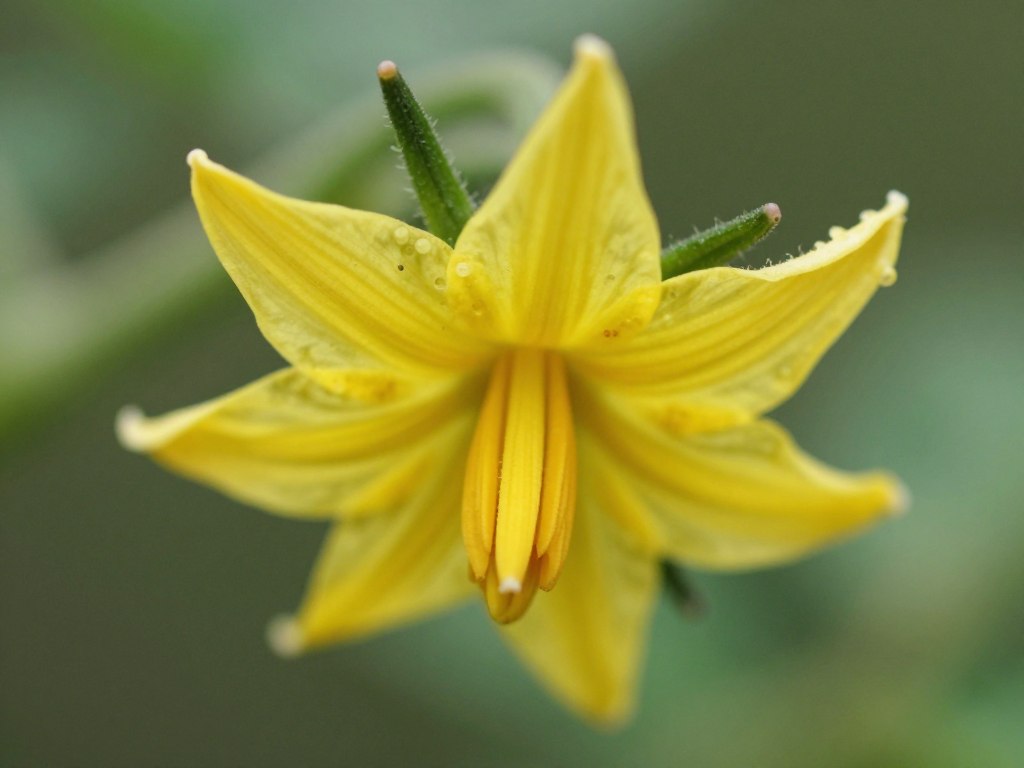
Tomatoes are typically self-pollinating, meaning each flower contains both male and female parts and can fertilize itself. However, pollination still requires pollen transfer from anthers to the stigma within each flower. In gardens, wind and visiting insects accomplish this naturally. On balconies, especially those sheltered from wind or high above ground level, you may need to assist pollination.
Signs of Poor Pollination
Poor pollination manifests as flowers that drop off without setting fruit, or fruit that develops misshapen or remains very small. If you notice many flowers but few developing tomatoes, pollination is likely the issue.
High balconies, enclosed balconies, or those with little air movement may lack the natural motion that shakes pollen loose. Additionally, high balconies have fewer pollinating insects visiting flowers.
Hand Pollination Techniques
Hand pollination is simple and takes only a minute or two every few days during the flowering period.
The Shake Method
Gently shake or tap the main stem or individual flower clusters daily when flowers are open. This vibration mimics natural wind and insect activity, shaking pollen loose to fall onto the stigma. Do this midday when pollen is driest and most likely to transfer.
The Brush Method
Use a small paintbrush or cotton swab to collect pollen from the yellow anthers (the flower’s center), then brush it onto the stigma (the sticky center part). Move from flower to flower, using the same brush. This method is more time-consuming but ensures thorough pollination.
Electric Toothbrush Method
An electric toothbrush (turned off) held against the stem behind flower clusters vibrates pollen loose very effectively. Touch the brush to the stem for a few seconds per cluster. Some gardeners swear this method produces better fruit set than other techniques.
Timing Pollination Efforts
Pollinate in late morning to midday when flowers are fully open and humidity is lower. Pollen transfers best when dry. Avoid pollinating during rain or early morning when dew makes pollen sticky and difficult to transfer.
Flowers are receptive for 1 to 2 days after opening. Pollinate every 2 to 3 days throughout the flowering period to ensure you catch all flowers at their peak receptivity.
Environmental Factors Affecting Pollination
Even with hand pollination, certain environmental conditions prevent successful fruit set.
Extreme temperatures are the most common pollination inhibitor. When nighttime temperatures drop below 55°F or daytime temperatures exceed 95°F, pollen becomes non-viable. Flowers will open but won’t set fruit regardless of pollination efforts. Wait for temperatures to moderate, and new flowers will set normally.
Excessive nitrogen fertilizer creates lush foliage but prevents flowering and fruiting. If plants are extremely leafy with few flowers, reduce nitrogen in your fertilizer program.
Insufficient light reduces flower production and can affect fruit set. Ensure plants receive at least 6 hours of direct sun daily.
Attracting Pollinators: Even on balconies, you can encourage pollinator visits by planting flowers nearby. Small pots of herbs like basil, borage, and dill produce flowers that attract bees and other beneficial insects. These visitors will also pollinate your tomatoes while feeding on the herb flowers.
Harvesting Tomatoes at Peak Ripeness
After months of care and anticipation, harvest time is the most rewarding part of growing tomatoes on a balcony. Understanding when and how to harvest ensures you enjoy tomatoes at their peak flavor while encouraging continued production from your plants.
Determining Ripeness
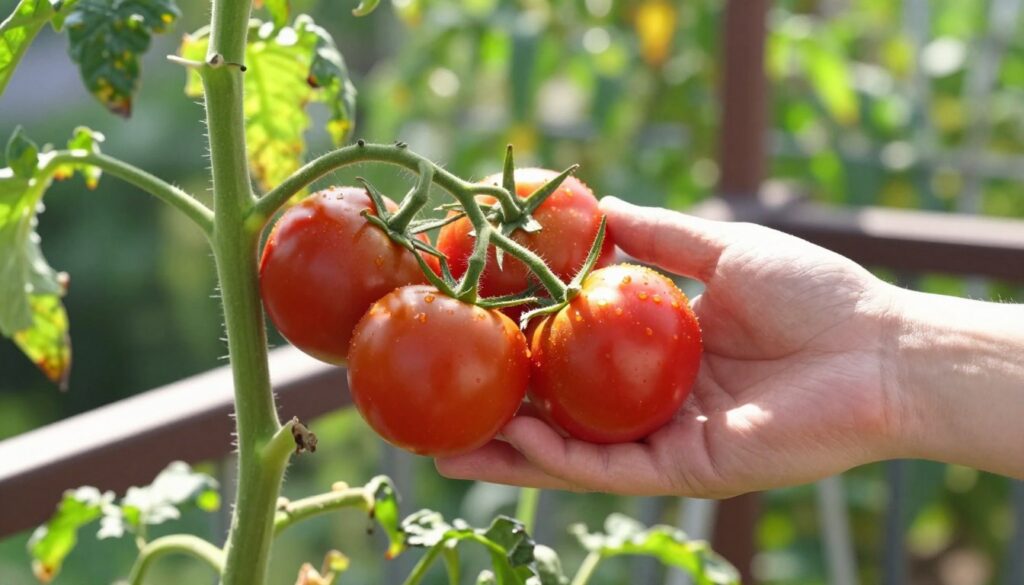
Tomatoes are ready to harvest when they reach full color for their variety and give slightly to gentle pressure. For red varieties, this means deep, uniform red color. Other varieties have different ripe colors: yellow, orange, pink, purple, or even remaining green (for green-when-ripe varieties).
The most reliable indicator is color uniformity. When tomatoes no longer have any green shoulders or unripened patches, they’re ready. Ripe tomatoes also develop a subtle sweet aroma near the stem.
Harvesting Technique
Gently grasp the fruit and twist while pulling slightly. Most ripe tomatoes detach easily. If a tomato doesn’t come off with light pressure, give it another day or two. Forcing unripe fruit off the vine damages both the tomato and the plant.
For cherry tomatoes, you can harvest entire clusters at once if all fruits in the cluster are ripe. Use pruning shears to cut the stem rather than pulling, which might damage the vine.
Harvest regularly during peak production season. Check plants every day or two when tomatoes are ripening. Regular harvesting encourages plants to produce more flowers and fruit.
Vine-Ripened vs. Off-Vine Ripening
Tomatoes develop the best flavor when ripened on the vine. They continue accumulating sugars and developing complex flavors until fully ripe. However, several situations call for harvesting slightly early.
When to Harvest Early
Harvest tomatoes just as they begin showing color if:
- Frost is forecast before full ripening
- Pests like squirrels or birds start damaging fruit
- Disease threatens to damage developing fruit
- You’ll be traveling during peak ripening time
- Fruit is cracking on the vine due to heavy rainfall
Tomatoes picked at the “breaker stage” (when they first show a hint of color) will ripen off the vine with reasonably good flavor, though not quite matching vine-ripened taste. Tomatoes picked completely green (without any color change) may ripen but typically lack flavor.
Ripening Tomatoes Indoors
Place early-harvested tomatoes in a single layer on a counter or in a cardboard box. Don’t refrigerate—cold temperatures ruin tomato flavor and texture. Room temperature (65-75°F) is ideal for ripening.
To speed ripening, place tomatoes in a paper bag with a banana or apple. These fruits release ethylene gas that triggers ripening. Check daily and remove tomatoes as they ripen.
Maximizing Yield Throughout the Season
Several practices help you get the most fruit from your plants over the longest possible time.
Harvest Promptly
Don’t leave ripe tomatoes on the vine. Once fully ripe, fruit quality begins declining. More importantly, leaving ripe fruit on the plant signals that seed production is complete, slowing new flower and fruit production. Regular harvesting of ripe fruit encourages plants to keep producing.
Remove Damaged or Diseased Fruit
Take off any fruit showing signs of disease, pest damage, or cracking. These fruits won’t improve and can spread problems to healthy fruit. Some partially damaged tomatoes can be salvaged by cutting away damaged portions.
End-of-Season Harvest
Before the first frost, harvest all remaining tomatoes regardless of ripeness. Even completely green tomatoes can be used for frying, pickling, or making green tomato relish. Tomatoes showing any color will ripen indoors.
You can also pull up entire plants and hang them upside down in a cool, dry location. Fruit will continue ripening on the plant for several weeks, extending your harvest beyond the first frost.
Storing Fresh Tomatoes
Never refrigerate fresh tomatoes unless they’re overripe and you need to extend storage by a day or two. Cold temperatures destroy the volatile compounds that give tomatoes their characteristic flavor and create a mealy texture.
Store ripe tomatoes at room temperature out of direct sunlight. Use within 3 to 5 days for best quality. If you have more ripe tomatoes than you can use fresh, consider freezing, canning, or making sauce.
Freezing Fresh Tomatoes
Tomatoes freeze beautifully for later use in cooked dishes. Simply wash, core, and freeze whole in freezer bags. Skins slip off easily when frozen tomatoes are run under warm water. Frozen tomatoes work perfectly for sauces, soups, and stews.
Peak Ripeness Indicators
- Full, uniform color for the variety
- Slight give when gently squeezed
- Sweet aroma near the stem
- Fruit detaches easily with light twist
- Glossy skin (not dull)
- Feels heavy for its size
Signs Tomatoes Need More Time
- Green shoulders or patches remain
- Hard, firm texture when squeezed
- No aroma present
- Doesn’t release easily from stem
- Color still deepening
- Dull rather than glossy appearance
Troubleshooting Common Problems in Balcony Tomato Growing
Even experienced gardeners encounter problems when growing tomatoes in pots. Understanding common issues and their solutions helps you address problems quickly before they seriously impact your harvest.
Leaf Problems
Yellow Leaves
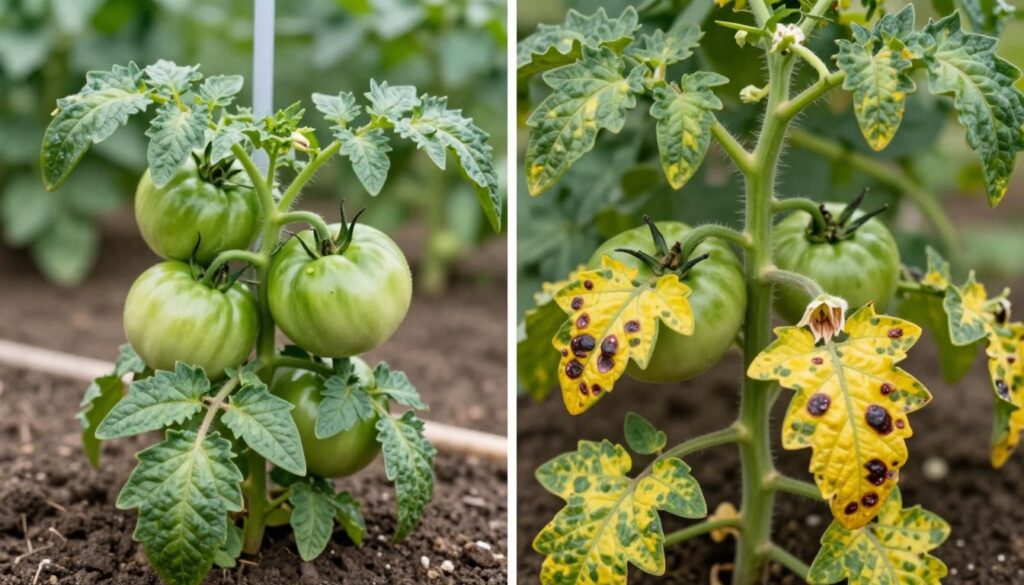
Yellowing leaves have multiple possible causes. Lower leaves naturally yellow and drop as plants age—this is normal. However, widespread yellowing indicates problems.
Nitrogen deficiency: Older leaves turn pale yellow while new growth stays green. Increase nitrogen fertilizer. Apply fish emulsion or high-nitrogen fertilizer.
Overwatering: Yellowing accompanied by soggy soil and stunted growth. Reduce watering frequency and check drainage holes aren’t blocked. Allow soil to dry slightly between waterings.
Disease: Yellowing with spots, wilting, or brown areas suggests fungal or bacterial infection. Remove affected leaves, improve air circulation, and apply appropriate fungicide if needed.
Brown or Crispy Leaf Edges
Leaf margins turning brown and crispy indicate several possible issues.
Fertilizer burn: Excess fertilizer salts damage roots and leaf edges. Flush soil with plain water several times to leach salts, then reduce fertilizer concentration.
Potassium deficiency: Older leaves develop brown, crispy edges while veins stay green. Apply balanced fertilizer or specific potassium supplement.
Heat stress: In extremely hot weather, leaf edges may scorch. Provide afternoon shade during heat waves and ensure consistent moisture.
Curling Leaves
Leaf curling can be physiological (normal response to conditions) or indicate problems.
Heat response: Slight upward curling during hot weather is normal and protective. Ensure adequate water and consider providing afternoon shade if extreme.
Herbicide exposure: Severe curling, twisting, and distorted growth suggests herbicide drift from nearby applications. No cure exists; plants may recover slowly or need replacement.
Viral disease: Curling with yellowing, mottling, or stunted growth may indicate viral infection. Remove and dispose of infected plants immediately to prevent spread.
Flowering and Fruiting Problems
Flowers Drop Without Setting Fruit
Blossom drop frustrates many gardeners. Several factors prevent fruit set.
Temperature extremes: Most common cause. Nighttime temperatures below 55°F or daytime temperatures above 95°F prevent pollen viability. Wait for temperatures to moderate; subsequent flowers will set normally.
Poor pollination: On balconies, insufficient wind or lack of pollinators can prevent pollination. Hand-pollinate flowers by gently shaking plants daily.
Excessive nitrogen: Too much nitrogen creates lush foliage but prevents flowering and fruiting. Reduce nitrogen fertilizer and switch to low-nitrogen, high-phosphorus formula.
Slow Fruit Ripening
Tomatoes that take forever to ripen usually need more heat or light.
Insufficient sunlight: Shaded plants produce fruit that ripens slowly. Ensure plants receive at least 6 hours of direct sun daily. Move containers to sunnier locations if possible.
Cool temperatures: Tomatoes ripen fastest between 68-77°F. In cool summer regions, fruit ripens slowly. Choose early-maturing varieties suited to shorter seasons.
Overproduction: Plants with too much fruit ripen each individual tomato more slowly. Remove some immature fruit to speed ripening of remaining fruit.
Small Fruit Size
Smaller-than-expected tomatoes usually result from stress or nutrient deficiency.
Water stress: Inconsistent watering produces small fruit. Maintain consistent soil moisture throughout fruit development.
Nutrient deficiency: Inadequate fertilization limits fruit size. Increase feeding frequency and ensure balanced nutrition.
Container too small: Restricted root space limits fruit size. Use larger containers (at least 5 gallons, preferably 10+ gallons).
Fruit Problems
Blossom End Rot
Dark, sunken spots on the blossom end (bottom) of fruit result from calcium deficiency, usually caused by inconsistent watering that prevents calcium uptake.
Solution: Maintain consistent soil moisture. Mulch soil surface to help regulate moisture. Ensure soil pH is 6.0-6.8 for optimal calcium availability. Add calcium supplement if soil is deficient. Affected fruit won’t recover, but new fruit will develop normally with consistent care.
Cracking
Circular cracks around the stem or radial cracks from stem to blossom end occur when fruit expands faster than skin can stretch.
Causes: Heavy rain or watering after dry period causes rapid water uptake and fruit expansion. Some varieties are more prone to cracking than others.
Prevention: Maintain consistent soil moisture. Harvest fruit as soon as fully ripe. Choose crack-resistant varieties. Cracked tomatoes are still edible if used promptly; just cut away cracked areas.
Sunscald
Pale, papery patches on the side of fruit facing the sun result from excessive sun exposure.
Prevention: Don’t over-prune foliage; leaves shade developing fruit. In very hot climates, provide afternoon shade. Ensure adequate water during heat waves. Affected areas can be cut away; the rest of the fruit is edible.
Growth and Production Problems
Stunted Growth
Plants that stop growing or grow very slowly have several possible issues.
Root bound: Container too small restricts root growth. Transplant to larger container.
Nutrient deficiency: Depleted soil provides inadequate nutrition. Increase fertilizing frequency.
Temperature stress: Growth slows in temperatures below 60°F or above 90°F. This is temporary; growth resumes when temperatures moderate.
Root damage or disease: Check roots for damage or rot. If roots are brown, mushy, or foul-smelling, root rot is present. Improve drainage and reduce watering.
Leggy, Spindly Growth
Tall, weak plants with long spaces between leaves need more light.
Solution: Move containers to a location with more direct sun. If this isn’t possible, prune to encourage bushier growth and stake plants well for support. Choose varieties better suited to lower light conditions for future seasons.
Little or No Fruit Production
Plants with abundant foliage but few tomatoes usually have excess nitrogen or insufficient light.
Solutions: Reduce nitrogen fertilizer. Switch to low-nitrogen, high-phosphorus formula. Ensure at least 6 hours of direct sun daily. Hand-pollinate flowers if wind is insufficient. Check for temperature extremes preventing fruit set.
Why are my tomato leaves turning purple?
Purple-tinged leaves typically indicate phosphorus deficiency, often caused by cool soil temperatures that prevent phosphorus uptake. This is common early in the season. As soil warms, plants usually recover. You can also apply phosphorus-rich fertilizer like bone meal.
Can I save seeds from my container-grown tomatoes?
Yes, if you grew open-pollinated or heirloom varieties. Hybrid varieties won’t grow true from saved seed. Ferment seeds in water for 3 days, rinse, dry completely, and store in a cool, dry place. Seeds remain viable for 4-5 years.
Why did my plant suddenly wilt even though the soil is moist?
Sudden wilting in moist soil suggests root problems or vascular disease. Check for root rot by examining roots—healthy roots are white or tan, while rotted roots are brown and mushy. Fusarium or verticillium wilt cause wilting despite adequate moisture. Unfortunately, no cure exists for wilt diseases; remove and dispose of infected plants.
How long do container tomato plants produce fruit?
Indeterminate varieties produce continuously from first harvest until frost kills plants. Determinate varieties produce a concentrated harvest over 2-4 weeks then slow significantly. In frost-free climates, indeterminate tomatoes can produce for many months.
Extending Your Balcony Tomato Growing Season
The standard tomato season runs from late spring through fall, but several techniques can extend production into cooler months or give you an earlier start. Container growing makes season extension easier than in-ground gardening since you can move plants to protected locations.
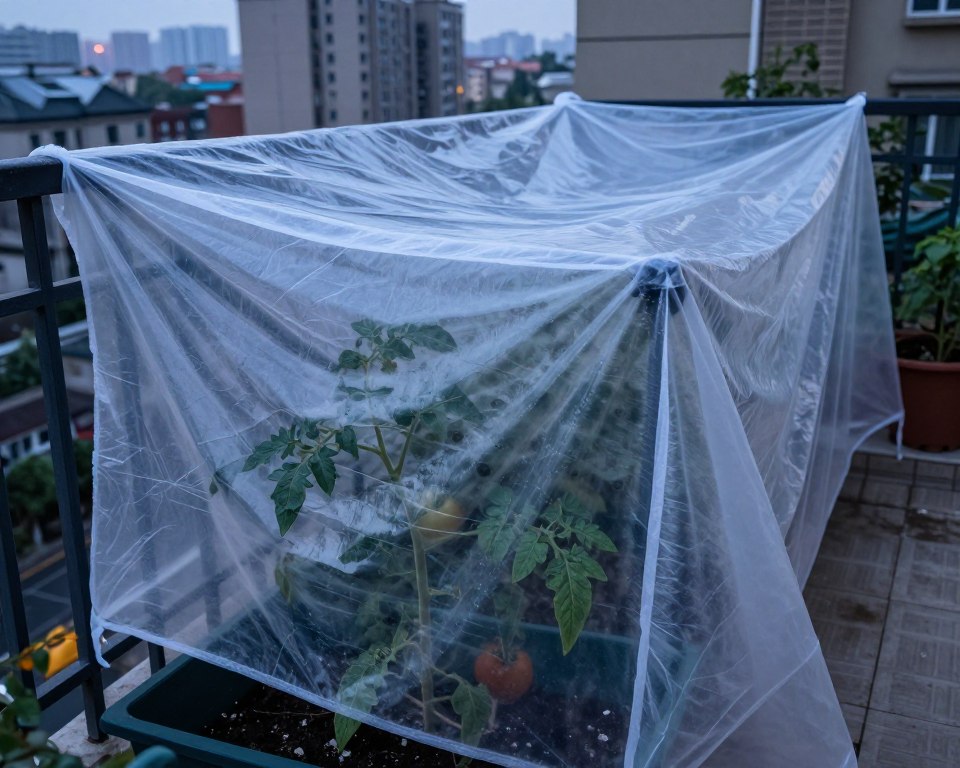
Starting the Season Early
Getting plants established before the last frost date provides earlier harvests and longer total production time.
Frost Protection
Plant tomatoes 1 to 2 weeks before your last expected frost date if you can provide frost protection. Move containers against your building’s wall, which radiates stored heat and provides several degrees of frost protection. Cover plants on cold nights with frost blankets, old sheets, or large cardboard boxes.
Even if tops get nipped by frost, if the main stem survives, plants usually recover and continue growing. However, severe frost will kill plants, so monitor weather forecasts closely during this risky period.
Creating Microclimates
Balconies naturally create microclimates warmer than the surrounding area, especially if enclosed by walls or railings. Position containers in the warmest spots, typically near walls on the west or south side.
On cool nights, even a simple windbreak or moving containers under an overhang can provide enough protection to prevent damage.
Extending the Fall Season
The most productive tomato weeks often arrive in early fall. Extending the season through the first few frosts can provide several additional weeks of harvest.
Harvest Green Tomatoes Before Frost
Monitor weather forecasts in fall. When a killing frost is predicted, harvest all remaining fruit, even if still green. Tomatoes showing any color change will ripen indoors. Completely green tomatoes can be used for fried green tomatoes or pickles.
Protect Plants Through Light Frosts
Light frosts (32-28°F) damage leaves and fruit but might not kill the entire plant. Cover plants on frosty nights and remove covers during the day. This can extend your season by 2 to 4 weeks, allowing more fruit to ripen.
Move containers against walls or under eaves for additional protection. The thermal mass of your building provides several degrees of warmth.
Move Containers Indoors Temporarily
If a brief cold snap threatens but warmer weather will return, move containers indoors overnight. A garage, basement, or even just inside your door provides enough protection. Return plants outdoors once the cold passes.
Growing Tomatoes Indoors
In climates with mild winters or if you have very bright indoor space, you can continue growing tomatoes indoors through winter. However, this is challenging and usually produces smaller yields than outdoor growing.
Requirements for Indoor Growing
Indoor tomatoes need very bright light—at least 12 to 16 hours daily. This typically requires supplemental grow lights since windows rarely provide sufficient light, especially in winter. LED grow lights designed for fruiting plants work best.
Indoor temperatures should remain between 65-75°F. Hand-pollinate flowers since no wind or insects are present indoors. Use small, determinate varieties or dwarf types bred for indoor growing.
Be aware that indoor growing often attracts pests like aphids and whiteflies. Monitor plants closely and address pest problems immediately.
Season Extension Tip: Determinate varieties work better for season extension since they produce their crop within a shorter window. Plant early-season determinates in spring for early harvests, then plant late-season varieties in mid-summer for fall production. This staggered planting maximizes your growing season.
Best Practices Summary for Balcony Tomato Success
Successful tomato growing combines proper variety selection, adequate containers, quality soil, consistent care, and attention to plant needs. Here’s a quick-reference summary of the most important practices for growing tomatoes on balconies.
Foundation Elements
- Choose appropriate varieties for your space and sun exposure
- Use containers at least 5 gallons, preferably 10+ gallons
- Start with quality potting mix, never garden soil
- Ensure excellent drainage with multiple holes
- Plant deeply, burying stem to first leaves
- Install support structures at planting time
Daily & Weekly Care
- Provide 6-8 hours of direct sunlight daily
- Water when top 2 inches of soil feels dry
- Water deeply until drainage from bottom holes
- Check for pests and diseases weekly
- Remove suckers from indeterminate varieties
- Harvest ripe fruit promptly to encourage production
Nutrition & Growth
- Fertilize every 1-2 weeks during growing season
- Switch to low-nitrogen formula when flowering begins
- Maintain consistent soil moisture for calcium uptake
- Mulch soil surface to retain moisture
- Prune lower leaves touching soil for disease prevention
- Hand-pollinate if needed on high or enclosed balconies
Monthly Checklist for Container Tomato Care
| Time Period | Key Tasks | What to Watch For |
| Early Season (Weeks 1-4) | Establish watering routine, apply nitrogen-rich fertilizer, ensure support is secure, protect from unexpected cold | Transplant shock, slow growth from cool temperatures, yellowing leaves indicating nutrient needs |
| Mid Season (Weeks 5-8) | Begin sucker removal, switch to lower-nitrogen fertilizer, hand-pollinate flowers, increase watering as plants grow | First flowers appearing, early disease symptoms, adequate support for growing stems |
| Peak Season (Weeks 9-12) | Daily watering checks, harvest ripe fruit promptly, maintain fertilizing schedule, monitor for pest pressure | Heavy fruit loads requiring additional support, blossom end rot, signs of water stress |
| Late Season (Weeks 13+) | Continue harvesting, top indeterminate varieties 6 weeks before frost, protect from early frost, reduce fertilizer as season ends | Slowing growth, fewer new flowers, weather forecasts for first frost |
Start Your Balcony Tomato Garden Today
Growing tomatoes on a balcony transforms limited urban space into a productive garden that provides fresh, flavorful fruit throughout the summer. No yard required—just containers, soil, sun, and consistent care. The satisfaction of picking a sun-warmed tomato steps from your door rivals any gardening experience.
Remember that successful balcony tomato gardening isn’t complicated, but it does require attention to fundamentals. Choose appropriate varieties for your space and light conditions. Provide containers large enough for robust root development. Use quality potting mix that drains well while retaining adequate moisture. Position plants where they receive at least six hours of direct sun. Water consistently, keeping soil evenly moist. Feed regularly throughout the growing season. Support plants as they grow. Harvest promptly to encourage continued production.
Your first season may involve some trial and error as you learn your balcony’s unique microclimate and how your plants respond to care. Take notes on what works and what doesn’t. Which varieties performed best? How often did you need to water during hot weather? What pests or diseases appeared? These observations make each subsequent season more successful.
The beauty of container gardening is its scalability and flexibility. Start with one or two plants this year. Next season, expand if your first experience was rewarding. Try different varieties. Experiment with training methods. Join online gardening communities to share experiences and learn from others.
Most importantly, enjoy the process. Balcony gardening isn’t just about the harvest—though that’s certainly rewarding. It’s about connecting with growing things, spending time outdoors, and creating something with your hands. It’s the daily ritual of checking plants, the excitement of spotting the first flower, the pride of showing friends your productive garden, and ultimately, the unmatched taste of a tomato you grew yourself.
The best time to start your balcony tomato garden was last spring. The second-best time is right now. Gather your supplies, choose your varieties, and begin your journey toward fresh, homegrown tomatoes. Your balcony holds more potential than you might imagine. Transform it into a productive, beautiful space that provides both fresh food and the satisfaction of successful gardening.
Welcome to the wonderful world of growing tomatoes on balconies. Your first harvest awaits.
Ready to Start Growing?
Everything you need to begin your balcony tomato garden is just a click away. Don’t let another growing season pass without enjoying fresh, homegrown tomatoes from your own balcony.